Tech Explainer: Data Center Cooling - Air, Evaporative, Liquid, and Hybrid Approaches
Key Highlights
- Different cooling methods, including air, water, liquid, and immersion cooling, each offer unique tradeoffs in cost, efficiency, water use, and complexity, making site-specific assessment crucial.
- Effective airflow management, such as containment and proper rack design, can significantly improve existing air-cooled data centers' efficiency without major infrastructure changes.
- Advanced liquid cooling solutions like direct-to-chip and immersion cooling are increasingly vital for high-density AI and HPC workloads, enabling higher rack power densities with better thermal management.
- Water availability and climate conditions heavily influence cooling choices; evaporative systems excel in dry, cool climates, while dry coolers suit water-constrained regions.
- A hybrid approach, combining multiple cooling technologies tailored to local conditions and workload demands, offers the most sustainable and cost-effective path forward for modern data centers.
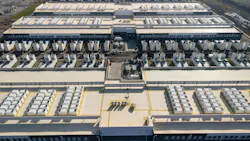
Cooling has become a central design question for modern data centers because nearly every watt consumed by IT equipment ultimately becomes heat that must be removed. For years, the basic model was straightforward: move large volumes of conditioned air through servers, keep equipment inlets within safe temperature limits, and reject the captured heat outdoors through chillers, cooling towers, dry coolers or other mechanical systems.
That model still serves much of the world’s enterprise, cloud and colocation capacity. But AI factories are bringing high-performance computing and accelerator-based systems, once concentrated in specialized supercomputing environments, into the mainstream data center market. The resulting increases in rack density are placing new demands on cooling infrastructure. The International Energy Agency projects that global data center electricity consumption will roughly double by 2030, with accelerated servers driving much of the growth and cooling and supporting infrastructure adding to the overall load.
There is no single best cooling architecture. Every approach involves tradeoffs in capital and operating cost, density, water and energy use, reliability, maintainability, climate suitability and retrofit complexity. A hyperscale campus in a favorable climate, a financial-services colocation facility in a dense city, a 20-year-old enterprise data center and a purpose-built AI training campus will not make the same choices. The question is not whether air cooling, liquid cooling or any particular heat-rejection method is inherently superior, but where each fits. Answering that question begins by distinguishing among three functions: capturing heat from the IT equipment, transporting it away from the rack or room, and ultimately rejecting or reusing it.
The Basic Cooling Chain
A data center cooling system performs three fundamental jobs. First, it captures heat from the IT equipment. Second, it transports that heat away from the rack or room. Third, it rejects the heat to the outside environment or, in some cases, makes it available for reuse.
Traditional air-cooled data centers capture heat by moving conditioned air through servers. Server fans pull cool air across CPUs, memory, storage, power supplies and network equipment, then discharge heated air into a hot aisle or return-air plenum. The facility cooling system removes heat from that air before recirculating it or exhausting it outdoors.
Liquid-cooling systems move the point of heat capture closer to the electronics. Rear-door heat exchangers remove heat from server exhaust before it enters the room. Direct-to-chip systems use cold plates mounted on high-heat components such as CPUs and GPUs. Immersion systems submerge servers or components in dielectric fluid. Lawrence Berkeley National Laboratory describes liquid cooling as a spectrum extending from room-level systems, such as computer room air handlers, to immersion cooling directly at the surface of heat-generating components. Capturing heat closer to the source can also allow systems to operate with warmer coolant temperatures while maintaining effective thermal control.
The central design tradeoff is straightforward. Air cooling is familiar, widely supported and electrically nonconductive, but air carries relatively little heat per unit of volume. Liquids can transport far more heat using much lower flow volumes, but they introduce pumps, coolant distribution, leak detection, materials-compatibility requirements and changes to service procedures. Once heat is transferred into a liquid loop, it can generally be transported and rejected more efficiently than heat carried through large volumes of air.
Air Cooling: The Incumbent Workhorse
Air cooling remains the dominant approach for general-purpose data centers. In a conventional configuration, computer room air conditioners (CRACs) or computer room air handlers (CRAHs) deliver conditioned air to cold aisles, often through a raised floor or overhead ductwork. Servers draw air through the front of the chassis and discharge heated air from the rear. The facility cooling system then removes heat from the return air and recirculates it through the room.
Common configurations include chilled-water CRAH systems, direct-expansion (DX) CRAC units, in-row coolers, rooftop systems and other close-coupled designs. In a chilled-water system, air handlers transfer room heat into water supplied by a central cooling plant. In a DX system, refrigerant absorbs heat within the cooling unit and carries it to an outdoor condenser or another heat-rejection device. In-row and close-coupled systems place cooling equipment nearer to the racks, shortening airflow paths, limiting hot- and cold-air mixing and reducing unnecessary fan energy.
Air cooling’s greatest advantage is maturity. It supports standard servers and conventional racks, relies on established maintenance practices and fits familiar redundancy models. It also keeps cooling liquid out of the IT equipment, an important consideration for many enterprise and colocation customers. At low to moderate rack densities, air cooling can remain efficient and reliable when paired with disciplined airflow management and effective containment.
Its primary limitation is the volume of air required as rack power increases. Higher airflow demands raise fan energy both within the servers and across the facility. Poor air management compounds the problem: bypass airflow, recirculation, missing blanking panels, cable obstructions and leaks in raised-floor systems can all force cooling equipment to work harder than necessary. Berkeley Lab’s guidance emphasizes that effective airflow management is not only an efficiency measure in its own right, but also a prerequisite for many other cooling and energy-saving improvements.
Water characteristics: Air cooling can use little or no water at the site when heat is rejected through dry coolers or air-cooled condensers. However, an air-cooled data hall may still depend on water elsewhere in the cooling chain if it uses water-cooled chillers, cooling towers or evaporative-assist systems. Fully dry designs can substantially reduce direct water consumption, although they may require more fan or compressor energy during the hottest operating conditions.
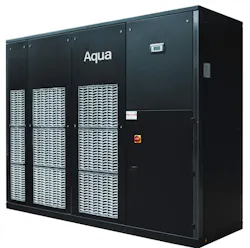
Energy characteristics: Air cooling performs best at low to moderate rack densities when airflow is carefully managed and outdoor conditions support air-side or water-side economization. As rack density increases, higher server and facility fan speeds may be required, while some systems may need lower supply-air temperatures or additional mechanical cooling. Energy use also rises when compressors must operate for longer periods because economizer conditions are unavailable.
Best suited for: Enterprise facilities, mixed IT environments, storage-heavy data halls, network rooms, legacy data centers and colocation facilities serving a broad range of customers. Air cooling also remains practical for low- and moderate-density cloud infrastructure and for sites where equipment compatibility, operational familiarity and simplicity are more important than supporting the highest possible rack densities.
Air Containment and Airflow Optimization
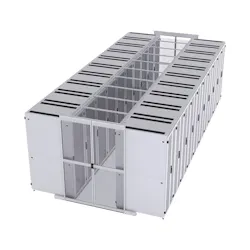
Containment is not a separate cooling technology so much as a way to make air cooling work properly. Hot-aisle containment encloses the server exhaust path and directs heated air back to the cooling units. Cold-aisle containment encloses the supply-air path and prevents conditioned air from spilling into the surrounding room. Either approach reduces hot- and cold-air mixing, stabilizes server inlet temperatures and can allow operators to raise supply-air temperatures or reduce fan speeds.
The energy benefit can be significant because fan power generally changes with the cube of fan speed under comparable system conditions. Even modest reductions in fan speed can therefore produce disproportionate energy savings. Containment also helps operators identify their actual thermal margins. Many legacy data centers are overcooled because room temperatures are set unnecessarily low to compensate for localized hot spots. Once airflow is controlled, facilities can often operate at warmer temperatures without increasing risk at server inlets. Both hot-aisle and cold-aisle containment are widely used in enterprise and legacy data centers.
Water characteristics: Containment does not directly consume or conserve water. However, by reducing the cooling load, it can lower the amount of water used by chillers, cooling towers and other evaporative systems. Berkeley Lab includes airflow management, IT efficiency and power-system improvements among the broader measures that can reduce data center water demand.
Energy characteristics: Generally favorable. Containment is one of the least disruptive ways to reduce fan and refrigeration energy in an existing air-cooled facility.
Best suited for: Nearly any air-cooled facility, particularly older data halls with mixed rack densities, poor separation of supply and return air, or persistent hot spots.
Chilled-Water Cooling
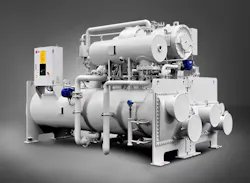
Chilled-water systems are common in large data centers. A central plant cools water and pumps it to CRAHs, in-row units or other heat exchangers, where heat from the data hall is transferred into the water loop. That heat is then rejected outdoors through cooling towers, dry coolers, fluid coolers or hybrid systems. Chilled-water plants can operate efficiently when they use variable-speed pumps and fans, appropriately elevated water temperatures, effective controls and water-side economization.
Their primary advantage is scale. A central chilled-water plant can serve large buildings or campuses, support familiar redundancy configurations and integrate with economizer systems. It can also provide flexibility as cooling requirements evolve. The same plant may serve air-cooled data halls while also supporting direct-to-chip or other liquid-cooling loops through heat exchangers and coolant distribution units.
The principal tradeoffs are capital cost and operational complexity. Chillers, pumps, valves, heat-rejection equipment, controls, water treatment and maintenance requirements all add to the infrastructure burden. Poorly designed or tuned plants can waste energy through excessive pumping, unnecessarily low water-temperature setpoints, inefficient control sequences or compressor operation when economizer cooling would be available.
Water characteristics: Highly variable. A chilled-water plant that rejects heat through cooling towers may consume substantial water through evaporation and blowdown, with smaller losses from drift. A plant using dry coolers can greatly reduce direct site water consumption but may require larger heat-rejection equipment and more fan or compressor energy during hot conditions.
Energy characteristics: Potentially highly efficient when the plant uses elevated chilled-water temperatures, variable-speed equipment, optimized controls and water-side economization. Efficiency declines when operators maintain unnecessarily low water temperatures, overpump the system or run compressors when outdoor conditions could support economizer operation.
Best suited for: Large campuses, hyperscale and colocation facilities, high-reliability buildings and sites that need a flexible path from conventional air cooling to direct liquid cooling.
DX and Refrigerant-Based Systems
Direct-expansion systems use refrigerant to absorb heat from data hall air and reject it outdoors through a condenser or other heat-rejection device. They are common in smaller data centers, edge facilities, telecom rooms and buildings where a central chilled-water plant is impractical. DX units can be packaged, modular and relatively straightforward to install or expand.
Modern systems may incorporate variable-speed compressors, air-side economizers, evaporative assist or pumped-refrigerant modes that reduce compressor operation under favorable conditions. DX systems can be effective for smaller loads, distributed facilities and retrofit applications, but they are generally less economical and scalable than central chilled-water plants for very large buildings or campuses.
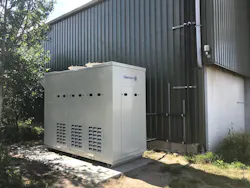
Water characteristics: Standard air-cooled DX systems can operate without cooling water at the site. Systems equipped with evaporative assist use water during hot conditions to improve condenser performance and reduce compressor demand.
Energy characteristics: DX systems are often less efficient at large scale than optimized chilled-water plants or systems with extensive economizer operation. For smaller facilities, however, their simplicity and modularity may outweigh that disadvantage. Variable-speed compressors, efficient controls and economizer integration can significantly improve performance.
Best suited for: Small and midsized enterprise data centers, edge facilities, telecom shelters, modular deployments and retrofit projects without central plant infrastructure.
Air-Side Economization
Air-side economization uses outdoor air directly, or mixes it with return air, when outside temperature, humidity and air quality are within acceptable limits. Instead of relying entirely on mechanical refrigeration, the facility draws in filtered outside air, uses it to absorb heat from the data hall and exhausts the warmed air outdoors.
The primary benefit is reduced compressor operation. In favorable climates, air-side economizers can provide many hours of low-energy cooling. The principal challenge is environmental control. Outdoor air can introduce particulates, wildfire smoke, salt, pollutants and wide swings in temperature and humidity. Filtration requirements and pressure drop must therefore be considered, while moisture levels must remain within the equipment manufacturer’s allowable operating envelope to limit condensation, corrosion and electrostatic risks.
Water characteristics: Air-side economization can use little or no water unless it is combined with direct evaporative cooling or another water-assisted process.
Energy characteristics: Generally favorable when climate, air quality and control systems permit extensive economizer operation. Fan energy and the pressure drop created by filtration and ductwork still affect total efficiency.
Best suited for: Cool or temperate climates, locations with acceptable outdoor air quality, facilities designed for economizer operation and operators prepared to manage broader environmental conditions.
Water-Side Economization
Water-side economization uses favorable outdoor conditions to cool a facility water loop while reducing or avoiding compressor operation. Rather than introducing outside air into the data hall, the system transfers heat to cooling towers, dry coolers, fluid coolers or other outdoor heat exchangers. A heat exchanger typically separates the facility water loop from the outdoor cooling loop.
Water-side economizers reduce mechanical refrigeration without exposing IT equipment directly to outdoor contaminants. They are especially useful in chilled-water plants and may operate alongside chillers, handling all or part of the cooling load as outdoor conditions permit.
Water characteristics: Water consumption depends on the heat-rejection system. Tower-based economizers consume water through evaporation and blowdown, while systems using dry coolers can operate with little or no direct water use. Hybrid systems can run dry under favorable conditions and introduce evaporative assistance only when needed.
Energy characteristics: Often highly efficient in cool conditions because compressor demand can be reduced or eliminated. Pumps and fans continue to consume energy, and performance depends on outdoor dry-bulb or wet-bulb conditions and the type of heat-rejection equipment used.
Best suited for: Large chilled-water facilities, climates with substantial numbers of cool operating hours and sites that want economizer benefits without bringing outdoor air into the data hall.
Direct Evaporative Cooling
Direct evaporative cooling lowers the temperature of supply air by evaporating water directly into the air stream. As the water changes from liquid to vapor, it absorbs heat and cools the surrounding air.
These systems can be highly energy-efficient in hot, dry climates because evaporation provides much of the cooling effect with limited compressor operation. The tradeoff is that moisture is added to the supply air, requiring careful control of humidity and dew point. Water quality, filtration, biological control and mineral accumulation must also be managed.
Water characteristics: Direct evaporative cooling can consume substantial water at the site because evaporation is the cooling mechanism. It may reduce energy use while increasing Water Usage Effectiveness, or WUE.
Energy characteristics: Typically requires relatively little compressor energy, with additional power used by fans and pumps. Performance is strongest in dry climates and declines as outdoor humidity rises and the air’s evaporative cooling potential falls.
Best suited for: Hot, dry climates, large facilities designed around evaporative operation and sites with sufficient water availability and treatment capabilities.
Indirect Evaporative Cooling
Indirect evaporative cooling uses evaporation in a separate working air stream or fluid circuit so that moisture does not enter the data hall supply air. Data center air passes across a heat exchanger, while a secondary air stream is evaporatively cooled and then exhausted outdoors.
This arrangement preserves much of the energy advantage of evaporation while reducing the humidity and contamination concerns associated with bringing evaporatively cooled outside air directly into the data hall. Forms of indirect evaporative cooling are widely used in hyperscale facilities because they combine efficient operation with greater control over IT environmental conditions.
Water characteristics: Indirect systems still consume water, although the amount depends on climate, equipment design and operating mode. Some can operate dry during cooler conditions and use evaporative assistance only when outdoor temperatures rise.
Energy characteristics: Generally favorable where indirect evaporative operation can reduce or avoid mechanical refrigeration. Performance declines in hot, humid climates, where supplemental compressor-based cooling may be required.
Best suited for: Hyperscale and large colocation facilities in climates with favorable wet-bulb conditions, particularly sites seeking to balance low energy use with controlled data hall air quality.
Cooling Towers and Evaporative Heat Rejection
Cooling towers are not an IT-equipment cooling method. They are a final heat-rejection technology used to remove heat from condenser-water or process-water loops. A tower evaporates a small portion of the circulating water, allowing the remaining water to approach the outdoor wet-bulb temperature. This can make tower-based heat rejection more energy-efficient than fully dry systems under many operating conditions.
The tradeoff is direct water consumption. Cooling towers lose water through evaporation and require blowdown to control the buildup of dissolved minerals. Smaller losses can also occur through drift. Towers require water treatment and regular maintenance to manage scale, corrosion and biological growth. In water-stressed regions, their use may also create permitting challenges or community opposition.
The Green Grid developed Water Usage Effectiveness, or WUE, to help operators quantify water consumption. The metric compares annual site water use with the energy consumed by IT equipment and is generally expressed in liters per kilowatt-hour. Evaluating sustainability requires looking beyond site WUE alone, however. Reducing water use at the facility may increase electricity consumption and shift some water demand to the power-generation system, depending on the local grid and generation mix.
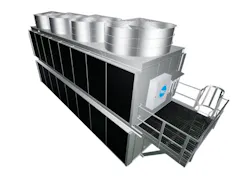
Water characteristics: Relatively high direct water consumption, particularly in hot climates and at facilities operating under sustained high loads.
Energy characteristics: Often favorable because evaporation allows heat rejection closer to the outdoor wet-bulb temperature, reducing fan or compressor demand compared with some fully dry or mechanically refrigerated configurations. Actual performance depends on climate, system design and operating controls.
Best suited for: Locations where water is sufficiently available and permitted, large facilities prioritizing energy efficiency, and chilled-water plants designed for extensive water-side economizer operation.
Dry Coolers and Air-Cooled Heat Rejection
Dry coolers reject heat directly to outdoor air without evaporating water. A water, glycol or other fluid loop passes through coils while fans move outside air across their surfaces. Dry coolers can serve chilled-water plants, facility water systems and direct liquid-cooling loops, particularly when return-water temperatures are high enough to support efficient heat rejection.
Their primary advantage is very low direct water consumption. Their performance, however, is governed by outdoor dry-bulb temperature rather than wet-bulb temperature. During hot conditions, a dry system may require larger coil surfaces, higher fan speeds, elevated coolant temperatures or supplemental mechanical cooling to maintain the required operating envelope.
Dry heat rejection has become increasingly important as communities, regulators and developers scrutinize data center water demand. Its sustainability benefits remain site-specific. The effect of a cooling system depends on local climate, watershed conditions, competing water demands, grid characteristics and the temperature requirements of the equipment being cooled.
Water characteristics: Very low to zero direct cooling-water consumption during normal dry operation.
Energy characteristics: Highly dependent on climate and system design. Fan energy can become significant during hot weather, and some facilities require compressor-assisted backup. Dry systems perform particularly well with warm-water or direct liquid-cooling loops that can tolerate elevated coolant temperatures.
Best suited for: Water-constrained regions, cooler climates, liquid-cooled AI and HPC facilities using higher-temperature loops, and projects where permitting requirements or community priorities favor minimal direct water use.
Hybrid and Adiabatic Systems
Hybrid heat-rejection systems combine dry operation with evaporative assistance. Under mild conditions, they operate as dry coolers. As outdoor temperatures rise, water is evaporated into the incoming air stream or applied near the heat-exchange surface to improve heat rejection.
This operating flexibility can reduce annual water consumption compared with systems that rely continuously on evaporation while limiting the equipment size or peak energy demand associated with an entirely dry design. Operators can prioritize dry operation when conditions permit and introduce water selectively during hotter periods or peak loads.
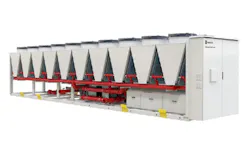
Water characteristics: Lower direct water consumption than systems that rely continuously on cooling towers or evaporative heat rejection, but higher than fully dry systems. Water use is generally concentrated during hot weather and peak-load conditions.
Energy characteristics: Often more efficient than fully dry heat rejection during hot conditions because evaporative assistance improves heat-transfer performance. It may use more fan and pumping energy than a system designed for continuous evaporative operation, depending on climate, controls and equipment design.
Best suited for: Sites seeking to balance water constraints with energy efficiency, regions with seasonal periods of high heat and campuses that value flexibility across changing weather and load conditions.
Rear-Door Heat Exchangers
Rear-door heat exchangers replace or attach to the rear door of an IT rack. Hot server exhaust passes through a liquid-cooled coil, which captures heat before the air returns to the data hall. Passive systems rely primarily on the server fans to move air through the coil, while active rear doors use integrated fans to provide additional airflow.
Rear-door systems are often used as a bridge between room-level air cooling and direct liquid cooling. The servers remain air-cooled internally, but much of their exhaust heat is transferred into a liquid loop at the rack boundary. This can support higher-density racks, reduce the cooling burden on the surrounding room and address localized hot spots without requiring servers designed for direct-to-chip cooling.
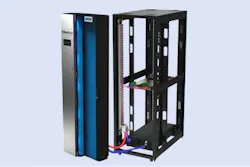
Water characteristics: Depend on the facility loop and final heat-rejection method. Rear-door heat exchangers may connect to chilled water, facility water or a closed water-glycol loop. Direct site water consumption is determined largely by whether the captured heat is ultimately rejected through cooling towers, dry coolers or hybrid equipment.
Energy characteristics: Rear-door systems can reduce the room-level cooling and airflow required for high-density racks or localized hot spots. They add pumping energy and, in active designs, additional fan energy, but overall performance can improve when they prevent the need to overcool an entire data hall.
Best suited for: Retrofitting higher-density racks into air-cooled rooms, colocation environments with mixed customer equipment and facilities seeking an intermediate step before direct-to-chip liquid cooling.
Direct-to-Chip Liquid Cooling
Direct-to-chip cooling uses cold plates mounted on high-power components, particularly CPUs, GPUs and other accelerators. Coolant flows through channels in the cold plate, absorbs heat and carries it to a coolant distribution unit, heat exchanger and facility water system. ASHRAE defines a cold plate as a metal heat exchanger containing internal channels or fins that transfer heat from high-density processors into a circulating liquid.
Most direct-to-chip systems remain hybrid. Cold plates remove a large share of the heat generated by processors and accelerators, while air continues to cool memory, storage, power supplies, network interface cards and other components. The data hall therefore still requires airflow, although the volume may be substantially lower than in a fully air-cooled deployment.
The principal efficiency benefit comes from capturing heat close to the source and transporting it through liquid rather than relying entirely on high-volume airflow. Higher coolant temperatures and wider temperature differentials can also expand opportunities for dry heat rejection, water-side economization and heat reuse. ASHRAE’s AI data center framework identifies warm-water operation, separation of the facility water system from the technology cooling system, water-quality management and effective control of temperature differentials as important considerations for high-density liquid-cooled environments.
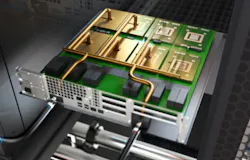
Water characteristics: Direct-to-chip cooling does not inherently consume water at the chip because the technology cooling loop is typically closed. Direct site water use depends primarily on the final heat-rejection method. Systems paired with dry coolers can operate with little or no cooling-water consumption, while systems using cooling towers may still consume significant water through evaporation and blowdown.
Energy characteristics: Generally favorable for high-density racks because liquid transports heat more efficiently than high-volume airflow and can support warmer coolant temperatures. Pumping energy, coolant distribution unit efficiency and remaining server and facility fan loads must still be considered.
Best suited for: AI training clusters, high-performance computing, dense GPU deployments, high-performance cloud infrastructure and new facilities designed for sustained high rack power.
Two-Phase Direct Liquid Cooling
In two-phase direct liquid cooling, a working fluid boils as it absorbs heat from a processor or other component and condenses elsewhere in the system. The phase change can transfer large amounts of heat while maintaining a relatively stable operating temperature.
Two-phase systems may use dielectric or refrigerant-based working fluids and can deliver strong thermal performance at high heat fluxes. They also introduce additional requirements involving fluid selection, pressure management, containment, controls, maintenance procedures and equipment compatibility. Environmental performance depends heavily on the chemistry of the working fluid. Some fluorinated fluids historically used in two-phase applications have high global warming potential or environmental persistence, making leakage, recovery, disposal and long-term regulatory availability important parts of the sustainability assessment.
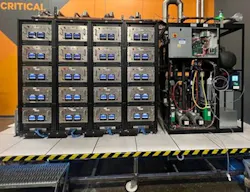
Water characteristics: The IT-side loop can be closed and may use no water. As with other liquid-cooling approaches, direct site water consumption depends primarily on how the captured heat is ultimately rejected.
Energy characteristics: Potentially strong because phase change can transfer large amounts of heat at relatively stable temperatures. Actual system efficiency depends on pumping or circulation requirements, condensation, controls, coolant conditions and the temperature at which heat is rejected.
Best suited for: Specialized high-density systems, HPC and AI equipment with validated vendor support, and facilities prepared to adopt new fluids, maintenance procedures and operating practices.
Immersion Cooling
Immersion cooling submerges servers or components in a dielectric fluid. In single-phase systems, the fluid remains liquid as pumps or natural convection move heat to a heat exchanger. In two-phase systems, the fluid boils at hot components and the resulting vapor condenses on a coil or other condenser surface before returning to the bath.
Immersion provides direct contact between the coolant and the electronics, allowing server fans to be reduced or eliminated and supporting high heat densities with stable component temperatures. Its challenges include hardware compatibility, serviceability, fluid cost and availability, equipment warranties, system weight, fire and environmental considerations, and the need to retrain operations personnel.
Immersion can also change the physical layout and operating model of the data center. Many systems use horizontal tanks rather than conventional upright racks, affecting floor loading, cabling, power distribution, maintenance access and equipment replacement procedures. These differences can be particularly significant in colocation facilities, where standard rack formats and customer-controlled hardware remain central to the business model.
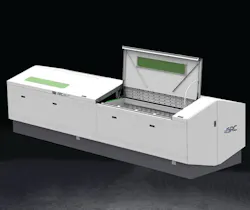
Water characteristics: Immersion tanks do not inherently consume water through evaporation. Direct site water use depends on the final heat-rejection method. Because immersion systems can operate with relatively warm fluid temperatures, they may support efficient dry heat rejection across a wider range of climates.
Energy characteristics: Potentially highly efficient because server fans can be reduced or eliminated and liquid transfers heat effectively. Pumping, fluid circulation, controls and final heat rejection still contribute to total energy use, however. Efficiency depends on the complete system rather than the immersion tank alone.
Best suited for: Purpose-built HPC and AI environments, edge or modular systems where density is a priority, and operators that control hardware selection, warranties and maintenance procedures.
Heat Reuse and Warm-Water Cooling
Heat reuse is not a cooling method in itself, but it can change the environmental and economic value of a cooling system. Liquid loops that capture heat at relatively high temperatures may make that energy useful for district heating, industrial processes, greenhouses, absorption chilling or nearby buildings. Heat carried in low-temperature server exhaust is generally harder to reuse economically because it is diffuse and may require additional energy to raise it to a useful temperature.
Warm-water liquid cooling can improve the opportunity by producing a more concentrated and higher-temperature heat stream while reducing or avoiding compressor-based refrigeration. Berkeley Lab’s warm-water cooling research has explored systems that combine liquid cooling, non-compressor heat rejection and reuse to reduce energy consumption and carbon emissions compared with conventional air-cooled designs.
Successful heat reuse still depends on more than cooling technology. The facility needs a nearby customer with a compatible temperature requirement, dependable year-round demand and infrastructure for transporting the heat. Without those conditions, the cost and energy required to move or upgrade the heat may outweigh its value.
Water characteristics: Heat reuse does not inherently reduce direct cooling-water consumption, although lower overall energy demand may reduce indirect water use elsewhere in the energy system.
Energy characteristics: Potentially favorable at the building, campus or district scale, particularly when captured heat can be delivered to a nearby customer without extensive temperature boosting or distribution infrastructure.
Best suited for: HPC facilities, dense AI campuses, cold climates, district-energy networks, universities and industrial sites with consistent nearby demand for recovered heat.
Choosing Among Cooling Approaches
The cooling decision begins with rack density, workload type, climate, water availability and the capabilities of the existing facility.
For low- to moderate-density IT, air cooling paired with effective containment and economization remains practical and cost-effective. In many older facilities, the first step should not be a wholesale transition to liquid cooling. Sealing floor and rack openings, installing blanking panels, separating supply and return air, safely raising temperature setpoints, tuning controls and measuring conditions at server inlets can recover substantial cooling capacity.
For large cloud and colocation campuses, the design decision may involve chilled-water plants, indirect evaporative systems, dry or hybrid heat rejection and infrastructure capable of supporting both air- and liquid-cooled equipment. Locations with adequate water and favorable wet-bulb conditions may use evaporation to reduce energy demand. Water-constrained sites may favor dry or hybrid systems, even when doing so requires larger equipment or more electricity during peak temperatures.
For AI and HPC environments, direct-to-chip liquid cooling is emerging as the leading high-density approach because it preserves the familiar rack-based operating model while removing a large share of processor and accelerator heat. Rear-door heat exchangers can provide an intermediate option for facilities introducing higher-density racks into existing air-cooled rooms. Immersion cooling offers substantial thermal capability but requires greater changes to hardware, service procedures and the physical data center.
No single efficiency metric can determine the best design. Power Usage Effectiveness, or PUE, does not account for local water conditions. A low-PUE facility that consumes substantial evaporative water may be poorly suited to a stressed watershed. Conversely, a dry-cooled facility with little or no direct water use may consume more electricity during peak heat, potentially shifting water and carbon impacts to the power system.
PUE should therefore be considered alongside Water Usage Effectiveness, source-water impacts, carbon intensity, local water stress, grid constraints, climate and IT utilization. Water performance is inherently local: the same cooling architecture may produce very different environmental outcomes in different regions.
Bottom Line
Air cooling is not obsolete. Evaporative cooling is not inherently irresponsible. Liquid cooling is not automatically waterless, and dry cooling is not automatically the most sustainable choice. Each technology addresses a different part of the cooling chain and introduces tradeoffs elsewhere.
The future of data center cooling is likely to be hybrid: air cooling for conventional IT, direct-to-chip liquid cooling for high-density processors, rear-door or in-row systems for transitional and mixed-density environments, and site-specific heat rejection that balances water, energy and climate conditions.
The most successful facilities will treat cooling not as a mechanical system selected after the IT design is complete, but as a first-order infrastructure constraint alongside power, land, networking, workload requirements and community impact.
Data Center Cooling Glossary
The following definitions reflect common terminology used in Department of Energy guidance, ASHRAE TC 9.9 materials, Berkeley Lab resources and Green Grid efficiency metrics.
Adiabatic Cooling — A cooling process that uses water evaporation to lower the temperature of air before it reaches a heat exchanger or cooling coil. It can reduce compressor demand but consumes water when evaporative assistance is active.
Air-Cooled Data Center — A facility in which heat is removed from IT equipment primarily by moving conditioned air through servers, even if that heat is later transferred to water or refrigerant elsewhere in the cooling system.
Air Handler — Equipment that moves, filters and conditions air before delivering it to a data hall or other controlled space.
Air-Side Economizer — A system that uses suitable outdoor air, either directly or mixed with return air, to reduce or avoid compressor-based refrigeration.
Airflow Management — The practice of delivering conditioned air where it is needed while preventing hot exhaust air from recirculating into server inlets.
Approach Temperature — The temperature difference between the two fluids leaving a heat exchanger at their closest thermal point. In a cooling tower, it commonly refers to the difference between leaving-water temperature and entering-air wet-bulb temperature. A smaller approach generally indicates more effective heat transfer.
ASHRAE TC 9.9 — The ASHRAE technical committee focused on mission-critical facilities, data centers, technology spaces and electronic equipment. It is a major source of environmental and thermal guidance for data center operators and equipment manufacturers.
Blanking Panel — A panel installed in unused rack spaces to prevent hot exhaust air from recirculating to server intakes.
British Thermal Unit, or BTU — A unit of heat energy commonly used to express the heating or cooling capacity of equipment.
Cabinet — An enclosure, also commonly called a rack, that houses servers, networking equipment, power-distribution hardware and, in some cases, cooling components.
Chilled-Water System — A cooling system that circulates mechanically or naturally cooled water through coils or heat exchangers to remove heat from a data center.
Chiller — Mechanical equipment that uses a refrigeration cycle to lower the temperature of water or another fluid.
Closed-Loop Cooling — A system in which water or another coolant is recirculated through a sealed or substantially sealed circuit rather than continuously consumed.
Cold Aisle — The aisle at the intake side of server racks where conditioned supply air is delivered.
Cold-Aisle Containment — A physical enclosure that isolates the cold aisle and prevents conditioned supply air from mixing with hot server exhaust.
Cold Plate — A metal heat exchanger mounted directly on a processor, accelerator or other high-heat component. Liquid flows through internal channels and carries heat away from the device.
Computer Room Air Conditioner, or CRAC — A data center cooling unit that uses a direct-expansion refrigerant cycle to cool and circulate air.
Computer Room Air Handler, or CRAH — A data center cooling unit that uses chilled-water coils and fans to cool and circulate air.
Condenser — A component that rejects heat from a refrigeration system and converts refrigerant vapor back into liquid.
Containment — The physical separation of hot and cold air streams to reduce mixing, stabilize inlet temperatures and improve cooling efficiency.
Coolant Distribution Unit, or CDU — Equipment that controls, pumps and monitors coolant for liquid-cooled IT systems. A CDU commonly separates the facility water system from the technology cooling system.
Cooling Capacity — The amount of heat a cooling system can remove, typically expressed in kilowatts, tons of cooling or BTUs per hour.
Cooling Coil — A heat exchanger inside an air handler, CRAC or CRAH that transfers heat from passing air into chilled water or refrigerant.
Cooling Tower — Outdoor heat-rejection equipment that removes heat from circulating water primarily through evaporation.
Delta T, or ΔT — The temperature difference between two points in a cooling system, such as supply and return air or supply and return water. A larger useful ΔT allows more heat to be transported at a given airflow or fluid-flow rate.
Dew Point — The temperature at which moisture in the air begins to condense. Dew point must be controlled to prevent condensation on electronics or cooling equipment.
Dielectric Fluid — An electrically nonconductive fluid used in certain direct liquid-cooling and immersion-cooling systems.
Direct Evaporative Cooling — A process that cools supply air by evaporating water directly into the air stream.
Direct Liquid Cooling, or DLC — A broad category of systems that bring liquid close to or directly into contact with heat-generating IT components.
Direct-to-Chip Cooling — A liquid-cooling method in which cold plates mounted on processors or accelerators remove heat close to its source.
Dry Cooler — Outdoor equipment that transfers heat from a fluid loop to ambient air without evaporating water.
Economizer — A system that uses favorable outdoor conditions to reduce or avoid compressor-based mechanical cooling. Economizers may be air-side or water-side.
Evaporative Cooling — Cooling that uses water evaporation to absorb heat. It can reduce energy demand but increases direct water consumption.
Facility Water System, or FWS — The building-side water loop that serves data center cooling equipment. In liquid-cooled facilities, it is commonly separated from the IT-side technology cooling system by a CDU or heat exchanger.
Fan Power — The electricity consumed by fans that move air through servers, racks, air handlers, cooling towers, dry coolers or other cooling equipment.
Fan Wall — A bank of modular fans used to move large volumes of air through a data hall or cooling system.
Free Cooling — An industry term for using favorable outdoor air or water conditions to reduce or avoid compressor-based refrigeration. Fans, pumps and controls still consume energy, so the cooling is not literally free.
Glycol — A fluid commonly mixed with water to provide freeze protection in outdoor or exposed cooling loops.
Heat Exchanger — A device that transfers heat between two air, water, refrigerant or coolant streams without mixing them.
Heat Load — The amount of heat that must be removed from a room, rack, component or cooling system. Nearly all electrical power consumed by IT equipment ultimately becomes heat.
Heat Rejection — The process of releasing captured data center heat to outdoor air, water or another useful destination.
Heat Reuse — The recovery of data center waste heat for another purpose, such as district heating, industrial processes, greenhouses or nearby buildings.
High-Density Rack — A rack that concentrates substantial IT power and heat in a limited footprint. AI servers and GPU systems commonly create high-density cooling requirements.
Hot Aisle — The aisle at the exhaust side of server racks where heated air leaves the equipment.
Hot-Aisle Containment — A design that encloses the hot aisle and directs server exhaust back to cooling equipment without allowing it to mix with conditioned supply air.
Hot Spot — A localized area where temperatures exceed the desired operating range because of high load, inadequate airflow or recirculated exhaust.
Humidity Control — The management of moisture and dew point within the environmental limits specified for IT equipment. Excessive moisture can contribute to condensation or corrosion, while unsuitable low-moisture conditions may increase electrostatic risk in some environments.
Hybrid Cooling — A cooling architecture that combines two or more methods, such as room-level air cooling and direct-to-chip liquid cooling or dry heat rejection with evaporative assistance.
Immersion Cooling — A liquid-cooling method in which servers or electronic components are submerged in an electrically nonconductive dielectric fluid.
Indirect Evaporative Cooling — A process that uses evaporation in a separate air stream or fluid circuit to cool data center air through a heat exchanger without adding moisture directly to the data hall.
Inlet Temperature — The temperature of air or liquid entering IT equipment. Server inlet temperature is a critical measure of whether equipment is operating within its approved thermal envelope.
In-Row Cooling — Cooling equipment installed between or alongside server racks to shorten the distance between the cooling source and the heat load.
Load Density — The concentration of IT power and heat within a rack, row, room or facility, commonly expressed in kilowatts per rack or watts per square foot.
Makeup Water — Water added to replace losses from evaporation, blowdown, drift, leaks or maintenance activities.
Mechanical Cooling — Compressor-based refrigeration provided by equipment such as chillers or direct-expansion air-conditioning units.
Negative Pressure — A condition in which air pressure within a space is lower than in an adjacent area, causing air to flow into that space. Uncontrolled pressure differences can disrupt intended data center airflow patterns.
N+1 Redundancy — A reliability configuration that provides one additional component beyond the number required to support the design load. If four cooling units are required, an N+1 system provides five.
PDU Airflow Obstruction — A condition in which rack power-distribution units, cables or related hardware interfere with airflow through or behind IT equipment.
Plenum — An enclosed or open space used to distribute supply or return air, such as the area beneath a raised floor or above a suspended ceiling.
Power Usage Effectiveness, or PUE — The ratio of total data center energy consumption to the energy consumed by IT equipment. A value closer to 1.0 indicates that a larger share of facility energy is reaching the IT load.
Pump Power — The electricity used to circulate water or coolant through piping, CDUs, heat exchangers, cold plates, chillers or heat-rejection equipment.
Rack-Level Cooling — Cooling equipment or heat exchangers applied directly at the rack rather than solely at the room level.
Raised Floor — An elevated floor system with an underfloor space historically used to distribute conditioned air, power and cabling.
Recirculation — The unintended movement of hot server exhaust back into equipment intakes, reducing cooling efficiency and potentially creating hot spots.
Refrigerant — A working fluid used in vapor-compression or pumped-refrigerant systems to absorb, transport and reject heat.
Return Air — Heated air leaving IT equipment or a conditioned space and returning to cooling units.
Room-Based Cooling — A conventional architecture in which cooling equipment conditions the overall data hall rather than an individual rack or component.
Sensible Cooling — Cooling that lowers air temperature without removing moisture from the air.
Setpoint — The target temperature, humidity, pressure, flow or other operating condition programmed into a cooling control system.
Single-Phase Liquid Cooling — A liquid-cooling method in which the coolant remains liquid as it absorbs and transports heat.
Supply Air — Conditioned air delivered to the intake side of IT equipment.
Thermal Envelope — The allowable range of temperature, humidity, dew point and related environmental conditions specified for IT equipment.
Thermal Management — The overall discipline of controlling heat across IT components, racks, data halls and facility cooling systems.
Thermal Ride-Through — The length of time a cooling system can maintain acceptable equipment temperatures during a power interruption, pump failure or transition between operating modes. Ride-through depends on system design, fluid volume, airflow, thermal mass, controls and the location of the failure.
Ton of Cooling — A traditional unit of cooling capacity equal to 12,000 BTUs per hour, or approximately 3.52 kilowatts.
Two-Phase Liquid Cooling — A liquid-cooling method in which the working fluid changes phase, typically from liquid to vapor, as it absorbs heat and then condenses back into liquid.
Variable-Speed Fan — A fan that adjusts its rotational speed according to cooling demand, reducing energy use when full airflow is unnecessary.
Variable-Speed Pump — A pump that adjusts fluid flow according to cooling demand, reducing energy use when full flow is unnecessary.
Water-Side Economizer — A system that uses favorable outdoor conditions and heat exchangers to cool a facility water loop with reduced or no compressor operation.
Water Usage Effectiveness, or WUE — A metric that compares annual data center site water use with the energy consumed by IT equipment, generally expressed in liters per kilowatt-hour.
Wet-Bulb Temperature — A temperature measurement that reflects both heat and atmospheric moisture. It is an important indicator of evaporative-cooling and cooling-tower performance.
White Space — The portion of a data center in which IT racks and equipment are installed, as distinct from electrical rooms, mechanical spaces, offices and other support areas.
At Data Center Frontier, we talk the industry talk and walk the industry walk. In that spirit, DCF Staff members may occasionally use AI tools to assist with content.
Keep pace with the fast-moving world of data centers and cloud computing by connecting with Data Center Frontier on LinkedIn, following us on X/Twitter and Facebook, as well as on BlueSky, and signing up for our weekly newsletters using the form below.
About the Author
 David Chernicoff
David Chernicoff
Voices of the Industry
 Adobe Stock image courtesy of Hitachi Energy