Why NERC Now Sees AI Data Centers as Grid Actors
Key Highlights
- Large computational facilities are now considered dynamic grid actors whose behavior during faults can significantly impact system reliability, necessitating advanced modeling and operational strategies.
- NERC’s seven Essential Actions include detailed load modeling, system studies, commissioning procedures, ride-through analysis, high-resolution fault recording, and operational communication pathways to manage these new risks.
- The alert signals a move towards formal standards for large loads, with potential registration requirements for facilities over 20 MW, emphasizing transparency, predictability, and grid integration for data centers and AI campuses.
- Utilities will need to develop more sophisticated protection, control, and operational protocols to handle the rapid load changes and contingency responses of large computational facilities.
- This initiative underscores a broader policy shift, integrating large data centers into the reliability framework, transforming traditional load management into a complex, behavior-focused reliability challenge.
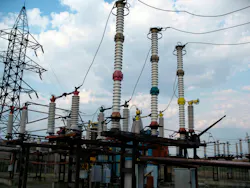
The North American Electric Reliability Corporation’s May 4 Level 3 Alert goes beyond a procedural warning from the grid reliability establishment. It signals that the rapid growth of AI training campuses, hyperscale data centers, cryptocurrency mining sites, and other large computational loads has pushed these facilities into a new operational category.
They are no longer viewed simply large customers to be served. They are becoming dynamic grid actors whose behavior during faults, voltage disturbances, ramping events, and emergency conditions can materially affect bulk power system reliability.
The alert, titled “Computational Load Modeling, Studies, Instrumentation, Commissioning, Operations, Protection, and Control,” directs NERC-registered transmission planners, planning coordinators, transmission owners, transmission operators, balancing authorities, and reliability coordinators to acknowledge the alert by May 11, 2026, and report by August 3, 2026, on their status implementing seven “Essential Actions.”
The alert applies to reliability risks posed by existing and new computational loads interacting with the bulk power system, including IT workloads colocated with generation. NERC cites AI training, cryptocurrency mining, and traditional data center operations among the examples. It is important to note that these are voluntary guidelines, unlike enforceable directives issued through entities such as FERC.
The specific scope of the alert is notable and significant. NERC is not simply stating the obvious: that data centers consume enormous amounts of power. The deeper concern is that large computational facilities can change load rapidly, transfer to backup systems, ride through disturbances (or fail to ride through them) in ways existing transmission planning tools do not adequately model.
In other words, the issue is no longer simply megawatts. It is how these facilities behave during disturbances, and how that behavior affects both grid operations and long-term system planning.
Why Level 3 Matters
NERC alerts come in three levels. A Level 3 “Essential Action” alert is the most serious form, used when NERC determines that specific actions are essential for certain owners, operators, or users of the bulk power system to preserve reliable operation.
The May 4 alert is not itself a mandatory Reliability Standard and does not create direct penalty exposure for failure to implement the listed actions. But registered entities must acknowledge the alert and report their activities back to NERC under Rule 810, and NERC will aggregate U.S. responses for FERC.
That distinction is important, but it should not be mistaken for a lack of concern. NERC is using the alert as a bridge between today’s reliability gaps and tomorrow’s formal standards.
In a March 2026 filing to FERC, NERC said it planned to submit revised registry criteria and Reliability Standards by December 31, 2026, while issuing a Level 3 Alert in early May to drive action before the standards process is complete. NERC also stated that grid events in Virginia and Texas showed large data center loads responding to, and in some cases amplifying, grid instability.
In a March 2026 letter to FERC commissioners, James B. Robb, president and CEO of North American Electric Reliability Corporation, made the organization’s position explicit:
We are entering a period of load growth unprecedented in recent memory, driven by data centers that support our daily lives and advance North America’s leadership in the deployment of artificial intelligence. The North American Electric Reliability Corporation (NERC) recognizes the urgency we are facing. We need significant investment in infrastructure and energy resources to meet our transforming resource and energy needs. At the same time, we must stay laser-focused on reliability, informed by NERC’s analysis of grid events in Virginia and Texas, where large data center loads have responded to, and amplified, grid instability. We understand we must quickly secure the reliable contribution of these loads to the future system, especially given the lessons learned related to the integration of inverter-based resources. As a result, NERC is currently processing many tasks in parallel to address large load integration, rather than in sequence as we normally would. We believe this is the most appropriate way to enable data center growth and reliable integration with the grid.
The Incident Behind the Alert
The result is a two-track reliability response: immediate operational and planning actions now, with formal registration requirements and reliability standards to follow later.
The most important precedent behind the alert is NERC’s review of a major voltage-sensitive load reduction event involving data centers. During a 230 kV transmission line fault, a local area experienced approximately 1,500 MW of load reduction consisting entirely of data center-type load.
NERC found that the load was not disconnected by utility equipment. Instead, it dropped on the customer side through data center protection and control systems. Frequency and voltage rose after the load loss; voltage reached 1.07 per unit, prompting operators to remove shunt capacitor banks to return conditions to normal.
That event reframes how planners think about data center reliability. Traditional outage analysis asks whether the grid can continue delivering power to a facility. NERC’s alert raises a more complicated question: what happens to the grid when a cluster of large computational loads reacts to the same disturbance in the same way at the same time?
In its 2025 State of Reliability materials, NERC put the issue bluntly: a simultaneous 1,500 MW data center disconnection is comparable to a large nuclear plant suddenly coming online, creating a supply-demand imbalance because there is abruptly too much generation on the system. NERC also noted that ERCOT had reported similar, smaller events in the 100 MW to 400 MW range.
The analogy is useful because it reverses the traditional data center reliability narrative. The problem is not simply that data centers may strain the grid when they arrive. It is that, once connected, they may behave less like passive customers and more like bulk-system resources whose collective response can materially affect grid stability.
In that sense, the traditional equation of power delivery is being turned on its head.
The Seven Essential Actions
NERC’s Level 3 Alert centers on seven Essential Actions. Together, they amount to a new reliability playbook for integrating large computational loads into the bulk power system.
1. Modeling. Transmission planners and planning coordinators are directed to develop detailed modeling data requirements for computational loads and distribute them to transmission owners. NERC recommends using the PERC1 — Power Electronic Reconnecting and Ceasing — model, or something with equivalent or greater capability, as a baseline.
The alert specifically calls for modeling IT load separately from non-IT load, such as cooling systems and motor loads. It also calls for detailed data on electrical size, power factor, dynamic characteristics, UPS settings, IT-versus-non-IT composition, expected ramp rates, protective devices, onsite generation, and facility use, including whether a site supports AI training, inference, storage, traditional compute, or cryptocurrency mining.
This represents a major change for utilities and developers. A 500 MW AI campus can no longer be treated as a single static load block. Its UPS topology, backup generation configuration, cooling architecture, control logic, reconnection timing, and workload profile all become reliability-relevant variables.
2. Study the system differently. NERC calls for evaluating operating limits or envelopes for additional load before voltage or frequency instability occurs, identifying vulnerable areas and potential mitigations, and identifying credible contingencies in which aggregate computational load reductions — including customer-initiated reductions — could violate planning criteria.
Customer-initiated reductions are often viewed commercially as demand response or load management. NERC is treating them instead as potential contingency drivers when they occur at scale or in response to grid disturbances.
3. Define what constitutes a “qualified change.” Growth in computational load, changes to electrical supply equipment or end-use configurations, and repurposing facilities from one workload type to another — such as converting data warehousing or crypto-mining sites into AI training facilities — may all trigger new reliability studies.
That means even relatively straightforward retrofits can become grid-relevant events. A shell originally designed for one class of workload may later be refit with denser GPU clusters, different UPS behavior, different cooling infrastructure, and a more volatile ramp profile. NERC is making clear that such changes cannot remain invisible to grid planners.
4. Commissioning. Transmission owners are directed to establish commissioning processes for computational loads, including as-built model review, model verification and validation, coordination with nearby systems, full-load and no-load testing where possible, testing of applicable electrical control modes, communication coordination, and pre-energization checklists.
NERC also recommends that testing include, where possible, 10% increases and decreases from nominal voltage with the facility’s computational equipment installed and operational.
This moves the concern from planning theory into field practice. The point is not simply to approve a load request. It is to verify how a facility actually behaves before it becomes part of the operating grid.
5. Address ride-through and non-consequential load loss. NERC says planners should study and implement corrective actions with transmission owners to ensure there is no non-consequential loss of firm computational load resulting from normally cleared non-bus faults. It also directs planners to obtain facility-level relaying and protection settings and use them to evaluate computational load response during normally cleared faults.
This is the core reliability concern. Transmission faults occur routinely, and the system is designed around the assumption that normally cleared faults should not produce broad, unnecessary load loss. But if customer-side data center controls interpret short voltage disturbances as triggers to transfer to backup systems or disconnect entirely, the grid may experience sudden load changes that were never planned as contingencies.
6. Dynamic fault recording. Transmission owners are encouraged to install and use devices capable of capturing computational load electrical performance during system disturbances, including both continuous lower-resolution recording and higher-resolution trigger-based recording.
The resulting data should be shared with planners, reliability coordinators, Regional Entities, and the Electric Reliability Organization for event and root-cause analysis.
Utilities cannot model what they cannot measure. The industry has far more experience recording generator behavior and transmission events than capturing high-resolution data center load response. NERC is attempting to close that visibility gap. And as entities such as PJM have previously indicated, visibility during planning and operations is becoming increasingly critical.
7. Establish operational communication pathways. NERC wants voice, SCADA, or other communication pathways that allow operators to issue instructions or orders intended to prevent bulk electric system emergencies.
That requirement may prove one of the alert’s most consequential implications. It suggests that large computational loads should be operationally reachable in ways that more closely resemble major grid assets than traditional retail customers behind the meter.
What This Means for Data Center Developers
For data center developers, the alert foreshadows a more demanding interconnection environment. Future projects will likely face deeper requests for equipment settings, UPS and switchgear behavior, dynamic models, commissioning test plans, SCADA points, operating protocols, and workload-change disclosures.
That will complicate development timelines, but it may also help the industry avoid a worse outcome: ad hoc utility requirements, inconsistent regional practices, and emergency restrictions imposed after a major reliability event.
NERC’s approach suggests that, for data center growth to remain both operationally and politically viable, large computational loads must become more transparent, predictable, and controllable from the grid’s perspective.
NERC specifically includes computational loads interconnected with colocated generation and requests information on onsite generation, batteries, and cases in which those assets operate in parallel with the bulk power system.
That means “bring your own power” strategies will not automatically sidestep bulk-system reliability scrutiny. In some cases, they may increase it.
What This Means for Utilities and Grid Operators
For utilities, the Level 3 Alert shifts computational load from a load-forecasting problem into a protection, controls, and operations problem.
The most sophisticated utilities will no longer simply ask, “How many megawatts does the customer need?” They will ask much more detailed operational questions:
“How does this facility respond to a 60-millisecond voltage depression? To repeated reclosing events? To underfrequency, overvoltage, operator instruction, workload ramping, backup power transfer, or a broader grid emergency?”
That creates new demands on transmission planning, distribution planning, customer engineering, protection engineering, and system operations teams.
It also raises difficult commercial questions. Who pays for new fault recorders, SCADA integration, studies, modeling tools, or facility-side ride-through improvements? How much proprietary operational data must data center operators share? And how will utilities protect confidential customer information while still meeting NERC reporting expectations?
NERC anticipated some of that sensitivity. The alert states that confidential information and Critical Energy Infrastructure Information will receive appropriate protection in NERC reporting to FERC and in any resulting public reports.
Still, the trust challenge will be real. Data center operators closely guard infrastructure designs and operational behavior. Grid operators, meanwhile, need enough visibility to model and manage system risk.
The Bigger Policy Signal
The Level 3 Alert is not happening in isolation. NERC’s Large Loads Action Plan, Project 2026-02 on computational loads, proposed registry changes, and upcoming reliability standards all point in the same direction: large computational loads are moving toward direct inclusion within the NERC reliability framework.
NERC has said it is developing a “Computational Load Entity” registration concept that would currently apply to loads of 20 MW or greater, connected at 60 kV, with more than 1 MW of IT load.
If that threshold seems low compared with the scale of modern AI campuses, it is because NERC is not focused solely on gigawatt-scale developments. The organization is also concerned about clusters of mid-sized facilities whose aggregate behavior can become a bulk-system event.
For the data center industry, this marks the beginning of a new compact with the grid. The sector has long optimized around uptime, redundancy, and customer protection. NERC is now making clear that customer-side protection can no longer be engineered in isolation from broader system reliability.
From Load Growth to Load Behavior
The Level 3 Alert ultimately asks a fundamental question: once these facilities are connected, can the grid rely on them to behave in ways that support system stability?
The AI factory era is not simply increasing electrical demand. It is changing the control assumptions, protection strategies, and operational dynamics of the grid itself.
As computational loads scale, data centers are becoming increasingly important to bulk-system reliability planning. For developers, utilities, and regulators alike, the new rule is simple: megawatts get you into the queue; behavior gets you safely onto the grid.
At Data Center Frontier, we talk the industry talk and walk the industry walk. In that spirit, DCF Staff members may occasionally use AI tools to assist with content. Elements of this article were created with help from OpenAI's GPT5.
Keep pace with the fast-moving world of data centers and cloud computing by connecting with Data Center Frontier on LinkedIn, following us on X/Twitter and Facebook, as well as on BlueSky, and signing up for our weekly newsletters using the form below.
About the Author
 David Chernicoff
David Chernicoff
Related
Voices of the Industry
 Source: SNEHIT PHOTO/Shutterstock.com
 Source: Matthew G Eddy/Shutterstock.com