Data Center Private Power: Who Regulates Behind-the-Meter Generation?
Key Highlights
-
Behind-the-meter generation does not necessarily mean going off grid: most privately powered data centers will still depend on public transmission, standby capacity, emergency imports or other reliability services.
-
As utility timelines stretch and large-load tariffs become more demanding, data center operators are increasingly evaluating dedicated generation as a way to gain greater control over capacity, deployment schedules and expansion.
-
Private power shifts more of the reliability stack onto the data center itself, including fuel security, operating reserves, black start, voltage and frequency control, maintenance and response to sudden load changes.
-
FERC, PJM and state utility regulators are now defining how co-located and self-supplied data centers should be treated, including the critical question of whether grid obligations should reflect a facility’s normal net demand or the larger load the system may need to support during an outage.
-
Cases involving Amazon–Talen, Ohio and Michigan point toward an emerging hybrid-grid model in which data centers can supply more of their own power while remaining financially and operationally accountable for the public system they continue to rely on.
For years, data center power followed a familiar development model: secure utility capacity, negotiate the interconnection, build the substation, and bring the facility online. That model is becoming harder to rely on. As utility timelines lengthen, available capacity tightens, and regulators push large customers to shoulder more of the infrastructure costs created by their demand, data center operators are increasingly pursuing power they can build, finance, control, or contract for themselves.
The technology and configurations vary. A campus may pair its load with dedicated gas generation, batteries, fuel cells, renewables, or a co-located power plant. It may operate behind the meter, contract with an independent generator, or design an electrical system capable of islanding during grid disruptions. The objective is largely the same: gain greater control over capacity and deployment timelines than the conventional utility-service process can currently provide.
But private generation does not necessarily create a private electricity system. Even a data center that supplies most or all of its own primary power may still depend on the public grid for transmission access, emergency imports, reserve capacity, voltage and frequency support, black-start capability, surplus-power exports, or future expansion. Those connections carry costs and obligations that do not disappear simply because the electrons normally feeding the servers originate on or beside the campus.
That is moving the regulatory debate beyond whether a utility can serve a new data center load. The emerging question is what happens when a large customer supplies much of its own electricity while retaining access to the wider system. Utilities and grid operators contend that customers relying on public-system reliability must pay an appropriate share of the infrastructure and standby capability required to support them. Data center operators, meanwhile, need to know whether investments in dedicated generation will be treated as genuine self-supply or remain subject to many of the costs and constraints of conventional utility service.
Hyperscale AI has accelerated the issue because of the size and speed of its power requirements, but the implications extend across the data center industry. Any operator facing constrained utility capacity, uncertain construction schedules, new large-load tariffs, or the need for greater energy resilience now confronts some version of the same question: When a data center supplies its own power but remains connected to the grid, what does it owe the grid — and who gets to decide?
The answer crosses multiple jurisdictions. State utility commissions govern retail service and utility territories; regional transmission organizations and independent system operators oversee interconnection and grid reliability; the Federal Energy Regulatory Commission regulates interstate transmission and wholesale power markets; and state and local agencies govern the permitting and operation of the generation assets themselves. The rules emerging from those overlapping authorities will help determine whether behind-the-meter power becomes a practical new path to data center capacity — or simply another form of grid-connected development carrying a different set of costs, responsibilities, and constraints.
GPC Infrastructure’s Connor Stone discusses how grid constraints are pushing data center developers toward behind-the-meter generation — and how those assets could ultimately interact with the wider electric system.
The Break From the Utility Model
The electric grid evolved from localized generating systems into an interconnected network designed to share reserves, balance supply and demand, and spread the cost of long-lived infrastructure across a broad customer base. That evolution also established the utility model under which most customers — including large industrial users — buy power from a regulated provider responsible for planning and delivering the infrastructure needed to serve them.
Data centers largely developed within that framework. A developer selected a site, the utility studied the load, the parties negotiated service and interconnection, and the utility built or upgraded the substations, transmission and distribution infrastructure required to bring the facility online.
That model becomes more difficult when a single project requires hundreds of megawatts, expects to ramp quickly, and cannot wait years for transmission planning, permitting, equipment procurement and construction. Increasingly, operators see a business case for controlling more of their own energy supply — whether to improve resilience, accelerate delivery, stabilize costs or create a clearer path for future expansion.
But the ability to build generation does not necessarily mean the legal or commercial freedom to use it in any configuration. A data center may be permitted to own generation serving its own load while facing different rules if a third party owns the plant and sells the electricity. A campus may receive power directly from a nearby generator while still remaining subject to utility tariffs, transmission rules, standby charges and reliability obligations because it retains a connection to the broader system.
That distinction matters because “private power” can describe several very different arrangements.
Traditional utility service remains the familiar model: the data center purchases electricity from the local utility, which plans and provides the infrastructure required to serve the load. The emerging question is how much of the incremental generation, transmission, substations and long-term capacity required by exceptionally large customers should be assigned directly to them.
Grid-connected dedicated supply uses generation developed specifically for a project, but the electricity still reaches the campus through utility or transmission infrastructure. That raises questions about whether the arrangement remains a private supply contract or constitutes retail electric service inside an incumbent utility’s territory.
Behind-the-meter self-supply allows on-site or adjacent generation to serve the facility directly, reducing or potentially eliminating routine purchases of utility-delivered electricity. The central issue then becomes which grid services the project retains and what it should pay for them.
Co-located generation and load places the data center beside an existing or newly developed generating asset, potentially allowing electricity to flow directly between plant and campus. Physical proximity, however, does not necessarily eliminate transmission charges, interconnection requirements or regional reliability obligations.
Islandable operation keeps the facility connected to the grid while allowing it to separate and operate independently during outages, constraints or other defined conditions. That capability introduces its own requirements for reserves, protection systems, fuel, black start and safe disconnection and reconnection.
Fully islanded operation eliminates the grid connection altogether. In return, the operator assumes responsibility for providing continuous generation, reserve margin, fuel security, maintenance, restoration capability and expansion capacity at the reliability level its customers require.
The Congressional Research Service similarly distinguishes self-supply from both conventional utility service and an off-site power-purchase agreement delivered across the grid. In a self-supply arrangement, electricity reaches the data center behind the meter from generation owned by the customer or from a third party serving the load directly. That distinction can materially affect rate design, utility regulation, grid planning and responsibility for infrastructure costs.
In practice, very few projects described as “off grid” are independent of the public system in every meaningful sense. A facility may supply most of its own electricity while retaining a transmission interconnection, emergency import capability, export rights, voltage support, restoration assistance, standby service or a future path to greater grid capacity.
The degree of that dependence changes both the regulatory and engineering equation. A behind-the-meter campus may make only modest routine withdrawals but rely on the grid during a generator outage. A co-located facility may receive power directly from a neighboring plant while remaining embedded in a regional reliability system. An islandable campus can separate temporarily but use utility service during normal operation. Only a fully islanded facility assumes every function the interconnected system would otherwise provide.
Data center power is therefore no longer a binary choice between utility service and private generation. It is becoming a continuum of ownership, control and dependence — with each configuration raising a different question about who builds the infrastructure, who operates it, who bears the risk when it fails, and who pays for the public system that remains available in the background.
Stella Power’s Nash Whitney examines why ERCOT’s enormous large-load pipeline is driving Texas data center developers toward behind-the-meter generation and greater control over their power supply.
Why Operators Want Private Power
Data center operators are not pursuing dedicated generation simply to bypass the utility. They are responding to a power-development process that has become slower, more expensive, and more conditional for very large loads.
Interconnection schedules can extend well beyond the commercial timeline for bringing new capacity online. A project may secure land, financing, customers, equipment and construction contractors while still lacking a firm date for utility service. At the same time, operators can face substantial exposure to the cost of new substations, transmission upgrades, distribution infrastructure, generation procurement and other system investments required to support the site.
Utilities and regulators are also imposing more explicit conditions intended to prevent the cost of large-load growth from shifting to other customers. New tariffs and service agreements increasingly address resource adequacy, capacity commitments, minimum bills, curtailment provisions, financial security and infrastructure costs. The result is a more demanding development equation: data center operators may be required to demonstrate that a project is commercially viable, that its projected load will materialize on schedule, and that utility investments made on its behalf will not become stranded or underused if the project changes course.
Dedicated generation can reduce some of that uncertainty by giving the operator a defined source of capacity and greater control over the timing of deployment and expansion. It may also allow an initial phase of a campus to move forward while longer-term utility interconnection or grid reinforcement continues in parallel.
That does not necessarily make private power cheaper, nor does it eliminate regulatory or infrastructure risk. It changes where those risks reside. Rather than depending primarily on the utility to procure capacity and deliver service, the operator assumes more responsibility for generation, fuel, maintenance, reliability, financing and the performance of the power system itself.
Texas offers one example of how the broader large-load framework is changing. ERCOT has moved toward batch processing for large-load interconnection studies, while state policy has placed greater emphasis on site control, interconnection standards, cost sharing and curtailment. Officials have also scrutinized projects in the queue as they seek to distinguish executable development from speculative demand and avoid committing system resources to loads that may not materialize as proposed.
Texas is not a universal model, but it reflects a broader shift in how utilities, grid operators and regulators are evaluating data center demand. Large-load policy is moving away from the assumption that utilities will simply accommodate new projects and toward a framework that tests commercial readiness, assigns costs more explicitly, and requires developers to show how their power strategy will function before major capacity is committed.
National Laboratory of the Rockies researchers demonstrate how batteries, fuel cells and firm generation can work together to manage the rapid load swings associated with data center computing.
Private Power Creates a New Reliability Stack
A conventional grid-connected data center divides responsibility across several layers. The bulk power system balances generation and demand across a wide network. The utility delivers electricity to the site. Inside the facility, UPS systems, standby generators, switchgear and distribution architecture protect critical loads through disturbances and outages. The operator designs redundancy around established assumptions about utility service, restoration and access to grid-scale reserves.
Private generation changes that division of labor.
A data center supplying a significant share of its own electricity assumes functions traditionally distributed among utilities, grid operators, generation owners, fuel suppliers and the facility's critical-power team. Its power system may need to provide continuous generation, secure fuel, maintain operating reserves, regulate voltage and frequency, coordinate protection systems, support black start, schedule maintenance and manage equipment failures — all while serving a load that may be extraordinarily large, sensitive to power-quality events and capable of changing rapidly.
The engineering challenge therefore goes well beyond installing enough generation to match the campus's nameplate demand. Private power has to be designed as a complete reliability system.
That means carrying enough reserve to withstand the loss of a generating unit, maintenance outage, fuel interruption or controls failure. The system must be able to restore the campus after a major outage and transfer among generation sources without disrupting sensitive computing equipment. Operators must also determine whether generating assets will run continuously, serve primarily as backup or peaking resources, or operate in coordination with utility power. Each model changes fuel requirements, maintenance schedules, operating costs, emissions obligations and the amount of redundancy the site must maintain.
Those questions become especially important for projects described as "off grid." A truly islanded facility cannot assume that the public system will absorb a generator trip, provide emergency imports or assist with restoration. An islandable campus must be able to separate from and reconnect to the grid safely. A grid-connected site with dedicated generation may retain access to utility backup or transmission service, but then the project must establish which reliability services it continues to receive and what those services should cost.
The characteristics of the computing load matter as well. A facility serving cloud, colocation, enterprise or other high-availability workloads may have little flexibility to reduce demand when its private power system is under stress. A campus capable of deferring or shifting selected workloads has more operating options. In practice, the value of that flexibility depends on customer commitments, workload characteristics and the amount of backup or co-located generation available when conditions deteriorate.
Recent operating experience also illustrates the difference between building generation capacity and operating it continuously at data center scale. As The Wall Street Journal reported, hyperscalers are pursuing off-grid and partially grid-connected systems as pressure mounts to bring computing capacity online faster. The Journal identified only a small number of U.S. data centers operating under those models and reported equipment and control problems at several early projects, including turbine failures, broken engine components and one critical-power incident that required roughly a day of diesel backup.
Those incidents do not demonstrate that on-site generation is inherently unreliable. Data centers have long operated sophisticated backup-power systems, while experienced generation operators run large power fleets under demanding conditions. They do, however, highlight the difference between producing enough megawatts and operating an integrated power system under continuous, high-consequence conditions.
When a data center supplies its own bulk power, fuel security, mechanical durability, controls coordination, operating reserves, maintenance windows, spare-parts availability and response to abrupt load changes become part of the campus's core availability strategy. They are no longer responsibilities that can simply be assumed to exist on the other side of the meter.
Harvard Electricity Law Initiative Director Ari Peskoe examines how data center growth is testing traditional utility regulation, cost allocation and the boundaries of behind-the-meter power.
The Legal Fault-Line
Behind-the-meter generation places data center power projects within several overlapping regulatory systems. State utility law governs retail electric service and exclusive service territories. Federal rules govern interstate transmission, wholesale markets and regional reliability. State and local agencies oversee permitting, emissions, fuel infrastructure and land use. Together, those frameworks determine not only whether a data center can build dedicated generation, but also how that power can be owned, sold and connected to the wider grid.
In traditionally regulated states, electric utilities generally hold exclusive rights to provide retail electric service within defined territories. Those rights come with corresponding obligations to plan, build and maintain infrastructure capable of serving customers, subject to state oversight of rates and investment recovery.
A data center that owns generation serving its own load is generally engaging in self-supply, although the project may still face environmental permits, interconnection requirements, fuel rules and restrictions on exporting electricity. The legal complication becomes more significant when ownership of the generation and ownership of the load are separated.
Self-generation is the most straightforward model: the data center owns and uses generation for its own electricity demand.
Third-party behind-the-meter supply creates a different issue. If an independent generator owns the plant and sells electricity directly to a separately owned data center, state regulators may determine that the transaction constitutes retail electric service. Depending on the jurisdiction, the arrangement may require commission approval, a statutory exemption, common ownership, utility participation or some other authorized structure. Existing exemptions for customer-sited generation, leasing or landlord-tenant arrangements were not necessarily designed for dedicated plants serving hyperscale loads measured in hundreds of megawatts.
Co-location with a merchant generator adds another layer. A data center may receive electricity directly from an adjacent power plant while remaining connected to the regional transmission system. That physical proximity does not necessarily eliminate interconnection requirements, standby charges, reserve obligations or transmission costs, particularly if the public system must support the campus when the dedicated generator is unavailable.
The regulatory issue therefore extends beyond how many megawatts normally flow across a utility line. The more consequential question is what generation, transmission and reserve capability the public system must remain prepared to provide during a forced outage, maintenance event, grid emergency or unexpected increase in load.
Utilities argue that exclusive service territories are paired with obligations to maintain reliability, invest in shared infrastructure and protect other customers from costs created by new large loads. From that perspective, a self-supplied or co-located data center should not retain access to public-system reliability without paying an appropriate share of the cost required to maintain it.
For data center developers, however, the ownership question has immediate commercial consequences. An operator may be willing to finance dedicated generation but prefer to leave construction, fuel procurement, maintenance and plant operations to an experienced independent power producer or energy-services company. That provider, in turn, may be prepared to finance the asset through a long-term electricity contract. State retail-service law can complicate or restrict that model even when the plant serves only one customer and sits directly beside the campus.
The tension is becoming increasingly difficult to ignore. Policymakers are asking large-load customers to bring, buy or build more of the generation needed to support their growth and to limit the infrastructure costs shifted to other ratepayers. Yet the same utility laws that govern exclusive service territories can restrict how a data center purchases that dedicated power, particularly when a third party owns the generating asset.
A project can therefore be technically feasible, financeable and capable of supplying its own electricity while still lacking a workable regulatory structure. That conflict — between encouraging self-supply and defining the obligations that remain when private generation stays connected to the public system — is now moving from abstract policy into specific regulatory cases.
Energy-policy experts examine FERC’s June 2026 large-load proceedings and what they could mean for interconnection, customer affordability, grid planning and the respective roles of federal and state regulators.
The Cases Writing the Rules
The regulatory questions surrounding private power are no longer theoretical. Federal regulators, regional grid operators and state utility commissions are already confronting disputes over co-located generation, transmission obligations, large-load tariffs and the financial commitments required from data center customers.
Amazon–Talen Puts Co-Location Before FERC
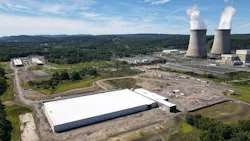
The Amazon–Talen–Susquehanna dispute became the most prominent federal test of how far a co-located data center can separate its power supply from the regional grid while remaining connected to the grid's reliability framework.
Amazon Web Services operates a data center campus adjacent to Talen Energy's Susquehanna nuclear plant in Pennsylvania. In 2024, the parties sought to expand the co-located load from 300 MW to 480 MW through an amended interconnection agreement with PJM. The proposed structure would have allowed the campus to receive more power directly from the nuclear plant while reducing the plant's capacity interconnection rights on the PJM system.
FERC rejected the amendment in November 2024, concluding that PJM had not justified the nonstandard provisions in the agreement. Importantly, the Commission did not prohibit co-location or dedicated generation. The dispute instead exposed a larger gap in existing transmission rules: how should a large load located beside a generator be measured, what transmission service does it require, what happens when the generator is unavailable, and how should the project pay for continued access to regional reliability?
Those questions soon moved beyond the Amazon–Talen project itself. In December 2025, FERC found that PJM's existing framework did not provide sufficiently clear and consistent rules for generators serving co-located loads or for transmission customers taking service on their behalf. The Commission directed PJM to develop defined interconnection and operating requirements along with transmission options ranging from conventional network service to firm and non-firm contract-demand structures.
The central issue is deceptively simple: physical proximity to a power plant does not necessarily remove a data center from the transmission system.
A campus may ordinarily obtain most of its electricity directly from adjacent generation, but the grid may still have to stand ready when that plant trips, enters maintenance, experiences a fuel constraint or cannot meet the site's full demand. That retained capability has value — and cost.
From One Dispute to a National Large-Load Proceeding
FERC widened that inquiry in June 2026, issuing show-cause orders requiring jurisdictional regional transmission organizations and transmission owners to explain or revise how their tariffs address the study, interconnection, cost recovery and transmission service of very large loads.
The proceedings brought the gross-versus-net-load question to the center of the national debate.
Consider a 500 MW data center supplied by 400 MW of on-site or adjacent generation. Under normal conditions, the campus might draw only 100 MW from the regional grid. But if the private plant becomes unavailable, the transmission system could potentially be called upon to support far more than that 100 MW.
That distinction affects much more than the monthly power bill. It can influence transmission planning, network upgrades, reserve requirements, resource adequacy, standby obligations and ultimately the economics of co-locating data centers with dedicated generation.
FERC's 2026 action also examined whether certain reliability services should be assessed on gross rather than net demand and whether large loads capable of curtailing during grid stress should have access to different firm or non-firm transmission products. The broader direction is clear: self-supply and co-location remain viable, but projects that retain material access to regional reliability increasingly will need to define precisely what service they require and how they will pay for it.
The Earlier Warning From Nevada
The underlying tension predates today's AI-scale power demand.
A decade ago, Switch fought to leave NV Energy and procure electricity from alternative suppliers for its Nevada data center operations. State regulators initially denied the request despite a proposed exit payment intended to protect remaining utility customers from stranded costs. Switch later reached an agreement allowing it to leave utility service subject to substantial financial obligations.
That case was not a behind-the-meter or co-location dispute in the modern sense. But it established an enduring principle: securing an alternative source of electricity does not necessarily allow a large customer to walk away from costs incurred by the utility system on its behalf.
Today's debate extends that same question from leaving utility service to remaining connected while relying increasingly on private supply.
Ohio: Large-Load Commitments Meet Behind-the-Meter Rights
Ohio illustrates how the issue is developing at the state level.
In 2025, the Public Utilities Commission of Ohio approved an AEP Ohio tariff for new data centers and certain other large loads above 25 MW. The structure requires long-term capacity commitments and minimum payments tied to contracted demand, along with exit provisions intended to protect the utility and other customers if a project delays, scales back or leaves service after infrastructure has been built for it.
The tariff dispute goes directly to the allocation of development risk. Utilities want assurance that generation, transmission and substation investments made for a large customer will be recovered even if the project's expected load does not fully materialize. Data center operators, meanwhile, must evaluate whether long-term minimum commitments restrict their ability to respond to changing workloads, technology and power strategies.
Ohio is especially significant because the state has simultaneously clarified a path for behind-the-meter generation. That creates both an obligation and an alternative: large-load customers may face more demanding terms for conventional utility service while gaining greater latitude to develop generation of their own.
Michigan Makes the Commitment Explicit
Michigan has taken a similar approach through the terms of conventional utility service.
In late 2025, the Michigan Public Service Commission approved new Consumers Energy requirements for data centers and other very large customers of at least 100 MW. Those terms included a 15-year minimum contract, an 80 percent minimum billing demand, defined load-ramp provisions, financial security and case-specific review of major new customers.
The commission also required scrutiny of whether the generation, storage, interconnection and other investments needed to serve qualifying projects would be subsidized by existing residential, commercial or industrial customers.
Michigan's framework does not prohibit self-supply. Rather, it makes the financial obligations associated with utility service more explicit. For developers, that can alter the relative economics of the choices now available: accept a long-term utility commitment, build or contract for dedicated generation, or assemble some combination of the two.
Taken together, these cases show the same regulatory principle emerging at different levels of the electric system. Utilities and grid operators are not simply asking whether a data center can obtain power. They are asking what infrastructure must remain available when that customer's preferred supply is unavailable, what financial commitments should accompany that availability, and how much risk can properly remain with the broader system.
For data center operators, the corresponding question is becoming equally concrete: How much independence does private power actually buy if the campus still needs the grid behind it?
A Western Interstate Energy Board webinar lays out the questions regulators are increasingly asking about large loads, including cost allocation, financial assurance, co-location, bring-your-own-generation and load flexibility.
The Questions That Matter Now
The cases now moving through FERC, regional grid organizations and state utility commissions point toward a common set of questions for any data center project pursuing self-supply or co-located generation. They concern not simply whether private power can be built, but whether the project is commercially real, operationally credible and financially accountable for the infrastructure it still expects the public system to provide.
Is the load real?
Before utilities or grid operators commit generation, transmission or substation capacity to a major new project, they increasingly want evidence that the demand will actually materialize.
That means examining customer commitments, site control, financing, equipment orders, construction schedules and expected load ramps. It also means determining how quickly projected demand will arrive and what happens if a campus builds more slowly than anticipated, reduces its load, changes technology strategies or never reaches its contracted capacity.
Large-load tariffs increasingly address that uncertainty through minimum contract terms, minimum billing requirements, financial security, defined ramp schedules and exit obligations. The objective is to prevent infrastructure built for one very large customer from becoming a stranded cost borne by everyone else.
Who actually owns and operates the power system?
Ownership determines much more than who finances the generating equipment.
Regulators need to know whether the arrangement is true customer self-generation, a third-party power sale, a lease, a shared-services structure or conventional utility service. That distinction can determine whether a generation provider falls under state utility regulation and whether the arrangement is permissible inside an incumbent utility's exclusive service territory.
Operational responsibility matters just as much. A private generation strategy must identify who secures fuel, maintains reserves, provides spare equipment, staffs maintenance, manages black start and controls synchronization with the public grid. A dedicated plant serving a data center continuously is performing a fundamentally different function from emergency backup generation.
What does the grid still have to provide?
This may be the most important question of all.
A campus can generate most of its own electricity and still rely on the public system for emergency imports, standby service, voltage support, frequency response, reserves, restoration capability or future expansion. Regulators and grid operators therefore need to understand not merely the project's normal power flow, but what happens when its private generation is unavailable.
That includes forced outages, maintenance, fuel interruptions, extreme weather and wider grid emergencies. It also raises questions about whether the campus can genuinely curtail load when required. A data center seeking flexible or non-firm transmission service must be able to demonstrate that workloads can actually be shed, shifted, paused or deferred when the system is stressed.
Who pays for the capacity that remains available?
This is where the debate over gross versus net load becomes economically significant.
Consider a 500 MW data center producing 400 MW through on-site or adjacent generation. Under ordinary conditions, it may draw only 100 MW from the grid. But if the private plant suddenly becomes unavailable, the transmission system could potentially be called upon to support much more than that 100 MW.
Should the grid be planned and financed around the site's routine net imports, its full gross demand, or some defined contingency requirement?
The answer affects transmission upgrades, resource adequacy, standby charges, reserves and the economic value of co-location itself. It also determines whether a project that rarely uses certain grid services should nonetheless pay for the system's obligation to keep those services available.
This is the problem FERC's current large-load proceedings are attempting to clarify: how to recognize genuine self-supply without allowing private generation to obscure the cost of maintaining the reliability capability a grid-connected project still depends on.
What obligations extend beyond the meter?
Private generation also moves some impacts that were once located elsewhere on the electric system directly onto or near the data center campus.
Continuous-duty generation can bring new questions involving air permits, emissions, fuel infrastructure, water use, noise, fire protection, land use and emergency operations. Regulators must distinguish equipment intended primarily for backup from generation expected to run as the site's routine power source, because the operating hours and community impacts can be very different.
The same applies to disclosure and enforcement. Communities and regulators increasingly want to know what load, fuel, emissions, water-use and operating assumptions supported a project's approval — and what happens if those assumptions change after construction.
Taken together, these questions reveal the broader policy challenge. The issue is no longer simply whether data centers should be allowed or encouraged to build their own generation. It is whether a privately supplied, grid-connected large load can deliver the capacity it promises while clearly allocating the reliability, financial, operational and environmental risks that remain.
That is the framework within which the next generation of data center power projects will be built.
The NC Clean Energy Technology Center and DOE Southeast Onsite Energy TAP examine how continuous onsite generation can support data center growth while addressing grid constraints, resilience and rising power-system demands.
Guardrails As We Build a Hybrid Grid
Behind-the-meter generation should not be mistaken for an off-grid future. Fully islanded data centers will likely remain the exception, particularly for facilities supporting workloads that require continuous availability and clearly defined recovery paths. Most private-power projects will retain some combination of grid interconnection, standby service, export capability, expansion rights or access to the wider system's transmission and reliability resources.
That does not diminish the value of dedicated generation. It points instead toward a more flexible power model in which data center operators can bring new capacity to constrained markets while utilities and grid operators retain visibility into the services those projects continue to require. The strongest arrangements will define those responsibilities from the outset: what the data center supplies for itself, what the grid must remain prepared to provide, how the facility responds during system stress, and who pays for the infrastructure supporting both.
Utilities have an obligation to maintain system reliability and recover investments made to serve their customers. Data center operators have an equally clear need for timely, dependable capacity and greater control over the power systems that determine when and where they can grow. The challenge is to align costs and obligations with the services a project actually uses and the risks its configuration leaves with the broader electric system.
The industry, then, is not simply building private power plants. It is beginning to define the operating and regulatory framework for a hybrid grid — one in which large data center loads can finance and operate more of their own generation while remaining accountable participants in the public electric system.
The question is no longer whether private power belongs in the data center energy mix. It is where private responsibility ends, where public-system responsibility begins, and how clearly that boundary can be drawn before the next wave of capacity is built.
At Data Center Frontier, we talk the industry talk and walk the industry walk. In that spirit, DCF Staff members may occasionally use AI tools to assist with content.
Keep pace with the fast-moving world of data centers and cloud computing by connecting with Data Center Frontier on LinkedIn, following us on X/Twitter and Facebook, as well as on BlueSky, and signing up for our weekly newsletters using the form below.
About the Author
 Melissa Farney
Melissa Farney
Melissa Farney is an award-winning data center industry leader who has spent 20 years marketing digital technologies and is a self-professed data center nerd. As Editor at Large for Data Center Frontier, Melissa will be contributing monthly articles to DCF. She holds degrees in Marketing, Economics, and Psychology from the University of Central Florida. She most recently served as Marketing Director for TECfusions, a global data center operator serving AI and HPC tenants with innovative and sustainable solutions. Prior to this, Melissa held senior industry marketing roles with DC BLOX, Kohler, and ABB, and has written about data centers for Mission Critical Magazine and other industry publications.
Voices of the Industry
 Image courtesy of Bell & Gossett
 Source: Adobe Stock, courtesy of ebm-papst