Executive Roundtable: The AI Infrastructure Credibility Test
For the fourth installment of DCF's Executive Roundtable for the First Quarter of 2026, we turn to a question that increasingly sits alongside power and capital as a defining constraint. Credibility.
As AI-driven data center development accelerates, public scrutiny is rising in parallel. Communities, regulators, and policymakers are taking a closer look at the industry’s footprintin terms of its energy consumption, its land use, and its broader impact on local infrastructure and ratepayers.
What was once a relatively low-profile sector has become a visible and, at times, contested presence in regional economies.
This shift reflects the sheer scale of the current build cycle. Multi-hundred-megawatt and gigawatt campuses are no longer theoretical in any sense. They are actively being proposed and constructed across key markets. With that scale comes heightened expectations around transparency, accountability, and tangible community benefit.
At the same time, the industry faces a more complex regulatory and political landscape. Questions around grid capacity, rate structures, environmental impact, and economic incentives are increasingly being debated in public forums, from state utility commissions to local zoning boards. In this environment, the ability to secure approvals is no longer assured, even in historically favorable markets.
The concept of a “social license to operate” has therefore moved to the forefront. Beyond technical execution, developers and operators must now demonstrate that AI infrastructure can be deployed in a way that aligns with community priorities and delivers shared value.
In this roundtable, our panel of industry leaders explores what will define that credibility in the years ahead and what the data center industry must do to sustain its momentum in an era of growing public scrutiny.
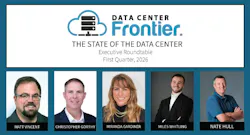
Our distinguished panelists for the First Quarter of 2026 include:
- Christopher Gorthy, Advanced Technology Core Market Co-Leader - Mission Critical, DPR Construction
- Miranda Gardiner, Executive Director, iMasons Climate Accord
- Miles Whitling, Marketing Director, Maddox Industrial Transformer
- Mike Connaughton, Senior Product Manager, Leviton Network Solutions
And now onto our fourth Executive Roundtable question for Q1 of 2026.
Data Center Frontier: Public scrutiny of large-scale data center development continues to rise, particularly around power use, land, and community impact. Looking ahead, what will define whether the industry optimally maintains its social license to operate as AI infrastructure expands?

Christopher Gorthy, DPR Construction: The concerns about use of these resources are real and, at least from our conversations, owners share those concerns from both the operational and environmental standpoints.
While the scale is substantial, we are seeing incredible efficiencies of energy, water and reductions in material usage.
On the construction side, we are working hard to lower emissions and water use through measures like recycled‑water wheel‑wash systems and sourcing materials with reduced embodied carbon, making construction activity less carbon‑ and water‑intensive than ever.
The industry is evolving quickly, and we expect things will look very different in the future.

Miranda Gardiner, iMasons Climate Accord: As AI infrastructure expands, maintaining our social license to operate will depend on demonstrating that rapid digital growth can align with responsible resource use and meaningful community benefit. Public scrutiny around power demand, land use, and environmental impact is increasing, and transparency is essential. Our communities want clear information about projects, and if we don’t provide it, misinformation will fill the gap. We are building great projects. We need to find better ways to communicate about our energy use, emissions reduction strategies, water stewardship, and efficiency improvements, while continuing to deliver advanced cooling technologies, optimized electrical systems, and growing access to lower-carbon energy sources.
One of the most significant concerns after energy/power is water, particularly in regions facing water stress. Addressing this resource requires both technical and operational solutions, such as more efficient cooling systems, increased use of recycled or non-potable water, and careful site selection aligned with local resource availability. The industry is expanding engagement efforts (iMasons Climate Accord has added water as a key vertical in 2026, and the iMasons 2026 State of the Industry report addresses the topic), supporting utility scale upgrades, and investing in local watersheds.
The reality is that not every community will welcome data center development, so we must be prepared to reallocate investment to regions that see the benefits of digital infrastructure. Given the scale of the opportunity (potentially $1 trillion in investment in 2026), we have both the responsibility and the resources to build responsibly.
If we continue improving transparency, investing in sustainable energy and water, and partnering with communities on workforce development and infrastructure improvements, we can demonstrate that the expansion of AI infrastructure supports both economic growth and environmental progress.

Miles Whitling, Maddox Industrial Transformer: Community pushback around data center development is often tied to concerns about power. Communities often think a new data center might crowd out residential power or drive up electricity rates. Maintaining public trust will depend on how transparently the industry plans and communicates around power infrastructure. In practice, large data center loads often incentivize utilities to invest in new generation capacity, substations, and transmission upgrades that strengthen the overall grid. Some operators are also pursuing on-site or data center–owned power generation. This approach can reduce strain on the public grid and address concerns about energy availability and pricing. The operators that are navigating this most effectively are those that actively invest in the surrounding power infrastructure. This means co-investing in substations, funding transmission upgrades, and pairing campuses with renewable generation. Maintaining approval to operate will depend in large part on transparent communication and demonstrating that data center infrastructure strengthens, rather than strains, the power systems that communities depend on.

Mike Connaughton, Leviton Network Solutions: Ultimately, this comes down to the economics of scale: The industry’s social license to operate will hinge on whether operators can prove that bigger, more powerful data centers generate meaningfully better outcomes — greater efficiency and improved services — compared to smaller or more distributed alternatives.
As these facilities grow in size and cost, operators must eventually recoup their investments.
If the business case holds, the public will validate their choices through their willingness to pay for the resulting AI driven products and services. But if the benefits fail to outweigh the perceived costs to communities, land use, or the grid—the social and economic support needed for continued expansion will erode.
At the same time, we are seeing AI campus developers engage proactively with local communities and state partners — well before shovels hit the ground — to identify potential challenges early and design solutions collaboratively.
This early stage coordination helps mitigate construction related growing pains, ensures infrastructure and environmental concerns are addressed upfront, and builds the long term trust.
About the Author
 Matt Vincent
Matt Vincent
Matt Vincent is Editor in Chief of Data Center Frontier, where he leads editorial strategy and coverage focused on the infrastructure powering cloud computing, artificial intelligence, and the digital economy. A veteran B2B technology journalist with more than two decades of experience, Vincent specializes in the intersection of data centers, power, cooling, and emerging AI-era infrastructure. Since assuming the EIC role in 2023, he has helped guide Data Center Frontier’s coverage of the industry’s transition into the gigawatt-scale AI era, with a focus on hyperscale development, behind-the-meter power strategies, liquid cooling architectures, and the evolving energy demands of high-density compute, while working closely with the Digital Infrastructure Group at Endeavor Business Media to expand the brand’s analytical and multimedia footprint. Vincent also hosts The Data Center Frontier Show podcast, where he interviews industry leaders across hyperscale, colocation, utilities, and the data center supply chain to examine the technologies and business models reshaping digital infrastructure. Since its inception he serves as Head of Content for the Data Center Frontier Trends Summit. Before becoming Editor in Chief, he served in multiple senior editorial roles across Endeavor Business Media’s digital infrastructure portfolio, with coverage spanning data centers and hyperscale infrastructure, structured cabling and networking, telecom and datacom, IP physical security, and wireless and Pro AV markets. He began his career in 2005 within PennWell’s Advanced Technology Division and later held senior editorial positions supporting brands such as Cabling Installation & Maintenance, Lightwave Online, Broadband Technology Report, and Smart Buildings Technology. Vincent is a frequent moderator, interviewer, and keynote speaker at industry events including the HPC Forum, where he delivers forward-looking analysis on how AI and high-performance computing are reshaping digital infrastructure. He graduated with honors from Indiana University Bloomington with a B.A. in English Literature and Creative Writing and lives in southern New Hampshire with his family, remaining an active musician in his spare time.
Voices of the Industry
 Image courtesy of Bell & Gossett
 Source: Adobe Stock, courtesy of ebm-papst