Executive Roundtable: The Rise of Integrated Infrastructure
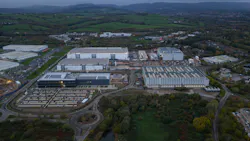
The AI era is exposing the limits of treating data center infrastructure as a collection of discrete subsystems. Historically, power, cooling, IT equipment, and facility operations could be optimized independently, with well-defined interfaces between disciplines. But as rack densities climb into the hundreds of kilowatts and liquid cooling becomes a mainstream design consideration, those interfaces are increasingly becoming the source of complexity rather than simplicity.
The emerging AI factory demands a more holistic approach. Decisions about electrical architecture influence thermal performance; cooling strategies affect facility layouts and water management; operational software must increasingly coordinate physical infrastructure in real time. The question is no longer whether these systems should work together, but how tightly they must be integrated to deliver resilient, repeatable, and economically viable AI deployments.
With that in mind, for this installment of our Executive Roundtable, we asked our panel to consider just how far this convergence must go to support the next generation of AI deployments.

Our distinguished Executive Roundtable panelists for Q2 of 2026 includes:
- Steve Altizer, President and CEO, Compu Dynamics
- Joe Capes, VP, Trane Technologies and Head of LiquidStack
- Robert Danforth, Director–Engineering, Simulation, and Advanced Development, Rehlko
And now onto the second question of the series for Q2 of 2026:
Data Center Frontier: How tightly integrated must power, cooling, and facility operations become to support the next generation of AI deployments?

Steve Altizer, Compu Dynamics: Integration has to be foundational. It has to start at the first planning conversation, not after the equipment is selected or once the building is already designed.
In previous generations of data center development, mechanical, electrical, IT, and operations teams could often work in parallel and bring the pieces together later. That worked when the load profile was more predictable and the facility had more room to absorb change. Before the introduction of ChatGPT, there was very little change to absorb.
AI removes that tolerance. A change in rack density can affect electrical distribution, structural requirements, thermal strategy, commissioning, service access, and the way the site is operated. These are no longer independent decisions. They are all part of one performance system. As AI systems move toward POD-scale platforms, the boundary between IT and facility infrastructure becomes much harder to separate.
The challenge is that AI workloads are too varied for a one-size-fits-all approach. Training clusters, inference nodes, enterprise AI environments, and edge sites can all have different requirements for density, cooling architecture, network connectivity, security, site conditions, and serviceability.
That is why many companies are adopting a modular approach, while others are embracing hybrid models where turnkey modular AI capacity is integrated into larger campus environments.
At the campus level, that means standardizing the backbone infrastructure that serves the site (utility power feeds, central cooling capacity, and network pathways), while allowing the IT environment and the integrated critical infrastructure components to evolve as workload requirements change. The goal is not modularity for its own sake. The goal is to support the next generation of AI deployments without forcing every hardware change to become a major redesign.
AI infrastructure cannot be planned as a collection of disparate systems. It has to be designed as one coordinated environment, from the utility backbone all the way to the IT rack.

Joe Capes, Trane/LiquidStack: AI is changing how data centers are designed and operated.
For years, power, cooling, facilities, and IT were often treated as separate areas of responsibility. That's becoming much harder to do. In high-density AI environments, everything is connected.
Cooling affects compute performance and reliability. Facility design affects cooling performance. Operational decisions can affect both.
The projects that are being executed well are the ones where everyone is working from the same plan, and communicating efficiently.
The more these systems are connected, the more important coordination becomes.
Robert Danforth, Rehlko: The level of integration required is definitely increasing.
Historically, power systems, cooling systems, and facility operations could be designed somewhat independently. That's becoming much harder in AI environments because everything is connected. Changes in workload behavior can affect power delivery, thermal performance, energy storage systems, controls, and overall facility operations at the same time.
What we're seeing is a move away from thinking about individual pieces of infrastructure and toward thinking about the entire operating ecosystem. The question isn't whether a generator, battery system, cooling solution, or control platform performs well on its own. It's whether all of those systems can work together effectively under highly dynamic conditions.
That's one reason simulation and digital twin technologies are getting so much attention. They allow operators to understand how these interactions play out before infrastructure is deployed and help identify potential challenges early in the design process.
As AI deployments become larger and more complex, reliability will increasingly be determined by how effectively the entire infrastructure stack performs as a coordinated system rather than by the performance of any single component.
NEXT: Scaling Beyond the Prototype Phase
About the Author
 Matt Vincent
Matt Vincent
Matt Vincent is Editor in Chief of Data Center Frontier, where he leads editorial strategy and coverage focused on the infrastructure powering cloud computing, artificial intelligence, and the digital economy. A veteran B2B technology journalist with more than two decades of experience, Vincent specializes in the intersection of data centers, power, cooling, and emerging AI-era infrastructure. Since assuming the EIC role in 2023, he has helped guide Data Center Frontier’s coverage of the industry’s transition into the gigawatt-scale AI era, with a focus on hyperscale development, behind-the-meter power strategies, liquid cooling architectures, and the evolving energy demands of high-density compute, while working closely with the Digital Infrastructure Group at Endeavor Business Media to expand the brand’s analytical and multimedia footprint. Vincent also hosts The Data Center Frontier Show podcast, where he interviews industry leaders across hyperscale, colocation, utilities, and the data center supply chain to examine the technologies and business models reshaping digital infrastructure. Since its inception he serves as Head of Content for the Data Center Frontier Trends Summit. Before becoming Editor in Chief, he served in multiple senior editorial roles across Endeavor Business Media’s digital infrastructure portfolio, with coverage spanning data centers and hyperscale infrastructure, structured cabling and networking, telecom and datacom, IP physical security, and wireless and Pro AV markets. He began his career in 2005 within PennWell’s Advanced Technology Division and later held senior editorial positions supporting brands such as Cabling Installation & Maintenance, Lightwave Online, Broadband Technology Report, and Smart Buildings Technology. Vincent is a frequent moderator, interviewer, and keynote speaker at industry events including the HPC Forum, where he delivers forward-looking analysis on how AI and high-performance computing are reshaping digital infrastructure. He graduated with honors from Indiana University Bloomington with a B.A. in English Literature and Creative Writing and lives in southern New Hampshire with his family, remaining an active musician in his spare time.
Voices of the Industry
 Source: Nimbus Advanced Process Cooling
 Image courtesy of Bell & Gossett