Data Center Insights: Robert Danforth, Rehlko
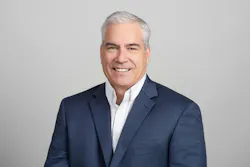
The Data Center Frontier Executive Roundtable features insights from industry executives with lengthy experience in the data center industry.
Here’s a look at the Q2 2026 insights from Robert Danforth, Director–Engineering, Simulation, and Advanced Development, Rehlko.
Robert Danforth is the Director–Engineering, Simulation, and Advanced Development at Rehlko. He holds a bachelor of science degree in mechanical engineering from Rose-Hulman Institute of Technology and a master of science degree in mechanical engineering from Purdue University. Robert has more than 30 years of cumulative experience in product development, performance simulation, and product testing, and holds more than 10 issued patents related to mechanical and electrical performance. He joined Rehlko in 2004 and currently leads engineering efforts focused on mechanical and electrical simulation, including the development of digital twin models and advanced computational fluid dynamics (CFD) analysis to evaluate the performance, stability, and robustness of emergency backup power systems across a wide range of operating conditions.
Data Center Frontier: As rack densities, cooling demands, and power requirements accelerate simultaneously, where do you see the greatest disconnect today between AI infrastructure ambition and deployment reality?
I think the biggest disconnect right now is that the industry is still talking a lot about capacity, while not talking about performance needed for the future.
Everyone is focused on securing enough power to support AI growth, and that's obviously important. But AI workloads are introducing operating conditions that look very different from what most data center infrastructure was originally designed for.
Historically, power systems were built around relatively stable operating conditions with occasional transient events. AI changes that equation. Large-scale training environments create highly dynamic, synchronized load patterns where what used to be an occasional disturbance increasingly becomes part of normal operation.
At the same time, we're seeing grid constraints, long interconnection timelines, and increasing pressure to bring capacity online faster than ever. The result is that simply having access to megawatts isn't enough. The bigger question is whether the infrastructure can deliver stable, reliable performance under real AI operating conditions.
As AI deployments continue to scale, I think we'll see the conversation shift from "How much power do we have?" to "How well does the entire system perform when AI workloads are running at full scale?" That's also why we're seeing growing interest in simulation and modeling tools that help operators understand system behavior before infrastructure is deployed.
The organizations that get ahead will be the ones designing around real-world operating conditions rather than theoretical capacity.
Data Center Frontier: How tightly integrated must power, cooling, and facility operations become to support the next generation of AI deployments?
The level of integration required is definitely increasing.
Historically, power systems, cooling systems, and facility operations could be designed somewhat independently. That's becoming much harder in AI environments because everything is connected. Changes in workload behavior can affect power delivery, thermal performance, energy storage systems, controls, and overall facility operations at the same time.
What we're seeing is a move away from thinking about individual pieces of infrastructure and toward thinking about the entire operating ecosystem. The question isn't whether a generator, battery system, cooling solution, or control platform performs well on its own. It's whether all of those systems can work together effectively under highly dynamic conditions.
That's one reason simulation and digital twin technologies are getting so much attention. They allow operators to understand how these interactions play out before infrastructure is deployed and help identify potential challenges early in the design process. As AI deployments become larger and more complex, reliability will increasingly be determined by how effectively the entire infrastructure stack performs as a coordinated system rather than by the performance of any single component.
Data Center Frontier: The industry is moving from prototype AI environments toward industrialized deployment at scale. What becomes materially harder once AI infrastructure moves into live production?
The real test begins when AI infrastructure moves from pilot environments into full-scale production.
A pilot can demonstrate that a system supports AI workloads under controlled conditions. Production environments introduce a different set of challenges. Operators must maintain performance and reliability across multiple facilities while supporting rapidly evolving workloads and growing capacity requirements.
As deployments expand, the focus shifts to consistency. Infrastructure needs to be deployed, operated, and maintained through repeatable processes across an entire portfolio of sites. That requires close coordination across design, construction, operations, maintenance, and supply chain teams. Challenges that can be addressed relatively easily in a single deployment become far more significant when they affect multiple facilities.
At the same time, expectations for reliability don't change. Operators still need to deliver uptime and performance while managing increasingly dense compute environments, growing power demands, and more complex power architectures. Every decision becomes more consequential because organizations are supporting critical infrastructure at scale.
Ultimately, success in the next phase of AI growth will depend on the ability to execute consistently, operate efficiently, and maintain performance over the long term. The organizations that succeed will be the ones that build repeatable operating models while maintaining the reliability that mission-critical environments demand.
About the Author
 Matt Vincent
Matt Vincent
Matt Vincent is Editor in Chief of Data Center Frontier, where he leads editorial strategy and coverage focused on the infrastructure powering cloud computing, artificial intelligence, and the digital economy. A veteran B2B technology journalist with more than two decades of experience, Vincent specializes in the intersection of data centers, power, cooling, and emerging AI-era infrastructure. Since assuming the EIC role in 2023, he has helped guide Data Center Frontier’s coverage of the industry’s transition into the gigawatt-scale AI era, with a focus on hyperscale development, behind-the-meter power strategies, liquid cooling architectures, and the evolving energy demands of high-density compute, while working closely with the Digital Infrastructure Group at Endeavor Business Media to expand the brand’s analytical and multimedia footprint. Vincent also hosts The Data Center Frontier Show podcast, where he interviews industry leaders across hyperscale, colocation, utilities, and the data center supply chain to examine the technologies and business models reshaping digital infrastructure. Since its inception he serves as Head of Content for the Data Center Frontier Trends Summit. Before becoming Editor in Chief, he served in multiple senior editorial roles across Endeavor Business Media’s digital infrastructure portfolio, with coverage spanning data centers and hyperscale infrastructure, structured cabling and networking, telecom and datacom, IP physical security, and wireless and Pro AV markets. He began his career in 2005 within PennWell’s Advanced Technology Division and later held senior editorial positions supporting brands such as Cabling Installation & Maintenance, Lightwave Online, Broadband Technology Report, and Smart Buildings Technology. Vincent is a frequent moderator, interviewer, and keynote speaker at industry events including the HPC Forum, where he delivers forward-looking analysis on how AI and high-performance computing are reshaping digital infrastructure. He graduated with honors from Indiana University Bloomington with a B.A. in English Literature and Creative Writing and lives in southern New Hampshire with his family, remaining an active musician in his spare time.
Voices of the Industry
 Source: Nimbus Advanced Process Cooling
 Image courtesy of Bell & Gossett