How States Are Rewriting the Rules for Data Center Growth
Key Highlights
- Pennsylvania's GRID framework ties environmental permitting and tax incentives to strict requirements on power, water, workforce and community standards for large data centers.
- Developers participating in GRID must demonstrate incremental energy capacity, assume the costs created by their power demand, and meet phased clean firm energy requirements.
- The framework increases transparency through project disclosures, annual energy and water reporting, public permitting information and community engagement requirements.
- Other states are moving in parallel—from New York's hyperscale moratorium and Illinois' incentive pause to Texas' tighter scrutiny of large-load interconnection requests.
- The emerging policy direction suggests that future data center projects will increasingly need to arrive with credible power, financing, environmental planning and community commitments already in place.
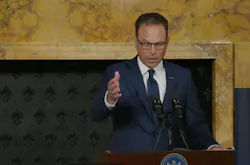
Pennsylvania has moved from courting data center investment to setting much stricter terms for how the industry grows. Governor Josh Shapiro’s August 18 executive order creates one of the country’s most comprehensive state-level frameworks for large data centers, linking a more favorable environmental permitting process and state tax treatment to requirements covering power supply, grid costs, local approval, workforce commitments, water use and environmental performance.
The order is the latest stage of Shapiro’s Governor’s Responsible Infrastructure Development, or GRID, initiative. GRID was announced in February, detailed in May and partially reinforced through Pennsylvania’s 2026-27 budget in July. The Pennsylvania House also passed legislation intended to codify the standards, but the Senate did not act. Shapiro has now used existing executive and agency authority to put much of the framework into effect immediately.
Pennsylvania’s debate has also produced more direct proposals to slow development. Senate Bill 1359 would impose a statewide moratorium on hyperscale data center development and permitting, although the measure remains in the Senate Local Government Committee. A separate measure, Senate Bill 1345, would authorize municipalities to temporarily stop accepting or considering new applications for high-impact data centers for up to 18 months. SB 1345 advanced to second consideration in the Senate in July. Neither measure has become law.
What is the Impact on Data Center Development?
For data center projects with peak demand exceeding 25 MW, Pennsylvania’s template GRID Consent Order and Agreement provides the mechanism for binding developers to the requirements while allowing the states Department of Environmental Protection (DEP) to review qualifying permit applications on a rolling basis.
Developers that decline to sign can still seek permits, but DEP will not begin reviewing their applications until local approvals and required water or wastewater authorizations are secured, and permits will not be handled on a rolling basis. Those projects are also excluded from Pennsylvania’s permit-decision guarantee programs.
This means that Pennsylvania is using permitting speed as leverage. Developers willing to assume a much broader set of financial, environmental and community obligations get a more predictable regulatory path. Those unwilling to do so face a considerably slower one and possibly more importantly, cannot qualify for the state’s existing sales and use tax exemption for data center equipment under the new framework.
Bring the Power and Pay the Bill
The centerpiece of GRID is energy cost responsibility. A qualifying developer must demonstrate how it will “build, bring or buy” enough incremental electric capacity to meet its new demand and must pay the full cost of that capacity. In general, the additional supply must be located in the same PJM locational deliverability area as the data center. That is an important provision because merely signing a power purchase agreement somewhere within the PJM region does not necessarily relieve the transmission, generation or capacity constraint created where a hyperscale campus is actually located.
GRID also introduces a stepped clean-energy requirement. Beginning January 1, 2027, qualifying projects must procure at least 10% of annual electricity consumption from incremental clean firm energy resources in Pennsylvania. The requirement increases to 14.5% in 2030 and 32% in 2035. Shapiro has specifically pointed to resources such as advanced nuclear, solar and battery storage as examples of the new energy supplies the policy is intended to encourage.
Potentially more consequential to utility customers are the cost-allocation rules. GRID requires developers to assume costs caused in whole or in part by their projects, including energy and ancillary services, transmission, distribution, network upgrades and dedicated facilities. The August order also directs Shapiro’s Special Counsel for Energy Affordability to press the Pennsylvania Public Utility Commission for tariffs that prevent data center interconnection costs and PJM reliability backstop costs from migrating onto residential and ordinary commercial customers.
The order goes a step further on reliability. Shapiro wants utility emergency procedures changed so that data centers are curtailed before other customers during pre-emergency or emergency conditions unless the facility has secured incremental electric capacity sufficient to cover its demand. Data centers also would not be treated as critical loads exempt from curtailment.
Pennsylvania is responding to a development pipeline that has become difficult to separate from speculation. As of August 18, the Shapiro administration said more than 100 projects appeared in publicly sourced databases and 58 had engaged with DEP at some level of formality. Only 15 had applied for at least one DEP permit, and just five had received all permits required for their first phase of development.
PPL Electric, meanwhile, reported approximately 20.7 GW of potential data center load associated with electric service agreements in an August investor presentation. Shapiro argues that many other announced projects lack end users, financing or credible access to electricity.
Ending the Secrecy Around Data Center Projects
Pennsylvania’s framework also tackles a less technical but increasingly contentious aspect of hyperscale development: secrecy. Agencies under the governor’s jurisdiction are prohibited from entering nondisclosure agreements relating to data center projects, while DEP must create a publicly accessible map showing permitting information for proposed facilities.
Beginning July 1, 2027, Pennsylvania data centers with peak electric demand of 10 MW or greater will have to submit annual reports detailing energy and water consumption for the preceding calendar year. The data must detail energy sources, onsite and offsite generation, natural gas use, peak load, water sources and efficiency measures, and projected future energy and water demand. The reporting requirement builds on provisions already enacted through Pennsylvania’s 2026-27 budget.
GRID certification goes further. Developers must identify end users and provide a footprint report covering building area, campus acreage, estimated peak electric demand, annual water consumption and source, the percentage of electricity supplied from non-emitting resources and expected Power Usage Effectiveness and Water Usage Effectiveness.
Local governments also gain substantial leverage. Projects must demonstrate consistency with local comprehensive plans and obtain applicable municipal zoning and subdivision approvals before DEP issues qualifying permits. GRID projects must undertake public outreach and pursue community benefit agreements dealing with issues including noise, lighting, traffic, aesthetics, emergency response and financial contributions toward local priorities.
The workforce standards are unusually specific for a data center policy. GRID projects must commit at least $250 million in cumulative new investment, create at least 200 prevailing-wage construction jobs, and by the fourth anniversary of certification create at least 50 new jobs paying 125% or more of Pennsylvania’s average statewide wage. Developers must also develop local recruiting and training programs, including use of registered apprenticeships and skilled construction labor.
Are Other States Following Similar Models?
Pennsylvania is not alone, but relatively few states combine this many regulatory tools in one framework. New York may be the closest current comparison.
On July 14, Gov. Kathy Hochul signed Executive Order 62 establishing what New York describes as the nation’s first statewide moratorium on new hyperscale data centers. During development of a statewide Generic Environmental Impact Statement, the state's Department of Environmental Conservation will for up to one year withhold discretionary permits that had not already been deemed complete.”
New York’s Energize NY proceeding is examining requirements that data centers either pay more for power or supply their own. Hochul also directed regulators to consider a Grid Acceleration Fund financed by data center developers, mechanisms requiring projects to fund new clean generation dedicated to their operations, and an insurance pool protecting customers from speculative large loads. New York is also developing a Community Investment Framework to help municipalities negotiate benefits and Hochul is pursuing legislation to repeal sales-tax exemptions for massive data centers.
Illinois has already paused new data center incentive agreements while Gov. JB Pritzker presses lawmakers to adopt a broader framework with several similarities to Pennsylvania’s. Governor JB Pritzker stopped processing new Data Center Investment Program incentive agreements beginning July 1, 2026, while calling for legislation establishing a separate data center electricity rate class. His framework would assign generation, transmission, distribution and water-system costs caused by data centers to the industry, require facilities to generate or pay for new clean energy, and make some data center loads interruptible when the grid is strained. It also proposes banning nondisclosure agreements, requiring energy and water reporting, providing public notice of permit applications and requiring community benefit agreements.
The distinction is important: Pennsylvania has already used executive authority to implement significant portions of its system, while most of Pritzker’s broader Illinois framework still requires legislative approval.
Oregon has adopted a narrower but significant version of the “cost causer pays” philosophy. House Bill 3546 directs the Oregon Public Utility Commission to establish a separate service classification for large energy-use facilities and requires the resulting tariffs to allocate the costs of serving those customers to them while protecting other retail customers from the associated risks. Oregon regulators are also examining connection charges, minimum-load commitments and other mechanisms to minimize stranded infrastructure.
Texas has concentrated on reliability, credible interconnection requests and financial responsibility. Senate Bill 6, signed in 2025,which we identified at the time as a potential model for other states, generally applies new requirements to loads above 75 MW. It requires large customers to contribute toward interconnection costs, pay at least a $100,000 initial transmission-screening fee, demonstrate site control and make financial commitments supporting infrastructure built to serve them. The law also provides mechanisms for large loads to be curtailed during grid emergencies.
Texas has since pushed that screening concept further. On August 3, Gov. Greg Abbott directed ERCOT to conduct additional verification before advancing data center large loads through the interconnection process, prompting ERCOT to postpone its original Batch Zero classification deadline. The Public Utility Commission subsequently approved a revised process allowing conditional classifications, but on August 31 ERCOT delayed those classifications again, saying it needed additional time for data validation and due diligence. The episode underscores the larger policy trend: requested megawatts are increasingly being treated as claims that must be substantiated rather than capacity planners can automatically assume will materialize.
Texas shares two important elements with Pennsylvania: filtering speculative or insufficiently mature projects from the interconnection process and subjecting qualifying large loads to defined curtailment and demand-management requirements during grid emergencies. It does not, however, impose Pennsylvania-style statewide clean-energy, labor and community-benefit requirements.
Virginia, Georgia and Ohio have moved primarily through utility regulation rather than comprehensive statewide development policies. Virginia’s State Corporation Commission created a separate GS-5 rate class for Dominion Energy Virginia’s largest loads. New qualifying customers face 14-year minimum service obligations, while large loads generally must pay monthly charges covering at least 85% of certain transmission and distribution commitments. The SCC also authorized collateral requirements intended to protect other customers if a proposed project fails to materialize.
Georgia regulators have authorized special terms for customers using more than 100 MW, including longer contracts, minimum billing requirements and recovery of generation, transmission and distribution costs associated with serving large loads. The Georgia Public Service Commission says the measures are intended to prevent data center-related expenses from being shifted to residential and smaller business customers.
Ohio’s approach is similar. The PUCO-approved AEP Ohio data center tariff requires new large data centers to pay for at least 85% of their contracted electricity capacity for as long as 12 years, even if actual consumption falls below that level. That effectively places much more of the stranded-investment risk on developers rather than other ratepayers.
Arizona has attacked the issue through incentives. Arizona’s 2026 tax legislation imposed a three-year moratorium on new applications for and grants of computer data center tax relief, running from July 1, 2026 through June 30, 2029, while policymakers reassess the incentive and the industry’s infrastructure impacts.
New Hampshire is moving toward an even more restrictive position. Gov. Kelly Ayotte said in August that she supports a statewide moratorium on new data centers, citing their potential effects on electricity prices, water and surrounding communities. On September 2, amid reports of a potential hyperscale project in Bow, Ayotte said she intends to include a multi-year data center moratorium in her next state budget and specifically opposed development of the Bow project.
Public filings show Granite Shore Power, owner of the former Merrimack Station coal plant, has requested an Eversource viability assessment for a potential 350-MW load, although those filings do not explicitly identify the proposed facility as a data center. The prospective redevelopment nevertheless highlights the tension now confronting states: even brownfield power-generation sites with existing grid infrastructure can face political resistance when hyperscale loads raise broader questions about regional power supply and ratepayer exposure.
The change in direction is particularly notable because New Hampshire lawmakers considered legislation earlier this year that would have made data centers a use by right in commercial and industrial zones and prevented municipalities from regulating them more strictly than comparable uses. The measure passed the Senate but died on the table in the House.
A Second Generation of Data Center Policy
The first generation of state policy was largely about attraction: sales-tax exemptions, property-tax concessions, expedited permitting and promises of economic development. The emerging second generation is increasingly about proof; proof that a project is real, proof that adequate power exists, proof that developers can pay for infrastructure, proof that local communities support development and proof that the economic benefits justify the demands placed on power and water systems.
Pennsylvania’s GRID program stands out because it combines nearly all of those concerns—generation, cost allocation, environmental protection, permitting, transparency, labor standards and community approval—within one framework.
For the data center industry, the implications extend well beyond Pennsylvania. New York and Illinois are already moving toward similarly comprehensive policies, while Texas, Oregon, Virginia, Georgia and Ohio have implemented many of the same principles through utility regulation.
The competitive question for states therefore may be changing. The issue is no longer simply which jurisdiction can offer the largest tax exemption or the quickest access to land. Increasingly, the winning projects may be those that arrive with their power supply, financing, grid contribution, community agreement and environmental strategy already attached. This may prove to be one of the defining changes in U.S. data center development during the AI infrastructure boom.
At Data Center Frontier, we talk the industry talk and walk the industry walk. In that spirit, DCF Staff members may occasionally use AI tools to assist with content.
Keep pace with the fast-moving world of data centers and cloud computing by connecting with Data Center Frontier on LinkedIn, following us on X/Twitter and Facebook, as well as on BlueSky, and signing up for our weekly newsletters using the form below.
About the Author
 David Chernicoff
David Chernicoff
 Matt Vincent
Matt Vincent
Matt Vincent is Editor in Chief of Data Center Frontier, where he leads editorial strategy and coverage focused on the infrastructure powering cloud computing, artificial intelligence, and the digital economy. A veteran B2B technology journalist with more than two decades of experience, Vincent specializes in the intersection of data centers, power, cooling, and emerging AI-era infrastructure. Since assuming the EIC role in 2023, he has helped guide Data Center Frontier’s coverage of the industry’s transition into the gigawatt-scale AI era, with a focus on hyperscale development, behind-the-meter power strategies, liquid cooling architectures, and the evolving energy demands of high-density compute, while working closely with the Digital Infrastructure Group at Endeavor Business Media to expand the brand’s analytical and multimedia footprint. Vincent also hosts The Data Center Frontier Show podcast, where he interviews industry leaders across hyperscale, colocation, utilities, and the data center supply chain to examine the technologies and business models reshaping digital infrastructure. Since its inception he serves as Head of Content for the Data Center Frontier Trends Summit. Before becoming Editor in Chief, he served in multiple senior editorial roles across Endeavor Business Media’s digital infrastructure portfolio, with coverage spanning data centers and hyperscale infrastructure, structured cabling and networking, telecom and datacom, IP physical security, and wireless and Pro AV markets. He began his career in 2005 within PennWell’s Advanced Technology Division and later held senior editorial positions supporting brands such as Cabling Installation & Maintenance, Lightwave Online, Broadband Technology Report, and Smart Buildings Technology. Vincent is a frequent moderator, interviewer, and keynote speaker at industry events including the HPC Forum, where he delivers forward-looking analysis on how AI and high-performance computing are reshaping digital infrastructure. He graduated with honors from Indiana University Bloomington with a B.A. in English Literature and Creative Writing and lives in southern New Hampshire with his family, remaining an active musician in his spare time.
Voices of the Industry
 Adobe Stock image courtesy of Hitachi Energy