Northern Virginia's Fairfax County Tightens Data Center Rules
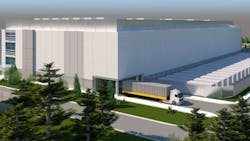
After months of discussion featuring lengthy and contentious debate, Fairfax County in Northern Virginia this week passed a new zoning ordinance to tighten its guidelines for data center development.
As approved by the county's Board of Supervisors, the revised ordinance imposes strict regulations on data center development in Fairfax County.
Key changes in the new zoning ordinance for data centers in Fairfax County include new requirements for:
- Equipment Enclosure: Data center quipment must be enclosed or screened by a wall or barrier to reduce visual and noise impacts.
- Residential Setback: Data centers must be at least 200 feet from the lot line of an adjacent residential district or property. Equipment such as back-up generators must be 300 feet from the lot line.
- Distance from Metro: Data centers must be at least one mile from a Metro station.
- Noise Studies: Pre- and post-construction noise studies must be submitted to ensure compliance with the Noise Ordinance.
- Building Design: Façade and archictectural improvements are required to enhance the visual appeal of the buildings.
The revised ordinance also specifies new limits on the size of projects, depending on location.
Existing facilities built or approved before July 2024 are not subject to the new rules.
According to county staff as reported by Inside NoVA, there are currently six data center applications that have been accepted by the county for review but not yet approved.
Of those six applications, one reportedly wouldn’t meet the proposed 1-mile setback requirement from a Metro station. Another would require a special exception or redesign due to its proximity to residential areas.
Comparing Virginia's Major Data Center Zones
While Fairfax County has about 3 million square feet (SF) of data centers, nearby Loudoun County, home of Ashburn's Data Center Alley, the largest data center market globally, has more than 30 million SF.
Meanwhile, an analysis by the Prince William Times found nearby Prince William County, home of the contentious PW Digital Gateway, which also came in for rezoning after a marathon public hearing last December, found that Prince William will overtake Loudoun County in data center development and go well beyond those numbers, should all plans come to fruition.
According to the analysis, Prince William County has at least 44 data center buildings totaling 8.3 million square feet. However, adding what’s under construction, already approved or otherwise underway, Prince William County could end up with more than 80 million square feet of data center space.
The new regulations in Fairfax County, which were passed after a roughly four-hour-long public hearing, came after Fairfax residents testified about both their oppositions and enthusiasms for data centers.
As reported by DC News Now, Fairfax County Chair Jeff McKay said before the 8-to-2 vote on the ordinance, “We want to put in place protections for data centers in Fairfax County and not repeat the challenges that have been faced in neighboring Prince William and Loudoun counties.”
To the south of the state, Virginia's Culpeper Tech Zone has put community protections in place in advance to encourage data center development while heading off the NIMBY mindset.
Way back in January of this year, the Fairfax County Board of Supervisors began by considering a proposal to rezone several acres near Chantilly Auto Park to build a three-story data center constructed by an affiliate of developer Penzance.
FFX Now reported the project raised strong opposition from several local stakeholder groups. The Chantilly data center plan was approved in July.
About the Author
 Matt Vincent
Matt Vincent
Matt Vincent is Editor in Chief of Data Center Frontier, where he leads editorial strategy and coverage focused on the infrastructure powering cloud computing, artificial intelligence, and the digital economy. A veteran B2B technology journalist with more than two decades of experience, Vincent specializes in the intersection of data centers, power, cooling, and emerging AI-era infrastructure. Since assuming the EIC role in 2023, he has helped guide Data Center Frontier’s coverage of the industry’s transition into the gigawatt-scale AI era, with a focus on hyperscale development, behind-the-meter power strategies, liquid cooling architectures, and the evolving energy demands of high-density compute, while working closely with the Digital Infrastructure Group at Endeavor Business Media to expand the brand’s analytical and multimedia footprint. Vincent also hosts The Data Center Frontier Show podcast, where he interviews industry leaders across hyperscale, colocation, utilities, and the data center supply chain to examine the technologies and business models reshaping digital infrastructure. Since its inception he serves as Head of Content for the Data Center Frontier Trends Summit. Before becoming Editor in Chief, he served in multiple senior editorial roles across Endeavor Business Media’s digital infrastructure portfolio, with coverage spanning data centers and hyperscale infrastructure, structured cabling and networking, telecom and datacom, IP physical security, and wireless and Pro AV markets. He began his career in 2005 within PennWell’s Advanced Technology Division and later held senior editorial positions supporting brands such as Cabling Installation & Maintenance, Lightwave Online, Broadband Technology Report, and Smart Buildings Technology. Vincent is a frequent moderator, interviewer, and keynote speaker at industry events including the HPC Forum, where he delivers forward-looking analysis on how AI and high-performance computing are reshaping digital infrastructure. He graduated with honors from Indiana University Bloomington with a B.A. in English Literature and Creative Writing and lives in southern New Hampshire with his family, remaining an active musician in his spare time.
Voices of the Industry
 Image courtesy of Bell & Gossett
 Source: Adobe Stock, courtesy of ebm-papst