Beyond Hyperscale: Why Enterprise Data Centers Still Matter in the AI Era
Key Highlights
- Enterprise data centers, though smaller than hyperscale deployments, represent a significant and growing segment of AI infrastructure demand.
- Differences in requirements—reliability, flexibility, security—make enterprise AI infrastructure distinct from hyperscale AI, especially for inference workloads.
- Rising cabinet densities and hybrid density configurations pose new design challenges for supporting traditional IT and high-density AI pods within the same facility.
- Enterprise customers prioritize reliability and optionality, often willing to pay more for redundancy and flexible contractual terms.
- Liquid cooling is being designed as an optional upgrade, allowing enterprises to add high-density cooling solutions as needed over a 10-year horizon.

Hyperscale campuses may dominate the AI infrastructure conversation, but the next major phase of AI adoption could unfold across a much broader and more fragmented landscape: the enterprise data center.
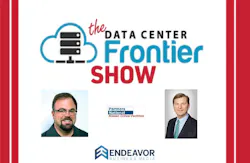
That was the central theme of the latest episode of the Data Center Frontier Show, featuring Kirk Killian, president of Partners National Mission Critical Facilities. Speaking with DCF Editor in Chief Matt Vincent, Killian argued that while the industry’s attention is understandably fixed on 100 MW, 200 MW and 300 MW AI campuses, enterprise data centers remain one of the most important—and underappreciated—segments of the digital infrastructure market.
“The enterprise data centers, even the new ones, tend to be far, far smaller than new hyperscale deployments,” Killian said. “Not uncommon to see enterprises deploy a quarter meg or one meg or two, maybe up to 10 megs. Whereas the hyperscale guys are deploying 40 up to 300 meg facilities.”
But scale alone does not tell the story.
For every one of the roughly 20 hyperscale users that dominate headlines, Killian noted, there may be 50 to 100 times as many large and mid-sized enterprise users. Those companies run critical business systems, purchase hardware, software, telecom and services, employ large data center teams, and often operate multiple facilities across domestic, edge, EMEA and Asia-Pacific footprints.
In other words, enterprise demand may be smaller in unit size, but it remains massive in aggregate. And as AI shifts from training to inference, the enterprise data center could become newly strategic.
Enterprise AI Is Not Hyperscale AI
Killian’s central point is that enterprise infrastructure requirements differ materially from hyperscale requirements. Hyperscalers are primarily optimizing for massive scale and speed to market. Enterprises, by contrast, tend to prioritize reliability, flexibility, integration into broader IT systems, and audit and compliance.
That difference has major implications for developers and colocation providers.
“The real industry opportunity is to take some of the innovation and the economies of scale that we’re seeing from the hyperscale builds to deliver smaller chunks of data center capacity,” Killian said.
That might mean adapting lessons from 40 MW or 100 MW campuses into enterprise-ready deployments of 2 MW, 4 MW or 8 MW. Killian pointed to providers such as DataBank and Flexential as examples of companies working to deliver hyperscale-derived efficiencies in smaller enterprise increments. He also noted that QTS and other large campus developers may reserve portions of multi-building campuses for multiple enterprise users, even as other buildings are leased to hyperscale customers.
The enterprise market, in this sense, is becoming a market of “bits and pieces”—the 4 MW, 8 MW or 12 MW increments left available inside larger developments.
That may sound secondary, but it can be highly attractive to developers. Enterprises often bring investment-grade credit profiles, long-term demand, and sophisticated operational requirements. They may not move at hyperscale speed, but they remain valuable customers.
Why Inference Could Pull Workloads Back Toward Controlled Infrastructure
The most important AI distinction for enterprises may be the difference between training and inference.
Killian said enterprises are generally comfortable outsourcing large chunks of AI training, particularly when speed is paramount and the process does not require extensive use of sensitive corporate data. Inference is different.
As AI applications move into production, they will increasingly draw on customer records, trade secrets, operational data, research data and other highly valuable enterprise information. Killian said that creates a different risk profile.
“I think as we see that shift to rolling out AI inference at scale, the inference at scale is going to require a large, large quantity of very valuable corporate data,” he said.
That could make enterprises more reluctant to rely on newer AI infrastructure firms that have not yet earned the same level of trust as established enterprise IT providers, cloud platforms or colocation partners. For regulated industries in particular, security, control, compliance and latency may push more inference workloads into on-premises environments, private colocation halls, or tightly controlled cloud architectures.
Killian cited one industry report suggesting that AI inference could require eight times the compute capacity of AI training over the next few years. If that proves directionally correct, the enterprise AI infrastructure story may be less about a wholesale move to hyperscale campuses and more about a carefully managed hybrid model.
Training may go out. Inference may come closer to the enterprise.
Density Is Rising, But Enterprise Reality Remains Heterogeneous
The industry is now full of discussion about 100 kW, 200 kW and even megawatt-scale rack architectures. Killian cautioned that this is not yet the average enterprise reality.
Enterprises typically operate heterogeneous environments, with many types and ages of hardware deployed across the same data center. Unlike hyperscalers, which may fill an 8 MW hall with nearly identical compute and storage platforms, enterprises often run mixed workloads, mixed densities and mixed refresh cycles.
Still, enterprise cabinet density is rising quickly.
Killian referenced AFCOM data showing average cabinet density moving from 12 kW three years ago, to 16 kW two years ago, to 27 kW last year. For current and near-term enterprise deployments in 2026 and early 2027, he said many customers are planning around 20 kW to 30 kW per cabinet.
That is a meaningful jump from the 8 kW to 10 kW enterprise norms common before the pandemic. But it is still far below the densest hyperscale AI deployments.
The more interesting pattern, Killian said, is hybrid density inside the same enterprise hall. An enterprise may plan for an average of 25 kW per cabinet, while also asking for a pod of six to 20 cabinets capable of 50 kW, 70 kW or 100 kW.
That creates a new design challenge: enterprise facilities must support traditional IT, rising densities and targeted high-density AI pods without forcing the entire deployment into a hyperscale AI design model.
Reliability Still Commands a Premium
Enterprise customers remain highly cost-conscious, but Killian said they are often willing to pay 5% to 10% more per megawatt to secure higher reliability and redundancy.
The reason is simple: enterprise data centers are deeply tied to business operations, compliance obligations and customer-facing systems. These customers want uptime, connectivity, third-party services, audit tools and flexibility across hardware types.
That can lead to different infrastructure preferences than hyperscale deployments.
Killian noted that some hyperscalers may accept UPS topologies such as 9-over-8 or 11-over-10 configurations if that helps reduce cost. Enterprises, by contrast, may prefer N+1 designs with 5-over-4 or 4-over-3 UPS lineups because those models align better with their reliability expectations.
The affordability strategy also differs. Hyperscalers may pursue cost savings through enormous scale and aggressive design optimization. Enterprises often look for affordability through contractual and operational flexibility: expansion rights, renewal rights, contraction rights, swing or shift rights, and the ability to balance predictable workloads in on-prem or colocation environments with public cloud capacity for bursting.
This is where the enterprise model becomes more complex—but also more durable. Enterprises are not simply buying megawatts. They are buying optionality.
Liquid Cooling: Needed Later, Designed For Now
Liquid cooling is now part of nearly every enterprise data center conversation, even when it is not immediately required.
Killian said many enterprise deployments planned for 2026 through 2028 can still be handled with air cooling, particularly with containment and disciplined airflow management, up to roughly 35 kW per cabinet. But most large enterprises want liquid cooling optionality over a 10-year planning horizon.
That means designing facilities where liquid cooling can be added later without forcing major disruption or excessive upfront cost. Enterprises may want the ability to add rear-door heat exchangers, direct-to-chip cooling, CDUs and secondary cooling loops as specific high-density pods emerge.
Immersion cooling, Killian said, has not gained the same traction with enterprise customers.
The key issue is deferral. Enterprises do not want to spend heavily today for infrastructure they may not need for several years. Providers that can make liquid cooling scalable on an as-needed basis are likely to be better positioned for enterprise demand.
That makes the next generation of enterprise-ready facilities less about deploying liquid cooling everywhere on day one, and more about creating a practical path to add it when and where workloads require it.
Latency Returns to the Foreground
Latency has always mattered for certain enterprise sectors, especially financial services. Killian noted that some financial institutions have long required two active-active data centers within the same metro, with sub-2 millisecond latency and sufficient separation for business continuity.
AI inference could broaden that requirement.
Enterprise inference workloads will often be integrated with existing corporate applications. AI systems in research and development, manufacturing, customer service, logistics or operations may need to interact repeatedly with other enterprise systems. That frequent back-and-forth can make latency a business performance issue, not merely a network engineering concern.
As a result, traditional data center hubs are likely to remain attractive. Northern Virginia, Dallas, Chicago and London still offer the connectivity, ecosystem depth and enterprise familiarity that many companies require. Lower-cost major markets such as Texas and Atlanta may also benefit.
But Killian also pointed to emerging secondary markets near large public cloud availability zones, including Columbus, Ohio; Portland, Oregon; and Austin-San Antonio. These markets may appeal to enterprises pursuing a “cloud plus controlled” architecture, where public cloud and enterprise-controlled infrastructure operate in close proximity.
He also identified several international gateway cities—Miami, Shanghai and Marseille—as potential enterprise edge nodes because of their concentration of international cable landings and cross-border traffic.
That is an important point for the AI era. Enterprise inference will not necessarily concentrate only in the largest AI campuses. Some of it may emerge in metro-adjacent, cloud-adjacent and cable-adjacent nodes where latency, data gravity and global connectivity intersect.
The Hybrid Cloud Is Maturing, Not Disappearing
Killian’s view of enterprise cloud strategy is not a simple cloud repatriation story. It is a hybrid cloud maturation story.
He cited one study indicating that more than 70% of enterprises are still adding public cloud capacity. At the same time, 67% are repatriating some applications and data sets from the public cloud, with those companies moving back an average of 21% of previously cloud-based applications.
That apparent contradiction is the reality of enterprise IT.
The cloud remains excellent for flexibility, speed and certain classes of workload. But it is no longer treated as a universal destination for all applications and data sets. The more mature model, Killian said, is “cloud plus controlled”—a mix of public cloud, on-premises infrastructure and colocation aligned to the needs of specific applications.
That model is especially relevant for AI inference. Enterprises will need to decide where each workload belongs based on data sensitivity, latency, cost, compliance, performance and operational control.
The result is not cloud abandonment. It is workload placement becoming more deliberate.
What Developers and Colo Providers Should Take From This
For colocation providers and developers, the enterprise AI opportunity is not simply a smaller version of hyperscale AI.
Enterprises move more slowly. They are more committee-driven. They are more cautious about ROI. They are more sensitive to stranded capital. They want to experiment with AI, but they do not want to be locked into infrastructure decisions that assume every application will scale immediately.
That means flexibility becomes a core product attribute.
Killian said enterprise customers are looking for facilities that work efficiently, reliably and affordably for current needs while preserving the ability to scale power and cooling later. That could include reserving land for future cooling plants, future electrical plants or later capacity additions, rather than building every element upfront.
It also means developers with a track record of continued development in a major metro may have an advantage. Enterprises want confidence that as AI inference scales, more capacity will be available nearby without forcing a wholesale migration.
The enterprise data center market may not produce the largest single-campus announcements in the AI era. But it may define how AI actually becomes operational across the broader economy.
Hyperscale infrastructure is building the foundation models. Enterprise infrastructure may determine where AI becomes business infrastructure.
And that makes the enterprise data center far more than a legacy category. In the next phase of AI adoption, it may become one of the most important frontiers.
At Data Center Frontier, we talk the industry talk and walk the industry walk. In that spirit, DCF Staff members may occasionally use AI tools to assist with content. Elements of this article were created with help from OpenAI's GPT5.
Keep pace with the fast-moving world of data centers and cloud computing by connecting with Data Center Frontier on LinkedIn, following us on X/Twitter and Facebook, as well as on BlueSky, and signing up for our weekly newsletters using the form below.
About the Author
 Matt Vincent
Matt Vincent
Matt Vincent is Editor in Chief of Data Center Frontier, where he leads editorial strategy and coverage focused on the infrastructure powering cloud computing, artificial intelligence, and the digital economy. A veteran B2B technology journalist with more than two decades of experience, Vincent specializes in the intersection of data centers, power, cooling, and emerging AI-era infrastructure. Since assuming the EIC role in 2023, he has helped guide Data Center Frontier’s coverage of the industry’s transition into the gigawatt-scale AI era, with a focus on hyperscale development, behind-the-meter power strategies, liquid cooling architectures, and the evolving energy demands of high-density compute, while working closely with the Digital Infrastructure Group at Endeavor Business Media to expand the brand’s analytical and multimedia footprint. Vincent also hosts The Data Center Frontier Show podcast, where he interviews industry leaders across hyperscale, colocation, utilities, and the data center supply chain to examine the technologies and business models reshaping digital infrastructure. Since its inception he serves as Head of Content for the Data Center Frontier Trends Summit. Before becoming Editor in Chief, he served in multiple senior editorial roles across Endeavor Business Media’s digital infrastructure portfolio, with coverage spanning data centers and hyperscale infrastructure, structured cabling and networking, telecom and datacom, IP physical security, and wireless and Pro AV markets. He began his career in 2005 within PennWell’s Advanced Technology Division and later held senior editorial positions supporting brands such as Cabling Installation & Maintenance, Lightwave Online, Broadband Technology Report, and Smart Buildings Technology. Vincent is a frequent moderator, interviewer, and keynote speaker at industry events including the HPC Forum, where he delivers forward-looking analysis on how AI and high-performance computing are reshaping digital infrastructure. He graduated with honors from Indiana University Bloomington with a B.A. in English Literature and Creative Writing and lives in southern New Hampshire with his family, remaining an active musician in his spare time.