Hammerspace Powers Vanderbilt ACCRE Storage Modernization
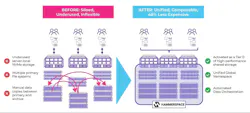
At SC25 last November, Hammerspace announced that the Vanderbilt Advanced Computing Center for Research and Education (ACCRE) has selected the company’s data platform to modernize its research data infrastructure and support growing AI and HPC workloads across the university’s research community.
ACCRE, Vanderbilt University’s campus-wide HPC and research support organization, provides advanced computing and storage services for faculty and students working across disciplines including genetics, physics, engineering, and social sciences. The organization supports large-scale simulations, data analytics, and machine learning workloads for hundreds of active research projects.
To address growing demand for scalable data infrastructure, ACCRE sought a more flexible and cost-efficient way to manage petabytes of research data spread across multiple storage environments. Historically, the center operated separate systems for primary and archival storage, including Panasas, GPFS, and LStore environments.
Under the new deployment, ACCRE will implement a 10-petabyte environment designed to integrate CPU and GPU server-local storage for Tier 0 performance, commodity storage servers for Tier 1 workloads, and multi-petabyte archival capacity from its existing LStore infrastructure under a unified global namespace.
By combining Hammerspace with LStore, ACCRE expects to reduce average storage costs by approximately 48% while improving data accessibility and storage flexibility for researchers. The deployment also aligns with the organization’s preference for commodity hardware architectures over proprietary storage appliances.
“Hammerspace’s platform offers a composable, open architecture that lets us unify GPU server-local, tiered and archival storage into a single data environment,” said Hunter Hagewood, Executive Director of Research Computing Operations at ACCRE. “Combined with LStore, our largest and most advanced storage platform, we now have a long-term strategy for meeting strong capacity demand. This integration not only cuts our costs dramatically but also changes how we deliver compute and storage services to Vanderbilt researchers, making it easier to support the next generation of data-driven science.”
ACCRE’s HPC environment currently includes approximately 750 compute nodes and 80 GPU nodes supporting AI, analytics, and simulation-driven research workflows. Vanderbilt said the new architecture will allow storage environments to be dynamically composed and reconfigured based on evolving project requirements, improving collaboration and throughput for multidisciplinary research teams.
“Vanderbilt ACCRE is a perfect example of how Hammerspace empowers research institutions to modernize their data infrastructure,” said Jeff Giannetti, Chief Revenue Officer at Hammerspace. “By unifying performance, capacity and archive storage into one high-performance data platform, ACCRE can deliver faster insights, greater efficiency and new agility to its scientific community.”