JLL's 2026 Global Data Center Outlook: Navigating the AI Supercycle, Power Scarcity and Structural Market Transformation
Key Highlights
- Global data center capacity is expected to nearly double to 200 GW by 2030, with the Americas leading growth at 17% CAGR, driven by hyperscale demand.
- Power availability is the primary constraint, influencing site selection, development timelines, and infrastructure investments, making energy infrastructure a strategic focus.
- AI workload distribution is shifting from centralized training to distributed inference, impacting data center design, siting, and capital allocation strategies.
- Emerging neocloud platforms and AI-specific facilities are creating new asset classes, commanding higher lease rates and supporting rapid capacity scaling.
- Community acceptance and political risks are increasingly influencing project timelines, requiring proactive stakeholder engagement and early planning.
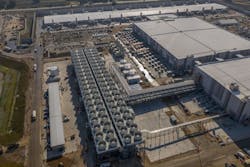
JLL’s 2026 Global Data Center Outlook frames the industry as entering the early stages of what may become a $3 trillion global infrastructure supercycle. Between 2026 and 2030, nearly 100 gigawatts (GW) of new data center capacity is projected to come online; an expansion that would, if realized, effectively double today’s installed base. The demand underpinning that growth is not speculative. It is being driven by hyperscale cloud expansion, the rapid scaling of AI workloads, and the widening geographic footprint of inference computing.
What distinguishes this cycle from previous cloud-driven buildouts, however, is not scale alone; it is constraint. Power availability, rather than land or capital, has emerged as the dominant limiting factor shaping where, when, and how data centers can be developed. As a result, competitive advantage is increasingly accruing to developers, operators, and investors who can secure energy early, navigate utility timelines, structure flexible capital stacks, and design facilities capable of adapting to fast-evolving compute requirements. In this environment, utility infrastructure investment is no longer a background consideration; it is becoming a primary determinant of data center strategy and market outcomes.
Market Sizing and Sector Forecasts: Doubling Capacity in a Constrained World
JLL projects global data center supply growth of approximately 14% CAGR through 2030, lifting installed capacity to roughly 200 gigawatts by the end of the decade. The Americas remain the industry’s center of gravity, accounting for nearly half of global capacity and the fastest regional growth rate at an estimated 17% CAGR, driven primarily by sustained hyperscale demand in the United States.
In Asia-Pacific, capacity is forecast to expand from approximately 32 GW to 57 GW, with colocation operators leading development as enterprises continue to migrate workloads out of on-prem environments. While on-prem capacity does not disappear, its relative contraction reinforces the role of colocation and hyperscale platforms as the primary engines of new supply. In EMEA, JLL anticipates roughly 10% CAGR through 2030, reflecting the combined influence of sovereign AI initiatives, regulatory pressure around data localization, and renewed government backing for domestic digital infrastructure.
Rather than presenting a single deterministic forecast, JLL outlines three potential growth trajectories. A base case assumes energy innovation and grid expansion broadly keep pace with demand, sustaining mid-teens annual growth. An upside scenario, approaching 20% CAGR, depends on AI adoption accelerating beyond current expectations—though it carries elevated risk of localized oversupply. Conversely, a downside case at approximately 7% CAGR reflects scenarios in which power constraints, geopolitical friction, or a pullback in AI investment materially slow deployment.
Across all three scenarios, energy emerges as the decisive variable. The pace and effectiveness of power infrastructure expansion (spanning grid upgrades, behind-the-meter generation, and new energy sources) ultimately determines whether projected capacity materializes or stalls. Industry activity throughout 2025 has already signaled the scale of this challenge, with a growing number of initiatives in the U.S. and internationally focused on expanding power availability on both sides of the meter.
According to Andy Cvengros, Executive Managing Director and Co-Lead of JLL’s U.S. Data Center Market:
The U.S. market is experiencing a fundamental shift in development strategy, with developers moving toward phased developments of hundreds of megawatts to gigawatts and demanding a preference for single-tenant hyperscale leases over multi-tenant colocation where possible. This reflects the scale and urgency of demand we’re seeing, where speed to power in 2027 for new developments has become the primary criteria driving site selection as traditional location and cost factors take a back seat to energy availability.
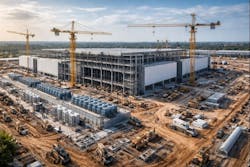
Hyperscalers, Colocation, and the Hybrid Future
Hyperscalers remain the system’s central actors, increasingly pursuing a dual strategy that blends direct ownership with large-scale leasing. JLL estimates that hyperscalers could deploy as much as $1 trillion in data center capital expenditure between 2024 and 2026, supporting the development of approximately 41 gigawatts of owner-occupied capacity delivered between 2026 and 2030.
At the same time, leased capacity as delivered through colocation and build-to-suit models is expected to contribute an additional 62 gigawatts. Speed-to-power, rather than long-term ownership preference, is reshaping development economics, with pre-leased hyperscale deals enabling developers to move projects forward in power-constrained markets. This dynamic continues to favor large, well-capitalized operators capable of executing at scale and navigating utility timelines.
On-prem data center capacity is projected to continue its gradual contraction, though it is unlikely to disappear. Highly sensitive workloads in financial services, government, healthcare, and other regulated sectors are expected to sustain a baseline level of enterprise-owned infrastructure, even as the majority of new capacity gravitates toward hyperscale and colocation platforms.
Taken together, these forces point toward hybrid portfolios becoming the default enterprise architecture rather than an interim transition state. Effective infrastructure strategies increasingly blend hyperscale, colocation, regional edge, and retained on-prem assets, optimizing for power access, latency, cost, and regulatory requirements. While standalone projects will persist, they are likely to be broader in scope and more tightly integrated across multiple deployment models, reflecting the growing interdependence of compute, energy, and operational delivery.
Pricing Power and Rent Growth
With global occupancy approaching 97% and vacancy hovering near historic lows, pricing power remains firmly with data center landlords. JLL forecasts approximately 5% global rent CAGR through 2030, with regional variation reflecting differing degrees of power and land constraint:
-
Americas: 7% CAGR, driven by acute power scarcity and hyperscale concentration.
-
EMEA: 6% CAGR, particularly in land- and energy-constrained metropolitan hubs.
-
APAC: 4% CAGR, moderated by capacity expansion into emerging markets with lower entry costs.
JLL cautions that even these projections may prove conservative if power constraints persist longer than anticipated. Rent growth, in this context, is not simply a function of demand strength, but of infrastructure scarcity. As grid expansion timelines lengthen and access to new generation becomes more competitive, pricing increasingly reflects the embedded value of secured power and delivered capacity rather than the underlying real estate alone.
Artificial Intelligence: The Move From Training to Inference
JLL estimates that AI workloads accounted for roughly 25% of total data center demand in 2025, with the majority concentrated in large-scale training environments. By 2027, the firm anticipates a structural inflection point: inference workloads are expected to overtake training as the primary driver of AI-related demand, with AI overall representing approximately 50% of total data center workloads by 2030.
This shift carries significant implications for data center design, siting, and capital allocation, reflecting the fundamentally different requirements of training and inference. Training workloads remain highly centralized, ultra-dense, and capital-intensive, typically operating at power densities of 40 kW per rack and well beyond. Inference, by contrast, scales outward rather than upward, prioritizing latency sensitivity, regional distribution, and proximity to end users and data sources.
JLL characterizes inference deployment as unfolding in successive waves, moving from centralized cloud clusters toward regional hubs and, ultimately, embedded edge intelligence. As this transition progresses, value creation increasingly migrates away from a small number of hyperscale cores toward a more distributed infrastructure footprint. The result is not simply a change in where data centers are built, but a rebalancing of how compute, network topology, and energy infrastructure intersect across cities, regions, and national boundaries.
For developers and investors, the implication is clear: infrastructure strategies optimized exclusively for training-era assumptions risk becoming misaligned as inference scales. Future-proofing assets will require greater flexibility in power delivery, geographic placement, and facility design to accommodate a broader range of AI workloads and deployment models.
Neoclouds and the Reconfiguration of Cloud Power
JLL identifies the rapid emergence of a “neocloud” ecosystem, i.e. GPU-as-a-service platforms purpose-built for AI workloads, as one of the most consequential structural shifts in digital infrastructure since the early days of cloud adoption. Unlike hyperscale platforms designed around broad, general-purpose compute, neocloud operators are defined by a narrower but highly differentiated profile:
-
AI-first infrastructure design.
-
GPU-centric commercial and utilization models.
-
Tight coupling to power-dense, AI-optimized data center environments.
Critically, JLL does not frame neoclouds as direct competitors to hyperscale cloud providers such as AWS, Azure, or Google Cloud. Instead, they occupy a complementary layer within the AI infrastructure stack, addressing use cases that fall outside the economic or operational sweet spot of general-purpose cloud platforms.
Within this context, AI infrastructure itself is increasingly treated as a distinct asset class. JLL notes that AI-optimized facilities can command lease rates up to 60% higher than traditional data center space, reflecting extreme power density, advanced cooling requirements, and accelerated deployment timelines. Early neocloud platforms have demonstrated an ability to scale capacity rapidly, prompting hyperscalers to partner with, rather than displace, these providers as a way to absorb burst demand, extend geographic reach, and provision specialized AI capacity without over-committing core cloud resources.
The resulting division of labor is reshaping procurement, financing, and real estate strategies. Hyperscalers continue to anchor the market through control of core cloud services and platforms, while neoclouds increasingly function as elastic capacity layers; bridging power constraints, GPU supply volatility, and the growing diversity of AI workload profiles. For developers and investors, this shift reinforces the premium placed on power-dense, AI-ready facilities and introduces new underwriting considerations tied to utilization intensity, hardware cycles, and shorter-duration demand signals.
According to Carl Beardsley, U.S. Data Center Leader, JLL Capital Markets:
The rapid emergence of AI and neocloud deals at scale has defined 2025 as a transformative year for the data center and infrastructure sector.
Sovereign AI and National Infrastructure Policy
JLL frames artificial intelligence infrastructure as an emerging national strategic asset, with sovereign AI initiatives representing an estimated $8 billion in cumulative capital expenditure by 2030. While modest relative to hyperscale investment totals, this segment carries outsized strategic importance. Data localization mandates, evolving AI regulation, and national security considerations are increasingly driving governments to prioritize domestic compute capacity, often with pricing premiums reaching as high as 60%.
Examples cited across Europe, the Middle East, North America, and Asia underscore a consistent pattern: digital sovereignty is no longer an abstract policy goal, but a concrete driver of data center siting, ownership structures, and financing models. In practice, sovereign AI initiatives are accelerating demand for locally controlled infrastructure, influencing where capital is deployed and how assets are underwritten.
For developers and investors, this shift introduces a distinct set of considerations. Sovereign projects tend to favor jurisdictional alignment, long-term tenancy, and enhanced security requirements, while also benefiting from regulatory tailwinds and, in some cases, direct state involvement. As AI capabilities become more tightly linked to economic competitiveness and national resilience, policy-driven demand is likely to remain a durable (if specialized) component of global data center growth.
Energy and Sustainability as the Central Constraint
Energy availability emerges as the report’s dominant structural constraint. In many major markets, average grid interconnection timelines now extend beyond four years, effectively decoupling data center development schedules from traditional utility planning cycles. As a result, operators are increasingly pursuing alternative energy strategies to maintain project momentum, including:
-
Behind-the-meter generation
-
Expanded use of natural gas, particularly in the United States
-
Private-wire renewable energy projects
-
Battery energy storage systems (BESS)
JLL points to declining battery costs, seen falling below $90 per kilowatt-hour in select deployments, as a meaningful enabler of grid flexibility, renewable firming, and limited load-shaping applications. While storage is not a universal solution, its improving economics are expanding its role as a tactical tool for accelerating interconnections and supporting hybrid energy strategies.
Solar paired with storage is positioned as a cornerstone of near-term sustainability planning, particularly in regions with favorable permitting and land availability. Nuclear energy, while recognized as strategically significant for long-duration, carbon-free baseload power, is unlikely to scale meaningfully within the current decade. As Data Center Frontier has consistently reported, realistic timelines for new commercial nuclear deployments extend into the 2030s, limiting its immediate impact on near-term capacity expansion.
Taken together, these dynamics reinforce a central reality: sustainability objectives and power availability are no longer parallel considerations. They are converging constraints that increasingly shape site selection, capital allocation, and facility design across the global data center market.
Development Trends: Modularization and Retrofit Economics
Persistent supply-chain constraints and rising construction costs are reshaping how data centers are planned and delivered. JLL notes that 57% of projects experienced schedule delays in 2025, while construction costs increased at a compounded annual rate of approximately 7% between 2020 and 2025. At the same time, AI-specific fit-outs, as driven by power density, cooling complexity, and electrical infrastructure, can exceed $25 million per megawatt, often eclipsing the cost of shell-and-core construction.
In response, modular and prefabricated systems are moving from specialized use cases into the mainstream of data center development. JLL projects that annual sales of modular systems could reach $48 billion by 2030, reflecting growing demand for faster deployment, repeatable designs, and the ability to scale capacity incrementally across multiple geographies. For developers facing power uncertainty and compressed timelines, modularization offers a way to reduce execution risk while maintaining flexibility.
Equally important, data centers are rarely rendered obsolete by technology shifts. Instead, they are increasingly designed around continuous retrofit cycles, allowing existing assets to absorb new generations of compute, cooling, and power infrastructure over time. New construction is therefore being planned with retrofit economics in mind—prioritizing adaptability, modular upgrades, and long-term asset durability over single-purpose optimization.
Community Acceptance and Political Risk
One of the report’s more revealing findings is what JLL characterizes as a “community acceptance paradox.” While 93% of surveyed respondents express support for data centers in principle, only 35% support projects in their immediate vicinity. This gap translates into a persistent entitlement and political risk that can materially affect project timelines, costs, and feasibility.
As Data Center Frontier has consistently reported, organized resistance to new data center development is becoming more common across multiple markets. Concerns around energy use, water consumption, land use, and perceived local benefit increasingly surface during zoning and permitting processes, introducing uncertainty well before construction begins.
JLL argues that mitigating this risk will require a shift from reactive stakeholder engagement toward proactive co-creation, with community considerations incorporated earlier in the development lifecycle. For developers and investors, community acceptance is no longer a secondary concern; it is an operational variable that directly influences schedule certainty, capital deployment, and long-term project returns.
Capital Markets: Financing This Supercycle
JLL estimates that meeting projected data center demand will require approximately $1.2 trillion in real estate value and $870 billion in new debt by 2030, excluding tenant IT and hardware spend. The scale and duration of this capital requirement exceed the capacity of traditional bank lending alone, accelerating the use of alternative financing structures. Asset-backed securities (ABS) and commercial mortgage-backed securities (CMBS) are expected to play a growing role, with combined issuance potentially reaching $50 billion as early as 2026.
At the same time, the capital stack supporting data center development is becoming more institutionalized. Core and core-plus funds now account for nearly a quarter of total fundraising, reflecting growing demand for stabilized yield and long-duration cash flows. Merger and acquisition activity is also evolving, shifting away from headline megadeals toward recapitalizations, platform-level investments, and joint ventures with property companies. Early-cycle investors are increasingly positioning for exits, while new entrants focus on de-risked assets with secured power and contracted hyperscale tenancy.
Despite recurring concerns about market overheating, JLL finds little evidence of real estate froth. High occupancy rates, long lease durations, and strong hyperscale credit profiles continue to underpin valuations. The more pressing risk, the report suggests, lies not in excess capital but in the industry’s ability to translate financing capacity into delivered, power-enabled infrastructure on predictable timelines.
Flexibility as the Defining Competitive Advantage
JLL’s central conclusion is straightforward: the winners of this cycle will not necessarily be the largest or the fastest, but the most adaptable.
The simultaneous evolution of AI workloads, persistent power scarcity, regulatory complexity, and rising capital intensity is compressing decision timelines while increasing the cost of misalignment.
Success increasingly depends on strategies that anticipate inflection points without locking assets, capital, or geography into assumptions that may not hold.
Viewed through that lens, the JLL 2026 Global Data Center Outlook functions less as a conventional forecast than as a strategic caution.
The next phase of data center growth will favor operators and investors who treat facilities not as static real estate, but as dynamic infrastructure platforms interfacing continuously with power markets, public policy, and rapidly shifting compute requirements.
In an environment defined by uncertainty rather than equilibrium, flexibility is emerging as the industry’s most durable source of competitive advantage.
At Data Center Frontier, we talk the industry talk and walk the industry walk. In that spirit, DCF Staff members may occasionally use AI tools to assist with content. Elements of this article were created with help from OpenAI's GPT5.
Keep pace with the fast-moving world of data centers and cloud computing by connecting with Data Center Frontier on LinkedIn, following us on X/Twitter and Facebook, as well as on BlueSky, and signing up for our weekly newsletters using the form below.
About the Author
 David Chernicoff
David Chernicoff
Related
Voices of the Industry
 Source: SNEHIT PHOTO/Shutterstock.com
 Source: Matthew G Eddy/Shutterstock.com