Revolutionizing Data Center Cooling: Innovations for AI and HPC Growth
Key Highlights
- Chip-level cooling innovations like two-phase liquid modules are managing heat flux more efficiently at the processor and module level.
- Manufacturers are scaling HVAC systems for gigawatt-scale AI campuses, focusing on energy efficiency, water conservation, and design repeatability.
- Engineered fluids from companies like Castrol are becoming critical infrastructure components, supporting both direct-to-chip and immersion cooling methods.
- Water management solutions such as Gradiant's HyperSolved address resource constraints by enabling reuse, treatment, and discharge control at scale.
- The cooling market is fragmenting into specialized, interdependent technologies that together enable cost-effective, scalable AI data center deployment.
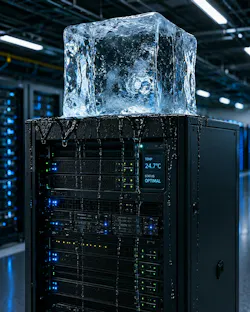
Over the last month we’ve seen a number of significant announcements from vendors focused on addressing the cooling issues in the data center. The five announcements covered here point to a clear shift in the data center cooling market: cooling is no longer being treated as a back-end mechanical discipline that can be solved after the IT architecture is chosen.
AI and HPC growth are pushing thermal design up the stack, closer to the chip, closer to the rack, closer to water strategy, and closer to capital formation, because it always comes down to costs and ROI. Issues surrounding cooling the stack aren’t new, but research into the issue is ongoing. The five companies addressed here are not all attacking the same layer of the problem. T-Global and SiPearl are focused at the chip and module level. Castrol is building the fluid layer for direct-to-chip and immersion cooling. Johnson Controls is systematizing full-campus cooling architectures for AI factories. Safe Air Technology is scaling mission-critical HVAC manufacturing. Gradiant is reframing water as a hyperscale infrastructure layer. Together, they show how the cooling ecosystem is fragmenting into specialized but increasingly interdependent technologies.
T-Global Technology and SiPearl: Cooling Moves to the Chip Package
T-Global Technology’s collaboration with France’s SiPearl is the most chip-proximate of the group. The company’s approved project, under Taiwan’s Ministry of Economic Affairs’ “A+ Driving Industrial Innovation with AI” program, is explicitly focused on “high thermal conductivity materials” and “two-phase liquid cooling modules” for HPC chips. That matters because the thermal challenge in AI and HPC is no longer simply a matter of removing heat from a server room. It is increasingly about managing heat flux at the processor, accelerator, and package level before that heat overwhelms the rest of the cooling chain.
The key phrase in the announcement is two-phase liquid cooling modules for HPC chips. In a two-phase cooling approach, the coolant changes phase — typically from liquid to vapor — as it absorbs heat. That phase change can move large amounts of thermal energy efficiently, which makes it attractive for high heat-flux chips. T-Global’s role appears to be materials and thermal module engineering, while SiPearl brings the processor platform. SiPearl is a European fabless semiconductor company developing energy-efficient processors for HPC, AI, and data center workloads, so the partnership links Taiwan’s thermal materials and module ecosystem with Europe’s push for sovereign high-performance compute silicon.
The broader significance is that chip vendors and cooling suppliers are beginning to co-design thermal systems earlier in the product cycle. Historically, server OEMs and data center operators could rely on air cooling envelopes and later adapt facility cooling to the installed equipment. That model strains under AI workloads, where chip-level heat flux is rising and conventional cooling approaches are reaching physical limits. T-Global’s announcement says exactly that: chip-level heat flux is rising significantly, and advanced thermal solutions are becoming essential to sustain the next wave of computing innovation.
Philippe Notton, CEO and founder of SiPearl clearly identified the focus of the companies project
"We are glad to be collaborating with T-Global, a recognized expert in the field of thermal management solutions, on its flagship project, 'Development of High Thermal Conductivity Materials and Two-Phase Liquid Cooling Modules for HPC Chips.' This excellent opportunity further strengthens SiPearl's long-standing ties with Taiwan's semiconductor ecosystem, under the auspices of the Taiwanese Ministry of Economic Affairs."
The T-Global/SiPearl collaboration also highlights the regionalization of the cooling supply chain. Taiwan is already central to semiconductor manufacturing and server supply chains. By positioning thermal materials, module optimization, and system-level validation as strategic capabilities, T-Global is moving from component supplier to R&D partner. That is important for AI infrastructure because thermal constraints increasingly determine how much compute can be packed into a rack, how much power can be delivered per node, and how reliably processors can run at peak performance.
Safe Air Technology: Scaling Precision HVAC for the Gigawatt Market
Safe Air Technology’s announcement identifies the importance of industrial scale HVAC to move in sync with the increasing demand that AI data centers are bringing with them for advanced air handling as part of the cooling infrastructure in the data center.
The company, based in Baton Rouge, designs and manufactures mission-critical HVAC systems for data center and industrial sectors. Its majority recapitalization by Milton Street Capital, alongside EA Advisors and founder/CEO David Ratcliff, is aimed at scaling production, automating manufacturing, and expanding capacity for what the company calls the “gigawatt-scale market.”
That phrasing is important. The industry’s move from megawatt-scale data halls to multi-hundred-megawatt and gigawatt campuses changes what is required from HVAC suppliers. Data center cooling has always demanded reliability, but AI campuses require repeatable manufacturing, faster deployment, and standardized integration across large fleets. Safe Air’s products include its SAWPAC series and thermal regulated wall systems, and the company positions itself as a supplier to hyperscale, enterprise, and colocation providers operating high-density compute environments.
Safe Air represents the “mission-critical air systems are not going away” side of the cooling market. Even as liquid cooling expands, data centers still need air management for residual heat, electrical rooms, power distribution areas, mechanical galleries, white-space support spaces, and mixed-density environments. Direct-to-chip systems may capture much of the chip heat, but not all heat leaves through liquid loops. Memory, storage, power supplies, networking equipment, busbars, and other components often still create air-side loads. That means precision HVAC and thermal wall systems remain essential in hybrid facilities.
The investment angle is key here. Private equity backing suggests that cooling capacity itself is recognized as a strategic bottleneck. If operators are trying to bring AI capacity online at speed, they need not only better cooling technologies but also suppliers that can manufacture at scale, meet compliance demands, and deliver repeatable systems across multiple campuses. Safe Air’s recapitalization is part of a broader cooling supply-chain buildout we have been seeing: more factories, more automation, more standardized mission-critical products, and more financial backing for vendors that can serve hyperscale demand.
Said David Ratcliff, CEO of Safe Air Technology,
"Our partnership with Milton Street and EAA arrives at a pivotal moment as we automate our production and expand our capacity to meet the needs of the gigawatt-scale market. The Milton Street and EAA teams understand the technical nuances of our industry, and their operational focus will be invaluable as we continue to deliver the specialized cooling solutions our customers depend on."
Johnson Controls: Reference Designs for the AI Factory Cooling Chain
Johnson Controls is approaching the cooling issues from the full-system design layer. Its second AI Factory Reference Design Guide (the first in the series was announced in February) focuses on air-cooled chillers and is part of a broader series that began with a water-cooled chiller guide and is expected to expand into absorption chillers and direct-to-chip liquid cooling. The company is not merely selling equipment; it is trying to define repeatable design architectures for industrial-scale AI factories.
The new guide supports data centers up to a 1-GW AI factory using air-cooled chillers. It integrates high-efficiency YORK centrifugal chillers, including the YDAM and YVAM lines, with fan coil walls and coolant distribution units to manage both air-cooled and liquid-cooled IT loads. Johnson Controls also provides sizing references for 220-MW compute clusters, including design temperatures and operating conditions across the thermal chain.
Austin Domenici, vice president & general manager, Johnson Controls Global Data Center Solutions, points out the issues of designing for scale, saying
"AI Factories are production facilities — the places where intelligence is manufactured at an industrial scale. By supporting the NVIDIA DSX reference architecture and improving water and energy efficiency in the cooling process while maintaining high temperature- loop compatibility, our Reference Design Guide equips customers to deploy gigawatt-scale AI infrastructure that is scalable, repeatable, resilient and sustainable."
This guide speaks to a practical problem facing AI data center developers: there is no single cooling answer for gigawatt-scale facilities. Operators must manage air-cooled loads, liquid-cooled loads, chilled-water loops, technology cooling systems, redundancy, heat-island effects, water constraints, and noise concerns. Johnson Controls is trying to make that complexity repeatable through reference designs.
Johnson Controls says its design can return up to 50 MW to the AI factory through bifurcated loops for air and liquid cooling systems, improve annual energy consumption by 32% through intelligent use of redundant chillers, save 20 MW of peak power by mitigating heat-island effects, and eliminate cooling tower water use, saving more than 12 million gallons of water per day, an especially important point given the current furor over data center water use. The guide also claims a 30% coefficient-of-performance improvement and 27% fewer chillers by raising chilled-water temperatures to support warm-water technology cooling system loops.
The guide is translating AI factory cooling into a design language already familiar to the people in the data center development cycle. Reference designs can be valuable because the market is moving too fast for every project to be engineered from scratch. This technique does not eliminate customization, but it can compress design cycles, reduce risk, and create a common basis for procurement, permitting, and construction.
Castrol ON: Fluids Become Strategic Infrastructure
Castrol ON’s announcement reminds us the importance of what is going on under the hood of liquid cooling implementations. It focuses directly on the growing importance of engineered fluids in the liquid cooling stack. The company’s PG 25 direct liquid cooling fluid has received “OCP Inspired” recognition, while its DC 15 and DC 20 immersion cooling fluids are expected to follow. All three are to be made available in the OCP Marketplace.
The significance of OCP Inspired status is not just branding. The Open Compute Project has become a major forum for standardizing open, interoperable infrastructure designs. For cooling fluids, OCP alignment can help reduce adoption friction by giving operators, OEMs, and integrators more confidence that products fit into a recognized ecosystem. Castrol says its liquid cooling portfolio is among the first of its type offered in the OCP Marketplace, which positions the company as a mainstream data center infrastructure supplier rather than simply a specialty fluids provider.
Castrol’s strategy covers both direct-to-chip and immersion cooling. Direct-to-chip cooling is increasingly attractive for AI servers because it can remove heat from CPUs, GPUs, and accelerators while preserving much of the existing rack and facility model. Immersion cooling, by contrast, submerges IT equipment in dielectric fluid and can offer dense thermal management, but it often requires more substantial changes to service models, hardware compatibility, and operations.
By offering both, Castrol is engineering appropriate fluids for the broader liquid cooling market. PG 25 serves direct liquid cooling, while DC 15 and DC 20 address immersion environments. Castrol frames the portfolio as part of a global end-to-end platform supporting multiple cooling methods across data center environments.
According to Peter Huang, Global President of Data Center & Thermal Management at Castrol,
"Liquid cooling is on pace to become the primary cooling method for data centers within the next two years as compute power intensifies and demand grows. The infrastructure for tomorrow must be built today. With the OCP Inspired recognition and marketplace inclusion, Castrol’s products and network of services and delivery are notably expanding to meet this objective."
The fluid layer is easy to underestimate, but it is critical. The wrong fluid can create compatibility, corrosion, serviceability, environmental, or reliability problems. As liquid cooling moves from pilot deployments to production AI infrastructure, operators will care about supply assurance, fluid lifecycle management, material compatibility, service networks, and ecosystem validation.
Gradiant: Water as the Hidden Constraint in AI Cooling
Gradiant’s HyperSolved announcement addresses a different but equally important cooling constraint: water. The company says HyperSolved is an end-to-end cooling water solution for AI data centers that is already deployed with several of the world’s largest hyperscale operators across major global markets. Gradiant is focused on the water lifecycle; sourcing, treatment, reuse, concentration, discharge, and operational management.
The company’s core argument is that water infrastructure remains fragmented while compute and energy systems have matured. The company points out that data center growth is increasingly constrained not only by power and land, but also by water availability, permitting complexity, and discharge limits. HyperSolved is designed to replace a patchwork of vendors with a single integrated platform that manages the full cooling water lifecycle.
Prakash Govindan, CEO of Gradiant says that this fragmentation needs to be addressed,
“We are in the middle of a once-in-a-generation build-out of AI infrastructure, comparable in scale to historic expansions like the railroads in the 1800’s, which connected regions and transformed entire economies. That level of growth demands a new approach. Today, water is still managed through a patchwork of vendors and solutions that were never designed for hyperscale. HyperSolved changes that by treating water as critical infrastructure, designed, delivered, and operated as one integrated system.”
This is a crucial point for AI infrastructure. In some markets, water can be as politically and operationally difficult as power. Evaporative cooling and cooling towers can consume large volumes of water, while discharge permits can slow projects or limit operations. Gradiant claims HyperSolved can expand access to alternative sources such as municipal reuse and impaired supplies, reduce reliance on freshwater, protect cooling performance through integrated treatment and AI-enabled operations, and minimize discharge through high-recovery concentration and reuse.
The platform uses containerized systems for immediate or temporary capacity while also supporting permanent infrastructure and lifecycle operations from commissioning onward. That fits the AI data center buildout, where developers may need bridge capacity during construction, phased water infrastructure, or interim systems while permanent treatment plants are completed. This can address the speed of deployment issue that plagues many data center solutions.
Water is becoming a siting and scaling variable that has to be addressed. A site may have land and power prospects, but if water sourcing, reuse, or discharge cannot be solved, the project will face higher costs, delays, and local opposition. Gradiant is positioning itself as the managed water layer for hyperscale AI, similar to how power providers, cooling vendors, and network suppliers each own critical infrastructure domains.
The Pattern: Hybridization, Standardization, and Industrial Scale
The announcements included here make it clear that cooling is seeing significant attention from technology vendors, and not just state-of-the-art new technologies such as direct-to-chip, but also traditional data center air cooling.
T-Global and SiPearl are working on high-conductivity materials and two-phase modules for HPC chips. Castrol is providing fluids for direct-to-chip and immersion environments. These are technologies aimed at the heat source itself, where higher chip power and rack density are overwhelming conventional approaches.
The reference design offerings from Johnson Controls acknowledges the importance of design and solutions to scale to meet the AI data center’s needs, while Safe Air is scaling the manufacturing base for precision, well understood, HVAC technology and thermal wall systems
It is also clear that cooling is a layered transformation. AI data centers will likely use combinations of technologies: chip-level thermal materials, direct-to-chip liquid loops, immersion in some cases, air-side support systems, air- or water-cooled chillers, CDUs, fan coil walls, water treatment, reuse, and discharge management. Gradiant’s HyperSolved treats water as part of the data center’s mission-critical infrastructure. Castrol treats engineered fluids as an ecosystem product. Safe Air treats HVAC manufacturing scale as a market enabler. And Johnson Controls treats design repeatability as an infrastructure product in its own right.
AI data centers will use combinations of technologies that will enable the most cost-effective, energy efficient, temperature management. Chip-level thermal materials, direct-to-chip liquid loops, immersion in some cases, air-side support systems, air- or water-cooled chillers, CDUs, fan coil walls, water treatment, reuse, and discharge management. Successful AI data center development will not simply be the companies with the most efficient component. They will be the companies whose technologies fit into repeatable, financeable, serviceable, and globally deployable AI factory designs.
About the Author
 David Chernicoff
David Chernicoff
Related
Voices of the Industry
 Source: Adobe Stock, courtesy of ebm-papst
 Source: Champion Fiberglass