The Data Center Power Squeeze: Mapping the Real Limits of AI-Scale Growth
Key Highlights
- AI workloads are significantly more energy-intensive, with data center electricity consumption expected to reach 134 GW by 2030, nearly tripling current levels.
- Mapping tools like national capacity maps, hosting capacity maps, and real-time congestion dashboards are vital for site selection and risk management amid grid constraints.
- Regions such as Pennsylvania, Texas, Atlanta, Ohio, and emerging markets like Phoenix and Las Vegas are identified as strategic hubs due to their power potential, infrastructure, and untapped resources.
- The industry must innovate in energy sourcing, including utilizing underused assets like non-powered dams and retired industrial sites, to meet future demand sustainably.
- Overcoming grid bottlenecks requires collaboration between public and private sectors, policy innovation, and technological advancements to unlock new power sources and expand capacity.
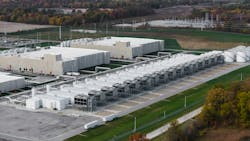
As we all know, the data center industry is at a crossroads. As artificial intelligence reshapes the already insatiable digital landscape, the demand for computing power is surging at a pace that outstrips the growth of the US electric grid. As engines of the AI economy, an estimated 1,000 new data centers1 are needed to process, store, and analyze the vast datasets that run everything from generative models to autonomous systems.
But this transformation comes with a steep price and the new defining criteria for real estate: power. Our appetite for electricity is now the single greatest constraint on our expansion, threatening to stall the very innovation we enable. In 2024, US data centers consumed roughly 4% of the nation’s total electricity, a figure that is projected to triple by 2030, reaching 12% or more.2 For AI-driven hyperscale facilities, the numbers are even more staggering. With the largest planned data centers requiring gigawatts of power, enough to supply entire cities, the cumulative demand from all data centers is expected to reach 134 gigawatts by 2030, nearly three times the current load.3
This presents a systemic challenge. The U.S. power grid, built for a different era, is struggling to keep pace.
Utilities are reporting record interconnection requests, with some regions seeing demand projections that exceed their total system capacity by fivefold.4 In Virginia and Texas, the epicenters of data center expansion, grid operators are warning of tight supply-demand balances and the risk of blackouts during peak periods.5 The problem is not just the sheer volume of power needed, but the speed at which it must be delivered. Data center operators are racing to secure power for projects that could be online in as little as 18 months, but grid upgrades and new generation can take years, if not decades. The result is a bottleneck that is forcing the industry to rethink our approach to energy sourcing, grid integration, and infrastructure planning.
The stakes could not be higher. If the power constraint is not resolved, the AI revolution could stall, with ripple effects across the economy. Companies may be forced to delay or scale back projects, and regions that fail to attract data centers could fall behind in the race for digital leadership. The solution will require a combination of policy innovation, technological advancement, and collaboration between the public and private sectors. Our industry is at a turning point, where the question is not just how much power is needed, but where it will come from.
The Scale of Demand: AI’s Insatiable Appetite
There is no denying it: the rise of artificial intelligence has fundamentally altered the energy landscape for data centers. In the past, data centers were primarily tasked with storing and serving digital content; this role required significant, but manageable, amounts of electricity. The advent of AI has changed that equation. AI workloads, particularly those involving large language models and deep learning, are orders of magnitude more energy-intensive than traditional computing tasks. We hear it; we know it.
Recent studies estimate that AI-specific servers in US data centers consumed 53 terawatt-hours of electricity in 2024, enough to power over 7 million homes for a year. Now consider the previous estimates that this figure could triple by 2030. Our facilities rank among the largest power consumers in the world.
The impact of this demand is already being felt. In Virginia, the nation’s data center capital, utility power demand from data centers is expected to reach 12.1 gigawatts in 2025, up from 9.3 gigawatts in 2024.5 In Texas, the figure is projected to hit 9.7 gigawatts, driven by both hyperscale and crypto-mining projects.4 These statistics reveal a fundamental shift in the way electricity is consumed. Because power is also needed for residential and industrial users, limited grid capacity is driving up prices and straining infrastructure. In a market where power availability is the critical gatekeeper of growth, many operators are willing to pay a premium for access to reliable, scalable energy.
With all operators facing similar challenges, there are many comprehensive guides, maps, and strategies available. With these tools, we can conduct our own advance power study to hopefully shorten the due diligence timeline.
National and Regional Maps of Power Capacity
Mapping the US power infrastructure has become fundamental to site selection, risk assessment, and portfolio planning. This enables our industry to visualize broad market capacity for new load, sketching supply pockets at the regional and state level. Key siting decisions often evaluate the proximity of new projects to high-capacity, reliable generation and substations, or, where redundancy is paramount, to a mix of sources (nuclear, hydro, renewables, gas). Taken together, this also allows early teams to scan for legacy sites (retired or retiring plants) that may have available transmission interconnects and cooling resources, creating brownfield opportunities to accelerate deployment timelines.
For a macro view, EIA’s U.S. Power Plant Map provides a searchable inventory of thousands of power plants nationwide, including each facility’s nameplate capacity, fuel mix, status (operational, retired, planned), and ownership overlays. The Synapse Energy Interactive Map further supplements these records with owner and emissions data, drawing from EPA datasets to create a lens into the carbon profile of every major generator from 2018 to 2023.
Beyond their direct use in site selection, these maps are essential for long-term risk management. The trending overlays for “planned” and “standby” status provide a leading indicator for regions where capacity could swing abruptly as plants retire or convert, or where market signals are prompting investment in new generation. Emission overlays and ownership data also help anticipate political and community acceptance for new large loads—critical as our industry becomes more visible to local stakeholders.
Yet these resources have clear limits: they do not show live system operating constraints, price volatility, or grid flexibility under real-world conditions. As more data centers migrate to AI and HPC deployments, national generation maps serve as a starting point, but not the finish line, for finding available power.
Distribution-Level Hosting Capacity Maps
A decade ago, most projects could assume easy grid access at the distribution level. Today, as hyperscale nodes seek loads orders of magnitude above historic norms, local bottlenecks often dictate project feasibility more than market fundamentals. Hosting capacity maps are also increasingly being integrated into RFP processes, ensuring that new sites are competitively vetted on grid readiness, not just cost or fiber.
For granular siting, the most powerful tool now available is the distribution-level hosting capacity map. Utilities increasingly publish these as GIS portals, color-coding feeders and substations by how much new load they can connect without requiring major upgrades. Green typically means available headroom; red means grid constraints, costly reinforcements, or multi-year approvals.
The DOE U.S. Atlas of Hosting Capacity Map offers an aggregated index of these tools, linking to hundreds of live utility maps across the country, updated as of July 2025. They are designed for use by developers, municipalities, and site selectors, rapidly surfacing neighborhoods, substations, or service territories where distribution circuits are either open for business or already tapped out.
However, caveats remain. No amount of research can guarantee approval, just a “first-pass” filter. Local markets cannot always anticipate and accommodate the collective impacts if multiple projects land in their geography, as we have seen when Atlanta became a sudden hotbed of data center activity. It is also much more challenging to and slower solve the underlying reality of upstream transmission congestion and backlog queue. Despite these limitations, hosting capacity maps are fast becoming table stakes for early site planning and for engagement with utilities on real-time system flexibility.
Real-Time and Congestion Insights
Granular, real-time awareness of grid conditions is no longer optional for our industry’s planners, especially when financial commitments are six- and seven-figure monthly energy bills. Traditional models relied on historical curtailments, seasonal forecasts, or average LMPs; today, actionable intelligence depends on live dashboards and congestion sensors.
The EIA Real-Time Electricity Dashboard provides public, near-real-time data on system frequency, demand curves, regional interchange, and market pricing. This tool, combined with richer commercial and ISO dashboards, enables teams to track supply-demand imbalances, outage risks, and peak load events as they happen. The Ember US Electricity Data Explorer further breaks down generation, fuel mix, and emissions by state and ISO, with monthly, albeit lagged, detail to monitor market shifts and decarbonization trends.
These resources are not just for energy procurement teams: siting professionals, risk officers, and even marketing teams monitor real-time congestion to anticipate permitting narratives and local political risk. During acute grid scarcity or after major transmission outages, demand spikes and curtailments can rapidly upend long-term cost models. Many operators have begun overlaying congestion maps from regional ISOs (such as ISO-NE’s system maps) to triangulate lowest-risk interconnection points.
It should be noted that these dashboards do not capture “latent” or untapped potential at the substation or feeder level; their principal value is as warning systems for stress, not as market growth blueprints. Still, as grid risks become more dynamic and are often weather-driven, near-real-time mapping is now integral to keeping projects both bankable and reliable across increasingly volatile markets.
Untapped Generation Potential
Alongside known sources, the US grid harbors substantial underutilized power that could be unlocked for new demand, including non-powered dams, retired or retiring industrial infrastructure, and grid corridors with falling load. For example, only 3% of the nation’s 80,000 dams generate electricity; the National Hydropower Association and DOE estimate that retrofitting non-powered sites could add 10–12 GW of low-carbon capacity to the national grid.6 Projects like the Red Rock Hydroelectric Project and the Ohio River dam retrofits serve as prime case studies in tapping this overlooked resource, with thousands of megawatts of capacity potentially available using existing water infrastructure.
Hydropower presents one potential generation source, but we can easily think beyond it. Regions with legacy industrial assets, from decommissioned steel mills to former chemical facilities, sometimes possess transmission and land suitable for advanced data center development, as shown in brownfield overlays provided by DOE’s Clean Energy Resources toolkit. Many of these locations enjoy proximity to grid backbones and are already zoned for heavy electricity use, though timelines for securing new generation or upgrading connections remain a challenge.
For forward-thinking operators, untapped grid assets offer a hedge against oversubscribed regions, aligning economic growth with sustainability goals while diversifying risk across regions and fuel types.
Where Will the Power Head To?
No single tool or map can answer, “Where will the power come from?” at the scale and granularity our industry now requires. But by integrating national capacity maps, distribution-level hosting data, real-time grid congestion dashboards, and overlays of untapped generation, industry leaders can build a multi-layered picture of risk and opportunity. Closing the power gap for digital infrastructure will demand complex insights and tools to map not only power potential, but local acceptance as we grow into new markets.
When you layer the national generation maps, utility hosting-capacity tools, DOE clean‑energy siting work, and current development pipelines, a consistent picture emerges of a handful of markets and corridors that look structurally advantaged for power‑hungry AI and HPC builds. Five, in particular, show up repeatedly as “next‑wave” destinations for capacity, backup, and infrastructure readiness—even if each comes with its own strengths and caveats. By overlaying with JLL’s latest data center market report, the same broad set of power‑advantaged regions keeps resurfacing as most likely to push the next wave of AI and HPC growth, because they combine power potential, industrial land, and infrastructure readiness. These five markets reveal themselves:
1. Pennsylvania / Mid‑Atlantic interior
Pennsylvania increasingly shows up as the pressure valve between Northern Virginia and the Midwest, with both power and industrial land positioning it as a natural corridor market. JLL’s U.S. Industrial Market Dynamics, Q3 2025 points to an active national pipeline and a long list of Pennsylvania and Mid‑Atlantic industrial markets—Eastern and Central Pennsylvania, Pittsburgh, and Richmond among them—where large‑scale sites and logistics infrastructure remain available, even as vacancy stabilizes. Noteworthy highlights include the state’s ample power, strong transmission position between NY/NJ and NOVA, and growing interest from both owner‑users and developers seeking 200 MW‑plus sites with 18–36 month power timelines. Regional maps of PJM’s grid show robust backbone transmission and legacy industrial corridors that can be repurposed, while state‑level land and power costs still undercut coastal metros. From our industry’s perspective, Pennsylvania scores well across all four map types: solid underlying generation, promising hosting and brownfield potential, and strategic proximity to the country’s largest existing hub.
In parallel, JLL’s mid‑year North America data center reporting highlights the continued dominance of Northern Virginia and the emergence of Pennsylvania‑adjacent sites marketed specifically for AI and hyperscale growth. When you overlay these signals with grid and clean‑energy maps that show strong transmission backbones and legacy industrial corridors, Pennsylvania and the broader interior Mid‑Atlantic begin to look like a logical next‑wave power corridor—close to existing demand, but not yet fully saturated.
2. Dallas–Fort Worth and the Texas triangle
Texas already ranks as one of the two largest state‑level demand centers, with utility power to data centers projected at roughly 9.7 GW in 2025, up from under 8 GW a year earlier. Growth projections for Dallas–Fort Worth alone call for more than 4,300 MW of future data center power needs, making it one of the fastest‑expanding hubs in the country. What the maps show is a state with abundant generation (including gas, wind, and solar), extensive transmission corridors, and multiple utilities experimenting with tariffs and on‑site “bridge” solutions such as fuel cells to cover near‑term gaps. Hosting‑capacity style intelligence is not as consistently public as in some coastal states, and ERCOT volatility is a real risk, but from a pure power‑access and scale perspective, the Texas triangle remains high on every shortlist.
JLL’s North America Data Center Report identifies Dallas as one of the two dominant absorption engines in the continent, recording 575 MW of demand in the first half of 2025 and more than 1,000 MW of cumulative capacity growth in recent years. The same analysis notes a substantial pipeline under construction and planned, with most of it already pre‑leased—clear evidence that power‑served land in the Dallas–Fort Worth region is being locked up for AI and hyperscale users. JLL’s broader industrial work confirms that the Texas triangle (Dallas–Fort Worth, Houston, Austin/San Antonio) has an expansive industrial inventory and an active development pipeline, supporting power‑intensive uses that can plug into existing logistics, workforce, and grid infrastructure. Against the backdrop of state‑level maps showing abundant generation and ongoing grid initiatives to accelerate large‑load interconnections, Dallas and its neighboring metros stand out as a core “power‑first” growth cluster, even as utilities flag that timelines for new capacity are tightening.
3. Atlanta and the broader Southeast
Georgia shows up repeatedly in both load‑growth forecasts and development trackers, with analysts pointing to “ample land, reasonable power costs, dense fiber, and demand from hyperscalers” as the mix driving rapid expansion around Atlanta. Regional utility maps and DOE clean‑energy siting work highlight strong transmission corridors, growing solar capacity, and a regulatory environment that has been relatively receptive to large loads. Neighboring Carolinas and Tennessee Valley territories add nuclear‑heavy baseload, which many in our industry view as attractive for AI‑class uptime and carbon narratives. While formal hosting‑capacity maps are patchier than on the West Coast or in the Northeast, the directional signal across sources is clear: the Southeast is consolidating its role as a power‑ready growth belt.
Atlanta’s data center footprint has grown from a secondary hub to a genuine powerhouse, and JLL’s mid‑year report frames it as one of the top five markets for absorption, with the market size having doubled since 2023 and on pace to double again by 2026. Fundamentals in JLL’s snapshot—low vacancy, hundreds of megawatts under construction, and over 200 MW planned—underscore how much of the city’s future grid headroom is being dedicated to our industry. At the same time, JLL’s industrial reports highlight Atlanta and a series of Southeastern markets (Charlotte, Nashville, Savannah, Jacksonville, and others) as active logistics and industrial corridors, where large tracts of industrial‑zoned land, transportation nodes, and utility‑served sites are already in play. Layer this on top of DOE clean‑energy siting work that points to growing solar, nuclear baseload nearby, and strengthening transmission in the region, and the picture that emerges is a Southeast arc anchored by Atlanta: a belt where both the grid and industrial real estate ecosystems are being tuned for very large, very power‑dense deployments.
4. Ohio / Midwest data‑center corridor
Columbus and the surrounding Ohio corridor are now firmly on the industry’s radar as an emerging “power plus land” play. The market particularly around Columbus has quietly become one of the most interesting power‑and‑land plays on the map, with American Electric Power reporting interconnection requests for 36 sites totaling 13 GW of load in its Ohio service territory alone, down from over 30 GW after queue pruning, and roughly 18 GW of new demand from data centers across its multi‑state footprint. Analysts now flag “significant growth in Ohio” as operators cluster near existing fiber, interstate transmission, and legacy industrial infrastructure. From a mapping perspective, DOE’s clean‑energy resources work and Midwestern advocacy groups point to competitively priced power, access to renewables and storage, and brownfield opportunities at former heavy‑industry sites, such as steel, auto, and chemical sites. This combination—grid backbone, stranded or underused capacity, and supportive state‑level engagement—makes Ohio and adjacent Midwest states a recurring “up‑and‑to‑the‑right” region in long‑range plans.
Wisconsin is now joining that corridor in a visible way. Microsoft has announced multi‑billion‑dollar plans for large data center campuses in Mount Pleasant and other southeastern Wisconsin locations, leveraging the high‑capacity infrastructure originally developed for the Foxconn project, including substantial transmission build‑out and industrial‑zoned land near Lake Michigan. Regional grid maps and ISO data show that this corner of Wisconsin sits on strong high‑voltage corridors connecting into both Midcontinent Independent System Operator (MISO) and neighboring PJM interfaces, while state and local leaders are positioning these investments as anchors for broader clean‑energy and advanced‑manufacturing strategies. In practical terms, the same attributes that defined Ohio’s rise—available power, legacy industrial sites, and proximity to major load centers like Chicago—are now being replicated just across the state line, turning southeastern Wisconsin into a new node on the Midwest data‑center spine.
While JLL’s North America Data Center Report focuses on Chicago as the Midwest’s incumbent core, with substantial inventory and ongoing expansion, it also notes significant capacity growth and hyperscale interest in other Central U.S. markets tied into major transmission and fiber routes. JLL’s industrial local reports for Columbus, Cleveland, Milwaukee, and other Midwest metros show robust pipelines and healthy absorption, signaling that large, infrastructure‑ready parcels remain available even as demand from manufacturing, logistics, and data centers accelerates. When you combine that with grid analyses showing heavy transmission corridors, legacy industrial substations, and DOE‑identified clean‑energy and brownfield opportunities across the region, the Midwest looks less like a peripheral option and more like a central growth spine for AI‑class infrastructure over the next decade.
5. Emerging “stranded‑power” markets: Phoenix, Las Vegas/Reno, and the interior/landlocked West
Finally, several western metros and sub‑regions repeatedly appear in power and data center mapping as candidates for large‑scale AI growth: Phoenix, parts of Nevada like Las Vegas/Reno, and pockets in states like Idaho, Oklahoma, and Louisiana. Visualizations of future capacity requirements suggest that Phoenix could ultimately support over 5,000 MW of data center demand, with Las Vegas/Reno and other desert or interior hubs not far behind. The through‑line here is a search for “stranded” or under‑utilized power: regions with strong high‑voltage infrastructure, growing renewables, relatively low land costs, and, in some cases, nearby non‑powered dams or other upgradeable assets. Utilities and developers are testing more integrated models, such as combining new generation, storage, and large on‑site backup, to turn these maps from theoretical potential into power‑ready campuses.
JLL’s view of the “Landlocked” West points to a set of interior markets that pair strong high‑voltage networks and industrial land with rising data center interest. Phoenix, for example, is highlighted in JLL’s data center report with nearly 900+ MW of inventory, low vacancy, more than 1.3 GW under construction, and over 4 GW planned, an extraordinary signal of how much power‑enabled capacity developers expect to bring online there in the next few years. JLL’s industrial market coverage for Phoenix, Las Vegas, Salt Lake City, and Denver adds another layer, showing active development and logistics ecosystems that make it easier to stand up and support very large campuses.
When these markets are cross‑referenced with DOE clean‑energy and resource maps, which highlight nearby renewables, storage projects, and in some cases non‑powered or underutilized infrastructure, they form a loose “stranded‑power” arc: places where our industry is betting that today’s relative headroom can be converted into tomorrow’s AI‑scale footprints before they, too, become crowded.
Industrial real estate and data center reporting validates what the power and hosting‑capacity maps already imply: our industry’s future is coalescing around a series of corridors—Pennsylvania and the Mid‑Atlantic interior, the Texas triangle centered on Dallas–Fort Worth, an Atlanta‑anchored Southeast, the Ohio/Midwest belt, and select interior‑West hubs—where power availability, industrial land, and infrastructure readiness are aligning fastest.
References:
4. https://gridstrategiesllc.com/wp-content/uploads/National-Load-Growth-Report-2024.pdf
5. https://www.brownadvisory.com/intl/insights/data-center-balancing-act-powering-sustainable-ai-growth
6. https://www.hydro.org/waterpower/converting-non-powered-dams/
About the Author
 Melissa Farney
Melissa Farney
Melissa Farney is an award-winning data center industry leader who has spent 20 years marketing digital technologies and is a self-professed data center nerd. As Editor at Large for Data Center Frontier, Melissa will be contributing monthly articles to DCF. She holds degrees in Marketing, Economics, and Psychology from the University of Central Florida. She most recently served as Marketing Director for TECfusions, a global data center operator serving AI and HPC tenants with innovative and sustainable solutions. Prior to this, Melissa held senior industry marketing roles with DC BLOX, Kohler, and ABB, and has written about data centers for Mission Critical Magazine and other industry publications.
Voices of the Industry
 Adobe Stock image courtesy of Hitachi Energy