Dual Feed: NextEra Energy, TotalEnergies, ENGIE, NIPSCO, ProPetro, Claibrant Energy, DTE Energy, Redwood Materials, KULR, Honeywell
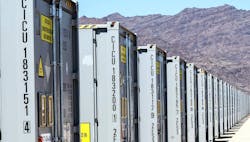
“Dual Feed” — the industry shorthand for data centers sourcing power from multiple feeds or substations — also captures the two parallel energy tracks now reshaping digital infrastructure. In this recurring DCF feature, we survey both sides: utility-driven generation and transmission projects, and the on-site or behind-the-meter capacity developers are deploying to meet AI-scale loads. We also examine new PPA structures, clean-firm power strategies, large-scale BESS deployments, and microgrid initiatives that reveal how the power landscape is evolving around hyperscale growth.
NextEra Sharpens Its Focus on Data Centers Amid Surging AI-Era Demand
U.S. data center energy demand is entering a steep acceleration curve — and NextEra is positioning itself squarely at the center of it. The company projects that by 2030, U.S. data centers could require an additional 22.5–30 GW of capacity, driven largely by the AI boom and the continuous, high-density loads that current grids are increasingly strained to support.
Against that backdrop, data center operators — hyperscalers, cloud platforms, and AI developers — have become one of NextEra’s most strategically important customer groups. On its 2025 earnings calls, the company highlighted a rapidly expanding pipeline of projects tailored specifically to “technology and data center customers.” As NextEra Energy CEO John Ketchum noted this summer:
Our backlog alone now includes approximately 6 gigawatts of projects intended to serve technology and data center customers. If you include our operating portfolio together with the expected build out of our backlog, we will have over 10 and a half gigawatts serving technology and data center customers across the United States.
Because modern data centers require power that is both clean (low-carbon) and firm (reliable, 24/7), NextEra is pursuing a diversified generation and storage strategy. Alongside its expansive renewables pipeline, the company is leaning into nuclear, long-duration storage, and other firming resources to meet AI-scale reliability needs.
Partnering with Major Cloud and AI Platforms
That strategy is already shaping large-scale collaborations. In December 2025, NextEra and Google Cloud announced a landmark partnership to build multiple gigawatt-scale data center campuses across the United States, paired with dedicated generation and capacity infrastructure. Under the agreement, NextEra will supply power tailored to Google’s data-center growth, while Google Cloud will contribute AI and digital-operations technologies to help modernize NextEra’s grid and enterprise systems.
As Google Cloud CEO Thomas Kurian noted:
Working with NextEra Energy to power our infrastructure growth further strengthens our long-standing collaboration and will help us meet increasing demand from our customers as they deploy AI technologies at scale. By infusing NextEra Energy’s deep domain expertise with Google Cloud’s AI infrastructure, platform and models, we can together support the digital future of energy infrastructure.
NextEra’s power strategy for the AI era rests on a simple requirement: data centers need power that is both clean and firm. To meet that dual mandate, the company is building a diversified portfolio that spans renewables, battery storage, nuclear generation, and, where appropriate, natural gas.
A recent example of this approach is NextEra’s expanded clean-energy agreements with Meta, which now total more than 2.5 GW of solar and battery-storage capacity across the Midwest, Texas, and the Southwest to support Meta’s accelerating data center footprint.
A Lot to Do — and Major Moves Ahead
One of NextEra’s most consequential steps is the plan, in partnership with Google, to restart the shuttered 615 MW Duane Arnold Energy Center in Iowa. Targeted to return to service by 2029 under a 25-year PPA, the restart reflects growing recognition that intermittent renewables alone cannot reliably support AI-scale data centers. NextEra executives have framed the company’s posture as an “all-of-the-above” strategy that blends renewables, storage, nuclear, and gas to deliver clean, 24/7 power.
Beyond nuclear, NextEra has indicated that its “land teams” are actively preparing additional generation near major data-center demand hubs — a mix that could include solar, wind, storage, and new gas-fired capacity depending on location and reliability requirements.
Taken together, these moves point to a larger shift: NextEra is no longer simply a renewable-energy supplier selling PPAs at arm’s length. It is evolving into a bespoke energy-infrastructure partner, designing integrated generation, storage, and transmission solutions purpose-built for data center campuses.
The Backbone of Data Center Supply: Renewables, Storage, and Firm Generation
Even as nuclear and other firm resources become more prominent in its strategy, NextEra continues to expand its core business in renewables and battery storage: still essential for carbon-reduction goals, cost efficiency, and rapid scalability. In 2025 alone, the company added roughly 8.7 GW of new renewables and storage projects.
NextEra’s renewables backlog grew by 3.2 GW in Q2 2025, lifting its total pipeline to nearly 30 GW. Notably, about 6 GW of that backlog is earmarked specifically for “technology and data center customers,” particularly AI-oriented hyperscalers.
One example: in Q2 2024, NextEra signed an 860 MW solar-plus-storage agreement with Google, part of a broader more-than-3-GW slate of data-center-linked renewable contracts that quarter.
On the storage front, NextEra’s subsidiary Dominguez Energy Storage, LLC, secured late-2025 approval for a 200 MW BESS near Salt Lake City, Utah. The project underscores the company’s intention to deploy storage across multiple geographies, and not just adjacent to solar farms, as it anticipates increasingly distributed data center load pockets.
Taken together, these initiatives signal a broader architectural approach: NextEra is assembling a modular, scalable power platform for data centers, pairing renewables and storage for “green” supply with nuclear, firm generation, and gas-backed storage where 24/7 reliability and baseload performance are required.
Why NextEra Is Doubling Down on Data Centers
What’s driving NextEra’s intensifying focus on data centers? Several structural factors are converging:
-
Market Opportunity: AI and cloud operators represent one of the fastest-growing, highest-capacity, longest-duration customer segments in the U.S. energy market. With data-center demand projected to surge, NextEra sees an opportunity to lock in multi-decade contracts and stable cash flows.
-
Regulatory & Environmental Pressure: Hyperscalers and cloud platforms have aggressive decarbonization targets. Partnering with NextEra enables them to secure large-scale clean energy and storage, critical for ESG reporting and 24/7 carbon-free power commitments.
-
Reliability and Firm Power Needs: AI workloads are continuous, high-density, and intolerant of intermittent supply. By combining renewables with nuclear, storage, and, where required, natural gas, NextEra can deliver “clean firm” power, a competitive edge over developers offering only intermittent renewable supply.
-
Scale & Diversification: NextEra’s footprint already spans nuclear, gas, solar, wind, and battery storage, allowing it to tailor energy portfolios to specific data-center needs—whether the priority is location, reliability, time-matched clean power, or net-zero alignment.
Other Notable Power and Storage Announcements Closing Out 2025
As 2025 draws to a close, a clear pattern has emerged: hyperscalers and large data-center operators are increasingly seeking one-stop, portfolio-based power solutions that combine renewables, storage, and, in some cases, firm generation.
Several major announcements illustrate how energy developers are positioning themselves to meet that demand.
TotalEnergies + Google: Ohio Solar and a Flexible Renewables Portfolio
In mid-November, TotalEnergies and Google signed a 15-year PPA that will supply 1.5 TWh of certified renewable electricity from the Montpelier solar farm in Ohio, supporting Google’s in-state data center operations.
The project is interconnected to PJM, making it a grid-supplied rather than behind-the-meter resource, but the PPA is structured to closely match Google’s Ohio data-center load profile. TotalEnergies used the announcement to spotlight its broader 10 GW U.S. pipeline of solar, wind, and battery storage—including roughly 1 GW in PJM and 4 GW in ERCOT—explicitly designed to serve large technology and industrial customers.
That portfolio, spanning solar + wind + BESS, gives TotalEnergies the flexibility to deliver time-matched or even 24/7-style clean power offerings, moving beyond traditional REC-based annual matching.
ENGIE + Meta: 600 MW Texas Solar to Expand U.S. Clean Power Portfolio
On October 27, ENGIE and Meta expanded their longstanding U.S. PPA relationship with the 600 MW Swenson Ranch Solar project in Stonewall County, Texas. Meta will offtake 100% of the output. When Swenson comes online in 2027, it will become ENGIE’s largest solar project in North America and will bring the total ENGIE–Meta U.S. PPA portfolio to more than 1.3 GW.
Although the Swenson PPA is a pure-solar transaction, ENGIE positions it within a broader 11 GW North American portfolio spanning solar, wind, and battery storage. In other words, the company is not merely selling standalone PV; rather, it is marketing a flexible, portfolio-based renewable platform that can incorporate storage for shaping and firming.
This is especially relevant in ERCOT, where the project is sited. The region increasingly requires battery capacity to manage congestion, mitigate negative-price events, and support grid stability during extreme weather. ENGIE already operates BESS assets in ERCOT, enabling Swenson to function as a large anchor renewable asset that can be dynamically balanced with storage as Meta’s load evolves.
NIPSCO and Amazon: A 3 GW “Shadow Grid” with 400 MW / 1.6 GWh BESS
On November 25, Northern Indiana Public Service Co. (NIPSCO) announced plans—through its new affiliate, NIPSCO Generation LLC (“GenCo”)—to build up to 3 GW of new dispatchable generation dedicated to serving Amazon’s data centers in northern Indiana.
The package includes:
-
Two 1.3 GW natural gas–fired plants (≈2.6 GW total)
-
A 400 MW / 1,600 MWh battery energy storage system (4-hour duration)
Total capital expenditure for the generation and associated transmission is estimated at approximately $7 billion.
Functionally, this structure creates a dedicated “shadow grid” for Amazon within MISO. GenCo will own and dispatch the assets into the wholesale market, while NIPSCO purchases the output under a PPA specifically to serve Amazon’s load. This arrangement gives Amazon access to large-scale, controllable, clean-firm–adjacent power without waiting for traditional grid upgrades or market-wide resource development.
The 400 MW / 1.6 GWh BESS is central to the design. Far from a backup UPS, it is grid-scale storage intended to smooth the ramping of the gas units, provide fast-response and ancillary services, and enhance system stability as Amazon’s data center footprint grows.
ProPetro / PROPWR: 60 MW Hybrid BESS + Recip Engines for a Midwest Hyperscaler
PROPWR, a division of ProPetro, has signed a long-term agreement to deliver a 60 MW behind-the-meter power system for an unnamed hyperscale data center operator in the Midwest. The project uses a hybrid configuration built around:
-
A battery energy storage system (BESS), paired with:
-
High-efficiency natural-gas reciprocating engines.
Together, the assets form an integrated microgrid-style plant designed specifically for AI-era operational demands. The reciprocating-engine/BESS combination enables:
-
Rapid load-following to track hyperscale ramp rates.
-
Islanding and resilience, allowing the facility to operate independently during grid disturbances.
-
Optional grid support, if interconnected, via fast-response capacity and ancillary services.
The result is a flexible, dispatchable onsite power platform; one calibrated for the volatile load profiles and reliability requirements of modern AI data centers.
Aligned Data Centers + Calibrant: 31 MW / 62 MWh BESS to “Jump the Queue” in the Pacific Northwest
On October 22–23, Aligned Data Centers and Calibrant Energy announced a “first-of-its-kind” 31 MW / 62 MWh on-site BESS at Aligned’s Hillsboro, Oregon campus, slated to come online in 2026.
The central claim: the battery enables the facility to come online years earlier than if it waited for traditional utility upgrades. By using the BESS to manage peak load and stay within a constrained interconnection limit, the data center can support high IT demand while avoiding delays tied to transmission and substation buildouts.
Rather than wait for full firm capacity, the design uses the battery as a bridge asset—maintaining compliance with the limited interconnection while serving substantial early-phase workloads. Once utility upgrades are completed, the same BESS can pivot to:
-
Market participation (arbitrage, ancillary services)
-
Backup resiliency
-
Load-shifting, particularly valuable in the Pacific Northwest’s hydro-rich, increasingly renewable-heavy grid
In effect, the BESS becomes both a schedule accelerator and a long-term operational asset, illustrating a model likely to see wider adoption as interconnection queues lengthen across the U.S.
DTE Energy Seeks Approval to Power a 1.4 GW AI Data Center in Michigan
DTE Energy is requesting approval from Michigan regulators for special electric-service contracts to supply a proposed 1.4 GW AI data center in Saline Township, in a project publicly linked to Oracle/OpenAI.
According to regulatory filings and industry commentary, the scale of the contract would, by itself, necessitate significant new battery storage capacity, reportedly enough to satisfy Michigan’s near-term statewide storage requirement.
Specific MW/MWh configurations have not yet been disclosed.
Energy Storage Announcements Riding the AI Wave
While not yet tied to data center deployments at hyperscale, several companies have recently introduced energy storage offerings aimed squarely at hyperscalers and AI Factory developers. Together, they signal the rapid expansion of a vendor ecosystem building AI-tuned BESS platforms rather than generic grid batteries.
Redwood Materials: “Redwood Energy” Storage Division
Redwood Materials—JB Straubel’s battery-recycling company—has launched Redwood Energy, a new division focused on repurposing used batteries into stationary storage systems. The offering is explicitly positioned to support AI-era data center loads and local grid balancing.
Redwood’s pitch emphasizes rapidly deployable, revenue-generating storage assets that both deliver grid services near AI campuses and create a domestic supply chain for recycled battery materials as U.S. demand for storage accelerates.
KULR: AI Data Center–Focused BESS Platform
KULR Technology Group announced plans to showcase an “AI Datacenter Battery Energy Storage Solution” at Reuters Energy Live 2025. The platform features pack- and tray-level thermal management, enhanced safety characteristics, and predictable discharge profiles tuned to data center duty cycles.
While not a PPA-backed project, the announcement reflects a broader trend: vendors are engineering purpose-built BESS architectures for AI workloads, moving beyond off-the-shelf containerized batteries.
Honeywell + LS Electric: Integrated Microgrid Solutions
In early October, Honeywell and LS Electric unveiled a global partnership to integrate Honeywell’s building controls and energy-management software with LS Electric’s power hardware and BESS platforms. The goal is to deliver turnkey microgrid-style power architectures purpose-designed for data centers.
By bundling controls, software, and hardware into a unified solution, the partnership aims to simplify adoption of on-site microgrid/BESS systems—an increasingly attractive option as operators seek tighter control over power quality, resiliency, and cost.
Conclusion: The New Architecture of AI-Scale Power
Across utilities, independent power producers, and emerging storage vendors, a clear pattern is taking shape: the power systems serving AI data centers are no longer simple PPA-driven add-ons. They are becoming integrated energy platforms; blending renewables, storage, nuclear, natural gas, microgrids, and advanced controls into bespoke architectures designed around hyperscale load profiles and timelines.
From NextEra’s nuclear restart with Google, to NIPSCO’s 3 GW “shadow grid” for Amazon, to Aligned’s interconnection-accelerating BESS in the Pacific Northwest, the industry is inventing new ways to bring firm, clean, rapidly deployable capacity to market. And on the vendor side, companies like Redwood, KULR, Honeywell, and LS Electric are racing to develop battery systems and microgrid solutions tailored specifically to AI-era duty cycles.
The message is unmistakable: As AI workloads scale, so too must the sophistication and integration of the energy infrastructure behind them. The next generation of data centers will be defined not only by GPUs and cooling innovations, but by the power systems engineered to keep them running, reliably and sustainably, at unprecedented scale.
At Data Center Frontier, we talk the industry talk and walk the industry walk. In that spirit, DCF Staff members may occasionally use AI tools to assist with content. Elements of this article were created with help from OpenAI's GPT5.
Keep pace with the fast-moving world of data centers and cloud computing by connecting with Data Center Frontier on LinkedIn, following us on X/Twitter and Facebook, as well as on BlueSky, and signing up for our weekly newsletters using the form below.
About the Author
 David Chernicoff
David Chernicoff
Related
Voices of the Industry
 Source: SNEHIT PHOTO/Shutterstock.com
 Source: Matthew G Eddy/Shutterstock.com