CleanArc’s Virginia Hyperscale Bet Meets the Era of Pay-Your-Way Power
Key Highlights
- Virginia has introduced a new rate class for large electricity users, signaling a move towards more precise cost and risk management for hyperscale data centers.
- Georgia's regulatory framework now includes enforceable backstops and long-term contracts to prevent cost-shifting and stranded assets from large data center investments.
- CleanArc's project demonstrates how hyperscale developers are planning utility-scale infrastructure with phased power delivery, emphasizing sustainability and regulatory compliance.
- Regulators are increasingly requiring transparency in contracts, minimum bills, and explicit financial backstops to align incentives and manage project risks.
- The evolving policies reflect a broader industry trend where large load growth must carry more of the financial and regulatory weight, shaping future data center development strategies.
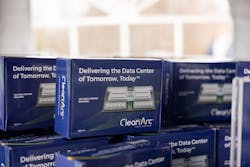
CleanArc Data Centers’ decision to break ground on a 900-MW flagship hyperscale campus in Caroline County, Virginia would have been headline-worthy in any year. In late 2025, it arrived amid something bigger: a fast-moving rewrite of how regulators and utilities in the Southeast and Mid-Atlantic intend to price, protect, and de-risk grid buildouts driven by data center load.
Virginia, already the world’s most concentrated data center market, has now created a new rate class for the largest electricity users, including data centers; an explicit acknowledgment that the state’s next phase of growth requires new tools for allocating cost and risk.
Georgia, meanwhile, shows where the conversation is heading. In a unanimous Dec. 19, 2025 vote, the Georgia Public Service Commission approved a stipulation allowing Georgia Power to proceed with 9,885 MW of new generation, most of it expected to serve large new customers such as data centers; while embedding protections meant to keep existing customers from paying if forecasts miss and projects become stranded.
Together, these three moves (CleanArc’s “power-first” campus, Virginia’s new large-load rate class, and Georgia’s increasingly explicit risk-transfer rules) map the industry’s emerging reality: big load can still move fast, but it will be expected to carry more of the financial and regulatory weight of the grid it requires.
CleanArc’s 900 MW Virginia Campus: A Grid-Scale Approach to Hyperscale Development
CleanArc’s announcement is straightforward on paper: a hyperscale campus in Ruther Glen (Caroline County) offering 900 MW of grid capacity, positioned as a multi-phase development intended to meet surging demand for “hyperscale-ready” infrastructure. Snowhawk Partners, which describes itself as a digital opportunities platform, leads the investment in the project.
Brian McMullen, Managing Partner and Co-Founder of Snowhawk Partners, said:
We are thrilled to support this project, which represents a significant investment in the future of digital infrastructure and underscores our commitment to building advanced, sustainable facilities that empower businesses and communities.
Reports describe the project as a roughly $3 billion campus, the largest economic investment ever announced in the county, according to the governor’s office, with about 50 jobs expected at full operation. In the project announcement, outgoing Governor Glenn Youngkin said:
Virginia is the data center capital of the world, and I am thrilled that CleanArc has selected Caroline County as the site to invest $3 billion for their newest data center campus. By listening to Virginians and collaborating with industry leaders, CleanArc is ensuring this campus brings great jobs and revenue to this community and the Commonwealth while ensuring the high quality of life Virginia is known for. This is the largest announced economic investment in the history of Caroline County and a testament to the results that come from strong collaboration between local and state leaders and industry partners.
What CleanArc’s Project Really Signals About Scaling in Virginia
The more important story is what the project signals about how developers believe they can still scale in Virginia at hyperscale magnitude. To wit:
1) The campus is sized like a grid project, not a real estate project
At 900 MW, CleanArc is not simply building a few facilities. It is effectively planning a utility-interface program that will require staged substation, transmission, and interconnection work over many years.
The company describes the campus as a “flagship” designed for scalable demand and sustainability-focused procurement. Power delivery is planned in three 300 MW phases: the first targeted for 2027, the second for 2030, and the final block sometime between 2033 and 2035.
That scale changes what “site selection” really means. For projects of this magnitude, the differentiator is no longer “Can we entitle buildings?” but “Can we secure a credible path for large power blocks, with predictable commercial terms, while regulators are rewriting the rules?”
2) It’s being marketed as sustainability-forward in a market that increasingly requires it
CleanArc frames the campus as aligned with sustainability-focused infrastructure: a posture that is no longer optional for hyperscale procurement teams.
That does not mean the grid power itself is automatically carbon-free. It means the campus is being positioned to support the modern contracting stack, involving renewables, clean-energy attributes, and related structures, while still delivering what hyperscalers buy first: capacity, reliability, and delivery certainty.
3) The timing is strategic as Virginia tightens around very large load
CleanArc is launching its flagship in the nation’s premier data center corridor at the same moment Virginia has moved to formalize a large-customer category that explicitly includes data centers.
The implication is not that Virginia has become anti-data center. It is that the state is entering a phase where it is trying to reconcile two realities:
- Data centers are now a primary engine of load growth and investment.
- Political and consumer tolerance for cost-shifting is collapsing.
That makes the CleanArc project a test case for what the next generation of Virginia campus development will look like: bigger projects, but also more structured obligations (both contractually and through regulated rates) around how grid upgrades are funded. It will also test CleanArc’s “True Additionality” model, which aims to add new clean energy to the grids where the company is drawing power.
Virginia’s New Data Center Rate Class: A Policy Pivot Toward Insulation and Cost Alignment
The CleanArc project is the largest regional data center development announced since the Virginia State Corporation Commission’s Nov. 25 decision to approve a new rate class for the state’s biggest electricity users, including data centers.
Reporting has framed the move as part of a broader SCC order affecting Dominion Energy Virginia, one that also included a rate increase and approval of new gas generation. Together, those actions point to a simple underlying driver: load growth is forcing new infrastructure, new infrastructure is pushing rates upward, and someone has to pay for it. And regulators are signaling that it will not be residential customers.
At the policy level, the meaning is straightforward: Virginia is explicitly separating conventional commercial and industrial customers from the largest and fastest-growing loads, where data centers are now the archetype. That line is meant to accomplish three things:
1) Reduce the cross-subsidy fight by design, not by argument
When large customers all sit in broad commercial and industrial buckets, disputes over who caused which upgrades quickly become messy and political. A distinct rate class gives regulators and utilities a way to:
- Identify customer-driven versus system-driven costs.
- Adjust demand charges and minimum billing rules based on who actually drives the load.
- Draw clearer boundaries between “system benefit” investments and customer-specific spending.
Given Virginia’s prominence in the data center world, this is not a minor tweak; it is a structural change in how the region plans to manage hyperscale growth.
2) Signal to investors and developers that the “old Virginia” is not the “new Virginia”
The new class is as much a market signal as it is a billing mechanism. It tells developers: Virginia still wants large load, but it also intends to protect customers who are not part of that growth.
In practice, that means more formal negotiation around:
- Network upgrade contributions.
- Contract length and exit provisions.
- The critical question of who pays if load disappears.
3) Align Virginia with a broader national trend: big load must carry more risk
This is the same direction Georgia has taken. Except Georgia is further along, already approving multi-gigawatt generation expansions tied to data center demand while embedding explicit protections.
Virginia’s new rate class is a front-end policy lever: design the billing framework now so the next decade of load growth arrives with fewer political battles and fewer claims of subsidy. For developers and utilities alike, it should translate into clearer expectations about who bears the cost, and the risk, of hyperscale growth.
Georgia PSC: The Clearest U.S. Model Yet for Data Center-Driven Grid Expansion
Georgia’s regulatory story is not a single decision. It is a multi-step build that culminated in late 2025 with a clear message: yes to infrastructure for growth, but not if existing customers are left paying for stranded bets.
The timeline: rules, reporting, and contract discipline
The Georgia PSC’s Data Center Fact Sheet (Dec. 1, 2025) lays out a sequence that reads like a playbook for managing hyperscale load in a vertically regulated utility state. Key steps include:
- In January 2025, the Commission approved new rules allowing minimum bills and longer contract terms for large-load customers, explicitly “to ensure data centers continue paying for new infrastructure even if they leave the state.” It also required Georgia Power to submit all new data center contracts to the PSC at least 30 days before execution.
- In April 2025, the PSC approved changes to Georgia Power’s pricing structures for large-load customers.
- On July 31, 2025, the Commission froze Georgia Power’s base rates through 2028 while continuing work to prevent cost-shifting from new data centers onto residential customers.
These were not symbolic moves. They form a governance framework meant to ensure that load growth comes with enforceable revenue commitments.
The capstone: Dec. 19, 2025 approval of 9,885 MW with explicit backstops
In its Dec. 19, 2025 news release, the Georgia PSC announced a 5–0 vote approving a stipulated agreement allowing Georgia Power to proceed with 9,885 MW of new generation, most of it expected to serve large new customers such as data centers.
The document is unusually direct about the risk regulators are trying to avoid:
- It warns that if projected data center load does not materialize, new facilities could become “stranded assets.”
- It notes that Georgia Power agreed to financially backstop new projects in 2029, 2030, and 2031, beyond the base-rate freeze through 2028.
- It frames the deal as ensuring that “data centers—or, if necessary, Georgia Power itself—will pay for this new infrastructure,” and that existing customers will not.
From an industry standpoint, this marks a key shift. It is not just identifying that large-load customers will pay more. It is requiring that the risk of inaccurate load forecasts be underwritten explicitly, and identified up front.
What This Means in Practical Terms
Georgia’s approach is setting expectations that are likely to spread.
-
Minimum bills and longer terms become standard. Utilities are being asked to build assets with multi-decade lives based on demand that can relocate far more quickly. Long commitments and minimum payments are the hedge against that mismatch.
-
Contract transparency becomes a regulatory requirement, not a courtesy. The PSC’s insistence on reviewing contracts before execution is a direct check on the gap between “announced load” and “contracted load.” It also means data center developers will need stronger internal controls before committing to mega-scale projects.
-
Backstops become the new bargaining chip. The Dec. 19 order makes financial backstops explicit and ties them to the ability to “alter or reverse certification” if contracts are not executed. That is an enforcement posture utilities and developers will have to take seriously elsewhere as well. This is not a pilot—it is how Georgia now intends to manage data-center-scale growth.
The New Rules of Hyperscale Growth
CleanArc’s 900 MW Caroline County campus is a development story, but it is also a regulatory mirror. At this scale, success is no longer determined mainly by land, zoning, and construction sequencing. It increasingly turns on how grid costs are allocated, how risk is structured, and how regulators prove to the public that growth is not being subsidized by those who do not benefit.
Virginia has created a discrete category for its largest users, including data centers; an implicit admission that the state’s growth story now requires new tools for managing cost and risk.
Georgia has gone further, approving multi-gigawatt expansions tied to data centers while embedding minimum bills, contract oversight, and explicit backstops designed to keep “stranded assets” off residential bills.
Whether these models hold will become clearer in 2026. But the direction is already set. The winning data center projects, whether in Virginia’s mature market or Georgia’s fast-growing corridor, will be the ones that can still move quickly while carrying the financial architecture regulators now expect.
Who Pays If the Bet Goes Wrong?
What often gets lost in these regulatory debates is how much this is changing the hyperscalers’ own decision math.
For the biggest buyers of capacity, site selection is no longer just about where power exists; it’s about where power comes with political durability. Minimum bills, exit penalties, contract transparency, and regulatory backstops now sit alongside megawatts and timelines as first-order variables.
A campus that looks attractive on paper can quickly lose its edge if its power deal is vulnerable to public backlash, regulatory reversal, or future cost-shift battles. In the “pay-your-way” era, hyperscalers are increasingly underwriting not just infrastructure, but the stability of the social contract around that infrastructure.
Not every state is moving at Georgia’s pace. In markets like Texas, where generation is more merchant-driven, the risk sits differently, less embedded in formal regulatory backstops and more in market exposure.
Other fast-growth states, from the Midwest to the Southwest, are still working through early versions of the same question Virginia and Georgia are now answering directly: who pays if the forecast breaks?
That question now reaches all the way into capital markets. These regulatory structures do not just satisfy commissions: they increasingly determine whether projects can be financed at all. Lenders and long-term investors want to see minimum bills, long terms, and clear allocation of downside risk. A campus without those features is no longer just a regulatory gamble; it is a financing one.
In the next phase of the hyperscale boom, speed still matters. But only the projects that can prove who pays when the bet goes wrong will be allowed to move fast.
At Data Center Frontier, we talk the industry talk and walk the industry walk. In that spirit, DCF Staff members may occasionally use AI tools to assist with content. Elements of this article were created with help from OpenAI's GPT5.
Keep pace with the fast-moving world of data centers and cloud computing by connecting with Data Center Frontier on LinkedIn, following us on X/Twitter and Facebook, as well as on BlueSky, and signing up for our weekly newsletters using the form below.
About the Author
 David Chernicoff
David Chernicoff
Voices of the Industry
 Image courtesy of Midea Building Technologies
 Adobe Stock image courtesy of Hitachi Energy