CBRE’s 2026 Data Center Outlook: Demand Surges as Delivery Becomes the Constraint
Key Highlights
- Demand for large, contiguous data center capacity is increasing, with premiums commanded for scale and single-tenant high-density deployments.
- Power availability and certainty are now primary site selection criteria, overshadowing traditional connectivity considerations.
- Construction timelines for large AI campuses are extending into multi-year periods due to infrastructure and interconnection complexities.
- Preleasing activity remains high, with rates in the mid-70% range, indicating strong early demand absorption.
- CBRE’s strategic acquisition of Pearce Services enhances its capabilities in power, critical infrastructure, and lifecycle management, addressing execution risks.
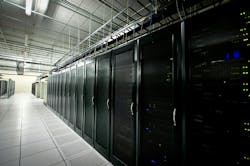
The U.S. data center market is entering 2026 with fundamentals that remain unmatched across commercial real estate, but the nature of the dominant constraint has shifted. Demand is no longer gated by capital, connectivity, or even land. It is gated by the ability to deliver very large blocks of power, on aggressive timelines, at a predictable cost.
According to the CBRE 2026 U.S. Real Estate Market Outlook as overseen by Gordon Dolven and Pat Lynch, the sector is on track to post another record year for leasing activity, even as vacancy remains at historic lows and pricing reaches all-time highs. What has changed is the scale at which demand now presents itself, and the difficulty of meeting it.
Large-Block Leasing Rewrites the Economics
AI-driven workloads are reshaping leasing dynamics in ways that break from prior hyperscale norms. Where 10-MW-plus deployments once commanded pricing concessions, CBRE now observes the opposite behavior: large, contiguous blocks of capacity are commanding premiums.
Neocloud providers, GPU-as-a-service platforms and AI startups, many backed by aggressive capital deployment strategies, are actively competing for full-building and campus-scale capacity.
For operators, this is altering development and merchandising strategies. Rather than subdividing shells for flexibility, owners increasingly face a strategic choice: hold buildings intact to preserve optionality for single-tenant, high-density users who are willing to pay for scale.
In effect, scale itself has become the scarce asset.
Behind-the-Meter Power Moves to the Foreground
For data centers, power availability meaning not just access, but certainty of delivery, is now the defining variable in the market.
CBRE notes accelerating adoption of behind-the-meter strategies as operators seek to bypass increasingly constrained utility timelines. On-site generation using natural gas, solar, wind, and battery storage is gaining traction, particularly in deregulated electricity markets where operators have more latitude to structure BYOP (bring your own power) solutions.
This dynamic is reinforcing a shift toward greenfield development, where power strategies can be engineered from the outset rather than retrofitted into legacy campuses.
The implication is clear. Gone are the days when power strategy was an operational consideration layered onto site selection. It now is site selection.
AI Inference Enters the Demand Conversation
While AI training workloads have dominated headlines, CBRE highlights inference as an emerging demand driver that bears watching in 2026.
Publicly traded data center operators reported that AI-related workloads accounted for a meaningful share of new leasing activity in 2025, signaling that AI demand is already broadening beyond model training clusters.
The open question is where inference ultimately lands. If inference workloads scale into more latency-sensitive, distributed architectures, edge data centers could see renewed relevance.
For now, inference remains tethered largely to large-scale facilities, but the next phase of AI commercialization may test the boundaries between core and edge deployment models.
Power Cost and Speed Supersede Connectivity
Perhaps the most telling shift in CBRE’s outlook is the reprioritization of site selection criteria. Fiber availability and network redundancy, long the top of the checklist, are now secondary to power cost and delivery timelines.
As power consumption grows non-linearly with AI density, developers and occupiers are prioritizing sites capable of supporting 300-MW-plus deliveries within 36 months or less. In many cases, the ability to meet that threshold now outweighs traditional connectivity advantages.
This does not diminish the importance of network infrastructure, but it does reframe it: connectivity is assumed, while power is contested.
Construction Timelines Stretch Into Multi-Year Territory
The supply side of the equation is becoming increasingly complex. CBRE emphasizes that traditional 12- to 18-month delivery timelines for sub-50-MW facilities are no longer representative of the market.
The industry’s pivot toward 500-MW-plus AI campuses has pushed construction schedules into multi-year territory, driven by the need for multiple on-site substations and, in many cases, new high-voltage transmission infrastructure.
Where incremental generation or transmission upgrades are required, interconnection timelines can extend to 24, 36, or even 48 months and beyond.
This structural friction may explain why vacancy remains compressed even as inventory expands.
Preleasing Becomes the New Normal
Preleasing activity underscores the imbalance. CBRE expects preleasing rates to remain in the mid-70% range in 2026, well above the historical norm of 40% to 50%. Even with a 43% year-over-year expansion in primary-market inventory, demand shows little sign of cooling.
Figures included in the CBRE outlook illustrate both rising rental rates for 250- to 500-kW requirements and sustained preleasing intensity across primary markets.
The takeaway is not simply that demand is strong, but that it is arriving earlier in the development cycle, absorbing capacity years before delivery.
Geography Follows Power and Gas
Looking ahead, CBRE anticipates continued greenfield development across emerging U.S. markets, particularly along the Interstate 20 corridor and in deregulated electricity markets.
Regions with abundant natural gas resources are especially attractive, with current commodity pricing well below prior peak cycles.
States including Alabama, Mississippi, Louisiana, Georgia, Florida, South Carolina, North Carolina, Virginia, and Pennsylvania remain priority development zones; not because they are new to data centers, but because they offer a combination of power economics, regulatory flexibility, and physical scale that the AI era now demands.
A Market Defined by Execution Risk
Despite fears of a bubble, CBRE's data shows how the 2026 data center outlook is not defined by demand uncertainty. It is defined by execution risk. Power procurement, interconnection timing, and construction sequencing now determine who can deliver, and who cannot, in a market where tenants are ready to commit capital years in advance.
For operators and developers, the message from CBRE is direct: success in this cycle will hinge less on chasing demand and more on mastering the mechanics of delivery at unprecedented scale.
In the AI era, the market’s appetite for capacity is clear. What remains uncertain is how quickly that capacity can be built, and powered, at scale.
Mortenson’s Maja Rosenquist and CBRE’s Gordon Dolven here discuss how AI’s growth has accelerated data center development, how site-selection strategies are evolving, and the challenges posed by power constraints.
Addendum: CBRE Extends Its Reach Into Power and Execution
CBRE’s 2026 outlook on data centers is not being articulated from the sidelines. In November 2025, the firm made a decisive move to deepen its operational exposure to digital and power infrastructure with the acquisition of Pearce Services, a transaction that underscores how seriously CBRE is positioning itself for the next phase of the data center cycle.
The deal, announced November 4, 2025, values Pearce at approximately $1.2 billion in cash, with an additional earn-out of up to $115 million tied to performance milestones in 2027. Pearce was acquired from New Mountain Capital and is expected to be immediately accretive to CBRE’s core earnings per share. The business will operate within CBRE’s Building Operations & Experience segment.
Founded in 1998 and headquartered in Paso Robles, California, Pearce has built a reputation as a specialized provider of advanced technical services supporting asset uptime and output across digital and power-intensive infrastructure. Its client base includes blue-chip operators across North America, with service lines spanning design engineering, maintenance, and repair.
From a data center perspective, the composition of Pearce’s business is instructive. Critical power and cooling systems account for roughly 34% of expected 2025 revenue, followed by renewable energy generation and storage at 30%, wireless and fiber networks at 29%, and electric vehicle charging networks at 7%.
In other words, Pearce sits squarely at the intersection of the very constraints now shaping data center development: power delivery, reliability, and lifecycle execution.
Pearce employs more than 4,000 people across North America and India, including field technicians distributed throughout the U.S. and Canada, along with centralized teams of design engineers and quality assurance specialists. That workforce profile matters in a market where labor availability and technical execution increasingly determine delivery timelines.
“This acquisition complements our large and growing presence in digital and power infrastructure,” said Bob Sulentic, Chair and Chief Executive Officer of CBRE Group. “It also opens sizable new growth avenues for CBRE in markets where the need for Pearce’s services is growing rapidly.”
From Pearce’s vantage point, the transaction aligns with a similar view of where infrastructure markets are headed.
“We are thrilled to join forces with CBRE, whose strategy and culture are highly complementary to ours,” said Michelle Edler, Pearce’s Chief Executive Officer. “Together, we will unlock significant growth opportunities across the infrastructure markets we serve and deliver even greater value to our customers.”
Financially, Pearce has been growing at a low double-digit compound annual rate since 2022 and is projected to generate more than $660 million in revenue and over $90 million in EBITDA in 2026. With the acquisition, CBRE expects to produce more than $350 million of Core EBITDA from its digital and power infrastructure services businesses in 2026, excluding any upside from potential data center development land sales.
Importantly, the deal did not materially strain CBRE’s balance sheet. The company expected to end 2025 with net leverage of approximately 1.1x, squarely within its stated target range of 0 to 2.0x. J.P. Morgan Securities and Wells Fargo served as financial advisors to CBRE, with Sullivan & Cromwell acting as legal counsel. Ropes & Gray advised Pearce and New Mountain Capital.
Seen in context, the Pearce acquisition reads less like a diversification play and more like a vertical integration move aligned with CBRE’s own market outlook. As data center development shifts toward 500-MW-plus campuses, multi-year delivery schedules, and increasingly bespoke power strategies, advisory insight alone is no longer sufficient. Execution - particularly around power systems, maintenance, and uptime - has become central to value creation.
CBRE’s data center outlook emphasizes that demand is no longer the limiting factor in this cycle. By expanding its in-house capabilities across critical power, renewables, and infrastructure services, the firm is positioning itself to participate more directly in solving the industry’s hardest problem: turning demand into delivered, powered capacity at scale.
In that sense, the Pearce deal is not a footnote to CBRE’s 2026 data center forecast. It is a case study in how the firm intends to operate inside the constraints it describes.
DigitalBridge CEO Marc Ganzi and CBRE’s Pat Lynch here explore the $1.13 trillion digital infrastructure market, discussing trends, challenges, and opportunities. From data centers to cell towers, fiber networks, and edge computing, this conversation addresses the industry's growth, the role of real estate, and the need for innovative solutions.
At Data Center Frontier, we talk the industry talk and walk the industry walk. In that spirit, DCF Staff members may occasionally use AI tools to assist with content. Elements of this article were created with help from OpenAI's GPT5.
Keep pace with the fast-moving world of data centers and cloud computing by connecting with Data Center Frontier on LinkedIn, following us on X/Twitter and Facebook, as well as on BlueSky, and signing up for our weekly newsletters using the form below.
About the Author
 Matt Vincent
Matt Vincent
Matt Vincent is Editor in Chief of Data Center Frontier, where he leads editorial strategy and coverage focused on the infrastructure powering cloud computing, artificial intelligence, and the digital economy. A veteran B2B technology journalist with more than two decades of experience, Vincent specializes in the intersection of data centers, power, cooling, and emerging AI-era infrastructure. Since assuming the EIC role in 2023, he has helped guide Data Center Frontier’s coverage of the industry’s transition into the gigawatt-scale AI era, with a focus on hyperscale development, behind-the-meter power strategies, liquid cooling architectures, and the evolving energy demands of high-density compute, while working closely with the Digital Infrastructure Group at Endeavor Business Media to expand the brand’s analytical and multimedia footprint. Vincent also hosts The Data Center Frontier Show podcast, where he interviews industry leaders across hyperscale, colocation, utilities, and the data center supply chain to examine the technologies and business models reshaping digital infrastructure. Since its inception he serves as Head of Content for the Data Center Frontier Trends Summit. Before becoming Editor in Chief, he served in multiple senior editorial roles across Endeavor Business Media’s digital infrastructure portfolio, with coverage spanning data centers and hyperscale infrastructure, structured cabling and networking, telecom and datacom, IP physical security, and wireless and Pro AV markets. He began his career in 2005 within PennWell’s Advanced Technology Division and later held senior editorial positions supporting brands such as Cabling Installation & Maintenance, Lightwave Online, Broadband Technology Report, and Smart Buildings Technology. Vincent is a frequent moderator, interviewer, and keynote speaker at industry events including the HPC Forum, where he delivers forward-looking analysis on how AI and high-performance computing are reshaping digital infrastructure. He graduated with honors from Indiana University Bloomington with a B.A. in English Literature and Creative Writing and lives in southern New Hampshire with his family, remaining an active musician in his spare time.
Voices of the Industry

 Image courtesy of Midea Building Technologies