Why Conduit Choices Matter as Construction for Resilient, High Density Data Centers Soars

The rapid expansion of data center capacity is placing renewed focus on one of the most fundamental, yet often underestimated, elements of electrical infrastructure: conduit systems. As medium-voltage distribution grows in scale and complexity, conduit decisions increasingly influence not just constructability, but long-term reliability, safety, and operational resilience.
From an engineering and construction perspective, large data center projects present a unique convergence of challenges. Schedules are compressed, labor availability is constrained, site conditions vary widely, and electrical systems must perform reliably for decades with minimal tolerance for failure. Conduit systems, particularly those installed underground or in transitional environments, play a critical role in protecting medium-voltage cables from physical, thermal, and environmental stresses.
Underground complexity and long-term exposure
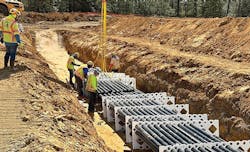
Underground installations are often viewed as “set and forget,” but experienced engineers know that subsurface conditions are rarely static. Soil chemistry, moisture intrusion, thermal cycling, and mechanical loading from future site modifications all affect conduit integrity over time. In large data center campuses, where thousands of feet of medium-voltage conduit may be installed below grade, small material or installation shortcomings can scale into significant long-term risk. Water ingress, joint integrity, and resistance to corrosion are persistent concerns.
Burn-through: a growing consideration
One challenge receiving increased attention is conduit burn-through during cable pulls. Conduit material behavior under heat and friction should therefore be evaluated as part of overall system resilience, not treated as a secondary consideration. Electrical engineers should take a close look at the coefficient of friction for conduit system types. PVC conduit is more vulnerable to burn-through. While steel conduit offers mechanical protection, it requires proper installation practices to prevent potential cable damage during pulling.
Cable fault concerns
Equally important is how conduit systems behave during abnormal electrical events. In medium-voltage environments, fault conditions place extreme thermal and mechanical stress on cable systems that can damage the cable and the conduit. PVC and steel conduit can melt or fuse under high heat, bonding to cable jackets and complicating cable repairs and replacements. In a data center environment where downtime carries enormous cost, maintaining cable accessibility and avoiding secondary damage during faults is critical.
Installation efficiency at scale
Beyond performance, constructability matters. Large data center projects demand repeatable, efficient installation practices across sprawling sites. Conduit weight, joining methods, support spacing, and handling characteristics all influence labor productivity and safety. Materials that are easier to cut, assemble, and support consistently help reduce variability in installation quality, an important factor when multiple crews are working simultaneously under tight schedules.
Coordination between design intent and field execution is especially important for medium-voltage systems. Engineers increasingly consider how conduit selection affects bend radii, pulling tensions, expansion requirements, and long-term maintenance access. These decisions are best made early, with input from contractors who understand real-world installation constraints.
Material selection as a resilience decision
Ultimately, conduit material selection is not just a code-compliance exercise, it is also a risk management decision. Engineers and builders are evaluating materials based on how they perform across the full lifecycle of a data center: initial installation, abnormal events, future expansions, and eventual system upgrades. Attributes such as no burn-through, dielectric performance, resistance to corrosion, thermal stability, and mechanical durability all contribute to infrastructure resilience.
As data centers continue to scale in size and power density, conduit systems deserve a seat at the table during early design discussions. Thoughtful selection and specification can help ensure medium-voltage systems remain reliable, serviceable, and resilient long after construction crews have left the site.
About the Author

Matt Fredericks
Matt Fredericks, vice president of sales and marketing, brings over a decade of electrical industry experience to his role at Champion Fiberglass where he’s focused on helping the Champion Fiberglass sales team drive solutions for contractors and end users of large industrial construction projects.
Champion FiberglassⓇ is a triple ISO-certified manufacturer of lightweight, durable fiberglass conduit systems made in America for demanding electrical infrastructure in data centers, utility transmission and distribution and transportation projects. Learn more about fiberglass conduit for data centers.
Voices of the Industry