The Gigawatt Bottleneck: Power Constraints Define AI Data Center Growth
Key Highlights
- Electricity has emerged as the key limiting factor for data center expansion, overshadowing capital, land, and connectivity considerations.
- Projected U.S. data center IT load could double from 80 GW in 2025 to 150 GW by 2028, significantly impacting grid planning and infrastructure development.
- Texas is poised to become the largest U.S. data center market by 2028, with over 40 GW of capacity, driven by abundant power and land availability.
- Emerging markets like Georgia are expanding rapidly, while traditional hubs such as Northern Virginia face grid constraints that may slow growth.
- Gigawatt-scale campuses are on the rise, with nearly one-third expected to exceed 1 GW by 2035, requiring new infrastructure approaches and grid integration strategies.
- A widening gap exists between developer expectations and utility timelines for power availability, prompting increased focus on onsite generation solutions.
- Onsite power sources, including natural gas, fuel cells, and nuclear technologies, are becoming central to data center design to ensure reliable, predictable electricity supply.
- Electrical architectures are evolving with higher-voltage busways and DC distribution systems, reducing energy losses and supporting large-scale, efficient power delivery.
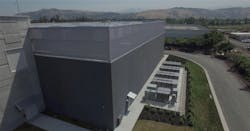
Power is rapidly becoming the defining constraint on the next phase of data center growth.
Across the industry, developers and hyperscalers are discovering that the biggest obstacle to deploying AI infrastructure is no longer capital, land, or connectivity. It’s electricity. In major markets from Northern Virginia to Texas, grid interconnection timelines are stretching out for years as utilities struggle to keep pace with a surge in large-load requests from AI-driven infrastructure.
A new industry analysis from Bloom Energy reinforces that emerging reality. The company’s 2026 Data Center Power Report finds that electricity availability has moved from a planning consideration to a defining boundary on data center expansion, transforming site selection, power strategies, and the design of next-generation AI campuses.
Based on surveys of hyperscalers, colocation providers, utilities, and equipment suppliers conducted through 2025, the report concludes that the determinants of data center growth are changing in the AI era.
Across the industry, the result is a structural shift in how data centers are planned, financed, and powered.
Industry executives interviewed for the report say the shift is already visible in real-world development decisions. “We’re seeing a geographic shift as certain regions become more power-friendly and therefore more attractive for data center construction,” said a hyperscaler energy executive quoted in the report, noting that developers are increasingly prioritizing markets where large blocks of electricity can be secured quickly and predictably.
AI Load Is Accelerating Faster Than the Grid
Bloom’s analysis suggests that U.S. data center IT load could grow from roughly 80 gigawatts in 2025 to about 150 gigawatts by 2028, effectively doubling within three years as AI training clusters and inference infrastructure expand.
That surge is already showing up in grid planning models.
The Electric Reliability Council of Texas (ERCOT), which oversees the Texas power market, now forecasts that statewide electricity demand could reach as much as 218 GW by 2031, more than doubling from current peak levels as large industrial loads, including data centers, come online.
Texas has emerged as one of the industry’s most attractive markets for hyperscale development due to abundant land and historically competitive power pricing. But the scale of projected demand is forcing grid planners to rethink how large loads are integrated into the system.
Bloom’s report notes that grid operators are already revising long-term forecasts. ERCOT, for example, increased its projection for data center-driven electricity demand in 2030 from 29 GW to 77 GW in a single planning cycle, underscoring how rapidly AI infrastructure is reshaping load expectations.
Requests from large electricity users including data centers have surged in recent years, prompting new policies and reforms aimed at managing large-load interconnection requests. Similar pressures are emerging across other U.S. power markets as the rapid buildout of AI infrastructure drives a new wave of gigawatt-scale electricity demand.
The Geography of Data Centers Is Shifting
Power availability is increasingly reshaping where data centers are built.
Bloom’s survey suggests Texas is poised to become the largest U.S. data center market within three years, potentially exceeding 40 GW of deployed capacity by 2028 and capturing nearly 30% of national demand.
That expansion would represent a 142% increase in market share, making Texas the biggest winner in the next phase of infrastructure development.
Other emerging markets are gaining ground as well. Georgia’s market share is projected to grow 75%, reflecting expanding hyperscale development across the Southeast.
Meanwhile several "legacy" markets (including California, Oregon, Iowa, and Nebraska) are expected to lose more than 50% of their relative market share as power constraints and permitting hurdles slow expansion.
Even Northern Virginia, the world’s largest data center hub, faces growing grid limitations that could slow the pace of expansion. Instead, developers are increasingly pursuing power-advantaged regions, expanding into emerging markets across the Southeast and interior United States where large blocks of electricity can be secured more quickly.
Collectively, emerging markets across the rest of the United States are projected to expand their share of the industry by 21%, highlighting how developers are widening their geographic search for reliable electricity supply.
The Rise of the Gigawatt Data Center Campus
At the same time that data center geography is shifting, campus scale is expanding dramatically.
Bloom’s survey finds that about one in five data center campuses could exceed one gigawatt by 2030, rising to nearly one in three by 2035.
At that scale, developers face an increasingly complex set of constraints beyond electricity alone. Cooling capacity, water availability, transmission infrastructure, permitting timelines, and network connectivity all become critical factors in project execution.
These gigawatt-scale facilities increasingly resemble large industrial complexes rather than traditional IT infrastructure, requiring new approaches to infrastructure planning and grid integration.
Developers and Utilities Remain Misaligned on “Time to Power”
One of the most striking findings in the Bloom report is a widening gap between developer expectations and utility timelines.
According to the survey, hyperscalers and colocation providers frequently expect power to be available one to two years earlier than utilities believe they can deliver it.
More than half of respondents report that securing power has become more difficult over the past year.
The challenges highlighted in the report are already playing out in the nation’s largest data center market. The PJM Interconnection, which operates the power grid serving Northern Virginia and much of the Mid-Atlantic, has been grappling with a surge of large-load requests tied to AI infrastructure.
Interconnection backlogs and transmission constraints have lengthened timelines for new capacity, prompting regulators and grid planners to explore new frameworks that would allow data centers to pair their demand with dedicated generation resources.
Onsite Generation Moves Into the Spotlight
Perhaps the most consequential shift identified in the report is the growing role of onsite generation in data center design.
Bloom’s survey suggests that roughly one-third of U.S. data centers may rely entirely on onsite power by 2030, representing a significant increase from earlier expectations.
More than 70% of developers report actively evaluating onsite power providers, reflecting the need for predictable timelines in an environment where grid interconnections can take years to secure.
The shift toward onsite power is also being driven by hyperscale operators themselves. Companies such as Microsoft, Google, and Amazon Web Services have increasingly explored approaches that pair large data center campuses with dedicated generation resources, including natural-gas plants, fuel cells, and emerging nuclear technologies.
In several recent projects, hyperscalers have worked with utilities and regulators to secure gigawatt-scale power commitments years in advance of construction, reflecting a growing recognition that reliable electricity supply has become the gating factor for AI infrastructure deployment.
Electrical Architecture Is Also Evolving
The report also highlights a wave of changes in the electrical design of data centers.
Rising rack densities are accelerating interest in high-voltage busway systems and direct-current (DC) distribution architectures, which allow large blocks of power to move more efficiently across massive campuses.
By 2028, Bloom’s survey finds that 60% of developers expect to adopt higher-voltage busways, while 45% anticipate deploying DC architectures in new facilities.
These approaches can reduce energy losses, simplify campus distribution, and integrate more efficiently with onsite generation sources.
However, widespread adoption will require updates to design standards, supply chains, and workforce training to support new electrical architectures.
Power Moves to the Front of Data Center Strategy
Taken together, the report’s findings reflect a broader shift across the digital infrastructure industry.
For decades, data center development decisions were driven primarily by real estate considerations such as land availability, fiber connectivity, and proximity to users.
In the AI era, that hierarchy has changed.
Power strategy is increasingly moving to the front of the development process. Operators that secure electricity early, whether through utility interconnection, dedicated generation, or hybrid approaches, will be able to deploy capacity faster and at larger scale.
Those that cannot may find that power, rather than demand, defines the limits of data center growth.
At Data Center Frontier, we talk the industry talk and walk the industry walk. In that spirit, DCF Staff members may occasionally use AI tools to assist with content. Elements of this article were created with help from OpenAI's GPT5.
Keep pace with the fast-moving world of data centers and cloud computing by connecting with Data Center Frontier on LinkedIn, following us on X/Twitter and Facebook, as well as on BlueSky, and signing up for our weekly newsletters using the form below.
About the Author
 Matt Vincent
Matt Vincent
Matt Vincent is Editor in Chief of Data Center Frontier, where he leads editorial strategy and coverage focused on the infrastructure powering cloud computing, artificial intelligence, and the digital economy. A veteran B2B technology journalist with more than two decades of experience, Vincent specializes in the intersection of data centers, power, cooling, and emerging AI-era infrastructure. Since assuming the EIC role in 2023, he has helped guide Data Center Frontier’s coverage of the industry’s transition into the gigawatt-scale AI era, with a focus on hyperscale development, behind-the-meter power strategies, liquid cooling architectures, and the evolving energy demands of high-density compute, while working closely with the Digital Infrastructure Group at Endeavor Business Media to expand the brand’s analytical and multimedia footprint. Vincent also hosts The Data Center Frontier Show podcast, where he interviews industry leaders across hyperscale, colocation, utilities, and the data center supply chain to examine the technologies and business models reshaping digital infrastructure. Since its inception he serves as Head of Content for the Data Center Frontier Trends Summit. Before becoming Editor in Chief, he served in multiple senior editorial roles across Endeavor Business Media’s digital infrastructure portfolio, with coverage spanning data centers and hyperscale infrastructure, structured cabling and networking, telecom and datacom, IP physical security, and wireless and Pro AV markets. He began his career in 2005 within PennWell’s Advanced Technology Division and later held senior editorial positions supporting brands such as Cabling Installation & Maintenance, Lightwave Online, Broadband Technology Report, and Smart Buildings Technology. Vincent is a frequent moderator, interviewer, and keynote speaker at industry events including the HPC Forum, where he delivers forward-looking analysis on how AI and high-performance computing are reshaping digital infrastructure. He graduated with honors from Indiana University Bloomington with a B.A. in English Literature and Creative Writing and lives in southern New Hampshire with his family, remaining an active musician in his spare time.