BYOP Moves to the Center of Data Center Strategy
Key Highlights
- BYOP enables data centers to procure dedicated power sources, reducing reliance on traditional utility interconnections and accelerating project timelines by 3-5 years.
- Natural gas is currently the leading onsite generation choice due to its dispatchability, scalability, and familiarity, with fuel cells emerging as a flexible, lower-emission alternative.
- Large-scale projects like Meta’s El Paso campus and xAI’s Mississippi site demonstrate the trend toward self-sufficient, dedicated thermal generation integrated into data center design.
- The shift is impacting turbine manufacturing, with increased demand for gas turbines and modular systems suited for bridge power and rapid deployment.
- Long-term options like advanced nuclear are being explored for sustainable, firm power, but current projects primarily rely on gas and fuel cells for immediate needs.
- Major compute companies are moving upstream into generation procurement, forming structured energy partnerships that challenge traditional utility roles.
- Regulatory and community concerns focus on grid reliability, cost allocation, environmental impacts, and local acceptance, as self-supply models grow in prominence.

Bring your own power (BYOP) describes a development strategy in which the data center developer, hyperscaler, or a power partner procures dedicated generation capacity outside the traditional utility interconnection model—or in parallel with it. It can mean behind-the-meter natural gas, modular fuel cells, or a co-located power plant built alongside the campus. Longer term, it may include advanced nuclear supply. The common thread is straightforward: developers are no longer assuming the grid alone will deliver the scale or schedule they require.
The shift is driven by both economics and timing. Modeling cited by Utility Dive from Camus, Encoord, and Princeton’s ZERO Lab suggests that a 500 MW data center using a hybrid approach (grid plus onsite generation) could reach full operation three to five years faster than through a conventional interconnection path, while reducing grid-related costs by roughly $78 million per GW of demand. For developers pursuing AI training and inference workloads, that kind of acceleration is decisive. A delayed campus is not just a late real estate asset. It represents deferred revenue in a market where capacity carries outsized value.
From Grid Dependence to Power Ownership
That reality is pushing BYOP adoption toward technologies that can be deployed quickly. Natural gas is leading the first wave—not as a sustainability preference, but as a practical one. It is dispatchable, scalable, commercially understood, and often more bankable than waiting on uncertain grid upgrades. What has changed over the past year is execution. These are no longer conceptual strategies; they are showing up as campus designs, permitting actions, equipment orders, and structured partnerships.
The shift is already visible in live projects. Crusoe’s joint venture with Engine No. 1 was formed to create “powered data center” infrastructure and accelerate time to market for large AI campuses, with the venture expected to draw on roughly 4.5 GW of power supply. Crusoe has also emerged as one of the most aggressive buyers of gas-turbine capacity for AI infrastructure. In July 2025, GE Vernova said Crusoe’s combined orders for 29 LM2500XPRESS aeroderivative turbine packages were expected to provide nearly 1 GW of electricity. The units can start independently of the grid and reach full output in minutes. Crusoe said the equipment would “significantly accelerate the path to energization.” That framing captures the BYOP thesis: generation is no longer auxiliary—it is the enabling infrastructure.
The supply chain is adjusting accordingly. GE Vernova said in December 2025 that it expected to end the year with an 80 GW gas turbine backlog stretching into 2029, with reservations potentially sold out through 2030 by the end of 2026. The company also noted rising demand for smaller aeroderivative models suited for “bridge power.” BYOP is not only reshaping data center design; it is reshaping the turbine manufacturing queue. Developers who once competed primarily for land and utility service are now competing for generation equipment slots.
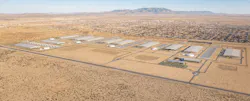
Meta’s El Paso project shows how this model is becoming normalized at hyperscale. The 1 GW campus is reported to include a 366 MW array of behind-the-meter natural gas generation. That does not mean the site is permanently disconnected from the grid, but it does illustrate how dedicated thermal generation is moving into the primary power architecture. It also highlights the political dimension: local officials and community groups have raised concerns about potential impacts on ratepayers and environmental conditions. BYOP can accelerate deployment, but it does not bypass public scrutiny.
xAI’s latest moves in Mississippi extend the pattern at even larger scale. In March 2026, the company received approval to install 41 natural gas turbines capable of generating 1.2 GW to support its Colossus data centers. The choice of a former power plant site is instructive. Developers are beginning to think like industrial energy users; prioritizing fuel access, generation siting, and permitting pathways alongside traditional considerations like tax incentives and fiber connectivity.
Self-Sufficiency Becomes a Feature, Not a Risk
Consider Wyoming’s Project Jade, where county commissioners approved an AI campus tied to 2.7 GW of new natural gas-fired generation being developed by Tallgrass Energy. Reporting from POWER described the project as a “bring your own power” model designed for a high degree of self-sufficiency, with a mix of natural gas generation and Bloom fuel cells. The campus is expected to scale significantly over time.
What stands out is not only the size, but the positioning. Self-sufficiency is becoming a selling point both for developers seeking to de-risk timelines, and for local stakeholders wary of overloading existing utility infrastructure.
Fuel Cells and Nuclear: The Middle Ground and the Long Game
Fuel cells occupy an important middle ground in this shift. Bloom Energy’s 2026 report positions fuel cells as a leading onsite option due to shorter lead times, modular deployment, and lower local emissions. Market activity suggests that interest is real. For developers, fuel cells can be easier to permit than large turbine installations and can be deployed incrementally. That makes them effective as bridge-to-grid solutions or as permanent components of hybrid architectures.
Advanced nuclear remains the most strategically significant, but least immediate, BYOP pathway. Companies including Switch and other data center operators have explored partnerships with Oklo around its Aurora small modular reactor design. Nuclear holds long-term appeal because it offers firm, low-carbon power at scale. But for current AI buildouts, it remains a future option rather than a near-term construction solution. The immediate reality is that gas and modular onsite systems are closing the time-to-power gap, while nuclear is being positioned as a longer-duration successor as licensing and deployment timelines evolve.
The model itself is also evolving. BYOP is beginning to blur the line between developer, energy provider, and compute customer. Reuters recently reported that Microsoft, Chevron, and Engine No. 1 have entered into an exclusivity agreement tied to a proposed West Texas natural gas facility expected to generate up to 2.5 GW. While commercial terms remain in flux, the structure is clear: large compute buyers are moving upstream into generation procurement and structured energy partnerships rather than relying solely on utility service or renewable PPAs.
The Regulatory and Community Reckoning
This shift introduces new tensions for utilities and regulators. Recent discussions in PJM around behind-the-meter generation highlight the challenge. If large loads begin to self-supply, utilities risk losing anticipated demand growth while still being expected to maintain grid readiness and provide partial interconnection. That raises difficult questions: Who pays for transmission upgrades built for loads that may not fully materialize? How should standby and backup service be priced? When does self-supply become a cost shift, and when is it a rational response to delays in grid delivery?
There is also a local political dimension. BYOP may ease strain on constrained grids, but it can intensify concerns around air emissions, water use, noise, land use, and potential ratepayer exposure if dedicated generation is later integrated into the broader system. Pushback around projects in El Paso and the Memphis/Southaven corridor underscores the point. Self-supplied power is not automatically viewed as a community benefit. It can be perceived instead as a private industrial power system operating within a public environmental and regulatory landscape.
The BYOP ethos is now far from any niche workaround. It is becoming an organizing principle for AI-era data center development. Power strategy is moving to the front of the process, shaping site selection around fuel availability, generation pathways, and speed to energization rather than legacy assumptions about grid access. The shift is simple but profound. The old model was “bring your load to the grid.” The new model is “bring your grid to the load.”
At Data Center Frontier, we talk the industry talk and walk the industry walk. In that spirit, DCF Staff members may occasionally use AI tools to assist with content. Elements of this article were created with help from OpenAI's GPT5.
Keep pace with the fast-moving world of data centers and cloud computing by connecting with Data Center Frontier on LinkedIn, following us on X/Twitter and Facebook, as well as on BlueSky, and signing up for our weekly newsletters using the form below.
About the Author
 David Chernicoff
David Chernicoff
Voices of the Industry
 Image courtesy of Midea Building Technologies
 Adobe Stock image courtesy of Hitachi Energy