xAI’s AI Factories: From Colossus to MACROHARDRR in the Gigawatt Era
Key Highlights
- xAI is pioneering a factory model for AI data centers, emphasizing rapid, repeatable deployment using standardized racks and liquid cooling.
- The development of Colossus demonstrated how high-density GPU clusters can be built quickly within existing industrial structures, pushing the boundaries of traditional data center timelines.
- Power infrastructure is lagging behind compute demands, leading to staged utility upgrades and temporary natural-gas generation, raising environmental and political concerns.
- Water management is becoming a critical factor, with proposals for recycled wastewater to decouple cooling from freshwater sources, reflecting a shift in resource planning.
- The expansion to MACROHARDRR signifies a move toward gigawatt-scale facilities, transforming the data center industry into electrical district builders, with infrastructure shaping project acceptance and resistance.
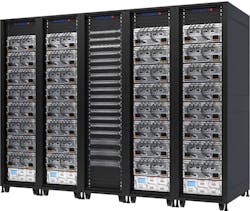
For decades, data centers were designed as careful, conservative pieces of digital real estate. The AI boom is breaking that mold. Facilities are being built less like offices for servers and more like power plants for computation.
xAI’s infrastructure program has become one of the most visible examples of that transition. In a single year, it has compressed what used to be multi-year development cycles into months, pushed density assumptions upward, and forced utilities and regulators to react to compute schedules that now move faster than the grid.
The first full expression of that approach was a site called Colossus.
One of the clearest technical windows into Colossus came last year through a long-planned video produced by ServeTheHome, which was granted rare access to film inside the facility after months of coordination. At the time of filming, the cluster had reached roughly 100,000 GPUs, and xAI allowed the team to document only the portion of the system built around Supermicro hardware.
As shown below, the video, sponsored by Supermicro, focused on what the company described as the more advanced side of the deployment, offering a rack-level view of how its servers and liquid-cooling designs were being used at scale. Unlike typical data center tours, the footage was reviewed in advance by Elon Musk and his team, with some elements deliberately blurred at xAI’s request, underscoring both how unusual the access was and how tightly controlled the project remained even as it entered the public eye.
Colossus: The Prototype
For much of the past year, xAI’s infrastructure story did not unfold across a portfolio of sites. It unfolded inside a single building in Memphis, where the company first tested what an “AI factory” actually looks like in physical form. That building had a name that matched the ambition: Colossus.
The Memphis-area facility, carved out of a vacant Electrolux factory, became shorthand for a new kind of AI build: fast, dense, liquid-cooled, and powered on a schedule that often ran ahead of the grid. It was an “AI factory” in the literal sense: not a cathedral of architecture, but a machine for turning electricity into tokens.
Colossus began as an exercise in speed. xAI took over a dormant industrial building in Southwest Memphis and turned it into an AI training plant in months, not years. The company has said the first major system was built in about 122 days, and then doubled in roughly 92 more, reaching around 200,000 GPUs.
Those numbers matter less for their bravado than for what they reveal about method. Colossus was never meant to be bespoke. It was meant to be repeatable. High-density GPU servers, liquid cooling at the rack, integrated CDUs, and large-scale Ethernet networking formed a standardized building block. The rack, not the room, became the unit of design.
Liquid cooling was not treated as a novelty. It was treated as a prerequisite. By pushing heat removal down to the rack, xAI avoided having to reinvent the data hall every time density rose. The building became a container; the rack became the machine.
That design logic, e.g. industrial shell plus standardized AI rack, has quietly become the template for everything that followed.
Power: Where Speed Met Reality
What slowed the story was not compute, cooling, or networking. It was power.
TVA and Memphis Light, Gas & Water approved an initial 150 megawatts of grid service for Colossus, with a second 150-megawatt increment planned to bring the campus to 300 MW. Delivery was staged. Early power came partly from an existing substation and partly from a new one. Another new substation and further upgrades were required to reach the second 150 MW. xAI also accepted curtailment provisions that allow the utility to reduce its load during periods of grid stress.
That is now a familiar pattern in AI development: power arrives in chapters, not in a single finished volume.
To keep its compute schedule intact while grid work caught up, xAI turned to interim natural-gas generation on site. What was meant to be temporary quickly became central to the project’s public identity. Environmental and civil-rights groups challenged the generators under the Clean Air Act. Permits were issued for some units, contested for others. Some equipment was removed as substations came online. Community opposition, especially in nearby predominantly Black neighborhoods, intensified.
From an infrastructure perspective, Memphis exposed a widening gap. AI deployment now runs on startup timelines. Grid infrastructure still runs on utility timelines. The space between them is filled with “temporary” solutions that are anything but politically invisible.
Water Joins Power as a Constraint
Water entered the picture as well. As part of its negotiations in Memphis, xAI proposed funding a recycled wastewater plant capable of supplying up to 13 million gallons per day of treated water, reducing reliance on local aquifers. The idea was to decouple cooling growth from freshwater draw, using municipal discharge as an industrial input rather than a waste stream.
It was an unusual move. Not because recycled water is exotic, but because it was positioned as part of the core strategy, not a side mitigation. In the AI era, water is joining power as a first-order constraint.
Across the data center sector, that shift is already visible. Hyperscalers and large operators are increasingly designing around three parallel questions: where does the power come from, how fast can it arrive, and what happens to water when density doubles or triples. In arid and semi-arid markets, that has pushed operators toward reclaimed water, air-assisted or hybrid cooling, and explicit “water-positive” pledges tied to local replenishment projects. In wetter regions, it has meant negotiating priority access, investing in treatment infrastructure, or redesigning cooling systems to reduce make-up water per megawatt.
What makes xAI’s approach notable is not that it recognized the problem, but that it treated water infrastructure the same way it treated power: as something that might need to be built, financed, and integrated directly into the project, rather than assumed to be available. The recycled-water proposal effectively reframed cooling as a civic-scale utility problem, not just a facilities-engineering problem.
That framing is likely to spread. As AI racks push thermal density higher, cooling systems are no longer a quiet background function. They are becoming visible parts of local resource politics; just like substations, transmission lines, and backup generation. In that sense, xAI’s wastewater proposal is less an outlier than a preview: in the next phase of the AI data center cycle, successful projects will not just secure megawatts. They will have to secure gallons, too.
From One Site to a Pattern: MACROHARDRR and the Factory Model
By late 2025, Colossus was no longer a singular experiment. Real estate and infrastructure watchers were tracking what appeared to be a second large xAI facility in the Memphis region, often referred to as “Colossus 2.” xAI has not published detailed specifications, but the outline was familiar: large industrial volume, rapid fit-out, and power and cooling pursued in parallel.
The point was no longer to build one heroic project. It was to replicate a factory.
That factory crossed the state line in January.
Mississippi officials announced that xAI will invest more than $20 billion in a new campus in Southaven, in DeSoto County just south of Memphis. The site, called MACROHARDRR, is expected to begin operations in February 2026. State and local incentives were central to the deal, including sales and use tax exemptions on computing hardware and software, waivers of sales, corporate income, and franchise taxes, and substantially reduced property taxes at the city and county level.
Mississippi framed the project as the largest private investment in its history. Gov. Tate Reeves predicted hundreds of permanent jobs, thousands of indirect jobs, and long-term tax revenue, even as the incentive structure means much of that revenue will arrive slowly. Elon Musk praised what he called the state’s “insane execution speed,” saying xAI and Mississippi were moving “at warp speed.”
Like Colossus, MACROHARDRR is being built in an existing structure rather than on a greenfield site. The strategy is familiar: reuse big industrial volume, move fast inside the fence, and line up infrastructure as quickly as the outside world allows. But the Mississippi project also makes explicit what was implicit in Memphis: that the factory model now has to scale not just across buildings, but across jurisdictions.
MACROHARDRR carries the factory model into a state eager to trade speed and incentives for scale. But it also inherits the lessons of Memphis: that when compute moves faster than utilities, and factories arrive faster than civic consensus, infrastructure becomes more than an engineering variable. It becomes the terrain on which these projects are accepted, or resisted.
The Shadow of Memphis
The Mississippi announcement arrived with baggage.
xAI’s Memphis operations remain under scrutiny from environmental and civil-rights groups, including the NAACP and the Southern Environmental Law Center, over air pollution tied to interim generation. In Southaven, a local group called the Safe and Sound Coalition has already gathered hundreds of signatures opposing xAI’s developments in the region.
State officials emphasized that environmental responsibility is a “core commitment” for xAI. The company did not immediately respond publicly to questions about those concerns.
The geography may be new. The political terrain is not.
From Megawatts to Gigawatts
With MACROHARDRR, xAI has changed the scale of its own story.
Colossus was measured in hundreds of megawatts. The Memphis–Southaven cluster is now being marketed in gigawatts. CFO Anthony Armstrong said the combined sites will support what xAI calls “the world’s largest supercomputer,” with an eventual footprint of about 2 GW.
Whether that number represents firm interconnection plans or long-range ambition will matter to utilities, regulators, and competitors alike. But the language alone is telling. xAI is no longer talking like a startup building data centers. It is talking like a hyperscaler building electrical districts.
What the Past Year Shows
Operationally, the past year shows that xAI can stand up massive GPU clusters quickly, industrialize density with liquid cooling, and turn old factories into AI factories.
Structurally, it shows something harder:
-
Compute now moves faster than power.
-
“Temporary” generation is no longer a footnote; it is a reputational risk.
-
Water, air permits, and community politics are as strategic as servers.
Colossus was the prototype. MACROHARDRR is the sequel with a bigger budget and a persistent environmental and political soundtrack.
For the rest of the industry, xAI’s year is less a curiosity than a preview. This is what the AI data center era looks like: fast, capital-heavy, electrically hungry, and increasingly shaped not by what can be built, but by what can be powered, permitted, and accepted.
At Data Center Frontier, we talk the industry talk and walk the industry walk. In that spirit, DCF Staff members may occasionally use AI tools to assist with content. Elements of this article were created with help from OpenAI's GPT5.
Keep pace with the fast-moving world of data centers and cloud computing by connecting with Data Center Frontier on LinkedIn, following us on X/Twitter and Facebook, as well as on BlueSky, and signing up for our weekly newsletters using the form below.
About the Author
 Matt Vincent
Matt Vincent
Matt Vincent is Editor in Chief of Data Center Frontier, where he leads editorial strategy and coverage focused on the infrastructure powering cloud computing, artificial intelligence, and the digital economy. A veteran B2B technology journalist with more than two decades of experience, Vincent specializes in the intersection of data centers, power, cooling, and emerging AI-era infrastructure. Since assuming the EIC role in 2023, he has helped guide Data Center Frontier’s coverage of the industry’s transition into the gigawatt-scale AI era, with a focus on hyperscale development, behind-the-meter power strategies, liquid cooling architectures, and the evolving energy demands of high-density compute, while working closely with the Digital Infrastructure Group at Endeavor Business Media to expand the brand’s analytical and multimedia footprint. Vincent also hosts The Data Center Frontier Show podcast, where he interviews industry leaders across hyperscale, colocation, utilities, and the data center supply chain to examine the technologies and business models reshaping digital infrastructure. Since its inception he serves as Head of Content for the Data Center Frontier Trends Summit. Before becoming Editor in Chief, he served in multiple senior editorial roles across Endeavor Business Media’s digital infrastructure portfolio, with coverage spanning data centers and hyperscale infrastructure, structured cabling and networking, telecom and datacom, IP physical security, and wireless and Pro AV markets. He began his career in 2005 within PennWell’s Advanced Technology Division and later held senior editorial positions supporting brands such as Cabling Installation & Maintenance, Lightwave Online, Broadband Technology Report, and Smart Buildings Technology. Vincent is a frequent moderator, interviewer, and keynote speaker at industry events including the HPC Forum, where he delivers forward-looking analysis on how AI and high-performance computing are reshaping digital infrastructure. He graduated with honors from Indiana University Bloomington with a B.A. in English Literature and Creative Writing and lives in southern New Hampshire with his family, remaining an active musician in his spare time.
Voices of the Industry
 Image courtesy of Midea Building Technologies
 Adobe Stock image courtesy of Hitachi Energy