Nuclear Momentum Meets the Megawatt Test
Key Highlights
- The U.S. nuclear industry has made rapid advances in reactor testing, regulatory actions, and power agreements, with a focus on supporting data centers and AI infrastructure.
- Key projects include the Microsoft-backed restart of Pennsylvania’s Crane nuclear plant and Kairos Power’s Hermes 2 demonstration plant, which is under construction and targeted to begin supplying the TVA grid in 2030 under a utility power purchase agreement.
- Four advanced reactors achieved criticality in recent months, demonstrating technical progress and supporting future commercial deployment, though full power systems and operational reliability remain to be proven.
- Federal initiatives, including a $17.5 billion loan program and regulatory reforms, aim to streamline licensing, expand supply chains, and accelerate reactor construction timelines.
- The integration of nuclear power with data centers is evolving from pilot projects toward binding power agreements, as described by the participating companies, signaling growing industry confidence while leaving substantial execution risk.
Moving into summer 2026, the U.S. nuclear industry has produced a rapid succession of reactor tests, regulatory actions, financing commitments and power agreements. Artificial intelligence and data center demand run through much of the activity, but the distance between a nuclear announcement and a deliverable megawatt remains substantial.
On the fastest timeline, an existing commercial reactor in Pennsylvania cleared important regulatory and grid-related obstacles on its way toward a planned 2027 restart, backed by a 20-year agreement with Microsoft. On another, four microreactor developers achieved zero-power fueled criticality in little more than a month, although the criticality tests themselves produced no useful electricity. Elsewhere, the Department of Energy offered $17.5 billion in conditional financing intended to accelerate 10 large Westinghouse AP1000 reactors, while federal agencies proposed extensive revisions to the rules governing reactor licensing and environmental review.
The period also produced a 1-gigawatt data center proposal at the Savannah River Site, a microreactor deployment partnership aimed at more than 3 gigawatts of capacity, a nuclear power purchase agreement involving Walmart, and additional progress at projects already supported by Google and other large electricity buyers.
Taken together, the announcements show that the nuclear-data center relationship is becoming more concrete. They do not, however, all represent the same level of commitment. Some involve binding power purchase agreements, as described by the parties. Others are pilot projects, federal loan offers, technology demonstrations, regulatory proposals or negotiations that may never become operating power plants.
That distinction will determine whether the past 60 days marked the beginning of a genuine nuclear construction cycle or simply one of the industry’s most energetic announcement cycles.
Crane Provides the Strongest Link Between AI Demand and Near-Term Nuclear Power
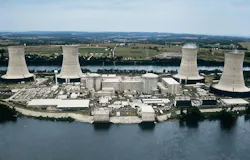
The Christopher M. Crane Clean Energy Center in Pennsylvania, formerly known as Three Mile Island Unit 1, remains the clearest example of contracted data center demand helping bring a retired American nuclear reactor back toward commercial operation.
On June 2, the Federal Energy Regulatory Commission granted a waiver allowing Constellation Energy to transfer 760 megawatts of capacity interconnection rights from the Eddystone natural gas plant near Philadelphia to Crane. FERC said the transfer could reduce or eliminate some of the contingent transmission facilities associated with Crane and potentially improve the plant’s interim deliverability. Constellation said the decision put the project back on a path toward its targeted 2027 restart.
Several days later, the Nuclear Regulatory Commission published a draft environmental assessment and draft finding of no significant impact covering proposed federal actions required to reauthorize power operations. NRC staff preliminarily concluded that restarting the plant would not significantly affect the human environment. The review covers an 835-megawatt unit and also notes the Department of Energy’s consideration of federal financial assistance for refueling and restarting the facility.
These actions occurred within the 60-day period, although the commercial foundation for the project was announced earlier. Constellation has a 20-year agreement to sell Microsoft all of Crane’s electricity, capacity and clean-energy attributes. The power will support Microsoft data centers across portions of PJM’s Mid-Atlantic and Midwest footprint.
The arrangement provides Constellation with a creditworthy customer and predictable revenue against which it can justify the approximately $1.6 billion restart program. For Microsoft, it offers a relatively near-term source of round-the-clock nuclear generation in a region where transmission constraints, plant retirements and data center demand have tightened the power market.
The plant is not yet operating, and Constellation must still complete physical work, licensing actions, testing and grid arrangements. Nevertheless, the June regulatory actions strengthened the project’s path toward its targeted 2027 restart.
Kairos Advances a Reactor Tied to a Binding Utility Power Agreement
At the opposite end of the technology spectrum is Kairos Power’s Hermes 2 project in Oak Ridge, Tennessee. Kairos describes Hermes 2 as its first commercial-scale demonstration plant and the first planned delivery under its master development agreement with Google. Targeted to begin operating in 2030, the plant is expected to provide as much as 50 megawatts to the Tennessee Valley Authority grid through what Kairos and TVA describe as the country’s first utility power purchase agreement for electricity from an advanced reactor. The TVA system serves Google data centers in Tennessee and Alabama.
The broader Google-Kairos arrangement establishes a pathway for as much as 500 megawatts of advanced nuclear capacity by 2035. Under the structure, Kairos develops and operates the reactors, TVA purchases the initial Hermes 2 power, and the generation supports the regional grid serving Google’s growing data center load.
Kairos followed the May update with manufacturing and licensing milestones. On June 24, the company reported producing more than 60,000 annular surrogate fuel pebbles through an increasingly automated manufacturing process. The non-nuclear pebbles simulate characteristics of the company’s TRISO fuel design and will support internal testing, including an engineering test unit containing approximately 16 metric tons of molten fluoride salt coolant. On July 16, Kairos announced completion of verification and validation reports for its KP-BISON code, which models the performance of TRISO fuel particles in the company’s salt-cooled reactor system. Kairos plans to submit the work to the NRC to support future reactor licensing.
Hermes 2 occupies a middle ground between Crane and the more speculative microreactor projects. Its power is not expected before 2030, and its design has not accumulated the operating history of a conventional light-water reactor. But it has a defined site, construction activity, a named technology customer and a binding utility power purchase agreement.
Four Criticality Demonstrations Reset Expectations
The most dramatic technical announcements came from Antares Nuclear, Valar Atomics, Deployable Energy and Aalo Atomics. Between June 4 and July 4, the four companies achieved zero-power fueled criticality under Department of Energy programs intended to accelerate advanced reactor testing. Criticality means a reactor has established and controlled a self-sustaining nuclear chain reaction. In a zero-power experiment, however, the reactor produces little or no useful electricity.
That difference was sometimes lost in the enthusiasm surrounding the announcements.
Antares completed the first test on June 4 at Idaho National Laboratory. DOE described the Mark-0 as the first privately developed non-light-water reactor to reach criticality in the United States in more than four decades. The experiment is intended to support subsequent Antares reactors that could begin producing electricity in 2027 or later. Initial applications are expected to include military installations and other locations needing resilient power.
Valar Atomics followed with its Ward 250 reactor in Utah. DOE announced the June 18 achievement as the first DOE-authorized reactor built outside a national laboratory. The reactor sustained a controlled chain reaction but had not yet produced commercial-scale power.
Valar then supplied the most visible connection between the criticality program and data center technology. After reaching criticality, Valar advanced Ward 250 to approximately 10 kilowatts of thermal output and conducted a separate demonstration in which power from the reactor was used to run Nvidia Blackwell-based computing hardware. On July 1, Valar and Nvidia also announced that they were exploring a small Utah data center using closed-loop cooling and behind-the-meter advanced nuclear generation.
The demonstration load was microscopic beside a hyperscale campus that may require hundreds of megawatts. Nvidia described the work as an exploration of how behind-the-meter advanced nuclear systems could support future AI factories, not as an agreement to purchase a specified quantity of electricity.
Deployable Energy became the third developer to achieve zero-power criticality when its Unity reactor completed its experiment at Idaho National Laboratory on June 30. DOE announced the result July 1, noting that the three companies had satisfied the administration’s objective of achieving three advanced reactor criticality milestones by July 4.
The commercial follow-up came quickly. On July 7, Deployable Energy and energy-infrastructure facilitator GridMarket announced a partnership aimed at data centers, hyperscalers and industrial customers. The agreement includes a committed pilot project and priority access to future Unity capacity. The companies said they were targeting 500 megawatts of annual deployments from 2030 through 2035 and more than 3 gigawatts cumulatively.
The companies have not publicly named the pilot host or end customers. Even so, the committed pilot and access provisions put the arrangement ahead of a conventional memorandum of understanding. GridMarket is attempting to assemble sites, customers, technology and capital before commercial Unity units become available.
Aalo Atomics completed the fourth criticality experiment on July 4, with DOE announcing the achievement July 6. Aalo-X went from groundbreaking to a sustained chain reaction in approximately eight months, according to the company.
Aalo said the test would support a commercial-scale system designed to produce 10 megawatts of electricity for an on-site data center in 2027. That is a specific deployment objective, but no named data center operator or binding power buyer was disclosed.
Collectively, the four experiments demonstrated that developers can assemble fuel, components, safety documentation and qualified teams on compressed schedules when working through DOE-authorized test programs. They also supplied investors and potential customers with evidence that the underlying reactor physics works.
As yet, these startups have not demonstrated full-power conversion systems, multi-year reliability, commercial operating costs or repeatable manufacturing at scale. Those are the metrics that will determine whether microreactors can compete in the data center market.
Savannah River Introduces the Federal “Gas First, Nuclear Later” Model
On July 20, the National Nuclear Security Administration selected Amentum to negotiate a phased lease for an AI data center and dedicated power project at the Savannah River Site in South Carolina.
The proposed development would combine a 1-gigawatt data center with approximately 2 gigawatts of on-site generation. NNSA described the energy plan as natural gas “bridging to nuclear energy.” The additional generating capacity is intended both to support the data center and potentially increase power availability to the surrounding grid.
The announcement places nuclear power inside a federally sponsored data center development rather than adding it later as an unrelated clean-energy purchase. It also reflects growing political pressure to prevent large computing campuses from transferring the cost of new generation and grid upgrades to residential customers.
Amentum was selected to enter negotiations; it did not receive a final lease. The announcement did not identify a hyperscale tenant, reactor developer, nuclear technology, construction schedule or power purchase price. Permitting, security reviews, negotiations and other federal approvals remain outstanding.
Natural gas is expected to provide the bridge because the data center can be developed faster than new nuclear capacity. Nuclear could eventually replace or supplement that generation after reactors are licensed and constructed.
Private energy campuses being planned elsewhere have talked about a similar process: install gas turbines, grid connections or other immediately available generation first, establish the computing load and revenue stream, and then take advantage of SMR or other compact nuclear technologies when they become available.
This approach acknowledges an uncomfortable timing problem. AI infrastructure developers want power as soon as possible. Gas can satisfy near-term load, while dependable commercial capacity from many first-of-a-kind nuclear projects remains a 2030s proposition.
Washington Offers $17.5 Billion to Restart the Large-Reactor Supply Chain
The most consequential large-reactor announcement came June 23, when DOE issued a conditional commitment for up to $17.5 billion in American Nuclear Supply Chain Loans.
The structure could finance long-lead components for up to five projects, each containing two Westinghouse AP1000 reactors. Ten units at 1.1 gigawatts each would represent approximately 11 gigawatts of new nuclear capacity. DOE said bulk purchasing and early component orders could accelerate deployment by as much as three years. The AP1000 is established nuclear power technology, with 6 units in operation and 14 more currently under construction.
For each two-reactor project, Westinghouse and a participating utility or energy company would each contribute $500 million in equity before drawing federal loan funds. Westinghouse has signed letters of intent with seven potential partners that have identified sites, although DOE did not disclose their names or locations. The commitment remains conditional on technical, financial, legal and environmental requirements.
The financing addresses a fundamental obstacle to new large reactors. Components such as reactor vessels, steam generators and specialized forgings require long manufacturing schedules, but utilities are reluctant to order them before a project has final regulatory approval, customer commitments and financing. A coordinated order for 10 standardized reactors could give manufacturers enough visibility to expand factories, train workers and negotiate lower prices. It could also reduce the risk that every AP1000 project effectively begins by rebuilding its own supply chain.
Data center demand is driving some reactor-restart and new-build discussions, but no hyperscaler or other anchor customer has been disclosed for any of the five proposed AP1000 projects. That is where the large-reactor program still lags the Crane model. Federal financing can reduce equipment and schedule risk, but it cannot substitute for a customer willing to pay for the electricity over several decades. The unnamed projects will eventually need regulated utility cost recovery, long-term corporate contracts, government procurement or some combination of the three.
Existing Nuclear Plants Continue to Attract Buyers Beyond Data Centers
Not every significant nuclear contract is being driven by artificial intelligence. The Walmart agreement shows that demand for long-duration nuclear contracts also extends beyond hyperscalers and data center operators.
On June 23, Constellation and Walmart announced a long-term PPA for approximately 176 megawatts from the Dresden Clean Energy Center in Illinois. The total includes 30 megawatts of added capacity expected from uprates, or improvements that increase the output of existing reactors. Walmart will purchase electricity, capacity and environmental attributes during two 15-year terms beginning in 2029 and 2030. This is Walmart’s first nuclear-derived PPA.
Adding 30 megawatts at an operating plant will not satisfy a gigawatt-scale data center campus, but uprates can generally deliver incremental capacity faster and with less execution risk than new reactors.
At another nuclear plant restart that has already received federal funding, Palisades in Michigan, Holtec announced July 2 that it had completed the major physical-project phase of its restart effort. Work included inspections, turbine-generator preparation, fuel-handling equipment, steam-generator refurbishment and other plant upgrades. More than 5,000 individual work activities remained, followed by testing, verification, fuel loading and operational-readiness procedures before startup.
Palisades is not being restarted around a disclosed data center power contract. Importantly, as Crane and Palisades successfully return to service, utilities and technology companies may gain confidence that additional retired plants can be evaluated as near-term capacity resources.
The available pool is limited, but successful restarts would add another category to the nuclear development pipeline between operating-plant uprates and entirely new construction.
Fuel and Licensing Reforms Build the Foundation Beneath the Announcements
On June 22, DOE said it was negotiating with five companies—Exodys Energy, Flibe Energy, Oklo, SHINE Technologies and Standard Nuclear—over potential use of nearly 20 metric tons of surplus government plutonium. The material could be converted into advanced reactor fuel or used for nuclear research and development. The participants would be responsible for the cost and security of processing facilities and related operations. The initiative comes as the United States remains heavily dependent on foreign nuclear-fuel supplies and services. In 2025, approximately 77% of the enrichment services purchased by U.S. reactor operators were foreign-origin, while U.S.-origin material accounted for just 7% of uranium deliveries.
The NRC has simultaneously proposed major regulatory revisions. On June 18, the commission proposed changes intended to accelerate advanced nuclear fuel infrastructure. On July 1, it announced what it described as its most comprehensive reactor-licensing modernization in decades. The proposal would introduce more risk-informed and performance-based options, allow certain early site activities after an application is docketed, and revise requirements affecting construction, emergency planning, operations and decommissioning.
In July, the NRC proposed a broad modernization of environmental reviews. Among other changes, it would focus reviews more narrowly on impacts within the commission’s statutory authority and expand the potential use of categorical exclusions for some actions. The proposal remains subject to public review and follows recently completed NRC rules covering categorical exclusions and generic environmental findings for new reactors.
Faster and more predictable licensing could improve the economics of data center-backed projects by reducing the amount of time capital remains committed without producing revenue.
A Consequential Start to Summer, With the Hardest Work Still Ahead
A major restart moved closer to supplying Microsoft. Kairos advanced manufacturing and licensing work behind a binding agreement serving Google data centers. Four advanced reactors achieved criticality. A microreactor developer assembled a multigigawatt data center pipeline. Nvidia participated in a small nuclear-powered AI demonstration. DOE proposed financing 10 AP1000 units, and federal regulators opened broad efforts to streamline reactor, fuel and environmental reviews. Momentum, but no material new capacity yet.
Data center demand is helping to accelerate that rebuilding because data center developers have enormous capital resources, concentrated electricity requirements and a strong interest in round-the-clock generation. They can provide something nuclear projects have often lacked: a large buyer prepared to make a long-term commitment before construction is complete.
But data center demand does not repeal the disciplines of nuclear development. Reactors still have to be licensed, fueled, financed, constructed and operated safely. Power agreements must allocate schedule and cost risks. Transmission must be available unless generation is truly isolated behind the meter. Customers must remain committed through years of development.
Crane and Hermes 2 show what more fully defined, contract-backed nuclear projects look like, even though they remain on very different timelines—Crane as the restart of a previously operating commercial reactor, and Hermes 2 as a first-of-a-kind demonstration project targeted for 2030. The criticality demonstrations show how quickly technical progress can occur under an accelerated federal framework. Savannah River and the AP1000 loan program show how government is trying to assemble sites, capital and supply chains at unprecedented scale.
The coming year will reveal whether the other projects can close the remaining gap—turning demonstrations into products, pipelines into contracts, and nuclear ambition into dependable megawatts for both data centers and the American grid.
Video: Inside the Hermes 2 Nuclear Project
The U.S. Department of Energy’s Oak Ridge office examines the groundbreaking for Kairos Power’s Hermes 2 demonstration plant. Targeted for operation in 2030, the project is expected to supply up to 50 MW to the TVA grid under an agreement supporting Google data centers in Tennessee and Alabama.
At Data Center Frontier, we talk the industry talk and walk the industry walk. In that spirit, DCF Staff members may occasionally use AI tools to assist with content.
Keep pace with the fast-moving world of data centers and cloud computing by connecting with Data Center Frontier on LinkedIn, following us on X/Twitter and Facebook, as well as on BlueSky, and signing up for our weekly newsletters using the form below.
About the Author
 David Chernicoff