Amazon-Generac Deal Puts Backup Power in the AI Infrastructure Spotlight
Key Highlights
- Amazon's agreement with Generac includes initial deliveries worth approximately $2.4 billion in 2027 and 2028, with potential total purchases reaching $8 billion.
- Generac received a warrant allowing Amazon to acquire up to 1.69 million shares at around $200.93 per share, exercisable through September 2033, linking the company's success to Generac's stock performance.
- Generac is expanding its manufacturing capacity to over $1.25 billion annually by late 2026, supporting large-scale data center and commercial generator demand.
- The deal reflects a broader trend of hyperscalers securing long-term supply agreements for electrical infrastructure, including transformers, switchgear, and generators, to ensure reliable power for AI and data centers.
- Generac's move into hyperscale power markets signifies its strategic shift from traditional markets, driven by increasing demand for rapid, large-scale backup power solutions.
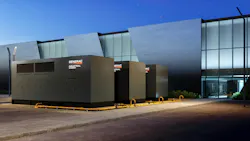
Amazon has struck a long-term supply agreement with Generac for backup generators supporting its data center buildout, tying one of the cloud industry’s largest infrastructure programs to a manufacturer that has been rapidly expanding into the hyperscale power market.
Under the agreement disclosed in a Sept. 16 regulatory filing, Generac expects initial deliveries to Amazon totaling approximately $2.4 billion during 2027 and 2028. The commercial relationship could ultimately involve as much as $8 billion in qualifying generator purchases.
The agreement also gives Amazon an equity interest in Generac’s success. Generac issued Amazon.com NV Investment Holdings a warrant to acquire as many as 1.69 million Generac shares at an exercise price of approximately $200.93 per share. About 308,000 shares vested when the agreement was signed, with additional tranches vesting as Amazon’s purchases increase. The warrant remains exercisable through September 2033.
The distinction is important: the frequently cited $8 billion figure represents potential cumulative payments by Amazon for backup power generators, rather than an $8 billion equity investment. The maximum warrant covers roughly $340 million of Generac stock at the stated exercise price.
CNBC first highlighted the equity component of the transaction, reporting that Generac shares surged more than 40% in extended trading following disclosure of the agreement. The shares ultimately gained about 18% during the following regular trading session.
Generac Was Already Scaling for the Data Center Market
For the data center industry, however, the more consequential part of the transaction may be the size and duration of Amazon’s equipment commitment.
Generac has spent much of the past two years positioning itself as an alternative large-megawatt generator supplier as AI infrastructure development puts pressure on established power-equipment supply chains. DCF previously examined Generac’s push into hyperscale backup power, including its effort to shorten generator lead times and support campuses requiring hundreds of units.
By July 29, Generac said its data center product backlog had reached approximately $1.6 billion — before including committed volumes from a second hyperscale customer. Commercial and industrial sales increased 29% year over year during the second quarter, driven partly by data center demand.
An August investor presentation described a global supply shortfall for large diesel generators and said Generac expected to have more than $1.25 billion of annual large-megawatt generator manufacturing capacity in place by the fourth quarter of 2026. The company outlined a path to roughly triple that capacity by the end of the third quarter of 2027.
That expansion has included the acquisition of Enercon Engineering, bringing generator packaging and switchgear capabilities in-house, as well as new manufacturing and packaging facilities intended to support large-scale commercial and data center deployments.
The capacity question has been developing for some time. In a 2025 DCF Show discussion, Generac executives identified lead time as one of the dominant concerns coming from hyperscale customers and described an effort to deliver large generator sets significantly faster than prevailing industry timelines.
Hyperscalers Secure the Supply Chain
The structure of the Generac agreement also resembles a broader Amazon infrastructure procurement strategy.
Earlier in September, Qualcomm granted Amazon warrants to acquire as many as 25 million Qualcomm shares in conjunction with a multi-generation agreement covering server silicon, AI infrastructure and optical connectivity. Vesting under that agreement is tied to commercial milestones and purchases that could total as much as $60 billion.
The two transactions span very different layers of the data center stack — semiconductors and backup generation — but point toward the same underlying requirement: hyperscalers increasingly need to secure critical infrastructure capacity years before the associated data centers reach operation. That strategy reflects a broader shift DCF has tracked as hyperscalers standardize equipment and reserve long-lead electrical infrastructure across multiple projects.
For generators in particular, that procurement cycle is becoming intertwined with the broader race for transformers, switchgear and other long-lead electrical equipment. Utilities and developers have increasingly moved toward multiyear commitments as AI data center construction absorbs manufacturing capacity across the power equipment supply chain.
The procurement race is unfolding as AI data centers increasingly become power systems in their own right, combining grid service, onsite generation, storage and controls to meet increasingly demanding reliability and deployment requirements.
For Generac, Amazon provides one of the clearest validations yet of the company’s push from its traditional power-generation markets into hyperscale infrastructure.
For Amazon, the agreement secures something arguably just as important as GPUs in the AI buildout: the equipment required to keep gigawatt-scale compute online when the grid is not.
At Data Center Frontier, we talk the industry talk and walk the industry walk. In that spirit, DCF Staff members may occasionally use AI tools to assist with content.
Keep pace with the fast-moving world of data centers and cloud computing by connecting with Data Center Frontier on LinkedIn, following us on X/Twitter and Facebook, as well as on BlueSky, and signing up for our weekly newsletters using the form below.
About the Author
 Matt Vincent
Matt Vincent
Matt Vincent is Editor in Chief of Data Center Frontier, where he leads editorial strategy and coverage focused on the infrastructure powering cloud computing, artificial intelligence, and the digital economy. A veteran B2B technology journalist with more than two decades of experience, Vincent specializes in the intersection of data centers, power, cooling, and emerging AI-era infrastructure. Since assuming the EIC role in 2023, he has helped guide Data Center Frontier’s coverage of the industry’s transition into the gigawatt-scale AI era, with a focus on hyperscale development, behind-the-meter power strategies, liquid cooling architectures, and the evolving energy demands of high-density compute, while working closely with the Digital Infrastructure Group at Endeavor Business Media to expand the brand’s analytical and multimedia footprint. Vincent also hosts The Data Center Frontier Show podcast, where he interviews industry leaders across hyperscale, colocation, utilities, and the data center supply chain to examine the technologies and business models reshaping digital infrastructure. Since its inception he serves as Head of Content for the Data Center Frontier Trends Summit. Before becoming Editor in Chief, he served in multiple senior editorial roles across Endeavor Business Media’s digital infrastructure portfolio, with coverage spanning data centers and hyperscale infrastructure, structured cabling and networking, telecom and datacom, IP physical security, and wireless and Pro AV markets. He began his career in 2005 within PennWell’s Advanced Technology Division and later held senior editorial positions supporting brands such as Cabling Installation & Maintenance, Lightwave Online, Broadband Technology Report, and Smart Buildings Technology. Vincent is a frequent moderator, interviewer, and keynote speaker at industry events including the HPC Forum, where he delivers forward-looking analysis on how AI and high-performance computing are reshaping digital infrastructure. He graduated with honors from Indiana University Bloomington with a B.A. in English Literature and Creative Writing and lives in southern New Hampshire with his family, remaining an active musician in his spare time.
Related
Voices of the Industry
 Source: Adobe Stock, courtesy of ebm-papst
 Source: Champion Fiberglass