Building Data Centers at Speed: Why Conduit Decisions Matter Earlier Than Ever
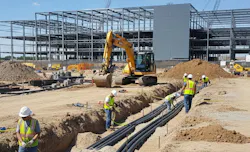

Aggressive schedules and electrical infrastructure complexity are testing the limits of data center construction. Today, this carries even more weight as project teams work through demanding schedules and projects grow in size and frequency. Meanwhile, contractors are managing skilled labor constraints with increased pressure to make every installation hour count.
This environment changes how teams should view routine design decisions; electrical conduit is one example. It may represent only one part of the overall electrical system, but product selection can influence assembly time, cable installation, future maintenance, and the ability of crews to keep work moving.
For engineers and contractors, the goal is not simply to choose a conduit material that meets the specification. The better approach is to consider how that material will perform from installation through the operating life of the facility.
Installation challenges have a bigger impact at data center scale
Labor availability remains one of the most practical constraints facing large electrical projects. When miles of conduit are involved, differences in handling and setup can accumulate quickly.
Conduit weight is part of that equation. Steel conduit provides significant mechanical strength, but its heft can make handling more labor-intensive, particularly at larger diameters. Lighter materials such as fiberglass or PVC offer an option where lower weight encourages better portability and a more streamlined installation. However, engineers need to account for other considerations during cable placement.
One of those considerations is burn-through. During cable pulls, friction and pulling force can cause an elbow made of PVC to groove, break, or burn through. These characteristics become significant as the number and complexity of pulls increase across a large facility.
Cable faults present a different concern. Under some fault conditions, cable can melt or weld to the inside of PVC or steel conduit. With a material such as fiberglass, faulted cable can be pulled through and replaced without damage to the conduit, helping maintain serviceability after an abnormal electrical event.
Conduit is moving beyond the underground duct bank
Electrical conduit has long been associated with underground data center infrastructure, particularly medium-voltage duct banks and elbows. An emerging application is its use above ground and on the roof, where engineers and contractors are evaluating the same system and assembly characteristics in a different part of the facility. Just as with underground duct banks, lighter weight conduit can simplify overhead handling on the roof, compared with steel.
This shift is less about replacing one material everywhere and more about broadening the options available to project teams. The right conduit product still depends on the application, installation environment, system requirements, and engineer of record.
Support systems deserve similar attention
Of course, conduit is only one part of the install. The systems supporting it can also affect field productivity. Strut systems range from steel to aluminum to fiberglass. As for longevity in the field, metallic systems are prone to corrosion, and their heavier weight can add to construction timelines.
Not only are nonmetallic systems corrosion resistant, but they are also lighter weight and can be cut onsite, giving crews flexibility when field conditions require adjustments. These characteristics can be useful when contractors are coordinating dense electrical systems and working within compressed schedules.
Field experience shows why constructability matters
When specifying electrical conduit for a project, it is important to validate its use. For example, a large project utilizing fiberglass in Virginia’s Data Center Alley illustrates the impact these decisions can have at scale. This deployment called for approximately 25 miles of 4-, 5-, and 6-inch heavy-wall 90-degree elbows for medium-voltage power and telecommunications duct banks. The schedule was strict, and the quantities large for this first-time install using this solution.
Lightweight material and prefabricated assemblies helped streamline installation. Equally important, the contractor received guidance as crews became familiar with the product. The project was completed on time with substantial productivity improvement compared with PVC.
Another data center project in the Midwest faced a similarly schedule-driven challenge. In that case, fiberglass elbows and straight sections were used throughout underground duct banks. With a gasketed joining system helping accelerate the work, the contractor installed three miles of conduit in one day. These examples reinforce a larger point: product characteristics alone do not determine installation success. Execution matters just as much.
Speed to market starts before the product arrives
For electrical contractors and engineers, support from a conduit manufacturer should be part of the evaluation process. Responsiveness matters when field conditions change. Engineering support can help resolve application or specification questions before they affect the schedule. Installation training can give crews confidence when working with unfamiliar material, particularly valuable on fast-moving data center projects, where a relatively small delay in one phase can impact work downstream.
Electrical conduit will never be the only factor determining when a data center goes online, but as projects become larger and schedules become tighter, the details deserve greater attention.
Selecting systems with constructability, cable installation, serviceability, and field support in mind can remove friction from the project long before commissioning begins. For teams focused on hitting deadlines, that is where successful project delivery starts.
About the Author
 Matt Fredericks
Matt Fredericks
Matt Fredericks, vice president of sales and marketing, brings over a decade of electrical industry experience to his role at Champion Fiberglass where he’s focused on helping the Champion Fiberglass sales team drive solutions for contractors and end users of large industrial construction projects.
Champion FiberglassⓇ is a triple ISO-certified manufacturer of lightweight, durable fiberglass conduit systems made in America for demanding electrical infrastructure in data centers, utility transmission and distribution and transportation projects. Learn more about fiberglass conduit for data centers.