Roundtable: Data Center Sustainability Plays for the AI Era

For today's installment of Data Center Frontier's Q2 Executive Roundtable, our four distinguished data center industry leaders were polled on whether and wherefore prioritizing a proactive approach to building greener data centers and fostering resilient sustainability practices squares with the exponential future power demands associated with AI and GPU-based computing.

Our Executive Roundtable for the Second Quarter of 2024 is comprised of:
Phillip Marangella, Chief Marketing and Product Officer, EdgeConneX
Ciaran Flanagan, Global Head of Data Center Solutions, Siemens
Joe Reele, VP Solutions Architects, Schneider Electric
Allen Rounds, Sales Executive, Kohler
Now onto the second question of the week for our Executive Roundtable for the Second Quarter of 2024.

Data Center Frontier: In the industry's now ongoing level-up to global net zero and decarbonization goals, what processes should data center developers and operators be prioritizing for a proactive approach to building greener data centers and fostering resilient sustainability practices, especially in the face of the exponential future power demands associated with AI and GPU-based computing?
Phillip Marangella, EdgeConneX: Implementing 24/7 carbon-free energy, leveraging wind, solar, hydro, geothermal, nuclear, and other carbon-free sources, ensures real-time confirmation of clean power supplies, with AI-based solutions enhancing real-time matching.
And integrating battery storage solutions ensures high availability and contributes to the decarbonization of local grids.
Other key areas include innovative water and waste management practices to minimize environmental impacts on surrounding communities.
In addition, by structuring innovative financing mechanisms around sustainability targets, data centers can lower capital costs and set industry precedents.
Transparency through regular reporting is not just a practice; it's a commitment to foster collaboration. Collaboration is the key to driving industry-wide innovation and efficiency.
Collaboration should be central to one's sustainability approach. We can all develop effective strategies that create a sustainable ecosystem by working closely with our customers, suppliers, and communities. This approach fosters growth for our business and the planet, making everyone a part of this vital journey.
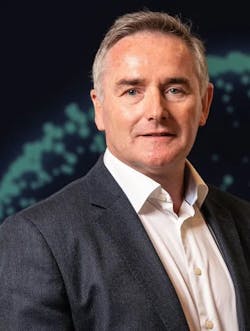
Ciaran Flanagan, Siemens: Our industry has made many promises about net zero, greener data centers, and climate neutrality. While these are credible and essential ambitions, we need to be transparent on the impact of building new facilities, because there is an impact, albeit short, relative to the lifespan of the facility.
Although we have the understanding that sustainability is a journey where we should strive, through technology and process, to incrementally improve operations, we should also acknowledge that building and operating data center facilities does have a sustainability impact.
We should focus less on the claims and really understand the method and the journey.
In the digital realm, the majority of a data center's environmental footprint is generated during its ongoing operations. It is crucial to prioritize decarbonizing the energy sources to significantly reduce this impact.
To move forward, we can collaborate with our partners on what I call the 3Ms approach - measure, manage, and mitigate.
Can you quantify the influence? Can you harness innovative technology to boost efficiency? Can you then actively reduce the carbon inputs?
I think it’s really fascinating to learn and understand what operators do to incrementally get better every year …every watt matters!

Joe Reele, Schneider Electric: Incorporating impactful sustainability processes and guidelines, much like raising a child, takes a village to do correctly!
With this in mind, we see developers, operators and clients prioritizing more of a “partner – solution process” approach, versus the traditional vendor approach.
Partners include utilities (electric, natural gas, water); concrete & steel material industries; many types of electrical, mechanical, and digital companies; along with compute, network, and storage companies. All these groups come together to make a data center.
Prioritizing and proactively bringing the entire ecosystem together allows for the data center to be optimized; matching performance, uptime, financial needs, and sustainability, all together. These partnerships then create a “multiplier effect.”

Allen Rounds, Kohler: The most important step for data centers’ environmental initiatives is identifying relevant metrics, measuring them accurately, and using that data to set goals.
Whether you’re managing your facility’s emissions, reducing carbon-based inputs, or increasing internal efficiency, you can’t understand your consumption until you start tracking it.
From internal stakeholders like shareholders, investors, and employees to external parties like lawmakers, regulatory agencies, and customers, reporting on sustainability metrics is the most definitive way to drive improvements, and, sadly, many data centers simply aren’t doing it.
As more data centers implement tracking systems, the metrics and measurements will become more standardized, and that’s the path to significant industry-wide change toward a more sustainable way of doing business in the data center sector.
Next: Modular Innovation Opportunities
About the Author
 Matt Vincent
Matt Vincent
Matt Vincent is Editor in Chief of Data Center Frontier, where he leads editorial strategy and coverage focused on the infrastructure powering cloud computing, artificial intelligence, and the digital economy. A veteran B2B technology journalist with more than two decades of experience, Vincent specializes in the intersection of data centers, power, cooling, and emerging AI-era infrastructure. Since assuming the EIC role in 2023, he has helped guide Data Center Frontier’s coverage of the industry’s transition into the gigawatt-scale AI era, with a focus on hyperscale development, behind-the-meter power strategies, liquid cooling architectures, and the evolving energy demands of high-density compute, while working closely with the Digital Infrastructure Group at Endeavor Business Media to expand the brand’s analytical and multimedia footprint. Vincent also hosts The Data Center Frontier Show podcast, where he interviews industry leaders across hyperscale, colocation, utilities, and the data center supply chain to examine the technologies and business models reshaping digital infrastructure. Since its inception he serves as Head of Content for the Data Center Frontier Trends Summit. Before becoming Editor in Chief, he served in multiple senior editorial roles across Endeavor Business Media’s digital infrastructure portfolio, with coverage spanning data centers and hyperscale infrastructure, structured cabling and networking, telecom and datacom, IP physical security, and wireless and Pro AV markets. He began his career in 2005 within PennWell’s Advanced Technology Division and later held senior editorial positions supporting brands such as Cabling Installation & Maintenance, Lightwave Online, Broadband Technology Report, and Smart Buildings Technology. Vincent is a frequent moderator, interviewer, and keynote speaker at industry events including the HPC Forum, where he delivers forward-looking analysis on how AI and high-performance computing are reshaping digital infrastructure. He graduated with honors from Indiana University Bloomington with a B.A. in English Literature and Creative Writing and lives in southern New Hampshire with his family, remaining an active musician in his spare time.
Related
Voices of the Industry
 Source: Getty Images, courtesy of Schneider Electric
 Source: Nimbus Advanced Process Cooling