Executive Roundtable: Converging Disciplines in the AI Buildout
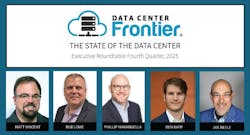 693703ce74264285ac5405ab Dcfexecutiveroundtableq4202512
At Data Center Frontier, we rely on industry leaders to help us understand the most urgent challenges facing digital infrastructure. And in the fourth quarter of 2025, the data center industry is adjusting to a new kind of complexity.
AI-scale infrastructure is redefining what “mission critical” means, from megawatt density and modular delivery to the chemistry of cooling fluids and the automation of energy systems. Every project has arguably in effect now become an ecosystem challenge, demanding that electrical, mechanical, construction, and environmental disciplines act as one.
For this quarter’s Executive Roundtable, DCF convened subject matter experts from Ecolab, EdgeConneX, Rehlko and Schneider Electric - leaders spanning the full chain of facilities design, deployment, and operation. Their insights illuminate how liquid cooling, energy management, and sustainable process design in data centers are now converging to set the pace for the AI era.
Our distinguished executive panelists for this quarter include:
- Rob Lowe, Director RD&E – Global High Tech, Ecolab
- Phillip Marangella, Chief Marketing and Product Officer, EdgeConneX
- Ben Rapp, Manager, Strategic Project Development, Rehlko
- Joe Reele, Vice President, Datacenter Solution Architects, Schneider Electric
Today: Engineering the New Normal - Liquid Cooling at Scale
Today’s kickoff article grapples with how, as liquid cooling technology transitions to default hyperscale design, the challenge is no longer if, but how to scale builds safely, repeatably, and globally.
Cold plates, immersion, dielectric fluids, and liquid-to-chip loops are converging into factory-integrated building blocks, yet variability in chemistry, serviceability, materials, commissioning practices, and long-term maintenance threatens to fragment adoption just as demand accelerates.
Success now hinges on shared standards and tighter collaboration across OEMs, builders, and process specialists worldwide. So how do developers coordinate across the ecosystem to make liquid cooling a safe, maintainable global default?
What's Ahead in the Roundtable
Over the coming days, our panel will also share their perspectives on other pressing Q4 industry themes, including:
- The Economics of Acceleration: Compressed build cycles, shifting capex/opex tradeoffs, and the tension between speed-to-market and long-term efficiency.
- Data Centers as Energy Ecosystems: Facilities producing, storing, and repurposing resources, requiring new grid partnerships and circular design models.
- Beyond the White Space: Cross-disciplinary coordination as AI stacks grow more interdependent, demanding unified data, workflows, and lifecycle transparency.
Now let's move onto our first Executive Roundtable question for the Fourth Quarter of 2025.
Data Center Frontier: As liquid cooling shifts from pilot deployments to baseline design, what new coordination is required among equipment manufacturers, construction teams, and chemical/process experts to standardize safe, maintainable systems across global portfolios?

Rob Lowe, Ecolab: As liquid cooling implementations become more standard, scaling it safely requires deeper coordination across OEMs, construction partners, and chemical and process experts.
Direct-to-chip systems introduce new requirements around coolant chemistry, materials compatibility, corrosion control, and cleanliness, making early involvement of water and glycol experts essential.
To manage global portfolios, operators increasingly rely on standardized commissioning specs, consistent coolant quality baselines, and integrated real-time monitoring tools like our 3D TRASAR™ Technology.
Ultimately, designing for maintainability, not just performance, ensures these systems remain reliable, serviceable, and consistent across all sites.

Phillip Marangella, EdgeConneX: The keyword is coordination:
- Coordination with the chip manufacturers on their latest reference designs and chip innovations.
- Coordination with customers and their deployment requirements and rack density requirements.
- Coordination with liquid to chip ecosystem vendors and partners on integrated liquid cooling solutions.
- Coordination with internal stakeholders on the design, commissioning, and operating of data centers leveraging liquid cooling in support of AI Factories.
And lastly: Coordination with our upstream supply chain to ensure long-lead items as identified in the design process are available when we need them (or securing acceptable alternative options when necessary.

Ben Rapp, Rehlko: As liquid cooling shifts from pilot programs to standard design practice, alignment across disciplines becomes essential. Success now requires earlier collaboration among equipment manufacturers, construction partners, and fluid chemistry experts to ensure interoperability, safety, and operational consistency at scale.
As a global energy systems provider, Rehlko plays a key role in ensuring power delivery, controls, and backup systems are engineered to meet the unique electrical and operational requirements liquid cooling introduces, both at commissioning and throughout the asset lifecycle.
Our focus is seamless integration, enabling operators to adopt and scale liquid cooling with confidence, reliability, and long-term performance in mind.

Joe Reele, Schneider Electric: We see significant progress in this area as liquid cooling transitions from pilot deployments to baseline design.
Air cooling standards and thresholds are well established, and similar work is now being applied to the emerging liquid cooling space.
This shift requires new coordination among equipment manufacturers, construction teams, and chemical/process experts.
Coordination is essential to ensure systems are standardized, safe, and maintainable across global portfolios.
About the Author
 Matt Vincent
Matt Vincent
Matt Vincent is Editor in Chief of Data Center Frontier, where he leads editorial strategy and coverage focused on the infrastructure powering cloud computing, artificial intelligence, and the digital economy. A veteran B2B technology journalist with more than two decades of experience, Vincent specializes in the intersection of data centers, power, cooling, and emerging AI-era infrastructure. Since assuming the EIC role in 2023, he has helped guide Data Center Frontier’s coverage of the industry’s transition into the gigawatt-scale AI era, with a focus on hyperscale development, behind-the-meter power strategies, liquid cooling architectures, and the evolving energy demands of high-density compute, while working closely with the Digital Infrastructure Group at Endeavor Business Media to expand the brand’s analytical and multimedia footprint. Vincent also hosts The Data Center Frontier Show podcast, where he interviews industry leaders across hyperscale, colocation, utilities, and the data center supply chain to examine the technologies and business models reshaping digital infrastructure. Since its inception he serves as Head of Content for the Data Center Frontier Trends Summit. Before becoming Editor in Chief, he served in multiple senior editorial roles across Endeavor Business Media’s digital infrastructure portfolio, with coverage spanning data centers and hyperscale infrastructure, structured cabling and networking, telecom and datacom, IP physical security, and wireless and Pro AV markets. He began his career in 2005 within PennWell’s Advanced Technology Division and later held senior editorial positions supporting brands such as Cabling Installation & Maintenance, Lightwave Online, Broadband Technology Report, and Smart Buildings Technology. Vincent is a frequent moderator, interviewer, and keynote speaker at industry events including the HPC Forum, where he delivers forward-looking analysis on how AI and high-performance computing are reshaping digital infrastructure. He graduated with honors from Indiana University Bloomington with a B.A. in English Literature and Creative Writing and lives in southern New Hampshire with his family, remaining an active musician in his spare time.
Related
Voices of the Industry
 Image courtesy of Bell & Gossett
 Source: Adobe Stock, courtesy of ebm-papst