Roundtable: Data Centers as Energy Ecosystems
As AI campuses scale from single-site builds into multi-vector energy ecosystems, the role of the data center is broadening in real time. Across the industry, operators are no longer thinking solely in terms of megawatts delivered to racks, but in terms of the reciprocal flows between their facilities and the communities and grids that surround them.
It’s a shift driven as much by necessity as ambition: higher densities and larger campuses are forcing deeper coordination with utilities, technology partners, and regional resource planners.
What’s emerging is a more active, participatory model of infrastructure; one in which onsite generation, long-duration storage, water stewardship, and heat-reuse strategies begin to intersect with utility planning and resilience goals.
In this environment, innovation isn’t confined to hardware. New commercial structures, operating agreements, and ecosystem alliances are reshaping how providers contribute to regional stability and how they capture value from capabilities that once sat idle or unmonetized.
Against that backdrop, our third Executive Roundtable question for the quarter turns to the frontier now opening up: the partnerships, technologies, and operating models that are repositioning data centers as integrated actors in the broader resource landscape.
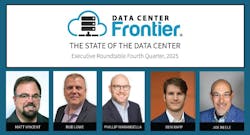
Our distinguished slate of panelists for Q4 includes:
- Rob Lowe, Director RD&E – Global High Tech, Ecolab
- Phillip Marangella, Chief Marketing and Product Officer, EdgeConneX
- Ben Rapp, Manager, Strategic Project Development, Rehlko
- Joe Reele, Vice President, Datacenter Solution Architects, Schneider Electric
And now onto DCF's third Executive Roundtable question for Q4 of 2025.
Data Center Frontier: As data centers are expected to evolve into energy hubs—producing, storing, and recycling power, water, and heat—what innovations or partnerships are emerging to make these facilities active participants in grid and resource stability?

Rob Lowe, Ecolab: Data centers are evolving into integrated energy and water ecosystems rather than standalone consumers.
Liquid cooling and advanced heat-transfer systems make heat reuse more viable, while closed-loop and reuse strategies reduce pressure on local water supplies.
Partnerships with utilities, renewable generation projects, and real-time data sharing improve grid predictability and resource stability.
By combining chemistry, digital monitoring, and mechanical optimization, operators can reduce waste, recover energy, and align cooling performance with broader sustainability goals, turning data centers into active contributors to resource resilience.

Phillip Marangella, EdgeConneX: AI factories are being built at gigawatt scale. Markets like Texas and Ohio are forecast to add at least 5 Gigawatts of capacity next year. That represents as much as the entire global market only two years ago.
At that scale, it all starts with the power. If you don't have the power, then we can't turn up these AI Factories, and that means all the investment in these chips can't start generating tokens and revenue.
And while markets like Texas and Ohio have grid power, it's still not enough. Therefore, we need to augment grid power with alternative, on-site generation solutions. Whether it's natural gas, solar, wind, SMRs, geothermal, or energy storage solutions, they are all on the table and up for consideration to meet the massive power requirements.
For EdgeConneX, being supported by EQT and its other portfolio companies on the power and networking side means we can bring an integrated offering to market that can help simplify and accelerate the time-to-market of an AI-enabled data center solution.

Ben Rapp, Manager, Rehlko: As data centers evolve into fully integrated energy hubs, the architecture supporting them is changing. Traditional standby systems are now part of a broader, more intelligent energy strategy designed to manage growing loads, offset grid constraints, and provide greater operational flexibility.
As deployment timelines accelerate and sustainability expectations rise, operators are looking for systems that do more than ensure uptime, they must actively support efficiency and long-term cost performance.
Hybrid power architectures are becoming central to this shift. By integrating traditional generation with battery storage, renewable energy sources, and advanced controls, data centers gain greater flexibility to manage peak demand, improve efficiency, and support evolving sustainability requirements.
Hydrogen-ready engines and fuel cells are also emerging as important pathways, giving operators the option to deploy proven technology today while transitioning to lower-carbon fuels when the infrastructure and supply chain mature.
This approach is redefining backup power, not as equipment waiting for failure, but as an integrated component of a dynamic energy ecosystem that supports resilience, efficiency, and future scalability throughout the facility’s lifecycle.

Joe Reele, Schneider Electric: There’s a lot involved in making this work at scale, and it requires three major pillars working together:
- Policy – Regulations must align with technology and its capabilities.
- Technology – Innovations such as advanced battery chemistry, nuclear, hydrogen, and other emerging solutions.
- The Digital Thread – Seamless communication and standards connecting grid systems to end loads, whether that’s a data center, a home, or an entire city.
You can’t have a smart grid without smart cities, and you can’t have smart cities without smart homes and buildings.
ll of this must operate in a safe, secure, and digitally integrated way.
We are finally functioning as an ecosystem to make this vision a reality, and progress continues.
NEXT: Beyond the White Space - Managing Complexity Across the Stack
At Data Center Frontier, we talk the industry talk and walk the industry walk. In that spirit, DCF Staff members may occasionally use AI tools to assist with content. Elements of this article were created with help from OpenAI's GPT5.
Keep pace with the fast-moving world of data centers and cloud computing by connecting with Data Center Frontier on LinkedIn, following us on X/Twitter and Facebook, as well as on BlueSky, and signing up for our weekly newsletters using the form below.
About the Author
 Matt Vincent
Matt Vincent
Matt Vincent is Editor in Chief of Data Center Frontier, where he leads editorial strategy and coverage focused on the infrastructure powering cloud computing, artificial intelligence, and the digital economy. A veteran B2B technology journalist with more than two decades of experience, Vincent specializes in the intersection of data centers, power, cooling, and emerging AI-era infrastructure. Since assuming the EIC role in 2023, he has helped guide Data Center Frontier’s coverage of the industry’s transition into the gigawatt-scale AI era, with a focus on hyperscale development, behind-the-meter power strategies, liquid cooling architectures, and the evolving energy demands of high-density compute, while working closely with the Digital Infrastructure Group at Endeavor Business Media to expand the brand’s analytical and multimedia footprint. Vincent also hosts The Data Center Frontier Show podcast, where he interviews industry leaders across hyperscale, colocation, utilities, and the data center supply chain to examine the technologies and business models reshaping digital infrastructure. Since its inception he serves as Head of Content for the Data Center Frontier Trends Summit. Before becoming Editor in Chief, he served in multiple senior editorial roles across Endeavor Business Media’s digital infrastructure portfolio, with coverage spanning data centers and hyperscale infrastructure, structured cabling and networking, telecom and datacom, IP physical security, and wireless and Pro AV markets. He began his career in 2005 within PennWell’s Advanced Technology Division and later held senior editorial positions supporting brands such as Cabling Installation & Maintenance, Lightwave Online, Broadband Technology Report, and Smart Buildings Technology. Vincent is a frequent moderator, interviewer, and keynote speaker at industry events including the HPC Forum, where he delivers forward-looking analysis on how AI and high-performance computing are reshaping digital infrastructure. He graduated with honors from Indiana University Bloomington with a B.A. in English Literature and Creative Writing and lives in southern New Hampshire with his family, remaining an active musician in his spare time.