Roundtable: Redefining Critical Infrastructure
For the second installment of our Executive Roundtable cycle for the third quarter of 2026, Data Center Frontier examines how AI-scale infrastructure is changing the very definition of what counts as mission-critical inside the data center.
As rack densities rise and power becomes more constrained, resilience is becoming less about the performance of any single piece of equipment and more about the behavior of the entire infrastructure system. Power generation, energy storage, cooling, controls and monitoring are increasingly interdependent, and the points where those systems meet can carry as much operational consequence as the systems themselves.
That shift is of key importance, because higher-density environments leave less room for small failures to remain small. A weakness at an interface, a control-layer blind spot or a poorly coordinated handoff between systems can propagate quickly across infrastructure that is operating closer to its limits.
For this installment of our Q3 Executive Roundtable, DCF asks where the boundaries of critical infrastructure are expanding, which formerly secondary systems now deserve mission-critical status, and whether the industry needs to think differently about reliability as a property of the whole facility rather than of individual components.
Because at AI scale, the resilience question increasingly becomes not simply “Will each system work?” but “Will all of these systems work together when the facility is under stress?”
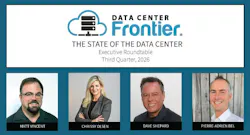
Our distinguished Executive Roundtable panelists for Q3 of 2026 include:
- Chrissy Olsen, Vice President of Critical Power Solutions, MPI Energy
- David Shepard, Global Head of Data Center Business, Chemelex-Raychem
- Pierre-Adrien Bel, Product Manager, EMEA, Rehlko
And now onto our second Executive Roundtable question for Q3 of 2026.
Data Center Frontier: As data centers become larger, denser and more power-constrained, where is the definition of “critical infrastructure” expanding — and are the interfaces between power, storage, cooling, controls and other systems becoming the real reliability risk?

Chrissy Olsen, MPI Energy: Critical infrastructure now includes much more than generators and UPS systems.
Energy storage, cooling, controls and monitoring all play a role in keeping an AI data center operating.
I believe the bigger risk is often where those systems connect.
Each piece of equipment may work properly on its own, but problems can occur when the systems do not communicate or respond together as expected.
As facilities become larger and more complex, someone must be looking at the entire operation, not just an individual product or system.
Clear ownership, better coordination between suppliers and testing everything together will be increasingly important.

David Shepard, Chemelex-Raychem: “Critical infrastructure” – once simply power and connectivity – now must be thought of more holistically, and must now include adjacent technology like leak detection, freeze protection and Data Center Infrastructure Monitoring (DCIM).
Editor’s note: Chemelex-Raychem’s data center portfolio reflects this broader view of critical infrastructure, with Raychem thermal-management and TraceTek leak-detection systems addressing risks across the white space, gray space and supporting plant. Its solutions include freeze protection for HVAC, chilled-water and other critical piping, along with detection of water, coolant and fuel leaks around liquid-cooling systems and backup-power infrastructure; newer integrated leak-detection technology can also provide real-time alerts to BMS/DCIM platforms.

Pierre-Adrien Bel, Rehlko: The definition of critical infrastructure is expanding to include the interfaces and controls that coordinate individual assets.
A generator, UPS or battery system can each perform within specification, but the overall power system can still become unstable if those assets are not responding together as intended.
That becomes especially important in hybrid and islanded architectures.
Battery systems can respond quickly to fast transients and support voltage and frequency stability, while generators provide sustained power over longer periods.
The power management system has to coordinate real power, reactive power, voltage and operating setpoints across those different technologies.
Those interfaces can absolutely become a reliability risk.
If one asset responds too slowly, reaches a protection limit or behaves differently than modeled, the fleet-level response can become unstable even when each individual asset appears acceptable in isolation.
That is why controls, communications and system coordination need to be treated as part of the critical power architecture, not as secondary layers around the equipment.
NEXT: Speed Without Compromise
Related video: DataBank offers a recent look inside the infrastructure and engineering required to support large-scale data center deployment, underscoring many of the same power, cooling and systems-integration issues explored in this roundtable.
About the Author
 Matt Vincent
Matt Vincent
Matt Vincent is Editor in Chief of Data Center Frontier, where he leads editorial strategy and coverage focused on the infrastructure powering cloud computing, artificial intelligence, and the digital economy. A veteran B2B technology journalist with more than two decades of experience, Vincent specializes in the intersection of data centers, power, cooling, and emerging AI-era infrastructure. Since assuming the EIC role in 2023, he has helped guide Data Center Frontier’s coverage of the industry’s transition into the gigawatt-scale AI era, with a focus on hyperscale development, behind-the-meter power strategies, liquid cooling architectures, and the evolving energy demands of high-density compute, while working closely with the Digital Infrastructure Group at Endeavor Business Media to expand the brand’s analytical and multimedia footprint. Vincent also hosts The Data Center Frontier Show podcast, where he interviews industry leaders across hyperscale, colocation, utilities, and the data center supply chain to examine the technologies and business models reshaping digital infrastructure. Since its inception he serves as Head of Content for the Data Center Frontier Trends Summit. Before becoming Editor in Chief, he served in multiple senior editorial roles across Endeavor Business Media’s digital infrastructure portfolio, with coverage spanning data centers and hyperscale infrastructure, structured cabling and networking, telecom and datacom, IP physical security, and wireless and Pro AV markets. He began his career in 2005 within PennWell’s Advanced Technology Division and later held senior editorial positions supporting brands such as Cabling Installation & Maintenance, Lightwave Online, Broadband Technology Report, and Smart Buildings Technology. Vincent is a frequent moderator, interviewer, and keynote speaker at industry events including the HPC Forum, where he delivers forward-looking analysis on how AI and high-performance computing are reshaping digital infrastructure. He graduated with honors from Indiana University Bloomington with a B.A. in English Literature and Creative Writing and lives in southern New Hampshire with his family, remaining an active musician in his spare time.
Related
Voices of the Industry
 Source: Adobe Stock, courtesy of ebm-papst
 Source: Champion Fiberglass