From Uptime to Resilience: AI Infrastructure Changes the Data Center Risk Equation
Key Highlights
- AI data centers are now regional-scale projects involving overlapping construction and operational risks, demanding comprehensive risk management approaches.
- Insurance strategies are shifting from full replacement coverage to Estimated Maximum Loss (EML), requiring detailed technical risk assessments and influencing project financing.
- Power infrastructure, including onsite generation and grid integration, is central to data center resilience, with water and cooling systems evolving into critical operational components.
- Labor shortages, human error, and supply chain delays pose significant risks, especially given the high value and complexity of AI infrastructure components.
- Community, regulatory, and political factors are increasingly impacting project development, emphasizing the need for social license and infrastructure contribution.
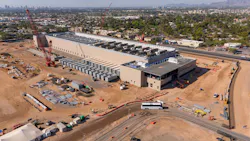
The data center industry has spent years habitually describing itself in terms of uptime, redundancy, availability zones, and power usage effectiveness. But the AI infrastructure boom may be forcing a fundamental reframing. The modern data center is no longer simply a building full of servers. It is an industrial campus, a regional-scale power customer, a construction megaproject, a geopolitical asset, a community flashpoint and, increasingly, a challenge for insurance markets.
That is the central message of Zurich North America’s 2026 U.S. report, Data Center Risks Right Now: 6 Critical Questions to Enable a Resilient Buildout. The report argues that the current wave of AI-driven data center construction is defined not simply by scale, but by the convergence of risks that were once managed independently: construction risk, operational risk, power risk, weather exposure, supply-chain constraints, labor shortages, cyber and physical resilience, and financial governance.
The report opens with a composite example of a three-mile-long AI campus spanning 20 buildings and requiring 2,000 megawatts of power, roughly equivalent to the electricity demand of a major city. The scenario illustrates how construction, operational, weather, supply-chain, and energy risks that once existed in separate silos are now colliding within a single project footprint.
At any given time, between 1,500 and 3,000 workers may be moving through the site while completed data halls are already operating adjacent to active construction zones. That dynamic captures one of the defining characteristics of the AI infrastructure era.
To wit: construction and operations are no longer sequential processes. They are overlapping, accelerating, and compounding operational risk.
The New Risk Stack for AI Infrastructure
The report frames the challenge around six core questions:
- How much insurance is enough?
- Is the industry adapting to new intersections of risk?
- How are energy and water constraints being managed?
- Is redundancy truly built in?
- What do downtime and construction delays actually cost?
- Can today’s data centers adapt to tomorrow’s regulatory, technological, and geopolitical realities?
All in all, the questions point to a larger conclusion: the limiting factor for AI infrastructure may prove less about demand for compute than the industry’s ability to absorb, model, finance, and manage risk at unprecedented scale.
From Real Estate Asset to Industrial Megaproject
The traditional data center has long been understood as a specialized form of real estate: land, shell, power, cooling, connectivity, and long-term lease economics. That framework still applies, particularly in colocation and hyperscale development. But the AI infrastructure boom is shifting the industry’s center of gravity away from conventional real estate and toward industrial-scale project execution.
Zurich notes that just five years ago, the average value of a Zurich-insured data center project was approximately $150 million. Today, that figure has climbed to roughly $3 billion. At the upper end of the market, project values now routinely stretch into the tens of billions of dollars, with lenders increasingly seeking insurance coverage tied to full replacement value.
That creates a practical constraint for the insurance market itself. At sufficient scale, there may simply not be enough available insurance capacity to cover every asset at full theoretical replacement value. As Kelly Kinzer, Global Head of Construction and Surety for Zurich, puts it:
Capacity challenges are highly dependent on the size, scope and geographic location of each project. At the upper end of size, there simply isn’t sufficient insurance capacity in the market to insure these projects to their full value.
When Insurance Becomes Bankability
This is where the industry’s language begins to change. Instead of automatically insuring projects to full replacement value, owners, lenders, brokers, and carriers are increasingly focused on Estimated Maximum Loss, or EML.
The logic is straightforward. Many AI mega-campuses are spread across large physical footprints, with meaningful separation between buildings, substations, generation assets, and operating zones. That reduces the likelihood of a true total-loss event relative to the headline value of the project.
But calculating EML requires significant technical rigor. Risk exposure now depends on factors including site layout, fire separation, utility architecture, equipment concentration, weather exposure, construction phasing, operational interdependencies, and recovery assumptions.
The shift is significant because the financing of AI infrastructure increasingly depends on risk models that can satisfy lenders without forcing unnecessary, impractical, or unavailable coverage limits. Insurance is no longer simply a back-office procurement exercise. It is becoming part of project bankability.
The governance implications are equally important. Zurich’s report highlights potential directors and officers exposure as companies pursue enormous capital commitments through increasingly complex financing structures, including off-balance-sheet vehicles. If growth assumptions, return expectations, or risk disclosures prove overly optimistic, boards themselves could face scrutiny.
In other words, the risk conversation is no longer confined to the construction site. It has moved into the boardroom.
The New Geography of Risk
For much of the cloud era, the U.S. data center landscape was dominated by established hubs such as Northern Virginia, Silicon Valley, Dallas, Phoenix, Chicago, Atlanta, and New Jersey. The AI infrastructure boom is beginning to redraw that map.
Power availability, land constraints, permitting friction, community opposition, and transmission bottlenecks are increasingly pushing development into frontier markets and secondary regions that historically saw little large-scale data center activity.
But that geographic expansion comes with a new layer of operational risk.
Many of these interior markets offer cheaper land and access to large power opportunities, but they also expose operators to severe convective storm activity, including tornadoes, hail, high winds, and rapid temperature swings. According to Patrick McBride, Head of International Construction for Zurich, severe weather has been the leading cause of loss within Zurich’s U.S. data center Builders Risk portfolio for three consecutive years. Previously, weather-related losses did not rank among the company’s top three risk factors.
The exposure extends beyond catastrophic storm events themselves. Hail can damage roofs, rooftop HVAC systems, cooling towers, solar infrastructure, and staged construction materials. Rapid temperature fluctuations can trigger condensation and corrosion inside sensitive equipment stored in unconditioned environments.
Zurich cites claim scenarios in which equipment exposed to sudden cold followed by rapid reheating developed white rust on critical components. In another incident, a fire overwhelmed temporary protection systems that had been considered adequate under normal construction assumptions.
The operational takeaway is increasingly difficult to ignore: frontier markets require frontier-grade risk engineering.
Hail-rated roof assemblies, protective shielding, early leak detection, weather-aware construction protocols, and improved equipment staging practices are no longer optional design enhancements. They are becoming part of the core resilience architecture for next-generation AI infrastructure.
The Most Dangerous Period May Be the Handover
One of the most important observations in Zurich’s report is that the traditional boundary between construction and operations is rapidly disappearing.
Under older development models, a data center was built, commissioned, and then formally handed over to operations teams. In today’s AI campus environment, those phases increasingly overlap. One building may already be live while another remains under construction, a third is being commissioned, and a fourth is still receiving critical equipment deliveries.
That phased handover model accelerates time to revenue, but it also creates a far more complicated risk environment.
The result is a growing need for lifecycle risk review beginning at the earliest stages of site selection and design. Zurich argues that operational perspectives, including plan reviews by property-risk and machinery-breakdown specialists, need to be integrated much earlier into the development process.
That becomes especially important in areas such as material selection, fire protection systems, combustible insulation, equipment spacing, water detection, and long-term maintainability. The least expensive time to solve an insurability problem is before the design is finalized and before major infrastructure is installed.
The warning for developers is straightforward. Speed creates competitive advantage in the AI infrastructure market, but compressed schedules can also push risk downstream, where it becomes significantly more expensive to correct and far more likely to trigger disputes among owners, contractors, tenants, lenders, and insurers.
Power Is Now the Central Data Center Risk
As Data Center Frontier has regularly reported, the AI infrastructure boom is fundamentally a power story. Zurich’s report points to potential annual power-generation investment requirements approaching $200 billion to support accelerating demand growth.
That shift is transforming data centers into some of the most consequential customers on the electrical grid. A single AI campus can require hundreds of megawatts of capacity, and Zurich says it has already reviewed projects at the 2-gigawatt scale. At that level, a data center is no longer a conventional commercial load. It becomes a regional infrastructure planning event.
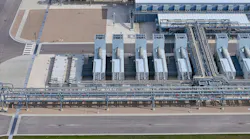
The industry’s response has been to move well beyond traditional grid interconnection models. Developers are increasingly pursuing behind-the-meter generation, dedicated substations, natural gas turbines, battery energy storage systems, renewables, and, in some cases, nuclear-linked procurement strategies.
Zurich notes that onsite power infrastructure, historically underwritten separately from the data center itself, is increasingly being treated as integrated operational property risk.
That distinction matters. When a data center depends on onsite generation, the power plant is no longer merely an adjacent asset. It becomes part of the compute factory itself. Turbine reliability, maintenance cycles, battery safety, fuel availability, emissions compliance, grid synchronization, and controls architecture all become part of the operational risk stack.
There is also an increasingly serious supply-chain dimension to the problem. Zurich notes that lead times for new gas-fired turbines in the U.S. have stretched to three years or more, with pricing pressure intensifying as data centers compete with utilities and grid-scale energy projects for the same equipment.
As a result, power strategy is no longer defined solely by economics or sustainability targets. It is increasingly shaped by equipment availability, procurement timing, construction sequencing, and long-term operational resilience.
The report also highlights water as a growing infrastructure constraint, particularly where hyperscale facilities depend on water both for cooling systems and indirectly through power generation. Municipal concerns surrounding water withdrawals, wastewater management, drought resilience, and competing local demands are becoming more politically and operationally significant.
Operators are responding with closed-loop cooling systems, water reuse strategies, direct and indirect air cooling approaches, and more aggressive tracking of both Power Usage Effectiveness (PUE) and Water Usage Effectiveness (WUE).
Cooling itself is also evolving from an efficiency conversation into a resilience conversation.
In high-density AI environments, a cooling failure can rapidly escalate into a business interruption event. Zurich cites a 2025 incident involving CyrusOne in which a cooling system failure disrupted trading activity on a major global derivatives exchange, illustrating how localized infrastructure failures can quickly cascade into broader economic consequences.
AI density only intensifies that exposure. In many next-generation facilities, the GPUs, networking systems, and associated compute infrastructure may represent more financial value than the building itself.
Zurich estimates that a 100 MW AI data center may require between $900 million and $1.5 billion for land, construction, power, and cooling infrastructure, while servers, networking equipment, and GPUs can add another $2.5 billion or more.
In that environment, the contents are no longer secondary to the structure. They are the primary insured asset and the core revenue-producing engine of the facility.
Machinery Breakdown, Batteries, and Human Error
As data centers scale, the number of potential failure points rises dramatically.
Zurich illustrates the issue with a simple comparison: moving from two transformers to 20, or from 10 HVAC units to 100, sharply increases the probability that equipment failure or human error will eventually affect a critical system.
In a phased AI campus environment, those failures can trigger startup delays, service-level penalties, business interruption claims, or disputes over whether an incident falls under construction coverage or operational property insurance. Concurrent operations, where active construction continues alongside live production environments, only compound the complexity.
Replacement timelines further amplify the risk.
Zurich cites Turner Construction estimates showing replacement lead times of approximately 30 to 52 weeks for UPS systems, 65 to 85 weeks for switchgear, 45 to 100 weeks for generators, and 16 to 20 weeks even for lower-complexity lighting controls.
For AI infrastructure, where revenue generation is directly tied to scarce compute capacity, a year-long delay involving critical electrical equipment can materially reshape project economics.
Human capital is also becoming a central component of the risk stack.
Zurich points to industry data showing that 92% of U.S. construction firms are struggling to find qualified workers, while Associated Builders and Contractors estimates the industry must attract roughly 349,000 net new workers in 2026 alone.
Data center construction may command wage premiums relative to conventional projects, but labor shortages still create operational exposure through fatigue, inexperience, workforce turnover, and compressed schedules.
Even the most advanced AI infrastructure design can be undermined by poor lockout/tagout procedures, inadequate hot-work controls, rushed commissioning, dust contamination, improper equipment staging, or crews unfamiliar with automated systems capable of starting unexpectedly.
In the AI infrastructure era, workforce quality is increasingly becoming a resilience variable. And historically, human error has often proven to be the most consequential failure point of all.
Regulation and Community Pushback Are Now Core Project Risks
The next major wave of data center risk may not come from equipment failures or severe weather. It may come from politics, regulation, and public acceptance.
Communities are increasingly scrutinizing data centers for their impact on electricity prices, water consumption, land use, noise, tax incentives, and local economic benefit. At the same time, regulators and utilities in several states are exploring special rate structures for large-load customers and, in some cases, considering temporary moratoriums on new data center development until infrastructure and policy questions are resolved.
For developers, that creates a significant strategic challenge.
A project that can secure land, financing, and power capacity may still fail if it cannot secure community legitimacy and regulatory support. Utilities and policymakers are also becoming more cautious about cross-subsidization, particularly around who ultimately pays for transmission upgrades, substations, new generation capacity, and reliability investments tied to massive new AI loads.
The emerging expectation is that hyperscale and large-load operators will increasingly be required to contribute more directly to the systems they depend on.
That could include funding grid upgrades, participating in demand-response programs, deploying onsite generation, procuring clean energy, investing in water reuse systems, or supporting local workforce and community initiatives.
The broader implication is becoming increasingly clear: the social license to operate an AI data center may ultimately depend on demonstrating that the project strengthens the surrounding infrastructure ecosystem rather than simply extracting resources from it.
Nuclear, Quantum, and the Long Horizon
Hyperscalers are already pursuing agreements tied to existing nuclear generation assets while simultaneously exploring the long-term potential of small modular reactors (SMRs).
Zurich’s report is careful not to overstate the timeline. It notes that SMRs likely remain five to 10 years away from broad commercial deployment due to licensing hurdles, manufacturing constraints, and unresolved insurance and regulatory considerations.
Even so, the strategic appeal is clear. AI infrastructure requires large-scale, reliable, low-carbon power delivered on a 24/7 basis, and nuclear generation aligns naturally with that operational profile.
Quantum computing remains far less mature, but it is already beginning to influence long-range infrastructure planning.
If quantum processors eventually operate alongside CPUs and GPUs inside production environments, they could introduce entirely new facility requirements, including cryogenic cooling systems, specialized controls architectures, different resilience standards, and highly specialized operational skill sets.
The broader issue is adaptability.
A data center built today may need to support dramatically different compute architectures, cooling systems, power topologies, and security requirements within its operational lifespan. Facilities designed too rigidly around current assumptions may become obsolete faster than expected.
Flexible campuses, particularly in areas such as power architecture, cooling distribution, space planning, and risk-transfer strategy, are likely to hold a long-term advantage.
The Bottom Line: AI Infrastructure Is Becoming a Resilience Business
The AI infrastructure boom is often described as a race for capacity. Zurich’s report makes clear that it is equally becoming a race for resilience.
The long-term winners may not simply be the companies announcing the largest megawatt pipelines or building the most square footage. They are more likely to be the organizations capable of integrating design, insurance, financing, power procurement, water strategy, construction safety, commissioning discipline, community engagement, and operational redundancy into a unified, risk-aware development model.
In the AI era, the data center is no longer merely the place where digital infrastructure resides. It is where the physical constraints of the digital economy become impossible to ignore.
The industry’s next challenge is not simply building faster. It is building infrastructure capable of surviving severe weather, satisfying grid operators, withstanding regulatory and community scrutiny, protecting workers, supporting customers, reassuring insurers, and adapting to technologies that are still emerging.
At Data Center Frontier, we talk the industry talk and walk the industry walk. In that spirit, DCF Staff members may occasionally use AI tools to assist with content. Elements of this article were created with help from OpenAI's GPT5.
Keep pace with the fast-moving world of data centers and cloud computing by connecting with Data Center Frontier on LinkedIn, following us on X/Twitter and Facebook, as well as on BlueSky, and signing up for our weekly newsletters using the form below.
About the Author
 David Chernicoff
David Chernicoff
Related
Voices of the Industry
 Source: Matthew G Eddy/Shutterstock.com
 Source: Getty Images, courtesy of Schneider Electric