PORTS-Pike Takes Shape as an 8-GW AI Infrastructure Model
Key Highlights
- The project involves a massive 10-GW development, including 9.2 GW of natural gas capacity and 8 GW of IT capacity leased to OpenAI under a 20-year agreement.
- NVIDIA's $1.5 billion investment and residual-value guarantees, carrying aggregate payment obligations capped at $105 billion for its initial 4.25-GW commitment, provide significant credit support for the project’s land, power and shell infrastructure.
- A major transmission expansion, including a proposed roughly 50-mile, 765-kV Baku-to-Gavin line, is advancing through route selection and regulatory review, with the project customer responsible for the transmission costs.
- Federal FAST-41 permitting process has been initiated, streamlining environmental reviews for complex infrastructure involving wetlands, federal property, and power generation.
- The project is creating up to 35,000 construction jobs and 2,500 permanent positions, with significant community benefits and workforce development commitments.
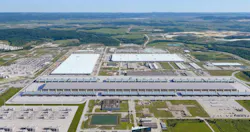
Back on March 31, 2026, we discussed we discussed SoftBank and SB Energy’s plans to redevelop the former Portsmouth Gaseous Diffusion Plant site near Piketon as a 10-GW artificial intelligence data center campus supported by almost an equal amount of new power generation. At the time, the plan called for as much as 10 GW of new generation, including 9.2 GW of natural gas capacity, along with approximately $4.2 billion of high-voltage transmission infrastructure developed with AEP Ohio. An initial 800-MW data center phase was targeted for service in 2028.
The March story was notable because Pike County appeared to offer a preview of a new model for building hyperscale infrastructure: develop the generation, transmission and data center simultaneously rather than wait for an increasingly congested regional grid to deliver multiple gigawatts of capacity. Not to mention the reuse of a brownfield site with the encouragement of the federal government.
Since then, almost every important part of the project has moved forward, and on August 17, the most consequential missing pieces fell into place.
NVIDIA announced that it will become the exclusive AI compute infrastructure provider for the PORTS-Pike Technology Campus. OpenAI will be the data center customer, signing a 20-year lease with SB Energy for approximately 8 GW of IT capacity. NVIDIA will invest another $1.5 billion in SB Energy and provide credit support for the land, power and shell infrastructure behind an initial 4.25 GW of IT load, with an option covering approximately another 3.75 GW.
The Securities and Exchange Commission filing accompanying the announcement makes the financial commitment even more significant. NVIDIA disclosed that its aggregate payment obligation associated with its initial commitment is capped at $105 billion. That is not a conventional capital commitment to spend $105 billion building the campus, nor is it simply a guarantee of OpenAI's rent. Rather, it is a contingent residual-value guarantee designed to protect the infrastructure owners if specified OpenAI payment or insolvency events occur.
The project has become a case study in how the AI industry may finance infrastructure measured not in hundreds of megawatts, but in multiple gigawatts.
From a Power Plan to an AI Infrastructure Stack
When DCF examined PORTS-Pike in March, many of the physical pieces were already visible; SB Energy was the developer. SoftBank was behind the investment strategy. DOE was making federal property associated with the former Portsmouth uranium enrichment complex available for redevelopment. AEP Ohio was working on transmission infrastructure. A massive natural gas generation program was contemplated, and an initial 800-MW phase was moving toward construction.
At that time, there was no publicly committed end user for the full campus. OpenAI's relationship with SoftBank and the broader Stargate initiative made it an obvious possibility, but the Piketon development had not been formally established as an OpenAI campus in DCF's March reporting.
The August 17 announcement establishes a very clear division of responsibilities:
· SB Energy will build, own and operate the data center infrastructure.
· OpenAI will occupy approximately 8 GW-IT under a 20-year lease.
· NVIDIA will supply the exclusive AI computing platform and is also putting its balance sheet behind a large portion of the project's land, power and shell infrastructure.
· DOE provides an important component of the real-estate and redevelopment framework
· AEP Ohio is developing the major transmission expansion needed as the project scales.
Pike County is evolving from a data center development into an integrated AI industrial ecosystem. Land, electrical generation, transmission, data center construction, compute architecture, tenant demand and credit support are being assembled as parts of the same system. That may ultimately prove more important to the data center industry than the headline 10-GW number.
NVIDIA's $105 Billion Backstop Changes the Risk Equation
The most striking detail of the August announcement is buried in the financial structure. NVIDIA's SEC filing says that the company's aggregate payment obligations for its initial PORTS-Pike commitments are capped at $105 billion. But understanding what NVIDIA has actually agreed to do is essential.
OpenAI remains the tenant. The NVIDIA obligations come into play under defined trigger events, including an OpenAI insolvency that results in lease default or OpenAI's failure to make required lease payments.
Under those circumstances, NVIDIA would generally cover the difference between a guaranteed minimum lease value and the money recovered through a replacement lease or sale of the affected assets. NVIDIA also has remedies that could include assuming a lease, helping relet the capacity or facilitating a sale. OpenAI, meanwhile, has agreed to reimburse and indemnify NVIDIA for amounts NVIDIA actually pays under the arrangements.
That makes the $105 billion figure a maximum contingent exposure, not a $105 billion check being written to SB Energy today.
Nevertheless, the structure is important for financing the campus. This is because one of the fundamental problems facing multi-gigawatt AI development is that infrastructure has to be financed years before the computing capacity begins producing revenue.
Developers have to acquire land, order transformers and switchgear, build substations, secure turbines, construct transmission, develop cooling infrastructure and erect buildings well before racks of GPUs can be installed.
Someone has to take that development risk.
At PORTS-Pike, NVIDIA is effectively using the strength of its balance sheet to reduce some of the long-term credit risk associated with building infrastructure for OpenAI. That is a notable expansion of NVIDIA's role in the AI infrastructure market.
The company is no longer simply waiting for developers to build data centers and then sell GPUs into them. NVIDIA describes land, power and shell capacity, or LPS, as a strategic resource and says it is applying some of the same supply-chain disciplines used to secure semiconductor manufacturing capacity to securing physical AI infrastructure. That is a significant shift for the data center industry.
The Campus Is Now an NVIDIA AI Factory
NVIDIA says PORTS-Pike will use its full-stack DSX AI factory platform, including GPUs, CPUs and networking. The initial NVIDIA-backed deployment is designed around 4.25 GW of IT capacity, with NVIDIA retaining the ability to expand its involvement across the remainder of the approximately 8-GW OpenAI commitment.
No specific future GPU generation needs to be assigned to all that capacity today. In a project scheduled to develop in phases for years, the underlying accelerator technology will change repeatedly. That is why the DSX architecture matters.
Rather than treating the building and IT hardware as separate engineering exercises, NVIDIA's AI factory approach attempts to coordinate compute, networking, power, cooling, facilities and software as an integrated platform.
PORTS-Pike looks increasingly different from the classic hyperscale campus in which a developer builds a relatively standardized shell and the tenant determines the equipment installed inside it. And at this scale, the facility itself becomes part of the computing architecture.
The size difference between the project's electrical infrastructure and usable IT load is worth noting. The overall development continues to contemplate approximately 10 GW of new power generation while OpenAI's announced commitment is approximately 8 GW of IT capacity. The project sponsors have not simply equated generating nameplate capacity with usable rack power.
From 800 MW to 8 GW
The first approximately 800 MW is expected to become available beginning in 2028. OpenAI says that initial phase can rely largely on existing AEP electrical infrastructure. Beyond that initial tranche it becomes considerably more complicated.
Later phases require new power plants, transmission infrastructure and additional construction. OpenAI specifically acknowledges that the broader development remains conditioned on infrastructure availability, permitting, environmental reviews and financing. That caveat reflects the reality of development at this scale.
The campus is expected to grow through multiple phases, with OpenAI describing a six-year construction program running through 2032. For the data center industry, that distinction is critical whenever gigawatt-scale announcements are evaluated. The contract may be measured in gigawatts. The physical deployment still happens transformer by transformer, substation by substation and building by building.
AEP's Transmission Plan Takes Shape
One of the biggest changes since the original DCF coverage is that the $4.2 billion transmission plan is moving from concept into defined routing, engineering and regulatory review. AEP Ohio's Piketon Area Improvements Project now includes a proposed Baku Substation in Pike County near Wakefield Mound Road and roughly 50 miles of new 765-kV transmission extending from Baku to the Gavin Substation near Cheshire in Gallia County.
AEP says the facilities are specifically required to serve the planned data center campus. And the company also continues to emphasize that the data center customer will pay the transmission investment required to serve the site, rather than shifting those costs into transmission rates paid by other Ohio customers.
That cost allocation has become increasingly important politically as communities and utility regulators across the country wrestle with the impact of large data centers on electricity rates.
At Pike County, the developers are attempting to make "pay your own way" part of the project's identity. AEP conducted public meetings during the spring and has since selected a preferred transmission route following field surveys and public feedback. The project still requires approval from the Ohio Power Siting Board.
The scale of the transmission line illustrates what makes PORTS-Pike different from most data center projects. A 765-kV line is bulk-power infrastructure. The campus is not simply connecting another load to a local utility substation. Its development is forcing the construction of grid infrastructure normally associated with major power stations and interstate power transfers.
PORTS-Pike Enters the FAST-41 Permitting Process
Federal permitting has also taken a significant step since the March DCF article. In June, the Federal Permitting Improvement Steering Council announced that the PORTS Technology Campus had been accepted for coverage under the federal FAST-41 permitting program.
It became the first project listed under FAST-41's high-performance computing, advanced computer hardware and software sector. The U.S. Army Corps of Engineers is serving as the lead federal permitting agency, with other federal agencies participating in the review.
FAST-41 does not waive environmental laws or automatically approve a project. Instead, it coordinates federal reviews, publishes milestones and attempts to keep complex projects involving multiple federal agencies on a more predictable schedule.
That distinction will be important at PORTS-Pike because the development combines data centers, wetlands issues, federal property redevelopment, transmission facilities, new generating plants and other infrastructure.
The federal permitting record reflects different layers of the larger development. The project-specific FAST-41 dashboard currently describes a roughly 1,300-acre private-land footprint adjacent to the DOE Portsmouth site and references two data center buildings with associated infrastructure. The Permitting Council's broader project portfolio, however, describes the Portsmouth development across approximately 2,700 acres of private land, while OpenAI says the overall project spans private land and remediated land controlled by DOE.
The published federal permitting schedule has targeted late December 2026 for completion of key portions of the current environmental review and permitting process. Fast-track status does not mean frictionless permitting.
Local reporting in July indicated that Ohio EPA determined a Section 401 water-quality certification filing associated with the project was incomplete and requested additional wetlands, aquatic-resource, endangered-species and alternatives information before continuing its review.
That was not a permit denial. It was, however, an early reminder that even a nationally prioritized AI project must navigate detailed environmental documentation before construction can advance across every portion of the property.
The 9.2-GW Gas Plan Is Beginning in Smaller Pieces
Perhaps the most important power-development update involves the proposed natural gas generation. The headline plan remains enormous: at least 10 GW of new generation supporting the technology campus, including approximately 9.2 GW of natural gas generation. The official PORTS-Pike project site continues to describe roughly $33 billion associated with the gas-generation program. The regulatory path is much more incremental. Portsmouth Gas DevCo is currently advancing the PORTS Energy Center, described as an initial natural gas generating project of up to approximately 2 GW using simple-cycle and combined-cycle technology.
The developer's present schedule calls for first-phase construction to begin during the first quarter of 2027, followed by phased commercial operations beginning in the third quarter of 2028. The plant will require a Certificate of Environmental Compatibility and Public Need from the Ohio Power Siting Board.
The 9.2-GW natural-gas figure remains the long-range campus vision. The current approximately 2-GW PORTS Energy Center represents a more immediate, permit-level generation project. It is another example of the gap between announcing a 10-GW AI campus and actually constructing one.
Power plants must be permitted. Turbines must be procured. Pipelines must be built or expanded. Transmission has to arrive at the right locations. Generation and data center schedules then have to converge within months rather than years.
Water and Cooling Plans Become More Specific
Water was another subject left relatively undefined during the project's initial announcement, but OpenAI has now supplied more detail.
The company says PORTS-Pike will use a closed-loop, air-cooled cooling design intended to recirculate water rather than continuously consume the volumes associated with traditional evaporative cooling towers. After the initial system fill, OpenAI says ongoing water consumption should be comparable to that of an office building supporting a similar number of people.
The project expects to use an existing DOE water system at the site while helping fund new local water infrastructure. OpenAI has also said it will publish projected water consumption once the final site design is complete.
The Jobs Forecast Has Grown Dramatically
The economic-development promises surrounding PORTS-Pike have also expanded. The initial March announcements spoke of more than 10,000 construction jobs and more than 2,000 permanent operating jobs. The latest OpenAI and project materials now forecast approximately 35,000 construction jobs over the six-year buildout through 2032 and 2,500 long-term operating positions. Those numbers should not be interpreted as 35,000 people working simultaneously at the site. They represent jobs associated with the extended construction program.
Still, even spread across years, the labor requirement is substantial for Appalachian Ohio.
OpenAI says the PORTS-Pike Campus has signed a memorandum of understanding with North America's Building Trades Unions and plans to work with the Ohio State Building and Construction Trades Council, apprenticeship programs, schools and veterans organizations to develop the workforce required for the campus.
For Pike County, the labor question may eventually become almost as important as the power question. Building an 8-GW IT campus means finding electricians, pipefitters, ironworkers, equipment operators, controls technicians, network technicians and commissioning specialists at a scale rarely demanded by a single project in a rural region.
$80 Million for the Community and Another $84 Million in AI Credits
The developers have also put more detail behind community benefits. SB Energy previously committed $40 million to community programs. OpenAI is adding another $40 million, creating an initial $80 million community benefits fund.
The companies say spending priorities will be shaped locally and are expected to include workforce development, education, infrastructure and community services. OpenAI also says an "Ohio Community Compact" will create public commitments against which the development can be measured. Separately, OpenAI announced approximately $84 million in Codex credits, offering eligible Ohio college students $100 in credits through ChatGPT.
Community benefits are likely to remain a major part of the project narrative as construction accelerates. So will the project's promise that its power requirements will not be subsidized by existing electricity customers.
What Has Changed Since March
The easiest way to understand the last several months is to compare the questions surrounding PORTS-Pike in March with those surrounding it today.
In March, the principal question was whether an almost unimaginably large power-and-compute campus could be assembled in southern Ohio. By August, several of the project's biggest uncertainties have been reduced.
- There is now an identified 8-GW IT customer in OpenAI.
- There is a 20-year lease structure.
- There is an exclusive compute supplier in NVIDIA.
- There is a $1.5 billion new NVIDIA investment in SB Energy.
- There is a contingent NVIDIA credit support structure covering an initial 4.25 GW of IT capacity and carrying a maximum disclosed NVIDIA obligation of $105 billion.
- There is a defined AEP transmission project centered on a roughly 50-mile, 765-kV Baku-to-Gavin connection.
- There is a federal FAST-41 permitting schedule.
- There is an approximately 2-GW natural-gas project beginning to work its way toward the Ohio Power Siting Board.
- There are more specific cooling and water plans.
- There is now an $80 million cash community-benefit commitment accompanied by more defined workforce initiatives.
None of that means the development is guaranteed to reach its ultimate scale.
The project still has to execute multiple generations of data center construction. AEP has to build major transmission infrastructure. Gigawatts of new generation must clear siting and environmental reviews. Federal and state permits have to be completed. SB Energy has to finance each phase. Gas supply and pipeline capacity have to arrive. DOE redevelopment work has to remain synchronized with commercial construction. And an unprecedented volume of NVIDIA computing equipment will ultimately have to be manufactured, delivered, installed and repeatedly refreshed.
The difference is that PORTS-Pike is no longer simply a rendering accompanied by enormous power numbers. Its contractual and financial architecture is becoming visible, making it real.
From Power-First to Bankability-First
Our previous assessment of PORTS-Pike described a power-first approach to AI infrastructure and that description remains accurate. But the August developments add another dimension.
PORTS-Pike is becoming a bankability-first AI infrastructure project. The physical resources necessary for an AI factory — land, power, transmission, buildings, cooling and networking — are being matched to long-term customer demand and a financial structure intended to make financing those assets possible.
NVIDIA's participation makes that especially significant. The company that dominates AI accelerators is now putting capital and credit behind the infrastructure into which those accelerators will eventually be installed. The campus now has a customer, a compute architecture, a credit structure and a timetable for turning those gigawatts into an actual AI factory.
At Data Center Frontier, we talk the industry talk and walk the industry walk. In that spirit, DCF Staff members may occasionally use AI tools to assist with content.
Keep pace with the fast-moving world of data centers and cloud computing by connecting with Data Center Frontier on LinkedIn, following us on X/Twitter and Facebook, as well as on BlueSky, and signing up for our weekly newsletters using the form below.
About the Author
 David Chernicoff
David Chernicoff
Related
Voices of the Industry
 Source: Getty Images, courtesy of Schneider Electric
 Source: Nimbus Advanced Process Cooling