What NVIDIA’s DSX POD Tells Us About the Future of Modular Data Centers
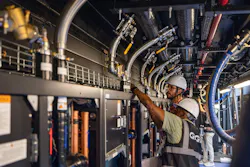

Since NVIDIA’s GTC Berlin announcement, ‘modular’ is back in the spotlight for data center builders and operators. DSX POD is a real milestone, but the conversation that followed treats modular as if it were new. Modular has been around for nearly two decades.
The real revolution is the factory.
Speed is the force reshaping this industry. Speed comes from moving work off the jobsite and onto a production line.
Modular is how that work gets packaged and shipped. It matters, but it’s the enabler. The factory is where we save time. Here’s how modular got to this point, what the current conversation gets right, and what it takes to build at gigawatt scale.
‘Modular’ is nothing new: The history of modular in data centers
The recent SemiAnalysis deep dive tracked more than 60 GW of capacity using some form of it right now. The past two decades of ‘modular’ data center construction split into three waves.
Wave one: modular shells. The industry started with the building. Precast concrete, pre-engineered steel, and factory-made panels got shells up quickly. But the power, cooling, and white space were all still built by hand on site.
Wave two: modular power and cooling. Next came switchgear, UPS, and cooling equipment shipped as pre-assembled skids. That’s standard practice now. I worked in this wave at Google, where we broke the infrastructure into blocks we could prefabricate. It helped, but the blocks were not fully integrated or tested. The on-site assembly, wiring, and piping work still left a lot of field testing and Cx open.
Wave three: integrated, factory-built blocks. Now the whole white space unit ships finished. The field crew sets it, connects it, and verifies it. This is the wave NVIDIA’s DSX POD belongs to.
Each time we see a new wave of ‘modular’ work, the same shift happens: work moves out of the field and into a factory. I’d argue that is the trend that matters.
What the ‘modular’ conversation gets right
The industry isn’t wrong to be excited about DSX POD. It’s just excited about the wrong part. The speed NVIDIA is talking about with the DSX POD comes from doing most of the work in a factory rather than in the field, not from the unit coming in as a module.
With a factory build, the work can run in parallel. On a stick build, every trade waits on the one before it. Concrete, then steel, then electrical, then commissioning. In a factory model, modules are built and tested while the site crew pours foundations. When the pad is ready, the equipment is ready too.
A factory is also easily repeatable. I started my career in semiconductor fabs, where the rule was copy-exact. If a process worked in one fab, you reproduced it identically in the next. A factory works the same way.
Problems get caught before equipment ships. Fixing a defect in the factory costs a fraction of fixing it in the field. Factory first-pass quality runs above 95%, compared with 60 to 70% in the field.
Finally, with a factory build, every unit gets better. Each unit off the line is faster and cleaner than the last because the team learns from each build. When you’re building on the jobsite, you start each project over with a fresh crew.
These are all advantages of modular data center builds, but modular is just the enabler. Factory construction is the real engine.
Speed is the real revolution, and speed is a manufacturing problem
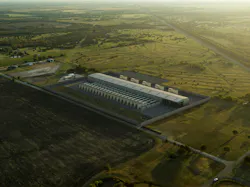
In the AI buildout, the operator who gets capacity online first wins. Stick builds are slow by nature. This slowness comes from electrician shortages, sequential work, and field redesigns. Moving the work into the factory, what the industry calls a ‘modular’ approach, solves these problems.
Pre-engineered, factory-built data centers need a fraction of the field labor. Work can run in parallel with site prep, and the repeatable, module-based nature of these builds keeps design consistent and reduces the need for field redesigns.
We should be excited about NVIDIA’s announcement because it signals a further shift toward building data centers in the factory, not simply because it’s modular.
That shift is why I joined Giga. In the past, we broke data centers into prefab blocks, but those blocks still needed large field crews to connect them. That limited how fast we could build. Giga solves this by building and testing all the power, cooling, and white space equipment in the factory, with standard connections between them, minimizing on-site labor.
We also handle engineering, manufacturing, logistics, installation, and commissioning in-house, so one team owns the build from start to finish. That’s how we take full sites from dirt to data in as fast as 9 months.
Factory-built data centers will power the future of AI
NVIDIA’s announcement is a strong signal for the industry. The next step is applying the same factory-built approach to the whole data center, including power, cooling, and the connections between them, not just compute.
Data centers need to be treated more and more like manufactured products and less like construction projects. The builders who keep up will be the ones who own that process from start to finish, from engineering and manufacturing through installation and commissioning.
That’s what we’re building at Giga. If you’re planning a campus and want to see what a factory-built approach looks like at scale, explore our GigaBase system.
About the Author
 Angad Sandhu
Angad Sandhu is CTO of Giga Energy. He previously led data center engineering at Google through the cloud-to-AI transition and has spent 15+ years delivering power infrastructure at scale. He joined Giga Energy in 2026 to help build a faster, more accountable model for AI infrastructure deployment.
Related


Voices of the Industry
 Source: Phonlamai Photo/Shutterstock.com
 Source: gualtiero boffi/Shutterstock.com
 Source: Gorodenkoff/Shutterstock.com, courtesy of FM Intellium