Google’s TPU Roadmap: Challenging Nvidia’s Dominance in AI Infrastructure
Key Highlights
- Google has introduced multiple TPU generations, each optimized for specific workloads, from cost-efficient training to high-performance inference.
- The new Ironwood TPU is designed explicitly for inference at scale, emphasizing low latency and energy efficiency for real-time AI applications.
- Strategic partnerships with Anthropic and discussions with Meta highlight Google’s push to expand TPU adoption in large-scale AI deployments.
- Google’s AI Hypercomputer integrates diverse accelerators, storage, and networking, enabling a heterogeneous environment that reduces reliance on Nvidia GPUs.
- The evolving landscape fosters data center heterogeneity, giving hyperscalers leverage in procurement and enabling tailored infrastructure for different AI workloads.
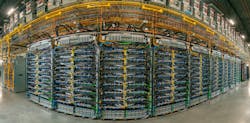
Google’s roadmap for its Tensor Processing Units has quietly evolved into a meaningful counterweight to Nvidia’s GPU dominance in cloud AI infrastructure—particularly at hyperscale. While Nvidia sells physical GPUs and associated systems, Google sells accelerator services through Google Cloud Platform. That distinction matters: Google isn’t competing in the GPU hardware market, but it is increasingly competing in the AI compute services market, where accelerator mix and economics directly influence hyperscaler strategy.
Over the past 18–24 months, Google has focused on identifying workloads that map efficiently onto TPUs and has introduced successive generations of the architecture, each delivering notable gains in performance, memory bandwidth, and energy efficiency. Currently, three major TPU generations are broadly available in GCP:
-
v5e and v5p, the “5-series” workhorses tuned for cost-efficient training and scale-out learning.
-
Trillium (v6), offering a 4–5× performance uplift over v5e with significant efficiency gains.
-
Ironwood (v7 / TPU7x), a pod-scale architecture of 9,216 chips delivering more than 40 exaFLOPS FP8 compute, designed explicitly for the emerging “age of inference.”
Google is also aggressively marketing TPU capabilities to external customers. The expanded Anthropic agreement (up to one million TPUs, representing ≥1 GW of capacity and tens of billions of dollars) marks the most visible sign of TPU traction. Reporting also suggests that Google and Meta are in advanced discussions for a multibillion-dollar arrangement in which Meta would lease TPUs beginning in 2026 and potentially purchase systems outright starting in 2027.
At the same time, Google is broadening its silicon ambitions. The newly introduced Axion CPUs and the fully integrated AI Hypercomputer architecture frame TPUs not as a standalone option, but as part of a multi-accelerator environment that includes Nvidia H100/Blackwell GPUs, custom CPUs, optimized storage, and high-performance fabrics.
What follows is a deeper look at how the TPU stack has evolved, and what these developments mean for data centers built around a predominantly Nvidia-centric model.
The Current Google TPU Roadmap
With several TPU generations now in production, Google is increasingly segmenting workloads across its accelerator portfolio, positioning each TPU line where it delivers the strongest cost-efficiency, memory footprint, and training or inference performance.
The result is a tiered compute model that mirrors how hyperscalers are planning their AI factories: frontier training at the top, scaled inference at the edge of the cluster, and cost-optimized tuning and experimentation beneath.
v5e: The Cost-Optimized “Workhorse” for Sub-Frontier Models
Cloud TPU v5e reached general availability in 2023 as Google’s most cost-efficient accelerator. It targets training and inference for models under roughly ~200B parameters, with Google citing ~2.3× better price-performance than TPU v4. v5e pods can be deployed in flexible slice sizes from only a few chips to large clusters, favoring throughput and economics rather than absolute peak performance.
This positioning has made v5e especially attractive to enterprises developing instruction-tuned, domain-specific, or smaller-scale LLMs that do not require full frontier-class infrastructure but still demand predictable performance per dollar.
v5p: Scale-Out Training at Pod Level
Cloud TPU v5p is the high-end sibling of the v5 generation, engineered for large-scale training workloads:
-
8,960 chips per pod.
-
3D torus ICI (Inter-Chip Interconnect) topology delivering 4,800 Gbps per chip.
-
More than 2× FLOPs per chip and roughly 3× HBM capacity vs TPU v4.
Architecturally, v5p represents Google’s TPU-native answer to Nvidia’s HGX/DGX GPU clusters: a tightly coupled pod fabric designed for frontier training but optimized specifically for XLA-compiled tensor workloads. In high-utilization training environments, this gives Google Cloud a competitive offering on both performance density and pod-level efficiency.
Trillium (v6): Performance and Efficiency Inflection Point
Introduced in 2024, Trillium—effectively TPU v6—marks one of the largest generational jumps in the TPU line. According to Google Cloud documentation, Trillium delivers:
-
4.7× performance per chip vs v5e.
-
Up to 4× better training performance and 3× higher inference throughput system-wide.
-
2× HBM capacity and bandwidth and 2× ICI bandwidth vs v5e.
-
67% improvement in energy efficiency.
-
Pod sizes up to 256 tightly coupled chips.
Trillium also marked the moment Google began explicitly comparing TPU economics against Nvidia’s most recent cloud GPUs, shifting the narrative from “internal Google workloads” to “industry-wide AI data-center TCO.” This was a notable pivot for hyperscaler buyers watching accelerator diversity emerge as leverage against pricing and supply constraints.
Ironwood (v7 / TPU7x): Built for the “Age of Inference”
At Cloud Next 2025, Google introduced Ironwood, its 7th-generation TPU (TPU v7 / TPU7x), and the first designed explicitly for high-volume, low-latency inference at scale. Key attributes include:
-
>4× performance per chip for training and inference vs the prior generation
-
192 GB of HBM3E per chip, targeting large context windows and MoE routing
-
Pod-scale clusters of 9,216 chips, delivering roughly 42.5 exaFLOPS FP8 compute
-
Architectural upgrades to ICI, HBM, and SparseCore, tuned for embedding- and MoE-heavy workloads
Google highlights comparisons to the El Capitan exascale system, but the company also acknowledges that FP8 and FP64 FLOP numbers are not directly comparable. El Capitan is optimized for FP64 and is expected to exceed 85 exaFLOPS FP8; thus, such comparisons are best viewed directionally rather than as direct benchmarks.
Google frames Ironwood as a unified training-plus-inference platform, but its marketing emphasis is unmistakably focused on inference economics (i.e.tokens per second per watt and per dollar) reflecting broader market momentum toward real-time LLM serving and agentic AI workloads.
The AI Hypercomputer: Google’s Full-Stack AI Factory
TPUs are not deployed as standalone accelerators. Google packages them within what it calls the AI Hypercomputer, a vertically integrated compute fabric that combines accelerators, custom CPUs, optimized storage, high-performance networking, and a unified software toolchain.
The intent is clear: to present a cohesive alternative to Nvidia’s end-to-end AI platform while retaining GPU optionality within the same environment.
At a high level, the AI Hypercomputer integrates:
-
Multiple accelerator types — TPU pods across v5e, v5p, Trillium, and Ironwood, along with Nvidia H100/Blackwell GPUs.
-
Specialized networking and ICI fabrics tuned for large-scale training and inference.
-
A unified software stack, including JAX, PyTorch/XLA, vLLM, Keras, and the XLA compiler.
On the storage side, Google exposes a tiered system designed to minimize data bottlenecks in large-cluster training:
-
Filestore and NFS-tuned options, enabling shared visibility across thousands of GPUs and TPUs and improving training times by up to 56% versus naïve storage architectures.
-
Hyperdisk Exapools and Rapid Storage buckets, which colocate datasets with accelerators and offer up to 20× faster random reads compared to standard regional buckets.
In late 2025, Google expanded the silicon footprint of the Hypercomputer with Axion, a custom Arm Neoverse v2 CPU line. Google reports up to 50% better performance and 60% greater energy efficiency than general-purpose x86 instances, with preview configurations supporting up to 96 vCPUs and 768 GB of DDR5. Axion-backed VMs (C4A, N4A, C4A Metal) are designed to handle data preparation, orchestration layers, and inference serving—operating alongside Trillium and Ironwood pods as well as Nvidia Blackwell GPUs.
Taken together, the Hypercomputer positions Google as a builder of a full-stack AI factory - e.g. CPU, accelerator, storage, network, and compiler - where Nvidia GPUs remain available but no longer serve as the gravitational center. For hyperscalers and large enterprises, this represents a maturing alternative architecture capable of supporting heterogeneous accelerator strategies at scale.
Anthropic, Meta, and the Emerging “Not-OpenAI” Camp
Anthropic: A One-Million-TPU Commitment (≥1 GW)
Anthropic’s expanded agreement with Google represents the clearest external validation of TPU momentum to date. The deal of up to one million TPUs, translating to at least 1 GW of dedicated accelerator capacity, reflects Anthropic’s continued focus on price-performance, predictability, and energy efficiency.
This is GPU-scale capital redirected into a non-Nvidia accelerator stack, giving Google a flagship customer capable of demonstrating TPU scale in production and at frontier-model intensity.
Meta: Negotiating a Mega-TPU Deal
Although no party has issued formal confirmation, multiple reports indicate that Meta and Google are in advanced discussions on a multibillion-dollar arrangement in which Meta would lease TPUs beginning in 2026 and potentially purchase systems outright starting in 2027.
If finalized, the deal would redirect a material portion of AI-infrastructure spending—traditionally flowing almost entirely to Nvidia—toward Google Cloud.
Even if the structure evolves, the strategic intent is clear: hyperscalers are actively exploring TPUs as both an economic hedge and a supply-chain hedge in a market constrained by Nvidia’s pricing, availability, and multi-year demand backlog. TPU capacity gives hyperscalers leverage in negotiations and an on-ramp to more heterogeneous accelerator planning.
OpenAI and Others: A Clean Segmentation
OpenAI, meanwhile, has stated that it does not plan to adopt TPUs at scale, despite limited experimentation. Its roadmap remains centered on:
-
Nvidia GPUs (GB200/GB300-class).
-
AMD accelerators.
-
OpenAI’s own in-development custom chip.
This divergence now defines two distinct architectural camps emerging across the AI ecosystem:
-
The GPU-first world: OpenAI, Microsoft, and most enterprise training workloads, built primarily around Nvidia’s high-end GPU roadmaps.
-
The multi-accelerator world: Google, Anthropic, and potentially Meta and Apple, where TPUs assume a significant share of training and inference, and GPUs or custom ASICs (such as AWS Trainium/Inferentia) operate as peer accelerators rather than the de facto center of gravity.
Implications of Google’s TPU Surge for AI Data Center Design
Google’s newest TPU generations—Trillium and especially Ironwood—combined with the Anthropic commitment and potential Meta deal, do not displace the Nvidia-centric AI data center. Instead, they redefine the competitive landscape.
Here’s how the market is shifting:
-
Nvidia remains the default choice for on-prem deployments and for a substantial share of cloud-based frontier training. Its software ecosystem, developer tools, and system-level integrations continue to set the industry standard.
-
TPUs now represent a credible large-scale alternative, offering competitive performance, strong efficiency, and seamless integration into Google’s AI Hypercomputer stack. For certain model architectures—particularly Mixture-of-Experts and large-context inference—Ironwood introduces a materially different performance-per-watt equation.
-
Hyperscalers gain bargaining power. With TPUs proving viable at million-chip scale, large cloud providers now have meaningful leverage in accelerator procurement, reducing dependence on Nvidia’s supply-constrained roadmap.
-
Data-center design becomes more heterogeneous by default. For operators, integrators, and enterprises, the practical implication is planning infrastructure—networking, storage, power envelopes, and orchestration—that can coexist with, interoperate with, or compete against the rapidly maturing TPU ecosystem.
The end state is not GPU versus TPU, but a multi-accelerator environment where different silicon types align with different workload economics. Google’s TPU roadmap accelerates that shift.
At Data Center Frontier, we talk the industry talk and walk the industry walk. In that spirit, DCF Staff members may occasionally use AI tools to assist with content. Elements of this article were created with help from OpenAI's GPT5.
Keep pace with the fast-moving world of data centers and cloud computing by connecting with Data Center Frontier on LinkedIn, following us on X/Twitter and Facebook, as well as on BlueSky, and signing up for our weekly newsletters using the form below.
About the Author
 David Chernicoff