7x24 Spring Conference: Future-Proofing the AI Data Center Amid New Bottlenecks, New Risks, New Rules of Execution
Key Highlights
- The industry is increasingly concerned with scaling operational and organizational systems alongside AI infrastructure to prevent new bottlenecks.
- Workforce development is critical; AI's automation of entry-level tasks risks eroding the expertise needed for future leadership and technical mastery.
- Quality management must evolve to include supplier governance, documentation, and process discipline to support scalable, reliable AI infrastructure.
- Schedule pressure in AI data center projects is leading to out-of-order execution, which heightens risks in commissioning, especially for liquid cooling systems.
- Future success depends on integrating engineering, chemical treatment, and operational teams early in the deployment process to mitigate risks and ensure reliability.
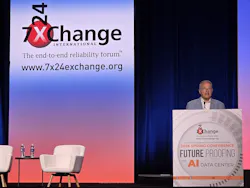
ORLANDO, Fla. — For much of the past two years, conversations about AI infrastructure have centered on scale.
How much power will AI require? How many GPUs will be deployed? Can utilities keep pace? How quickly can new capacity be delivered? Will liquid cooling become the industry standard?
Those questions remain important. But a different conversation emerged repeatedly during the opening day of the 7x24 Exchange Spring Conference.
The challenge facing the industry is no longer simply whether and how effectively AI infrastructure can be built.
It is whether the systems responsible for building, operating, and governing that infrastructure can scale alongside it.
Across presentations spanning workforce development, quality management, supply chains, commissioning practices, and liquid cooling deployment, speakers repeatedly returned to a common concern: the emergence of new bottlenecks and new forms of risk as AI infrastructure moves from rapid expansion toward industrial-scale deployment.
The result was a Day 1 agenda that felt less focused on technology itself and more focused on execution.
As AI data centers become larger, denser, more valuable, and more complex, future-proofing infrastructure increasingly means future-proofing the human, operational, and organizational systems that support it.

The Human + AI Workforce
The conference opened with a keynote from AI pioneer Sol Rashidi, whose presentation, The New Workforce of the Future – The Human + AI Workforce, offered a perspective notably different from many AI discussions currently dominating corporate boardrooms.
Rather than focusing on model capabilities or automation gains, Rashidi concentrated on what she sees as one of AI's least discussed risks: the erosion of human expertise.
Rashidi, who helped launch IBM Watson and later became the world's first Chief AI Officer for Enterprise, argued that organizations are increasingly deploying AI to perform many of the tasks traditionally assigned to entry-level workers. While that may improve short-term efficiency, she warned that it also threatens the developmental pathways through which future experts acquire judgment, discernment, and operational intuition.
Her concern centers on what she describes as a "talent formation fracture."
If organizations stop hiring and developing early-career professionals because AI can perform many introductory tasks, the industry may discover years later that it has also eliminated the mechanisms through which future leaders, engineers, operators, and specialists learn their craft.
The warning carries particular relevance for the data center industry, which has spent years confronting workforce shortages across engineering, operations, construction, commissioning, and skilled trades.
Expertise, Rashidi argued, is not developed through prompting large language models. It is developed through accumulated experience, critical thinking, problem-solving, and exposure to real-world complexity.
"AI should handle execution. Humans should handle thought," she said.
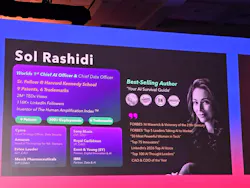
Throughout the keynote, Rashidi challenged attendees to rethink how organizations measure success in an AI era.
The current obsession with productivity, efficiency, and speed, she suggested, risks creating a future in which companies become increasingly capable of making poor decisions faster.
Instead, she advocated a shift toward effectiveness, trust-building, and human-centered outcomes.
One of her most repeated recommendations was deceptively simple:
"Outsource tasks, not critical thinking."
The observation resonated because it touched on a broader issue facing AI deployment itself.
Despite enormous investment and near-constant publicity, many organizations continue to struggle to operationalize AI successfully. Rashidi cited industry research suggesting that only a small percentage of AI initiatives ultimately move beyond proof-of-concept and into production environments.
Too often, organizations focus heavily on models and technology while underinvesting in governance, workforce preparation, workflow redesign, and change management.
The distinction between "using AI" and "doing AI" became one of the keynote's defining themes.
Purchasing AI copilots may improve productivity around existing workflows. Meaningful transformation, however, requires organizations to redesign those workflows entirely and make deliberate decisions about where automation creates value and where human involvement remains essential.
For Rashidi, future-proofing AI ultimately means ensuring that AI happens "with us, not to us."
That concern would reappear repeatedly throughout the remainder of the day.
Building the Resilient Future
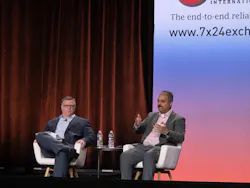
If Rashidi focused on preserving human expertise, Google's Govind Ramu, Senior Technical Program Manager for AI Infrastructure, and Gino Tozzi, Global Head of Data Center Quality, focused on preserving operational expertise.
Their session, Building the Resilient Future, offered one of the conference's most consequential discussions about what happens when AI infrastructure scales faster than traditional quality systems.
The premise was straightforward.
The data center industry is entering a period of growth unlike anything it has previously experienced. Manufacturing capacity is expanding. New suppliers are entering the market. Existing vendors are scaling production. Project timelines continue to compress.
Yet the same forces enabling rapid expansion also create new opportunities for failure.
Drawing upon supplier audits, field investigations, commissioning data, root-cause analyses, and quality reviews, the Google team argued that one of the industry's greatest risks is no longer technology itself.
It is change.
Ramu highlighted research showing that roughly 70% of organizational change initiatives fail. In an environment where a seemingly minor material substitution, undocumented process change, supplier variation, or logistics issue can ripple through an entire infrastructure deployment, that statistic becomes increasingly significant.
The implications extend far beyond traditional notions of reliability.
Historically, resilience in data centers has been defined through redundancy, uptime, backup power, and cooling performance.
The AI era is expanding that definition.
Today, resilience increasingly encompasses supplier governance, documentation discipline, manufacturing consistency, workforce readiness, knowledge management, logistics integrity, and quality systems capable of functioning at unprecedented scale.
The challenge, as Google framed it, is that quality cannot simply be inspected into AI infrastructure after the fact.
It must be engineered into the process itself.
That philosophy is helping drive the development of DCE 9000, a new quality management framework being developed through the Telecommunications Industry Association (TIA).
The initiative seeks to establish a common quality framework for data center infrastructure equipment, suppliers, contractors, and operators, drawing lessons from established quality systems in telecommunications, manufacturing, aerospace, and other highly engineered industries.
The effort reflects a growing recognition that AI infrastructure growth is exposing new forms of technical debt.
As products become more sophisticated and deployment schedules accelerate, documentation, training, standardization, and process discipline increasingly become capacity constraints of their own.
Viewed through that lens, Google's presentation was less about quality assurance than about scalability.
The question is not simply whether infrastructure can be built.
It is whether it can be built repeatedly, consistently, and reliably at AI scale.
When Schedule Becomes a Risk Surface
The day's third major session brought those concerns directly into the field.
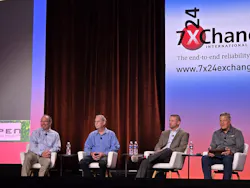
Moderated by Don Mitchell of Victaulic and the Open Compute Project, Schedule Is Risk: Rethinking Fabrication and Commissioning for AI Factories explored how schedule pressure is reshaping the realities of liquid cooling deployment.
Joining Mitchell were Terry Rodgers, Vice President of Design Engineering at T5 Data Centers; Justin Seter, Strategic Initiatives Officer at DLB Associates; and Vali Sorell, Senior Data Center Design Engineer at Oracle.
Collectively, the panel delivered perhaps the most vivid illustration of how AI's growth is creating new operational bottlenecks.
"We have to get really comfortable doing things out of order," Seter said.
The statement captured the reality many teams now face.
Equipment is increasingly being ordered before designs are finalized. Prefabricated assemblies are being manufactured before final IT requirements are fully understood. Infrastructure decisions must often be made months before software workloads and hardware configurations are known.
The reason is simple.
The economics of AI have fundamentally changed the cost of delay.
Panelists discussed scenarios in which large AI facilities can generate enormous business value immediately upon deployment, creating intense pressure to accelerate schedules whenever possible.
As one participant observed, spending millions to recover schedule may be entirely rational if the alternative is losing substantially more revenue through delayed deployment.
The result is an environment in which schedule increasingly dominates project decision-making.
"The only thing anybody cares about is schedule," Seter observed. "Budget means less."
Yet the panel repeatedly warned that schedule compression can create its own risks.
Those risks become particularly acute in liquid-cooled environments.
Traditional flushing and commissioning practices that once received relatively little attention are now becoming mission-critical activities. Stainless steel piping must be properly passivated. Fluid loops must be thoroughly cleaned. Contamination must be removed before expensive AI hardware is connected.
The process is far more complicated than many outside the liquid cooling ecosystem realize.
A single cooling loop may require multiple filling, flushing, filtering, draining, and testing stages before commissioning can begin. Load banks, temporary equipment, cooling distribution units, and piping systems must all meet stringent cleanliness requirements.
Even temporary equipment can become a source of contamination if not properly managed.
For operators deploying high-density AI systems, the stakes are substantial.
As Sorell noted, the value of the IT equipment often dwarfs the value of the supporting infrastructure itself. Protecting that hardware increasingly drives commissioning strategy, fluid management practices, and operational decision-making.
The discussion also highlighted a growing industry blind spot.
Chemical treatment specialists and water quality experts are often brought into projects late, sometimes buried several contractual layers below owners and engineering teams.
For AI facilities, panelists argued, those specialists need a seat at the table much earlier.
The future, they suggested, will likely require greater integration between engineering teams, contractors, commissioning providers, equipment manufacturers, chemical treatment experts, and IT organizations.
In many respects, the conversation mirrored Google's earlier discussion about quality systems.
Both sessions described an industry attempting to industrialize itself while simultaneously reinventing itself.
The challenge is not merely building faster.
It is building faster without introducing new forms of risk.
A New Era of Infrastructure Execution
Taken together, the opening sessions of the 7x24 Exchange Spring Conference offered a revealing interpretation of this year's theme: Future-Proofing the AI Data Center.
The most interesting discussions were not necessarily about GPUs, power density, or cooling technologies themselves.
Instead, speakers repeatedly focused on the systems surrounding those technologies:
Human expertise. Governance. Workforce development. Quality management. Change control. Commissioning. Documentation. Supply chains. Standardization. Operational discipline.
The common thread was execution.
As AI infrastructure scales, the industry's next bottlenecks may increasingly emerge not from technology limitations but from the organizational and operational systems responsible for delivering that technology successfully.
For an industry moving at unprecedented speed, that may prove to be the defining challenge of all.
Future-proofing the AI data center, it turns out, may ultimately depend on future-proofing the people, processes, and practices required to build it.
At Data Center Frontier, we talk the industry talk and walk the industry walk. In that spirit, DCF Staff members may occasionally use AI tools to assist with content. Elements of this article were created with help from OpenAI's GPT5.
Keep pace with the fast-moving world of data centers and cloud computing by connecting with Data Center Frontier on LinkedIn, following us on X/Twitter and Facebook, as well as on BlueSky, and signing up for our weekly newsletters using the form below.
About the Author
 Matt Vincent
Matt Vincent
Matt Vincent is Editor in Chief of Data Center Frontier, where he leads editorial strategy and coverage focused on the infrastructure powering cloud computing, artificial intelligence, and the digital economy. A veteran B2B technology journalist with more than two decades of experience, Vincent specializes in the intersection of data centers, power, cooling, and emerging AI-era infrastructure. Since assuming the EIC role in 2023, he has helped guide Data Center Frontier’s coverage of the industry’s transition into the gigawatt-scale AI era, with a focus on hyperscale development, behind-the-meter power strategies, liquid cooling architectures, and the evolving energy demands of high-density compute, while working closely with the Digital Infrastructure Group at Endeavor Business Media to expand the brand’s analytical and multimedia footprint. Vincent also hosts The Data Center Frontier Show podcast, where he interviews industry leaders across hyperscale, colocation, utilities, and the data center supply chain to examine the technologies and business models reshaping digital infrastructure. Since its inception he serves as Head of Content for the Data Center Frontier Trends Summit. Before becoming Editor in Chief, he served in multiple senior editorial roles across Endeavor Business Media’s digital infrastructure portfolio, with coverage spanning data centers and hyperscale infrastructure, structured cabling and networking, telecom and datacom, IP physical security, and wireless and Pro AV markets. He began his career in 2005 within PennWell’s Advanced Technology Division and later held senior editorial positions supporting brands such as Cabling Installation & Maintenance, Lightwave Online, Broadband Technology Report, and Smart Buildings Technology. Vincent is a frequent moderator, interviewer, and keynote speaker at industry events including the HPC Forum, where he delivers forward-looking analysis on how AI and high-performance computing are reshaping digital infrastructure. He graduated with honors from Indiana University Bloomington with a B.A. in English Literature and Creative Writing and lives in southern New Hampshire with his family, remaining an active musician in his spare time.
Voices of the Industry
 Image courtesy of Midea Building Technologies