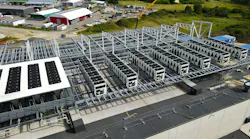
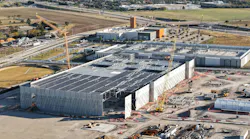
Why Modularization is Becoming the Blueprint for Modern Data Centers


The explosive growth of AI, cloud computing and digital services is driving data center developers to rethink how facilities are designed, built and deployed. Speed to market has become a competitive requirement, yet projects face mounting challenges related to labor availability, supply chains and increasing infrastructure complexity.
In response, modularization is rapidly becoming the preferred growth model. Rather than treating every facility as a one-off project, operators are increasingly adopting reference designs, prefabricated systems and replicable building blocks that can be deployed quickly while maintaining consistent quality and performance.
The shift is about more than construction efficiency. It reflects a broader industry move toward standardization, scalability and operational resilience. Much like software platforms rely on reusable components, data center developers are starting to view infrastructure through the same lens. The result is an environment where modularity and workflow management matter as much as traditional scale.
Skirting the skilled labor gap
With data center construction expanding at a pace that’s difficult for the skilled workforce to match, contractors are taking on increasingly sophisticated projects while competing for a limited pool of workers with mission-critical experience. This year alone, the U.S. construction sector is projected to need nearly 500,000 new workers to meet overall demand, up from about 439,000 in 2025. Along with labor availability, power availability presents similar constraints for data center development. Shifting to modular design allows operators to synchronize construction timelines with utility readiness.
Modular infrastructure helps address this challenge by shifting assembly and testing into controlled manufacturing environments, improving predictability, reducing risk and maintaining performance standards across sites.
The rise of “data center as a platform”
A related trend is the emergence of the "data center as a platform” model. This concept centers on standardized infrastructure components that can be replicated across facilities, allowing operators to leverage proven architectures that accelerate deployment and simplify engineering.
This approach allows facilities to add capacity faster while maintaining operational consistency across sites. Analysts predict that 60% of data center projects anticipated to come online in 2027 haven't yet begun construction. This means there may soon be a wave of new data centers and the pressure to have these built up – and fast – is going to be immense. Modular mechanical rooms, prefabricated skids and containerized infrastructure support rapid deployment while preserving flexibility.
The case for modular cooling infrastructure
As rack densities rise, cooling infrastructure must scale without requiring major redesigns. Where traditional designs often require significant modifications when capacity requirements change, modular architectures offer a flexible alternative.

Xylem’s scalable hydronic systems and water management technologies, for instance, can grow with facility requirements. These modular, multi-pump arrangements allow operators to add capacity as demand increases while maintaining system resilience and efficiency. Instead of replacing existing equipment, facilities can expand incrementally, helping optimize both capital investment and operational performance.
The same principles apply to water treatment. Standardized and containerized water treatment solutions can integrate directly into cooling towers and chiller systems, helping improve water use efficiency while supporting future expansion.
The goal isn’t simply to build larger systems; it’s to build systems that can evolve as operational needs change.
Rethinking equipment selection
Modularization also is reshaping how operators evaluate infrastructure equipment. Performance remains essential, but ease of deployment, footprint reduction and integration flexibility are equally important considerations.
The turnkey nature of Xylem’s Bell & Gossett packaged systems lend themselves to modular environments, where every square foot matters. Compact solutions like the e-80SC Smart Pump and packaged hydronic systems are intentionally designed to simplify installation and support repeatable system layouts. Backed by Bell & Gossett’s engineering expertise, these solutions integrate pumps, valves, piping, VFDs, motors and controls into preassembled packages for faster, more predictable deployment.
Considering the next generation of data centers
Modularization is evolving from a construction methodology into a foundational strategy for data center growth. Technologies like Xylem's hydrovar X platform reinforce the approach by delivering a compact, integrated "system-in-a-box" solution that simplifies installation and commissioning. Built-in intelligence, pre-programmed controls and quick-connect electrical interfaces help support the rapid deployment requirements of modular facilities, while ultra-premium efficiency helps operators manage operating costs and support sustainability goals as power demands continue to grow. What’s more, Bell & Gossett has over a century of experience with redundant, scalable models for commercial buildings that can be easily transferred to this data center building block model.
With demand for capacity showing no signs of slowing, the industry has reached an inflection point. Traditional approaches to building and scaling facilities are becoming increasingly difficult to sustain.
Modularization offers a practical path forward. By combining standardized designs, prefabricated infrastructure and scalable technologies, operators can deploy capacity faster, improve consistency and create future-ready facilities.
About the Author
 Matt Johnson
Matt Johnson
Matt Johnson is a business development manager for Xylem’s Bell & Gossett, responsible for formulating high growth strategies to improve Xylem’s commercial building services market position, drive differentiated customer experiences and achieve financial growth for the business unit. With over 28 years of experience in the water sector, Johnson has spent the past four years driving hydronic HVAC solutions within the health care, education and data center industries. He earned his undergraduate degree in business from California State University-Fresno and holds an MBA from the University of Phoenix.
For 110 years, Xylem’s Bell & Gossett has engineered industry-leading equipment for hydronic HVAC, heat transfer and plumbing systems, including pumps, valves, heat exchangers and accessories. For more information about Bell & Gossett's approach to modularization, visit our dedicated data centers page.