10 Reasons You Cannot Afford to Miss DCF Trends Summit 2026
The data center industry has no shortage of AI infrastructure ambition. What it lacks is certainty.
Power is harder to secure. Designs are advancing faster than facilities can be built. Supply chains remain vulnerable. Liquid cooling is adding operational demands. Projects that look viable on paper can still stall on permitting, commissioning or community opposition.
The question in 2026 is no longer how large the AI opportunity may become. It is what can actually be delivered, and who has learned how to deliver it.
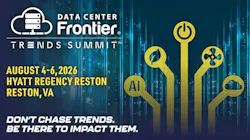
That question defines the 2026 Data Center Frontier Trends Summit, August 4–6 at the Hyatt Regency Reston. Across three days, the people building, powering, financing and operating next-generation infrastructure will examine what is working, where execution is failing and how the market is responding.
This is not a conference about whether AI will create demand. It is about who will be able to meet it.
The advantage will belong to those who join the conversation before its conclusions become market consensus.
Here are 10 reasons to be in the room.
1. The industry has entered the execution era
For several years, the market has been defined by projected demand, capacity, density and investment. The next phase will be defined by execution.
AI data center announcements remain abundant. Energized, commissioned and operational capacity is harder to find.
DCFTS begins with a live editorial calibration, followed by “The New Geography of AI,” featuring EdgeCore CEO Lee Kestler, Data Center Frontier founder Rich Miller and DCF Editor in Chief Matt Vincent.
The focus: how power, entitled land, utility partnerships and execution speed are determining where AI capacity can be built—and who can deliver it.
Demand creates opportunity. Execution determines who captures it.
2. Power will be treated as the foundation of AI strategy
Power is no longer one workstream within a project. It is the factor around which the project must increasingly be organized.
Grid congestion and interconnection delays are pushing developers toward utility service, onsite generation, fuel cells, batteries and behind-the-meter systems.
The question is no longer whether alternative power models will matter. It is which are financeable, permit-ready, repeatable and capable of supporting production infrastructure.
“Power First” and “The AI Power Stack: From Generation to GPU” will move beyond repeating that power is scarce to examine what credible developers and operators are doing about it.
3. Site selection is being rewritten around scarcity
A site may have land but no near-term power. It may have power but inadequate fiber, water or transmission capacity. A technically viable location may face zoning, permitting or community resistance.
“The New Site Selection Stack: Power, Fiber, Water—and Friction” will examine where projects are advancing, where they are stalling and which compromises developers can accept.
For developers, operators, utilities and investors, these variables determine whether a project exists beyond a planning document.
Companies can hear which assumptions are changing now—or discover which no longer apply after committing to a market.
4. The AI factory will be followed from model to production
Simulation and digital twins can show how power, cooling and compute should interact before construction. Turning that model into an operating AI environment remains one of the industry’s hardest problems.
“Design, Simulate, Build” will address integrated design, featuring leaders from Schneider Electric, Motivair, Digital Realty, Compass Datacenters and NVIDIA. “Designed vs. Deployed” will feature leaders from NVIDIA, Meta and the Open Compute Project. “The AI Factory in Practice” will move into commissioning, handoffs and day-two operations.
The gap between what can be designed and what can be reliably operated may be the most consequential gap in AI infrastructure. DCFTS lets attendees hear those conclusions take shape—and challenge them in real time.
5. The density debate will be grounded in production reality
AI roadmaps increasingly point toward 100-kilowatt, 300-kilowatt and potentially megawatt-scale racks. Those figures attract attention. Production environments remain more complicated.
Training, inference, enterprise, edge and hyperscale deployments do not create identical requirements. Some facilities can be retrofitted; others need purpose-built environments.
“One Density Doesn’t Fit All” will examine where density is actually landing and when extreme density is essential rather than an expensive over-optimization.
The question is where higher density creates value, where it adds disproportionate risk and whether today’s infrastructure will still make sense when the workload arrives.
6. Liquid cooling will be treated as an operating system
Liquid cooling is moving toward mainstream adoption, but implementation is more complicated than selecting a product.
Operators must integrate liquid systems with mechanical plants, water loops, controls, redundancy and maintenance while preparing for mixed environments and long-term serviceability.
Buying liquid-cooling equipment is one decision. Living with it for the next 15 years is another.
Main-stage sessions, roundtables and “From Hybrid to Liquid” will focus on retrofits, heat rejection, water stewardship and operational readiness—with perspectives from Nortek, Nautilus, Motivair by Schneider Electric and Equinix.
7. AI investment will be tested against physical reality
Capital continues to pour into AI infrastructure. But the assumptions supporting it are being tested by the pace at which projects can secure power, equipment, permits and customers.
The constraint is not necessarily money or demand. It is turning both into operating infrastructure on schedule.
“AI Infrastructure Investment: Bubble, Breakthrough, or Both?” will examine how investors and operators are underwriting power risk, supply-chain exposure, construction timelines and market uncertainty.
There is little doubt AI will require substantial investment. There is considerably more doubt about which projects will absorb it successfully.
8. Hidden delivery risks will be exposed before they become failures
Land, power, capital and customers do not guarantee that a project will open on time.
“Beyond the Dashboard” will explore active exception management. “The Hidden Constraint” will examine long-lead equipment and supply chains. “The Last 90 Days” will focus on the period when generators, switchgear, controls, cooling, utility coordination and commissioning must converge.
The project is not finished when everyone starts calling it “nearly finished.”
DCFTS will examine the disciplines separating on-time delivery from another unforeseen delay.
9. Community acceptance will be treated as infrastructure
Data center projects are increasingly judged on land use, water, grid impact, noise, construction practices and the credibility of promised local benefits.
The closing keynote, “Earning the Social License,” will treat community acceptance as an outcome of execution rather than messaging. Moderated by Loudoun County’s Buddy Rizer, it will feature leaders from Cologix, Nomad Futurist, Dominion Energy and Vantage Data Centers.
Demand does not automatically produce permission. Companies that understand that may continue building. Those that do not may find public acceptance has joined power on the critical path.
10. The most valuable conversations may happen beyond the stage
Wednesday evening’s structured roundtables will put attendees into peer-led discussions on AI deployment, construction, liquid cooling, colocation economics and onsite power—without formal slide decks or familiar talking points.
The Summit concludes with tours of NTT Global Data Centers’ VA10 facility and Sabey Data Centers’ Ashburn campus, placing the discussion inside the world’s most important data center market.
Many events provide information that eventually appears online. Fewer provide access to the people whose decisions will shape what appears online next.
You can always read the recap
The AI infrastructure market is moving too quickly—and the cost of poor execution is too high—for companies to evaluate its challenges in isolation.
Power determines geography. Density reshapes electrical and cooling architecture. Cooling changes operations. Supply chains alter schedules. Construction practices affect trust. Capital depends on whether the entire system can be delivered.
DCFTS 2026 brings that system—and the leaders responsible for it—into one room.
There will be articles, session summaries and secondhand accounts afterward. Those may be sufficient for some.
For everyone deciding what gets built, where it gets built, how it gets powered and whether it succeeds, being part of the conversation will be more valuable than reading about it later.
Join Data Center Frontier and the leaders building, powering and operating the next phase of AI infrastructure, August 4–6 at the Hyatt Regency Reston.
Register now for the 2026 Data Center Frontier Trends Summit.
At Data Center Frontier, we talk the industry talk and walk the industry walk. In that spirit, DCF Staff members may occasionally use AI tools to assist with content. Elements of this article were created with help from OpenAI's GPT5.
Keep pace with the fast-moving world of data centers and cloud computing by connecting with Data Center Frontier on LinkedIn, following us on X/Twitter and Facebook, as well as on BlueSky, and signing up for our weekly newsletters using the form below.
About the Author
 Matt Vincent
Matt Vincent
Matt Vincent is Editor in Chief of Data Center Frontier, where he leads editorial strategy and coverage focused on the infrastructure powering cloud computing, artificial intelligence, and the digital economy. A veteran B2B technology journalist with more than two decades of experience, Vincent specializes in the intersection of data centers, power, cooling, and emerging AI-era infrastructure. Since assuming the EIC role in 2023, he has helped guide Data Center Frontier’s coverage of the industry’s transition into the gigawatt-scale AI era, with a focus on hyperscale development, behind-the-meter power strategies, liquid cooling architectures, and the evolving energy demands of high-density compute, while working closely with the Digital Infrastructure Group at Endeavor Business Media to expand the brand’s analytical and multimedia footprint. Vincent also hosts The Data Center Frontier Show podcast, where he interviews industry leaders across hyperscale, colocation, utilities, and the data center supply chain to examine the technologies and business models reshaping digital infrastructure. Since its inception he serves as Head of Content for the Data Center Frontier Trends Summit. Before becoming Editor in Chief, he served in multiple senior editorial roles across Endeavor Business Media’s digital infrastructure portfolio, with coverage spanning data centers and hyperscale infrastructure, structured cabling and networking, telecom and datacom, IP physical security, and wireless and Pro AV markets. He began his career in 2005 within PennWell’s Advanced Technology Division and later held senior editorial positions supporting brands such as Cabling Installation & Maintenance, Lightwave Online, Broadband Technology Report, and Smart Buildings Technology. Vincent is a frequent moderator, interviewer, and keynote speaker at industry events including the HPC Forum, where he delivers forward-looking analysis on how AI and high-performance computing are reshaping digital infrastructure. He graduated with honors from Indiana University Bloomington with a B.A. in English Literature and Creative Writing and lives in southern New Hampshire with his family, remaining an active musician in his spare time.
Voices of the Industry
 Image courtesy of Midea Building Technologies
 Adobe Stock image courtesy of Hitachi Energy