Hillwood, PowerHouse Advance $20B Joliet Data Campus as Midwest AI Buildout Accelerates
Key Highlights
- The Joliet project involves 24 buildings, up to 1.8 GW capacity, and is among Illinois' most significant digital infrastructure developments, signaling a new era for AI-focused data centers in the Midwest.
- Local government and developers negotiated substantial community investments, including $100 million for infrastructure, reflecting a shift toward visible, near-term community benefits from large projects.
- Public opposition centered on environmental, utility, and social concerns, illustrating the increasing political complexity of large-scale AI infrastructure projects.
- Regulators are implementing new protections to prevent utility costs from being unfairly shifted to ratepayers, highlighting industry-wide efforts to manage infrastructure risks associated with speculative demand.
- The project underscores a broader industry trend: land and power are now prioritized assets, with development timelines and utility planning adapting to the rapid growth of AI and hyperscale cloud demands.

The approval of the Joliet Technology Center signals that the Chicago region is being pulled into the Midwest’s next phase of AI infrastructure development, one that has so far been led by Ohio and defined by scale, power demand, and rising public scrutiny. It also underscores a growing reality: local governments are beginning to understand exactly what that shift entails.
On March 19, 2026, the Joliet City Council voted 8–1 to approve the conditional annexation of roughly 795 acres for the proposed Joliet Technology Center, a $20 billion data center campus backed by Hillwood and PowerHouse Data Centers. The site, near Rowell and Bernhard Roads on Joliet’s east side, is planned as a 24-building, multi-phase development that would rank among the most consequential digital infrastructure projects ever approved in Illinois.
Joliet is now a clear case study in how the Midwest’s data center market is evolving: massive land assemblies, utility-scale power requirements, front-loaded community concessions, increasingly organized local opposition, and regulators working to ensure that the costs of AI infrastructure are not shifted onto ratepayers.
A Project Too Large to Call Routine
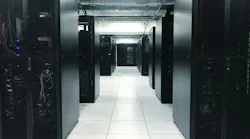
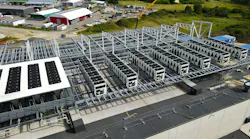
The Joliet Technology Center is a campus-scale industrial platform built for the AI era. Plans call for 24 two-story buildings of roughly 144,500 square feet each, with total development estimated at approximately 6.9 million square feet and up to 1.8 GW of eventual capacity. That places the project firmly in the emerging “AI factory” category, e.g. far-removed from the incremental, metro-edge data center expansions that defined earlier growth cycles.
The distinction is critical. AI-scale campuses operate on a different economic and technical model. Fiber access and metro proximity are no longer enough. These developments require large, contiguous power blocks, land to support phased substation and utility infrastructure, and a political framework capable of absorbing what is effectively heavy industrial development under a digital banner.
Joliet checks those boxes: available land, a logistics-oriented location, access to the Chicago market, and a municipal posture aligned with long-term economic development. Just as importantly, it reflects a growing willingness among cities to engage with projects at a scale that would have been considered exceptional only a few years ago.
Why Joliet Said Yes
For Joliet officials, the project’s appeal was straightforward. The city estimates the campus will generate roughly $310 million in property taxes over 30 years, in addition to utility tax revenue. Projected distributions include $677 million for Joliet Township High School District, $76 million for Joliet Junior College, and $146 million for Will County. The development is also expected to create approximately 700 permanent onsite jobs and between 7,000 and 10,000 construction jobs sourced locally.
The developer’s messaging reinforces that case, positioning the project as a long-term expansion of the tax base capable of supporting city services, education, and infrastructure without adding pressure to existing municipal systems. A five- to seven-year build schedule further frames the campus as a durable economic engine rather than a one-time construction cycle.
Joliet also secured a substantial, front-loaded community investment package. Ahead of the vote, Hillwood and PowerHouse committed up to $100 million for sidewalks, streets, and city services. The structure is notable: $20 million payable within 30 days of closing, with additional $20 million contributions tied to permits across each of the project’s four phases.
This is no peripheral concession. It reflects a shift in how communities are negotiating with data center developers. Increasingly, cities are demanding visible, near-term returns; not just long-dated tax projections.
That shift helps explain why the Joliet vote matters beyond Will County. Hyperscale and AI-oriented data centers are no longer treated as low-friction industrial projects moving quietly through zoning. They are being evaluated as large-scale infrastructure developments that must begin paying for their public impact from day one.
Why Residents Fought It
If the economics supported approval, the public hearings made clear why projects of this scale are becoming politically volatile.
Local coverage described packed meetings, hundreds of attendees, and a marathon public hearing on March 16 that ran more than six hours and ultimately forced the vote to be postponed until March 19. Residents raised concerns spanning electricity demand, water use, noise, light pollution, environmental impact, and the broader social implications of AI-driven infrastructure.
NBC Chicago reported the meeting stretched to roughly six and a half hours before the decision was delayed, while ABC 7 and Shaw Local documented both the scale of turnout and the intensity of local opposition.

A More Sophisticated Opposition
Those objections were not unusual, but they were revealing. In earlier waves of data center development, opposition often centered on aesthetics or tax incentives. In Joliet, the concerns were more structural: utilities, affordability, resource competition, and whether the long-term benefits justify the scale of the project. That movement reflects how visible and consequential the infrastructure demands of AI have become.
Developers responded by emphasizing modern design, noise mitigation, and lower-impact cooling. Project materials state the campus will use closed-loop systems designed to minimize water consumption and argue that noise profiles associated with older facilities no longer reflect current data center design. The site plan also highlights setbacks from residential areas and the use of natural buffers for screening and acoustics.
But those assurances, while necessary, do not resolve the underlying concern. Residents are not reacting to a single facility. They are responding to the prospect of a 795-acre, AI-scale load entering their community.
The Real Issue Is Power
The Joliet approval is part of a much larger Illinois story and a broader sea change across the industry. As the city moved the project forward, regulators were moving in parallel to limit the risks associated with very large new loads, particularly data centers.
The Illinois Commerce Commission approved a set of consumer protections tied to ComEd’s proposed framework for serving large customers, including higher financial security requirements and minimum payment obligations. At the same time, it opened a wider inquiry into how to prevent the costs of distribution upgrades (often required to serve data center demand) from being passed on to ratepayers.
The underlying question has changed. It is no longer simply whether a city wants the tax base. It is who carries the risk when large-load projects drive infrastructure expansion and then underutilize that capacity, or fail to materialize at all. Recent reporting on the Illinois debate points to a pipeline of data center demand large enough to force a fundamental rethink of utility planning and cost allocation.
The Joliet Technology Center sits at the intersection of two converging realities. The AI boom is pushing developers to secure land and power earlier, and at far greater scale, than in previous cycles. At the same time, utilities and regulators are drawing clearer boundaries around speculative demand, signaling that the broader customer base will not absorb that risk.
Joliet is not unique. But it is an early, visible example of how these tensions are beginning to play out.
A Midwest Market Moving Up the AI Stack
The Chicago region has long been a core U.S. data center market, historically defined by colocation, network interconnection, and enterprise deployments. What it has not been known for until now is the kind of large-scale AI campus development that has reshaped Northern Virginia, Phoenix, and parts of Texas.
That shift is now coming into view. Around Chicago, a more land- and power-intensive model is emerging: one built for hyperscale cloud and AI demand. In this model, developers secure entitlement and utility positioning first, then bring the campus to market. That appears to be the case in Joliet where local reporting indicates no end user has been publicly identified, even as the city approved annexation and the project was positioned as potentially the largest in the state.
This is increasingly standard in the AI era. The primary assets are no longer just the buildings. They are the entitled land, the secured power pathway, the substation strategy, and the ability to phase delivery in line with demand that is outpacing traditional infrastructure timelines.
Fox 32 reports the first building is expected in 2028, with the remainder delivered in phases. The timeline underscores a key point: for projects at this scale, much of the value is created well before construction begins.
What the Approval Really Means
The city approved not just a data center campus, but a new kind of industrial proposition. This is infrastructure built for the AI economy, where the primary constraints are no longer limited to building design or site availability, but extend to power procurement, ratepayer protection, political legitimacy, and social license.
Joliet’s leaders determined the economic upside justified moving forward. Residents made clear those benefits will not be accepted on faith. Illinois regulators, meanwhile, are signaling that utilities and their customers will not be expected to absorb the risks of large, speculative load growth.
That is why the Joliet Technology Center matters beyond its $20 billion price tag. It marks a point where the Midwest’s data center trajectory becomes inseparable from the AI buildout—and where local approval is no longer the end of the process, but the beginning of a broader negotiation over who pays, who benefits, and what kinds of infrastructure communities are willing to support.
This is not a remote, out-of-sight development. Joliet sits within the Chicago region, home to the third-largest city in the United States. The impacts of AI-scale infrastructure will be visible, debated, and contested in real time, and developers will be required to respond accordingly.
At Data Center Frontier, we talk the industry talk and walk the industry walk. In that spirit, DCF Staff members may occasionally use AI tools to assist with content. Elements of this article were created with help from OpenAI's GPT5.
Keep pace with the fast-moving world of data centers and cloud computing by connecting with Data Center Frontier on LinkedIn, following us on X/Twitter and Facebook, as well as on BlueSky, and signing up for our weekly newsletters using the form below.
About the Author
 David Chernicoff