The Rural Data Center Boom Comes Into Focus: Challenges and Opportunities
Key Highlights
- A majority of planned U.S. data centers are now in rural areas, signaling a strategic shift driven by energy availability and land access rather than proximity to urban centers.
- The move into rural markets raises concerns about land conversion, water use, electric rates, and local acceptance, especially in regions with strong agricultural identities.
- Power availability, not latency, is now the primary factor in siting decisions, with regions like Texas potentially surpassing traditional hubs like Northern Virginia by 2030.
- Local communities are increasingly scrutinizing data center projects, emphasizing transparency, environmental impact, and long-term economic effects over simple tax incentives.
- The industry’s expansion into frontier markets is prompting a reevaluation of incentives, infrastructure costs, and community engagement strategies to ensure sustainable development.
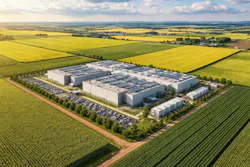
Pew Research Center’s latest snapshot of the U.S. data center buildout lands with the force of a market correction: 67% of planned U.S. data centers are in rural areas, even as 87% of existing facilities remain in urban markets. Nearly as important, 39% of planned projects are targeting counties that do not host a single data center today. This isn’t incremental growth. It’s a directional shift in where the industry is going next.
The Rural Shift Rewrites the Data Center Map
The next wave of digital infrastructure is no longer clustering around population centers and network hubs. It is moving outward into farm country, exurban utility territories, lightly populated industrial zones, and counties better known for row crops, timber, or logistics than campus-scale AI factories.
For rural America, the implications are immediate and uneven. Projects pitched as tax-base expansion and AI-era economic development are also becoming flashpoints over land conversion, transmission access, water use, electric rates, and who defines public benefit in regions that have rarely hosted infrastructure at this scale. They're also where power and connectivity are often managed by small local cooperatives.
When Growth Meets Local Reality
That tension is already surfacing in plain language. In a NewsNation/The Hill interview, Texas Agriculture Commissioner Sid Miller warned that the impact on farmers extends beyond land loss to potential pressure on electric rates. In a January statement, he said his office was hearing from farmers concerned that data centers were being built on “precious, richest farmland” while consuming large volumes of power and water.
His proposed response—“Agriculture Freedom Zones”—would not halt data center development, but would attempt to redirect it away from prime farmland toward marginal land, brownfields, arid regions, or sites with existing grid access.
Pew’s rural buildout statistic is therefore more than a migration story. It is proof that the industry’s hardest problems are being relocated. The cloud era concentrated development in a handful of mature, infrastructure-rich markets. The AI era is forcing a different question: where can developers still secure land, power, permits, and political permission at scale?
For now, the answer points to rural America. But the consequences of that determination are only beginning to take shape.
The Old Data Center Map Is Breaking
For most of the modern data center era, site selection was driven by proximity: to enterprise customers, population centers, internet exchanges, and the dense fiber ecosystems that enabled low-latency interconnection. That logic concentrated growth in Northern Virginia, Silicon Valley, Phoenix, suburban Chicago, Dallas-Fort Worth, and similar metro-adjacent hubs.
The AI boom is changing that geometry.
JLL’s North America Data Center Report Year-End 2025 found that 64% of capacity under construction is now in frontier markets, with West Texas, Tennessee, Wisconsin, and Ohio among the primary beneficiaries. The shift is not stylistic; it is structural, driven by energy availability, land access, and the sheer scale of current demand. More than 35 gigawatts of capacity is under construction across North America, and 92% of it is already precommitted.
Pew’s state-level data reinforces that picture. Virginia still leads with 287 planned data centers, followed by Texas (170) and Georgia (141), with Illinois and Arizona in the next tier. Regionally, the South accounts for 48% of planned facilities, while the South and Midwest together represent roughly three-quarters of the national pipeline.
This is no retreat from core markets but an expansion beyond them. Hyperscale and AI infrastructure are now moving into territories once considered secondaryor dismissed as edge. The reason is obvious: legacy markets no longer offer easy paths to scale. Land is constrained. Power is contested. Permitting is slower. Community tolerance is lower.
In other words, the industry isn’t just chasing new opportunity. It’s running out of workable options in the old ones.
Power, Not Latency, Is Now the First Question
The defining siting question in 2026 is no longer, “How close is the fiber?” It’s, “How fast can I get power, and how much more can I grow from there?”
That shift is what makes rural markets strategic.
These regions often sit closer to underutilized transmission corridors, retiring industrial loads, greenfield substation sites, or existing generation assets. Just as important, they offer the physical room for phased campus buildouts, dedicated substations, and on-site generation. JLL’s latest data makes the point clearly: the move into frontier markets is being pulled by the need for abundant energy and available land. On that basis, Texas could overtake Northern Virginia as the world’s largest data center market by 2030.
The demand trajectory explains the urgency. U.S. data centers consumed roughly 183 terawatt-hours of electricity in 2024—more than 4% of total U.S. demand—and that figure is projected to reach 426 TWh by 2030. EPRI’s 2026 scenarios go further, estimating data centers could account for 9% to 17% of U.S. electricity consumption by the end of the decade. Virginia has already crossed a critical threshold, with data centers consuming more than 20% of statewide electricity. In a mid-range scenario, EPRI projects eight states reaching that level by 2030.
At that scale, data centers stop behaving like commercial real estate and start behaving like industrial load centers.
That distinction matters. It explains why developers are moving into counties with no prior data center footprint, and why proximity has taken a back seat to power certainty. Rural markets aren’t winning because they’re cheaper. They’re winning because they may be among the last places where land, power, and permitting can still be aligned on a timeline that matches AI demand.
Why Farmers Are Now Part of the Data Center Story
What the NewsNation/The Hill segment and Texas Agriculture Commissioner Sid Miller make clear is that rural siting is no longer just about land prices or tax incentives. It’s about the operating economics of agriculture, and how large-scale data center development intersects with systems that have been in place for generations.
Miller’s argument is straightforward: farmers are being squeezed from multiple directions. Prime farmland is being converted. Water resources are under pressure. And large new electrical loads have the potential to reshape the economics of power in regions where farms and ranches already operate. In a January statement, he described agricultural land and water as strategic assets that should be protected even as technology infrastructure expands.
Whether those pressures materialize uniformly across utility territories is a technical and regulatory question. Politically, however, the impact is immediate. Rural communities that once viewed data centers as distant infrastructure are being forced to evaluate them as local economic variables, i.e. projects that can influence land values, utility costs, and water access.
That reframes the debate. It is no longer just about attracting investment. It is about whether a region can absorb that investment without disrupting the existing economy.
In agricultural regions, that economy is tangible and intergenerational in terms of acreage, irrigation systems, feed operations, commodity pricing, and the long-term viability of keeping land in production. That is why Miller’s “Agriculture Freedom Zones” proposal carries weight even if it never passes in its current form. It signals a broader evolution: agriculture is beginning to assert itself as critical infrastructure, and to question whether AI infrastructure should automatically take precedence.
The Jobs-and-Tax Argument Is Losing Its Edge
In many regions, the appeal of data center investment is still straightforward. Construction brings large workforces, extensive subcontracting, and immediate economic activity, along with the promise of a broader tax base. For local officials facing rising service costs or limited growth, data centers can look like a way to fund schools, roads, and public safety without adding residential density.
That argument still resonates. But it is no longer sufficient on its own.
Pew’s March survey found Americans are more likely to view data centers as positive for jobs and tax revenue. At the same time, respondents expressed significantly stronger concern about environmental impact, home energy costs, and quality of life. On those issues, negative perceptions outweighed positive ones.
The gap becomes more pronounced as communities understand the long-term employment profile. Construction may generate hundreds of temporary jobs, but permanent staffing is limited. The World Resources Institute, reviewing more than 1,200 U.S. data centers, found that even the largest facilities typically employ fewer than 150 full-time workers, with some operating with as few as 25.
That reality doesn’t surprise the industry. But it is changing how projects are evaluated locally.
As expectations adjust, the conversation is shifting from economic upside to cost allocation. WRI’s policy recommendations reflect that shift: dedicated rate classes for large loads, clearer cost-recovery mechanisms, water-use monitoring, drought contingency planning, and land-use frameworks tailored to data center impacts.
Opposition is evolving with it. What was once framed as aesthetic or reflexive NIMBY resistance is becoming more structured, and more difficult to dismiss. Rural communities are asking whether tax incentives are too generous, whether utilities are socializing infrastructure costs, and whether local investments in roads, water, and grid upgrades are being properly accounted for.
The question is no longer just what data centers bring. It is who pays, and who benefits over time.
Rural Does Not Mean Friction-Free
For years, developers assumed that moving away from dense suburban markets would reduce entitlement friction. That assumption is now being tested.
Pew’s data shows a significant share of planned data centers are heading into counties with no existing facilities. These regions may offer more land and fewer legacy constraints, but they also lack institutional experience with projects of this scale. That gap can intensify opposition, not ease it. Residents are being asked to absorb industrial development they have never encountered, often on accelerated timelines and with limited transparency. In many cases, the friction stems as much from process as from the project itself.
The fight in Calvert County, Maryland, shows how quickly that dynamic can escalate. A proposed large-scale data center development triggered sharp pushback over secrecy, environmental risk, noise, and the potential reshaping of the county’s rural character. Supporters pointed to jobs and tax revenue. Opponents argued the process was moving too quickly, with insufficient public scrutiny. Calvert has no existing data centers, making it exactly the type of market now entering the development pipeline.
That pattern is unlikely to be isolated.
Rural counties may have smaller populations, but they often have stronger place-based identities and less tolerance for infrastructure perceived as externally imposed. Once the conversation expands beyond a single site to include water use, transmission buildout, diesel backup, or electric rates, opposition can organize quickly, and become harder to contain.
In rural markets, the barrier is no longer just zoning. It is trust, process, and the ability to establish a durable local mandate for development.
Incentives Are Being Rewritten
Another reason the rural boom accelerated is simple: states spent years competing to attract data centers. The National Conference of State Legislatures reports that 38 states offer dedicated tax incentives for data center development. But that landscape is starting to shift. Lawmakers in at least 28 of those states have introduced proposals this year to amend those incentives; often adding guardrails tied to energy demand, fiscal exposure, or both. As of April, at least nine states had considered outright repeal.
The politics are changing because the economics are becoming clearer.
Rural markets attracted data centers in part because state and local governments made them easier (and cheaper) to land. Now those same jurisdictions are confronting second-order effects: strained power systems, rising subsidy costs, and growing concern that the local benefits may not justify the tradeoffs.
If AI infrastructure is going to scale in these regions, incentives alone won’t carry the model. What’s emerging instead are early versions of a new framework; one that includes clearer rules for allocating grid upgrade costs, protections for agricultural land, disclosure requirements for water and energy use, and a more explicit accounting of long-term community impact.
The Rural Bet Comes With Conditions
The industry is moving rural because that is where some of the last buildable geography still exists. There is land to assemble, room to expand, and in some cases a more viable path to power than in saturated metro markets. JLL’s frontier-market data shows capital has already followed that logic. EPRI’s projections show why the search for new electrical capacity will only intensify. Pew’s county-level findings make clear how many projects are moving into places with little or no prior exposure to data center infrastructure.
That shift is redefining who matters in the development process. Farmers, co-ops, county commissioners, rural ratepayers, and landowners are no longer peripheral. They are the stakeholders being asked to host, subsidize, and adapt to industrial-scale infrastructure.
The question now is whether the industry - and the states competing for its investment - can build a rural development model that treats land, water, and power systems as assets to be managed, not constraints to be worked around.
Because in the next phase of the buildout, access to those resources will depend as much on local acceptance as on technical feasibility.
At Data Center Frontier, we talk the industry talk and walk the industry walk. In that spirit, DCF Staff members may occasionally use AI tools to assist with content. Elements of this article were created with help from OpenAI's GPT5.
Keep pace with the fast-moving world of data centers and cloud computing by connecting with Data Center Frontier on LinkedIn, following us on X/Twitter and Facebook, as well as on BlueSky, and signing up for our weekly newsletters using the form below.
About the Author
 David Chernicoff
David Chernicoff
Related
Voices of the Industry
 Source: Adobe Stock, courtesy of ebm-papst
 Source: Champion Fiberglass