From Real Estate to AI Factories: 7x24 Exchange's Michael Siteman on Power, Politics, and the New Logic of Data Center Development
The data center industry’s explosive growth in the AI era is transforming how projects are conceived, financed, and built. What was once a real estate-driven business has become something far more complex: an engineering and infrastructure challenge defined by power availability, network topology, and local politics.
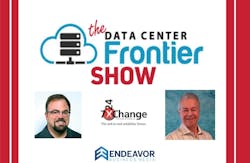
That was one of the key themes in this recent episode of the Data Center Frontier Show podcast, where Editor-in-Chief Matt Vincent spoke with Michael Siteman, President of Prodigious Proclivities and a longtime leader and board member within 7x24 Exchange International.
Drawing on decades of experience spanning brokerage, development, connectivity strategy, and infrastructure advisory, Siteman offered a field-level view of how the industry is adapting to the demands of AI-driven infrastructure.
“The business used to be a pure real estate play,” Siteman said. “Now it’s a systems engineering problem. It’s power, network topology, the real estate itself, and political risk—all of these factors that have to work together.”
Site Selection Becomes Systems Engineering
For much of the early data center era, location decisions revolved around traditional real estate considerations: available buildings, proximity to customers, and nearby fiber connectivity.
That logic has fundamentally changed.
“Years ago, the question was: Is there a building? Are there carriers nearby?” Siteman recalled. “Now it’s completely different. Power availability, network topology, community acceptance—these are the variables that define whether a site works.”
Utilities themselves have become gatekeepers in the process.
“You go to a utility and ask if there’s power,” he explained. “They might say, ‘We might have power, but you have to pay us to study whether we actually have power.’”
In many regions experiencing rapid digital infrastructure expansion, the answer increasingly comes back the same: there simply isn’t enough grid capacity available.
Power Becomes the Project
In the gigawatt-scale era of AI infrastructure, power strategy has moved from a supporting detail to the defining factor in development.
When asked what data center companies might be getting wrong about power, Siteman argues that developers’ varying approaches aren’t mistakes so much as reflections of different business strategies.
“I wouldn’t characterize it as mistakes,” he said. “Each developer has their own business algorithm that drives their power strategy.”
Still, the constraints are real. Many utilities are unable to provide large amounts of new capacity on the timelines hyperscalers and AI developers require.
That reality is accelerating interest in behind-the-meter generation, particularly natural gas.
“What I’m seeing most often are projects that might have some grid connectivity, but not enough to power the entire data center,” Siteman said. “So they supplement it with onsite generation—usually gas.”
He has also observed a rapid shift in market acceptance.
“Six months ago, partners and customers would say, If you don’t have grid interconnection, we’re not interested.” he said. “In the last 30 days, it’s completely different. Now they say, We’d like grid power—but if you don’t have it, we’ll take onsite generation.”
The driver behind this shift is simple: the urgency of AI deployment combined with historically low vacancy rates in the data center market.
Power Gravity vs. Network Gravity
Historically, fiber connectivity determined where data centers were built. Today, Siteman believes the equation has flipped.
“Network access has taken a back seat to the availability of power,” he said. “Because without power, the network means nothing.”
If power is available, networks can usually be extended to the site, even if the cost is significant.
“With power, you can drive the network to the location,” Siteman said. “It might be expensive. It might be really expensive. But at least you’ve got a path.”
He cited a project he is currently advising where an island-powered data center will rely entirely on onsite generation due to a lack of grid capacity.
“The fiber is about a thousand feet away,” he said. “So we’re doing a fiber study to understand how much additional capacity we can pull in and create parity with competitors.”
Selling Capacity Before It Exists
Another major shift in the industry is the increasing prevalence of pre-leasing data center capacity years before facilities are completed.
During Siteman’s tenure working with Digital Realty in the early 2010s, convincing customers to sign contracts for unfinished buildings was extremely difficult.
“People in the IT world are incredibly risk-averse,” he said. “Signing a colo deal felt like giving away their firstborn.”
Today, the situation is reversed.
“Now the model is on its head,” he said. “Companies are contracting for space before it exists.”
The risk, however, has not disappeared; it has simply been redistributed.
“The risk is shared,” Siteman explained. “Developers may have bankable contracts with large customers, but those contracts often include termination rights. Lenders don’t like that.”
At the same time, customers must protect themselves from delivery delays.
“If you’re an end user, you need the right to cancel if milestones aren’t met,” he said. “Otherwise you could get locked into a deal that doesn’t deliver when you need it.”
In practice, he believes hyperscale customers typically retain the upper hand.
“The end user is pretty much in the driver’s seat,” he said.
The Politics of Place
Even when power and network conditions align, developers face another growing challenge: community opposition.
Local politics, zoning battles, and regulatory friction are increasingly shaping data center project timelines across the United States.
Siteman believes the key to navigating this environment is early engagement with local stakeholders.
“It comes down to relationships,” he said. “You have to meet with every department in the city—mayor, city manager, zoning, fire, economic development.”
But he also acknowledges that the political climate has changed significantly.
“Communities are pushing back,” he said. “They don’t want the noise. They don’t see much revenue benefit. They like the fast internet, but they don’t want the data center in their backyard.”
As a result, government relations is becoming a core competency for developers.
“I think this is becoming a full-time job for some teams,” he said.
Hyperscale vs. AI Factories
Perhaps the most dramatic transformation in the industry lies in the infrastructure itself.
Siteman describes modern AI facilities as fundamentally different from traditional hyperscale or colocation data centers.
“They’re worlds apart,” he said.
Conventional data centers typically operate at 10 to 20 kilowatts per rack, with cooling systems designed around air-based architectures.
AI workloads, by contrast, demand radically higher densities and new thermal management strategies.
“In an AI environment you might have 120 or 150 kilowatts per rack,” Siteman explained. “It’s almost entirely liquid cooled—direct liquid to chip.”
These environments also create hybrid cooling ecosystems.
“You’ve got liquid-cooled AI racks but network racks that still require airflow,” he said. “So you end up with mixed topologies that completely change the data center environment.”
Despite the excitement around AI, Siteman believes traditional colocation facilities will remain essential for enterprise workloads.
“Most enterprises aren’t running their own AI workloads,” he noted. “They’re still using traditional infrastructure.”
Is AI a Bubble?
The extraordinary scale of investment in AI infrastructure has led some observers to speculate about the possibility of a technology bubble.
Siteman believes the question is worth asking—but says it is too early to draw conclusions.
“AI infrastructure is extremely expensive,” he said. “One high-performance AI server with GPUs and storage can cost over half a million dollars.”
The economic challenge will ultimately come down to whether companies can generate sufficient revenue from those investments.
“There’s an arms race in AI,” he said. “Everyone wants the biggest, fastest models and the newest hardware.”
That competition could fuel speculative investment, but for now Siteman believes the industry still has a long runway.
“I don’t think we’re seeing a bubble yet,” he said. “It’s still too new.”
The Workforce Challenge
While power shortages dominate industry headlines, Siteman believes the sector faces another critical constraint: talent.
“Data centers don’t run themselves,” he said.
The industry’s workforce is aging, and demand for skilled professionals continues to accelerate.
“We simply don’t have enough people to build and operate the infrastructure that’s coming,” he said.
Organizations like 7x24 Exchange International are attempting to address the issue through initiatives such as International Data Center Day, mentorship programs, and workforce outreach.
“We’re trying to educate people about the opportunities in this industry,” Siteman said. “Because there are meaningful careers here.”
The Digital Industrial Revolution
Ultimately, Siteman sees the current moment as part of a much larger transformation.
“We are in a digital industrial revolution,” he said. “Digital infrastructure is the foundation of everything.”
And at the center of that revolution sits the data center.
“All that digital information comes from a data center.”
At Data Center Frontier, we talk the industry talk and walk the industry walk. In that spirit, DCF Staff members may occasionally use AI tools to assist with content. Elements of this article were created with help from OpenAI's GPT5.
Keep pace with the fast-moving world of data centers and cloud computing by connecting with Data Center Frontier on LinkedIn, following us on X/Twitter and Facebook, as well as on BlueSky, and signing up for our weekly newsletters using the form below.
About the Author
 Matt Vincent
Matt Vincent
Matt Vincent is Editor in Chief of Data Center Frontier, where he leads editorial strategy and coverage focused on the infrastructure powering cloud computing, artificial intelligence, and the digital economy. A veteran B2B technology journalist with more than two decades of experience, Vincent specializes in the intersection of data centers, power, cooling, and emerging AI-era infrastructure. Since assuming the EIC role in 2023, he has helped guide Data Center Frontier’s coverage of the industry’s transition into the gigawatt-scale AI era, with a focus on hyperscale development, behind-the-meter power strategies, liquid cooling architectures, and the evolving energy demands of high-density compute, while working closely with the Digital Infrastructure Group at Endeavor Business Media to expand the brand’s analytical and multimedia footprint. Vincent also hosts The Data Center Frontier Show podcast, where he interviews industry leaders across hyperscale, colocation, utilities, and the data center supply chain to examine the technologies and business models reshaping digital infrastructure. Since its inception he serves as Head of Content for the Data Center Frontier Trends Summit. Before becoming Editor in Chief, he served in multiple senior editorial roles across Endeavor Business Media’s digital infrastructure portfolio, with coverage spanning data centers and hyperscale infrastructure, structured cabling and networking, telecom and datacom, IP physical security, and wireless and Pro AV markets. He began his career in 2005 within PennWell’s Advanced Technology Division and later held senior editorial positions supporting brands such as Cabling Installation & Maintenance, Lightwave Online, Broadband Technology Report, and Smart Buildings Technology. Vincent is a frequent moderator, interviewer, and keynote speaker at industry events including the HPC Forum, where he delivers forward-looking analysis on how AI and high-performance computing are reshaping digital infrastructure. He graduated with honors from Indiana University Bloomington with a B.A. in English Literature and Creative Writing and lives in southern New Hampshire with his family, remaining an active musician in his spare time.