The Evolution of Modular: From Inference Platforms to AI Factories
Rethinking Data Center Deployment for AI Workloads
Artificial intelligence is reshaping how we think about data center infrastructure. It is altering expectations around rack density, deployment timelines, cooling strategies, and where compute must reside.
Traditional data centers remain the backbone of global digital infrastructure. Large campuses will continue supporting hyperscale, cloud, enterprise, and colocation growth. AI introduces a parallel requirement: infrastructure that can be deployed faster, scaled more predictably, and aligned directly to specific workloads.
For me, modular has never been about putting equipment into a box. It is about starting with the application and building infrastructure required to support it.
From White Space to Data Fabric
Historically, data centers were built around centralized white space and overprovisioned for future growth. That model still works, but AI places different demands on infrastructure. Training environments require dense compute, significant power, liquid cooling, and tighter environmental control. Inference workloads, driven by latency, often need to be deployed closer to users, data, or available power. As a result, infrastructure is becoming more distributed, with compute placed closer to the point of need.
The Evolution of Modular
Modular data centers have come a long way from early designs based on shipping container dimensions. While this choice offered a straightforward path to modularity, it was unable to support the full spectrum of IT infrastructure and related components, especially Tier 3 or higher configurations, which require high availability and reliability.
Modern modular infrastructure is engineered as an integrated system. IT, power, cooling, and controls are designed, built, and tested in a factory environment before deployment. This approach improves quality, reduces on-site risk, and delivers a level of repeatability that traditional construction cannot match.
The real advantage of modularity extends far beyond a rapid response to rising rack densities. It gives operators the agility to keep pace with continuous IT innovation while seamlessly scaling to multi-megawatt capacities. By shifting this complex integration entirely to a controlled manufacturing environment before shipping to the field, the industry can finally replace traditional construction variables with guaranteed, predictable deployment timelines and performance.
Why AI Is Accelerating Modular Adoption
AI has exposed a fundamental gap between how quickly compute technology evolves and data center infrastructure evolves to support it. Traditional data center designs and build cycles simply cannot keep pace with accelerating demand. Modular infrastructure bridges this gap by addressing:
- Time-to-Market: Parallel fabrication and site preparation compress deployment timelines, allowing operators to commission capacity faster.
- Repeatable Design: Proven modules can be rolled out consistently across multiple locations.
- High-Density Readiness: Systems are purpose-built from day one to handle advanced cooling and power demands.
- Flexible Placement: High-performance compute can be deployed at the edge or in constrained environments where traditional builds are impractical.
- Latency Demands: Real-time applications require compute closer to users.
- Continuous Innovation: Modular infrastructure allows you to keep pace with IT innovation without risking obsolescence.
Emerging Deployment Models
Modular is no longer a one size fits all solution. It represents a spectrum of deployment strategies aligned to specific workloads:
- Dense learning and training clusters: Multi-megawatt environments supporting AI and HPC, requiring advanced liquid cooling and tight integration between IT and infrastructure.
- Distributed inference platforms: Compact deployments positioned near available power sources and applications.
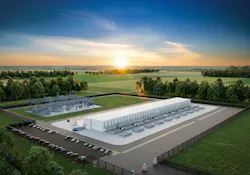
- Turnkey AI factory campuses: At larger scale, modular becomes a full deployment strategy. Repeatable IT modules, power systems, cooling plants, and network infrastructure, integrated into a cohesive, scalable model.
This approach allows operators to build 50 MW+ AI factory campuses while delivering capacity in phased, repeatable increments.
Engineering for Density and Scale
As densities increase, engineering discipline becomes critical. Everything is interdependent: a shift in GPU architecture instantly alters electrical, thermal, and fluid dynamics, directly reshaping rack-level cooling requirements.
An application led approach resolves this complexity by deploying standardized, factory-integrated modular IT blocks. At Compu Dynamics Modular (CDM), for example, we design and manufacture IT modules supporting 1.25 MW to 3 MW+ of intensive AI workloads. These blocks scale seamlessly into 5 MW or 10 MW clusters. At the campus level, this repeatable design delivers massive, coordinated scale without construction delays or field performance risks.
The advantage is performance and predictable scalability with full system coordination.
Looking Ahead
Modular data centers are not replacing traditional facilities; they are becoming a parallel path. Some workloads will continue to rely on centralized campuses, while others will demand distributed, high-density deployments. The outcome is purpose-built AI factories where compute, power, and cooling are integrated from the start.
That is the future of modular: infrastructure designed around the application, built for repeatability, and deployed as a complete system.
About the Author
 Ron Mann
Ron Mann
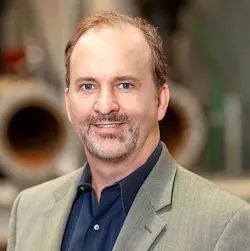
Ron Mann, Vice President at Compu Dynamics Modular, has spent more than twenty-five years at the intersection of product design, project development, and advanced manufacturing, shaping some of the industry’s most forward-thinking innovations in data center infrastructure.
In the early 2000s, Mann helped pioneer one of the first containerized data centers—an achievement that marked a defining shift toward modular, rapidly deployable solutions.
With a rare blend of IT fluency and infrastructure expertise, Mann bridges the complex worlds of data center architecture, modular technology, and client-driven strategy. His holistic perspective allows him to anticipate needs before they surface in order to align expectations and deliver sustainable, high-performance solutions across data center, edge, cloud, colocation, and fully customized modular construction environments.
To learn more about Compu Dynamics Modular (CDM), please visit https://cd-modular.com/
Related
Voices of the Industry
 Image courtesy of Bell & Gossett
 Source: Adobe Stock, courtesy of ebm-papst