Power Is Redefining Data Center Site Selection — And Forcing Supply Chains to Evolve With it
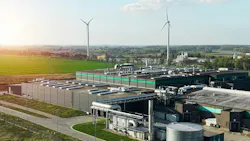

Data center site selection once followed a straightforward formula. Established power networks, reliable transportation routes, available labor, and mature construction ecosystems made certain markets the default choice for large-scale data center development.
Today, many data center developers are selecting sites based on the availability of power.
That shift is forcing supply chains to support projects in locations not traditionally associated with data center construction. The logistics challenges that come with building in emerging markets are not new to construction broadly, but they are relatively new to this industry, and the scale of data center buildouts leaves less room for error.
AI-driven demand has pushed power consumption to levels that existing grid infrastructure was never designed to support. In many established markets, utility interconnection queues stretch years into the future, pushing many developers toward behind-the-meter generation strategies and locations where power can be created rather than waiting for it to be allocated.
Power Shapes Site Selection. Site Selection Shapes the Supply Chain.
When grid constraints pushed development away from established metro markets, the first wave of alternative sites followed natural gas. Today, natural gas-powered generation accounts for 26% of off-grid power strategies, offering control and reliability without dependence on utility queues or capacity timelines. But it also carries its own complications: natural gas pipeline access, regulatory approvals, and the physical reality that many of the most viable sites sit far outside established logistics corridors.
Wind, solar, and nuclear have expanded those options further, though their share of current deployment remains smaller. The specific power source may vary, but the trend remains consistent: data centers are moving toward available power, and the supply chain has to follow.
Power Infrastructure Is Supply Chain Infrastructure
When discussions about power occur, attention typically focuses on generation. But between a power source and a functioning data center sits a significant amount of physical infrastructure.
Generators, transformers, switchgear, substations, battery energy storage systems, cooling equipment, and prefabricated electrical assemblies must all be manufactured, transported, stored, tracked, and set on site. Many of these components are oversized, long-lead-time assets sourced from specialized manufacturers located hundreds or thousands of miles from the project site.
Mission-critical assets require the same planning and care whether it's headed to Northern Virginia or rural Nebraska. What does change is the logistics context around them: where equipment can be staged, how quickly storage can be arranged, and how much flexibility exists when construction timelines shift.
In some respects, non-traditional markets can simplify certain logistics. Permitting for oversized loads is often more complex in dense metro areas, where traffic conditions and municipal restrictions create real friction. Some specialized carriers actively avoid markets like New York or California for exactly that reason. Wide-open rural routes can actually be easier to navigate for heavy haul moves.
The variable that genuinely becomes harder in non-traditional markets is warehousing. When a project is in an established data center hub, secure, project-ready storage is generally close. When a project moves into an emerging market, finding adequate storage may require looking two to three hours out from the site, which adds coordination and transit time that established markets don’t demand.
New Markets Create New Challenges
When projects are built in mature data center ecosystems, logistics gaps are manageable. Distribution networks exist. Carriers are familiar with the routes. And when equipment arrives before the site is ready, overflow storage is usually within reach.
When development moves into secondary and tertiary markets in pursuit of power availability, that proximity disappears. Specialized carrier capacity is constrained regardless of geography — that’s not unique to rural projects. But the difference is that in established markets, storage solutions exist nearby. In emerging markets, project teams may need to source and arrange appropriate storage well in advance, from a wider radius, with less existing infrastructure to draw on.
At the same time, equipment is often procured months before the site is ready. Long-lead items like generators and switchgear must be secured early. When power infrastructure itself is still being established, that gap between manufacturing completion and installation readiness can grow longer than it would on a project in an established market. The storage and sequencing challenge doesn’t disappear. It expands.
Supply Chain Planning Has to Start with Site Selection
The industry has spent years refining its approach to procurement, design, and construction execution. Supply chain planning has matured as a discipline. But it has largely been applied after the site decision is made.
A site's proximity to power is not sufficient on its own. The question that needs to be asked alongside it: can mission-critical equipment reach this site reliably, at the scale this project requires, within the timeline the schedule demands?
That means evaluating warehousing proximity, carrier access, and permitting complexity before ground breaks, not after the first delivery falls behind schedule.
The Role of Project Buffering
What changes in an emerging market, or when power infrastructure delays push back site readiness, is the degree of that gap. When utility interconnection or substation construction extends the timeline, equipment may sit waiting longer than it would on a project where the power situation was already resolved.
Project buffering addresses this directly. Controlled storage environments receive, track, and manage equipment based on actual project requirements rather than manufacturing or shipping schedules. That reduces unnecessary handling, protects equipment from uncontrolled staging conditions, and maintains visibility into critical assets throughout the project.
In markets where local warehousing infrastructure is limited, buffering isn’t a workaround. It’s a planned part of execution.
The Build Environment Is Changing. The Execution Framework Has to Keep Up.
The projects that perform best won’t simply be the ones that secure power. They’ll be the ones that coordinate the transportation, storage, equipment management, and project sequencing required to put that power to work.
Where the power is determines where the data center goes. Where the data center goes determines what the supply chain has to do. The industry's next competitive advantage won't come from finding power alone. It will come from building the supply chains capable of supporting it.
About the Author
 Jarrett Atkinson
Jarrett Atkinson
Jarrett Atkinson is Vice President of Supply Chain at BluePrint Supply Chain, a national supply chain solutions provider specializing in logistics, storage, and equipment management for mission-critical construction. Learn more at blueprintsupplychain.com.
Voices of the Industry
 Source: Robert Kneschke/Shutterstock.com
 Source: Starline, a brand of Legrand