Rack Densities Are on the Rise. Can Your Power Distribution Systems Keep Up?
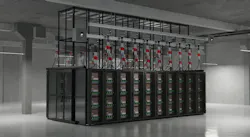

In a recent interview, Chris Osian, Product Manager at Starline, spoke to Matt Vincent, Editor-in-Chief of Data Center Frontier, about why busways outperform traditional RPP-based approaches and what the right power distribution infrastructure needs to deliver.
Matt Vincent:
As rack densities continue to increase, how are power distribution requirements changing for modern data centers?
Chris Osian:
To provide context, I think it's important to point out how rack power has changed over the years. Ten or 15 years ago, most racks were between 10 kW and 20 kW. Five years ago, we saw around 50 kW per rack. Today, we're deploying and powering 100 kW racks, and we're getting requests for 150 kW racks.
The driving force behind these higher power distribution requirements is the adoption of GPU rack technology, which has grown at an unprecedented rate during the past 10 to 15 years. The impact on power distribution is simple — racks now need power at an order of magnitude higher than what they did a decade ago. Five or ten years ago, our high-volume busway amperages were 400 amp, usually at 208 volt or 415 volt. Today, that’s more than doubled. We are routinely distributing 1,000 amp and 1,200 amp busway systems over the rack.
Redundancies are different as well. We used to do a lot of A/B, but we're seeing a lot of N-plus-1 or 4-to-make-3 topologies today. In short, the overhead distribution increases with the rack power.
Vincent:
When exact rack density requirements aren't known at the start of a project, how should data center designers approach power distribution planning?
Osian:
This is a good question. Over the last year or two, we’ve seen a lot of clients starting to over-design and build flexibility into their systems. My recommendation is to build more than what you think you're going to need in the next 6 months, year, or two years.
Building in flexibility helps you adapt when things are changing rapidly. One way you can do that is to specify open channel busway or bus duct, which is something else Starline offers. That allows you to build the backplane of the power you need, including redundancy, and then when you know the exact rack density, you can buy the right circuit and install it in a matter of minutes.
You need to make sure you're prepped for the long term and over-designing gives you the ability to adapt down the road.
Vincent:
That sounds like good advice for designers. From an engineering standpoint, what are the key trade-offs between traditional cable or whip-based systems and overhead busways?
Osian:
This is one of the biggest considerations when you're designing your white space: how do you power the racks? There are a couple of key trade-offs here, and one of the biggest is how labor-intensive and cost-effective one system is compared to the other.
I'll start with whip-based remote power panels (RPPs). With an RPP, you're deploying the panel within a row, but you're routing up to 30 or 40 circuits — sometimes more — from that one point in the row out to wherever the load device is. In the latest data centers, that routing tends to happen overhead, with bundles of whips running above the row. This makes the system more prone to mistakes, because each of those circuits has to be landed twice — once at the RPP and once at the load. You can imagine that 30 sets of cable running overhead gets a little cumbersome.
Now compare that to a busway system. Setting one up is very much like assembling a large LEGO set. For a single row, you put together a busway run that could be 30 or 40 feet long, but it's really only about 8 to 10 large pieces to assemble. That sets up a power backplane so you can simply add circuits whenever you need them. In terms of labor and time — which affects cost as well — a busway system is simpler and less labor-intensive to install.
The other key trade-off between RPPs and busways is flexibility. With an open-channel busway, you can quickly add or remove circuits live, without an electrician. If a new circuit requirement comes up on day 52 of your deployment, trained personnel can install it on the bus without any downtime. That's one of the biggest advantages a busway system has over an RPP. You still have to follow local jurisdiction and safety requirements, but the downtime is minimal compared to what an RPP can offer.
Vincent:
Beyond product specifications, what qualities should data centers prioritize when choosing a busway provider?
Osian:
There are a few things I can point to here.
One is scaling and global distribution. With such a massive push for data centers around the world, you want to choose a busway provider that can provide thousands of plug-ins for distribution at scale. Some of the larger clients out there could be ordering tens of thousands of plug-ins for a single project, which is exponentially more than just a few years ago. So, it's important that whoever you choose is able to scale that amount in a reasonable amount of time.
The other piece of that is global distribution — if you're deploying data centers both in the U.S. and overseas, you want to make sure your provider is set up to scale in each of those locations too. Starline, for example, has locations for Starline Busway that service Europe, Asia, South America, and the U.S., so we're set up pretty well on that front.
The second thing I'd point to is history. There are a lot of new entrants into the market right now because AI is exploding — we're seeing a ton of new products and companies entering the space. What I'd say is make sure your vendor has a long history in the industry, because scaling could be a problem for some of these new entrants, especially if you're deploying globally.
The last thing I'll mention is that when choosing a busway provider, you want a true partner. Technology is moving so fast that you may not know what's coming next in any given slice of the power chain. You need to be able to rely on your vendors to keep you up to date on what's available because the longevity of your data center depends on it.
Vincent:
At Data Center Frontier, we like to break out the crystal ball and ask about the future of data centers. So, for our last question, how do you see power distribution architecture evolving in the coming months and years as AI and HPC push data centers toward higher loads?
Osian:
This trend of increasing power is not going to stop. Everybody's preparing for deployments at even larger power scales than they are today.
I also think one of the things we're going to see in the coming months is more sidecar deployments. Traditionally, a lot of power conversion happened within the rack, but with GPU racks pulling so much power now, we're seeing that conversion move out into sidecars — which takes up a larger footprint but lets you keep pace with how much power these racks are demanding.
Looking further ahead, I think we're going to see a lot more discussion and design work around 800-volt DC. The market is already asking a lot of questions about it. 800-volt DC might end up being one of the biggest changes the data center market has seen in a long time, but Starline is actively preparing to support that kind of architecture for our clients.
About the Author
 Chris Osian
Chris Osian
Chris Osian is Product Manager at Starline, a brand of Legrand, where he is responsible for the global portfolio of data center products, including track busway and metering solutions. He has more than 15 years of experience in product and application engineering, with extensive expertise in data center power distribution and monitoring.
Chris holds a bachelor’s degree in electrical engineering from San Francisco State University and an MBA from Golden Gate University.
Voices of the Industry

 Image courtesy of Midea Building Technologies