The Next Cooling Challenge: Building Resilience Beyond Technology

The conversation around data center cooling has changed dramatically over the past few years.
Not long ago, discussions focused primarily on efficiency, airflow, and uptime. Today, the rise of AI has exponentially elevated the urgency behind efficient cooling. As operators race to deploy new capacity, the ability to effectively manage heat is becoming just as important as access to power.
According to the International Energy Agency (IEA), data centers accounted for roughly half of U.S. electricity demand growth in 2025, reflecting the rapid expansion of digital infrastructure. At the same time, AI workloads are driving higher rack densities and accelerating the industry's adoption of new cooling approaches, including a mix of air and liquid cooling for the most demanding applications.
What's emerging, however, is a broader market lesson. The industry's challenge is no longer just how to cool the next generation of infrastructure; it's how to build the resilience needed to support that growth over the long term.
Over the past several years, data center operators have learned that supply chains can be just as critical as technology. Whether the disruption comes from global logistics bottlenecks, component shortages, geopolitical tensions, or changing trade policies, the impact is often the same: delayed projects, rising costs, and uncertainty around delivery timelines.
Recent tariff activity has reinforced that reality. New duties affecting materials such as steel and aluminum, along with ongoing questions surrounding technology imports, have prompted many organizations to take a closer look at where critical infrastructure components come from and how vulnerable those supply chains may be.
These various impacts have directly led to a growing focus on localization. Companies are increasingly looking for ways to shorten supply chains, diversify sourcing, and bring manufacturing closer to the markets they serve. This isn't a retreat from globalization. Rather, it reflects a practical recognition that resiliency often comes from having more options, not fewer.
We've seen this lesson play out repeatedly in the data center industry. Operators don't rely on a single power source. They build redundancy into critical systems. Cooling infrastructure includes backup capacity. Network connectivity is designed with multiple paths. The objective is simple: reduce risk while maintaining flexibility.
There is growing evidence that the same thinking is being applied to supply chains.
Regional manufacturing investments across North America are helping create additional layers of stability for industries that depend on specialized equipment and long planning horizons. In many cases, closer proximity between manufacturers and customers can help organizations adapt more quickly when market conditions change.
As AI adoption continues to accelerate, cooling will remain one of the defining topics shaping data center strategy. But the lessons emerging from the market suggest that the future conversation will be larger than cooling technology alone. The most successful organizations will likely be those that view resilience holistically, balancing innovation with operational flexibility, and technological advancement with supply chain preparedness.
The data center industry has always excelled at planning for failures before they happen. As demand continues to grow, that mindset may become just as valuable beyond the walls of the data hall as it is inside them.
About the Author
 Tom Carroll
Tom Carroll serves as Director of Data Center within the ACV Strategic Business Field at ebm-papst Americas, a global leader in heating and air movement technology. With more than 15 years of experience in air moving, motor, and electronic systems— including 11 years with ebm-papst—he leverages deep technical expertise and leadership across the HVAC and data center ecosystem to drive innovation and growth in high efficiency cooling solutions. He works closely with OEM partners and ebm-papst’s R&D teams to develop advanced solutions for the evolving data center and HVAC markets. Tom holds a B.S. in Mechanical Engineering and an M.S. in Management of Technology from Fairfield University.
Voices of the Industry
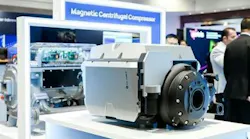 Image courtesy of Midea Building Technologies
 Adobe Stock image courtesy of Hitachi Energy