The AI Cooling Inflection Point
This launches our article series on practical approaches for building scalable, AI-ready environments.
AI and high-performance workloads are forcing operators to rethink how data centers are powered, cooled, and scaled. Infrastructure designed for predictable enterprise demand is being pushed beyond its original thermal assumptions.
At the center of this shift is cooling. Modern AI workloads create heat densities that traditional air cooling alone can struggle to support efficiently at scale, driving adoption of hybrid architectures that combine air and liquid cooling.
This article series examines the technologies, design strategies, and operational realities shaping AI-ready infrastructure, including Trane’s role in helping operators integrate air, chilled-water, and liquid cooling strategies in practical, scalable ways.
In the AI era, cooling is no longer just supporting infrastructure. It is becoming a defining factor in whether infrastructure can scale.
Introduction
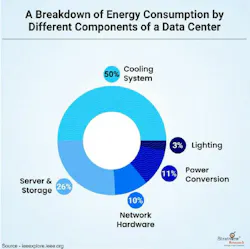
The data center industry has reached a major inflection point. Artificial intelligence and high-performance computing are reshaping how infrastructure is designed, powered, cooled, and operated, creating denser and more dynamic workloads. For years, infrastructure evolved gradually. That model has changed. Rack densities have pushed beyond 25 kW and continue climbing, while cooling systems now consume roughly half of total facility power.
Modern AI workloads generate concentrated heat that is difficult to manage with traditional approaches alone. Air cooling remains foundational, but as densities rise, many operators are supplementing air-cooled environments with liquid cooling as part of a broader hybrid strategy.
This transition introduces new considerations around integration, water management, deployment planning, operational readiness, and lifecycle service, especially in existing facilities. This article series outlines practical approaches for building scalable, AI-ready environments.
For Trane, that practical middle ground is central to its value proposition: combining global thermal management expertise, intelligent controls, lifecycle services, and a network of more than 6,000 technicians with LiquidStack’s liquid cooling portfolio.
The Physical Limits of Air in the AI Era
Airflow is not going away. It remains a critical part of data center design. But AI is changing the equation as heat loads grow more concentrated, which is where hybrid cooling strategies begin to take shape.
Modern AI environments generate heat levels that traditional rack designs were never intended to support at scale. As GPU density rises, airflow becomes more difficult to manage, hotspots develop faster, and even small inefficiencies can affect performance, efficiency, and hardware longevity.
Operators are already adapting by improving containment, environmental visibility, airflow refinement, and controls while introducing liquid cooling into targeted high-density areas.
This is why hybrid cooling architecture is becoming increasingly important. Air still plays a foundational role, but it now works alongside liquid cooling in a more coordinated and workload-aware way. That includes:
- Better visibility into airflow behavior at the rack and row level.
- Hybrid designs that deploy liquid cooling where it delivers the most value.
- Operational models built around continuous monitoring and adjustment.
- Intelligent controls that optimize system performance, anticipate maintenance needs, and improve reliability.
The takeaway: AI-era cooling is not just about moving more air. It is about building a balanced thermal strategy that supports density, reliability, and long-term scalability.
The AI Cooling Inflection Point
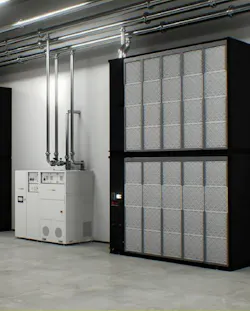
Today, AI workloads are reshaping the operational profile of the data center, introducing new thermal, power, and infrastructure demands that many legacy environments were never designed to support. AI training, inference, and high-density compute deployments are increasing thermal intensity across enterprise and colocation facilities alike.
As a result, airflow management is becoming increasingly important in supporting higher-density AI and HPC workloads. Air cooling remains a foundational part of modern data center design, but many operators are augmenting traditional air-based strategies with additional thermal management approaches to maintain efficiency, stability, and long-term scalability as infrastructure requirements continue to evolve.
From Predictable Enterprise Loads to AI-Scale Density
For years, infrastructure teams could forecast thermal growth with relative confidence. Many enterprise environments operated comfortably below 10 kW per rack, and cooling systems were designed around gradual increases in compute density. That operating model has changed dramatically in the AI era.
According to the 2026 AFCOM State of the Data Center report, average rack density has now climbed to 27 kW per rack, representing a 69% year-over-year increase and nearly four times what the industry reported just five years ago. Nearly 70% of operators expect density to continue rising over the next 12 to 36 months.
AI training clusters and inference workloads behave differently from traditional enterprise applications. GPU-heavy systems create concentrated heat, rapid utilization swings, and sustained thermal intensity that place greater demands on cooling infrastructure.
- Large AI training environments are rapidly moving beyond 30 kW and 50 kW rack densities, particularly in hyperscale and GPU-focused deployments.
- Inference workloads are bringing higher-density compute closer to enterprise and colocation environments, expanding the need for more flexible thermal management strategies.
- Traditional airflow assumptions become more difficult to maintain as heat loads become increasingly concentrated.
- Operators are placing greater emphasis on containment, environmental visibility, airflow optimization, and hybrid cooling strategies to maintain efficiency and operational stability.
Why Hybrid Cooling Architectures Are Emerging
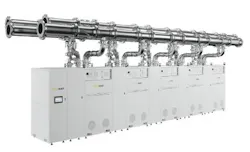
One of the biggest industry misconceptions is that liquid cooling replaces air cooling entirely. In reality, most operators are moving toward hybrid cooling architectures that intentionally combine both technologies. Air still supports residual heat removal and data hall stability, while liquid cooling is introduced where air alone becomes inefficient or operationally difficult to scale. AFCOM findings reinforce this shift: 36% of operators have implemented liquid cooling, another 28% plan deployment within 12 to 24 months, and respondents identified roughly 50 kW per rack as the threshold where liquid cooling becomes operationally necessary.
- Air cooling continues to support facility-wide thermal stability.
- Liquid cooling targets high-density AI and GPU heat loads directly at the source.
- Hybrid cooling allows operators to modernize incrementally while preserving existing infrastructure investments.
Scaling Cooling Infrastructure for the AI Era
As organizations scale AI deployments, operational simplicity is becoming just as important as raw cooling performance. Data center teams are increasingly prioritizing modular, repeatable deployment models that simplify implementation and reduce operational complexity at scale.
The industry is moving away from isolated cooling components and toward integrated thermal ecosystems designed to support long-term AI growth. That means combining liquid and air-cooling strategies, centralized monitoring, scalable distribution infrastructure, and deployment models that can expand as real-world workload demand grows.
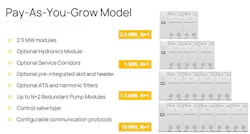
That system-level view is where the Trane approach becomes particularly relevant. By bringing together Trane’s broader thermal system expertise with liquid cooling solutions from LiquidStack, the focus is not simply on deploying liquid cooling technology but on creating scalable thermal architectures that are easier to integrate, standardize, operate, and service across enterprise, colocation, and hyperscale environments. Many of these newer approaches are designed around several key operational priorities:
- Simplifying expansion from smaller deployments into multi-megawatt environments.
- Improving operational visibility through centralized controls and monitoring.
- Reducing deployment risk with modular, factory-tested infrastructure.
- Supporting hybrid cooling environments that evolve alongside AI adoption.
- Aligning commissioning, service, and lifecycle planning so high-density capacity remains reliable after day one.
As AI infrastructure continues to expand, the ability to deploy scalable cooling systems quickly, consistently, and operationally efficiently will become a major differentiator across the industry.
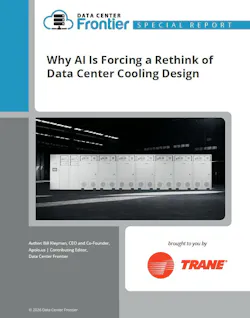
Download the full report, Why AI is Forcing a Rethink of Data Center Cooling Design, featuring Trane, to learn more. In our next article, we’ll explore how many operators are augmenting proven air-cooling foundations with additional thermal management approaches to improve precision, efficiency, and scalability.
About the Author
 Bill Kleyman