Future-Proofing Data Center Cooling: Designing for the Unknown
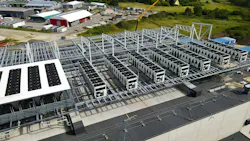

Data center planners are being asked to make infrastructure decisions around workloads that can change in months. AI training, inference and traditional enterprise computing can place different demands on the same facility. Rack densities may rise unevenly, hardware roadmaps may shift, and the cooling strategy selected for one deployment may not fit the next. In that environment, future-proofing is less about choosing the winning technology and more about creating a mechanical system that can change without forcing the facility to start over.
Design for a range, not a single design point
A conventional design process begins with a target load, but that target ideally should be treated as part of a range. Depending on time of day, the usage may vary, requiring a varying range of cooling needs. The equipment must be able to provide necessary cooling at peak and off-peak times. Therefore, it's critical to have designed-in redundancy to maintain maximum uptime especially during peak usage. The system should account for mixed rack densities, partial buildouts and changing proportions of air- and liquid-cooled loads. A hall that supports high-density racks in one zone and lower-density equipment in another may need different supply temperatures, airflow rates and redundancy strategies at the same time. Zoning allows capacity to be directed where it is needed instead of requiring the entire room to operate for the most demanding rack.
The roadmap should define day-one needs, staged additions and the physical constraints that could block growth. Space for piping, manifolds, heat exchangers, pumps, electrical distribution, controls and service access should be considered before those components are required. With capacity continuing to increase, it's important to design with that in mind.
Liquid cooling does not mean water or to eliminate air
The phrase “liquid cooling” can mislead important system differences. Liquid cooling is primarily tied to high-performance computing applications such as AI processing and machine learning. It's important to note that these cooling trends are not an industry wide change, but rather a modification to higher density applications where air cooling is no longer sufficient. Lower latency applications and general cloud storage will continue to be air cooled via fans. Liquid, in this case, describes how heat is transported, not necessarily tied to the water usage of the data center. Depending on the architecture, the above mentioned “liquid” may be treated water, a water-glycol mixture, a refrigerant or a dielectric fluid. Heat then moves through a coolant distribution unit, or CDU, and ultimately is rejected through dry, evaporative or hybrid equipment.
Liquid cooling also does not make fans irrelevant. Direct-to-chip and immersion cooling remove heat directly from the source at the chip. Air cooling will still be required for the remaining 20-30% of the white and grey space, as heat is still produced by the remaining mechanical equipment. Rear-door heat exchangers, an air-assisted liquid cooling system, deliberately combine both media in this hybrid system.
Future-proofing depends on reserving space, connections and control capacity for both air and liquid paths. That flexibility allows a facility to support higher-density or hybrid cooling without replacing the entire thermal system. The goal is not to predict which approach will dominate, but to make future transitions possible in manageable phases.
Make retrofit readiness a design requirement
A future-ready system should be evaluated by how it changes while the data center remains in operation. Can a new cooling zone be connected without shutting down an existing one? Can airflow be rebalanced as racks move? Can fans be replaced without reducing the required level of redundancy? Are operators able to see both air- and liquid-side performance through a coordinated control system? Can cooling capacity be increased in the existing footprint? These questions turn future retrofits from an impending construction concern into a present-day reliability requirement.
Controls are especially important because installed capacity and actual demand rarely match perfectly. Temperature, pressure, flow and power data allow fans to respond to real loads rather than fixed calculations. They also give operators a baseline for identifying lost capacity, testing new configurations and verifying that a retrofit performs as intended. These critical systems can have zero downtime, even during a retrofit. It’s important to have real time and reliable controls for commissioning of these retrofit systems.
Preserve choices
No design can anticipate every processor, rack configuration or cooling medium that will arrive over the life of a facility. It can, however, preserve choices. A system designed around ranges, zones, modular increments, and coordinated controls can absorb change with less disruption. That is the practical meaning of future-proofing: not predicting the unknown but ensuring the next decision does not require undoing the last one.
About the Author
 Brooke Zalud
Brooke Zalud
Brooke Zalud is Market Segment Manager for the IT and Telecommunication division of Ziehl-Abegg. She provides global support via a deep understanding of the Data Center market trends. Focusing on these trends, she provides strategic development plans focusing on product development and target applications.
Ziehl-Abegg (Künzelsau, Germany) is one of the leading global companies in the field of ventilation, control and drive technology. In the 1950s, Ziehl-Abegg established the basis for modern fan drives: external rotor motors which even today are still seen as state-of-the-art worldwide.
The high-tech company has an impressive innovative capability (all figures and statements refer to the year 2025). The company has a global workforce of 6,415 spread between 17 production plants, 30 subsidiaries and 114 sales locations. The products, approx. 30,000 in all, are sold in more than 100 countries. Revenue totals more than one billion euros annually.
Emil Ziehl founded the company in Berlin in 1910 as a manufacturer of electric motors. After World War II the company’s headquarters were relocated to southern Germany. Ziehl-Abegg SE is not a listed company but instead is family-owned.
In North America, the subsidiary was established in 2004 in Greensboro, North Carolina. The North American headquarters has since moved to Winston-Salem, North Carolina, where it operates a 140,000 ft² production facility. ZIEHL-ABEGG Inc. maintains multiple sales offices across the United States and also serves the Canadian and Mexican markets, with sales offices located in each country.
For more information go to https://www.ziehl-abegg.com/en/
Related
Voices of the Industry
 Source: SNEHIT PHOTO/Shutterstock.com
 Source: Matthew G Eddy/Shutterstock.com