Liquid Cooling Market Matures: Innovations, Acquisitions, and Modular Solutions for AI Infrastructure
Key Highlights
- CoolIT's new 15kW coldplate demonstrates the potential for single-phase direct liquid cooling to support future AI accelerators, extending the viability of established architectures.
- Vertiv's acquisition of Strategic Thermal Labs emphasizes the importance of system-level thermal validation, integrating coldplate design, modeling, and lifecycle support for high-density environments.
- Accelsius introduces the NeuCool IR150, a fully integrated rack-level two-phase cooling system designed to simplify deployment and support high-density AI workloads.
- LiquidStack's GigaModular platform offers scalable, multi-megawatt liquid cooling capacity, enabling phased expansion aligned with AI campus growth.
- The industry is shifting from technology validation to deployment, with a focus on validated performance, ecosystem partnerships, and manufacturing scale to support large-scale AI infrastructure.
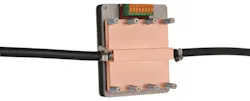
The rapid rise of AI infrastructure is forcing the data center industry to rethink one of its most fundamental systems: cooling. As accelerator platforms push rack densities higher and chip-level heat loads climb, traditional approaches are giving way to a new generation of liquid cooling technologies designed for scale, efficiency, reliability, and long-term flexibility.
But the latest developments suggest the market is entering a new phase. Recent announcements from CoolIT Systems, Vertiv, Accelsius, and LiquidStack are less about proving that liquid cooling works than about making it practical to deploy at scale. Through new thermal architectures, strategic acquisitions, integrated rack-level solutions, customer validation programs, and modular infrastructure platforms, vendors are increasingly focused on the operational realities of supporting high-density AI environments.
Taken together, the announcements point to a liquid cooling market that is becoming more mature, more ecosystem-driven, and increasingly aligned with the demands of large-scale AI infrastructure deployment.
CoolIT Extends the Single-Phase Roadmap
CoolIT Systems' new 15kW coldplate demonstration may represent an important milestone for AI infrastructure, suggesting that single-phase direct liquid cooling (DLC) has a longer runway than some observers expected.
The company says it has developed what it describes as the industry's first 15kW coldplate design, delivering nearly four times the capacity of its previously demonstrated 4kW coldplate and more than 10 times the cooling capacity required for current-generation AI GPUs. Just as important, CoolIT said the design was validated using a standard water-glycol coolant at 1.2 L/min/kW, with system-level thermal performance suitable for 45°C warm-water cooling environments.
That validation aligns with broader industry trends. As accelerator densities continue to rise, warm-water liquid cooling is increasingly being viewed as a practical path toward supporting larger AI clusters while reducing dependence on traditional chilled-water systems. CoolIT's position is that single-phase DLC can continue scaling through multiple generations of AI accelerators rather than serving as a transitional technology on the path to more complex cooling architectures.
CoolIT CTO Kamal Mostafavi described the milestone as evidence that single-phase DLC can support both current and future AI platforms. The company also highlighted its Split-Flow microchannel architecture and a roadmap that includes cooling additional peripheral components and addressing increasingly concentrated hotspots within advanced AI packages.
The announcement is significant not only because of its thermal performance, but because of what it says about the future of an already established cooling architecture. Single-phase DLC benefits from an ecosystem of liquid loops, coldplates, manifolds, monitoring systems, and service practices that are already familiar to server OEMs, hyperscale operators, and infrastructure teams. Rather than requiring a wholesale shift to a new operating model, CoolIT argues that the existing architecture can continue evolving as chip heat loads increase.
The company also tied the work to broader momentum behind warm-water liquid cooling, including NVIDIA's public emphasis on 45°C supply temperatures as part of its next-generation AI platform direction. If those assumptions hold, the industry's most widely deployed liquid-cooling architecture may remain viable far longer than many expected.
In broader industry terms, the announcement is about confidence. Operators, OEMs, chipmakers, and data center developers are making long-term infrastructure decisions amid uncertainty around future GPU power levels, rack densities, facility water temperatures, and deployment requirements. A 15kW coldplate does not resolve all of those questions, but it extends the investment horizon for an architecture that is already understood, deployed, and supported at scale.
As Dylan Patel, CEO of SemiAnalysis, noted:
"AI accelerator innovation depends on cooling architectures that can keep pace with rising circuit density and packaging complexity. CoolIT's work demonstrates that single-phase DLC has a clear path forward, giving both the semiconductor and data center industries greater confidence in the cooling architectures they can invest in."
The industry's confidence in that roadmap was underscored by a major corporate development earlier this year. In March, Ecolab announced its planned $4.75 billion acquisition of CoolIT Systems from KKR, positioning the transaction as a strategic move to create an end-to-end platform for AI data center cooling that combines CoolIT's thermal engineering and direct liquid cooling technologies with Ecolab's expertise in water management, chemistry, digital monitoring, and global service.
The deal highlighted how liquid cooling has evolved from a specialized hardware category into a strategic infrastructure layer attracting investment from some of the world's largest industrial technology companies. Just as significantly, it reinforced the view that mature single-phase direct-to-chip cooling technologies are expected to remain foundational to AI deployments as hyperscale operators scale to ever larger clusters and higher rack densities.
Vertiv Buys Deeper Into the Thermal Chain
If CoolIT's announcement highlights the continued evolution of a core cooling technology, Vertiv's acquisition of Strategic Thermal Labs reflects another important trend: the growing importance of system-level thermal engineering in AI infrastructure.
Vertiv announced on April 27, 2026, that it had acquired Strategic Thermal Labs, a specialist in advanced liquid-cooling technologies. The company said the acquisition strengthens its capabilities at the intersection of server-side liquid cooling and supporting infrastructure, including coldplate design, thermal modeling, high-density validation, and system integration.
The move reflects a broader shift taking place across the industry. As rack densities rise and AI platforms become increasingly complex, cooling performance is no longer determined by individual components alone. It depends on how chips, coldplates, liquid loops, controls, power systems, and facility infrastructure function together as an integrated thermal system.
Scott Armul, chief product and technology officer at Vertiv, described the rationale behind the acquisition:
“As AI and high‑performance computing push power densities to unprecedented levels, understanding and solving heat challenges at the chip level becomes critical to system design, performance and reliability. STL brings deep expertise and proven capability in addressing some of the industry’s most demanding chip-level density and thermal problems, strengthening Vertiv’s ability to emulate and validate system-level solutions and enabling customers to improve performance and lifecycle outcomes in liquid-cooled environments.”
Thermal Validation Becomes a Strategic Capability
Cooling is no longer simply a matter of installing enough CRAC units, chillers, CDUs, or rear-door heat exchangers. As rack densities climb and chip-level heat flux intensifies, the performance of the entire thermal chain increasingly depends on how coldplates, manifolds, pumps, controls, facility water loops, power systems, commissioning practices, and service workflows interact.
Vertiv said Strategic Thermal Labs will help it simulate and emulate real-world high-density compute conditions, optimize interactions between the thermal chain and power train, and support customers across design, integration, commissioning, and lifecycle operations.
That reflects a broader evolution underway in AI infrastructure. Data centers are becoming tightly coupled systems where thermal behavior influences power design, reliability, serviceability, operational efficiency, and ultimately the utilization of increasingly expensive accelerator platforms.
Vertiv also emphasized that the acquisition does not alter its commitment to interoperable, server- and silicon-agnostic infrastructure solutions. That distinction matters because hyperscale and colocation operators remain wary of vendor lock-in at a time when chip architectures, server designs, and cooling strategies continue to evolve rapidly.
Viewed through that lens, Vertiv's acquisition reflects a larger industry shift. Infrastructure providers are no longer waiting for server OEMs or chipmakers to define the cooling roadmap. Instead, they are investing deeper in modeling, validation, and chip-level thermal expertise because the next generation of AI infrastructure performance will increasingly be determined by how effectively those systems work together.
Accelsius Moves from Technology Validation to Market Scaling
Accelsius offers a different view of where the liquid-cooling market is headed. While some vendors are extending existing architectures, Accelsius is focused on making two-phase direct-to-chip cooling easier to deploy, validate, and scale.
The company's recently introduced NeuCool IR150 is designed around that objective. Described by Accelsius as the industry's first fully integrated rack-level cooling solution for two-phase liquid cooling, the system combines a two-phase CDU, 42U of IT rack space, and integrated liquid and vapor manifolds within a single 800mm-wide enclosure, supporting up to 150kW of cooling capacity.
The approach reflects a broader effort to simplify deployment. Rather than requiring operators to assemble cooling infrastructure from multiple components, the IR150 integrates the CDU directly into the rack. Accelsius says the design reduces installation complexity, confines potential failures to a single rack, and supports high-density AI workloads with minimal chiller infrastructure.
The platform also highlights one of the central debates shaping the liquid-cooling market: where should complexity reside? Single-phase systems generally emphasize familiarity and ecosystem maturity. Accelsius argues that two-phase direct-to-chip cooling can improve efficiency and eliminate water inside the IT rack by using a non-conductive dielectric refrigerant. The company says the approach reduces risk to GPUs and other electronics while supporting increasingly dense AI deployments.
Accelsius reinforced that strategy at Data Center World 2026 with the launch of its NeuCool HyperStart program, which is designed to help hyperscale operators, neocloud providers, and strategic partners evaluate and integrate two-phase cooling into future reference architectures and deployment roadmaps.
That effort may be as important as the hardware itself. For many emerging cooling technologies, the challenge is no longer proving that they work. The challenge is demonstrating that they can fit within established procurement processes, operational models, maintenance practices, and risk frameworks. HyperStart is intended to accelerate that transition from technical validation to operational adoption.
Preparing for Scale
Accelsius is also positioning itself for a new phase of growth. The company recently announced that founding board member and data center industry veteran John Hewitt will become CEO, while founder Josh Claman transitions to executive chairman.
The move reflects a common evolution among infrastructure technology companies as they shift from market education and technology evangelism toward manufacturing scale, strategic partnerships, and commercial execution. Hewitt previously led Vertiv's $3.5 billion Americas business, while Claman will focus on partnerships, customer engagement, and long-term strategy.
The leadership transition follows a series of growth milestones that include a $65 million Series B funding round led by Johnson Controls with strategic participation from Legrand, the general availability of the NeuCool MR250 row-based CDU, the launch of the IR150, and customer deployments representing hundreds of megawatts of planned capacity.
Taken together, the announcements suggest that Accelsius wants to be viewed not simply as a two-phase cooling innovator, but as a company preparing to scale alongside the broader AI infrastructure buildout.
LiquidStack and Trane Push Modular Cooling to Multi-Megawatt Scale
If Accelsius is focused on simplifying deployment at the rack level, LiquidStack is addressing a different challenge: how to scale liquid cooling infrastructure across increasingly large AI campuses without overbuilding capacity or locking operators into fixed designs.
LiquidStack, now part of Trane Technologies, recently announced commercial availability of its GigaModular CDU platform with validated capacity expanded to 14 MW. The company says the platform uses a modular, pay-as-you-grow architecture designed to support NVIDIA Vera Rubin-class infrastructure, allowing operators to deploy liquid cooling capacity in multi-megawatt increments as demand grows.
The announcement reflects a broader reality of AI infrastructure development. Large AI deployments are rarely built all at once. Capacity is often added in phases as compute requirements, customer commitments, and accelerator roadmaps evolve. Cooling infrastructure that can scale alongside those deployments is becoming increasingly important for operators seeking to balance capital efficiency with future growth.
Joe Capes, Vice President at Trane Technologies and General Manager of LiquidStack, described the GigaModular platform:
“Purpose-built for high-density AI environments, GigaModular helps operators expand cooling capacity without requiring significant infrastructure redesigns or over-provisioning upfront. Its flexible deployment and distribution architecture enables phased buildouts aligned to AI compute demand, while centralized system-level controls help simplify operations, improve efficiency and optimize capital planning.”
Scaling Cooling Alongside AI Demand
The appeal of modular cooling is closely tied to how AI campuses are actually being built. Large deployments rarely arrive all at once. Capacity is typically added in phases as customer commitments grow, accelerator roadmaps evolve, and new clusters come online. Cooling infrastructure that requires extensive over-provisioning can tie up capital early, while systems that cannot expand efficiently can become operational bottlenecks later.
LiquidStack says GigaModular addresses that challenge through centralized controls, flexible deployment architectures, pay-as-you-grow expansion, and support for next-generation GPU platforms in high-density and gigawatt-scale environments.
The platform's integration with Trane Technologies may be equally significant. Since acquiring LiquidStack, Trane has provided the company access to a larger global service, deployment, and lifecycle-support organization. For operators building distributed AI infrastructure, long-term serviceability and operational support can be just as important as the cooling hardware itself.
LiquidStack also noted that GigaModular has completed extensive multi-module integration and full-load testing, validating performance up to 14 MW while achieving ETL certification. The company said early customer orders indicate growing demand for scalable liquid-cooling infrastructure.
Taken together, those milestones highlight a broader shift across the liquid-cooling market. Vendors are increasingly announcing validated capacity, commercial availability, customer deployments, strategic acquisitions, and operational support programs rather than simply demonstrating new technologies. The focus is moving from proving concepts to deploying infrastructure at scale.
The Larger Pattern: From Cooling Products to Cooling Ecosystems
Taken together, these developments point to a liquid-cooling market that is becoming more mature, more specialized, and increasingly ecosystem-driven.
CoolIT is extending the performance envelope of single-phase direct liquid cooling, giving operators greater confidence in an established architecture. Vertiv is investing deeper in thermal modeling, validation, and chip-level expertise. Accelsius is focused on simplifying deployment and accelerating adoption of two-phase cooling. LiquidStack is addressing the challenge of scaling liquid-cooling infrastructure across multi-megawatt AI campuses.
Each company is approaching the market from a different direction, but all are responding to the same reality: AI infrastructure is creating thermal demands that cannot be solved with a single technology, architecture, or deployment model.
The industry does not need one cooling answer. It needs a portfolio of solutions capable of supporting different densities, accelerator roadmaps, facility designs, operational preferences, sustainability goals, and risk profiles. Some operators will favor the familiarity and ecosystem maturity of single-phase DLC. Others will explore two-phase architectures for their efficiency and waterless operation. Still others will prioritize modular cooling platforms that can expand alongside phased AI campus development.
The partnerships behind these technologies may prove just as important as the technologies themselves. CoolIT continues to align with server and accelerator ecosystems. Vertiv is strengthening its ability to validate end-to-end infrastructure performance. Accelsius is leveraging strategic investors, OEM relationships, hyperscale engagement, and programs such as ARPA-E COOLERCHIPS. LiquidStack now operates within Trane Technologies' global thermal-management and service organization.
In many respects, this is where years of liquid cooling innovation begin to bear fruit. The market is no longer defined primarily by technology demonstrations and competing concepts. Increasingly, vendors are talking about validated performance, commercial availability, deployment support, ecosystem partnerships, customer adoption, and manufacturing scale.
That shift may be the clearest signal yet that liquid cooling is moving beyond an emerging technology category and becoming foundational infrastructure for the AI era. The companies best positioned to succeed will not simply be those with the most advanced cooling technologies, but those capable of integrating, validating, deploying, and supporting those technologies at the scale the AI buildout now demands.
Take a behind-the-scenes look inside the former Strategic Thermal Labs "Liquid Garage," now part of Vertiv following its recent acquisition of STL. The video showcases STL's Widowmaker TTV server featuring two 10kW sockets in a 1RU chassis, a live demonstration of the company's 10kW Coyote cold plate, and the Liquid Management Controller (LMC) platform in action. The technologies on display offer a glimpse into the advanced thermal validation and chip-level cooling expertise that helped make STL an attractive addition to Vertiv's expanding liquid-cooling portfolio.
At Data Center Frontier, we talk the industry talk and walk the industry walk. In that spirit, DCF Staff members may occasionally use AI tools to assist with content. Elements of this article were created with help from OpenAI's GPT5.
Keep pace with the fast-moving world of data centers and cloud computing by connecting with Data Center Frontier on LinkedIn, following us on X/Twitter and Facebook, as well as on BlueSky, and signing up for our weekly newsletters using the form below.
About the Author
 David Chernicoff
David Chernicoff
 Matt Vincent
Matt Vincent
Matt Vincent is Editor in Chief of Data Center Frontier, where he leads editorial strategy and coverage focused on the infrastructure powering cloud computing, artificial intelligence, and the digital economy. A veteran B2B technology journalist with more than two decades of experience, Vincent specializes in the intersection of data centers, power, cooling, and emerging AI-era infrastructure. Since assuming the EIC role in 2023, he has helped guide Data Center Frontier’s coverage of the industry’s transition into the gigawatt-scale AI era, with a focus on hyperscale development, behind-the-meter power strategies, liquid cooling architectures, and the evolving energy demands of high-density compute, while working closely with the Digital Infrastructure Group at Endeavor Business Media to expand the brand’s analytical and multimedia footprint. Vincent also hosts The Data Center Frontier Show podcast, where he interviews industry leaders across hyperscale, colocation, utilities, and the data center supply chain to examine the technologies and business models reshaping digital infrastructure. Since its inception he serves as Head of Content for the Data Center Frontier Trends Summit. Before becoming Editor in Chief, he served in multiple senior editorial roles across Endeavor Business Media’s digital infrastructure portfolio, with coverage spanning data centers and hyperscale infrastructure, structured cabling and networking, telecom and datacom, IP physical security, and wireless and Pro AV markets. He began his career in 2005 within PennWell’s Advanced Technology Division and later held senior editorial positions supporting brands such as Cabling Installation & Maintenance, Lightwave Online, Broadband Technology Report, and Smart Buildings Technology. Vincent is a frequent moderator, interviewer, and keynote speaker at industry events including the HPC Forum, where he delivers forward-looking analysis on how AI and high-performance computing are reshaping digital infrastructure. He graduated with honors from Indiana University Bloomington with a B.A. in English Literature and Creative Writing and lives in southern New Hampshire with his family, remaining an active musician in his spare time.
Voices of the Industry
 Adobe Stock image courtesy of Hitachi Energy