Cooling at AI Scale: Inside Motivair’s Blueprint for the Liquid-Cooled Data Center
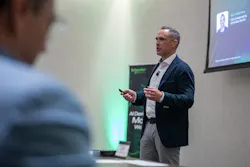
BUFFALO, N.Y. — In the race to build AI infrastructure, the industry often focuses on GPUs, power availability, and the massive capital investments reshaping the digital infrastructure landscape.
But a walk through Motivair’s manufacturing facility in Buffalo, as provided on the eve of the Motivair-Schneider Electric Global Press Event's tour of the nearby Terawulf Lake Mariner AI campus, offers a reminder that another critical component of the AI boom is being built one coolant distribution unit at a time.
During a recent Data Center Frontier Show podcast recorded at Motivair’s Buffalo headquarters, CEO Rich Whitmore described a reality that is becoming bedrock across the industry: Liquid cooling is now very far from being an emerging technology. It is now a prerequisite for deploying the most advanced AI systems.
"You cannot deploy AI servers—at least the cutting-edge AI servers—without liquid cooling," Whitmore said.
That observation may be obvious to infrastructure veterans. Yet it points to a larger shift now underway across the data center ecosystem. As AI workloads drive rack densities beyond the practical limits of air cooling, thermal infrastructure has moved from a supporting role to a primary design consideration.
For Whitmore and Motivair, that transition did not begin with ChatGPT.
From Supercomputing to Commercial AI
Long before AI became the defining growth story of the data center sector, Motivair was developing liquid cooling systems for high-performance computing and supercomputing environments.
Whitmore describes today's AI market as less of a technological revolution than a commercialization of capabilities that have existed for years inside elite computing environments.
"We cut our teeth in high-performance computing and supercomputing," Whitmore explained. "What we're seeing today as we go into the AI era is really a commercialization of traditional supercomputing."
That experience has positioned Motivair differently than many newer entrants rushing into the liquid cooling market.
Rather than reacting to current demand, the company develops its cooling technologies against future silicon roadmaps. Product decisions—from capacity levels to physical form factors—are driven by where processors are headed rather than where they are today.
The implication is significant. Cooling vendors must often have products production-ready six to eighteen months before the chips they are designed to support reach market availability.
"We have to be developing product 6, 12, 18 months in advance," Whitmore said. "Our cooling technology has to be ready when those chips launch."
The Industrialization of Liquid Cooling
That forward-looking approach helps explain one of Motivair's most recent product introductions.
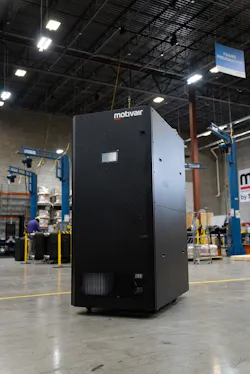
The company's new MCDU-70 platform delivers approximately 2.5 megawatts of cooling capacity, a design point Whitmore says was intentionally aligned with emerging AI infrastructure architectures.
The decision was not simply about increasing cooling capacity.
Instead, it reflects a growing emphasis on standardization and repeatability at a time when AI infrastructure is being deployed at unprecedented speed.
A 2.5 MW cooling block aligns naturally with increasingly common 2.5 MW electrical lineups within modern AI data centers. Staying within those parameters allows operators to leverage commercially available power infrastructure rather than moving into highly customized electrical equipment that can slow deployment timelines.
The lesson mirrors one increasingly heard throughout the AI infrastructure ecosystem: scale is important, but standardized scale is often more valuable than bespoke scale.
That philosophy is also evident in Motivair's manufacturing strategy.
Since becoming part of Schneider Electric in 2025, Motivair has expanded production capabilities beyond Buffalo to facilities near Venice, Italy, and in Bangalore, India. Products are now industrialized for global manufacturing while maintaining identical specifications across regions.
The objective is straightforward: ensure hyperscale and AI customers can access the same cooling platforms regardless of deployment geography.
"The industry needs the same exact product shipping to different geographies," Whitmore said.
Manufacturing as Competitive Advantage
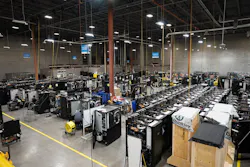
The Buffalo facility itself offers a glimpse into how liquid cooling is evolving from a specialty engineering discipline into a mature manufacturing operation.
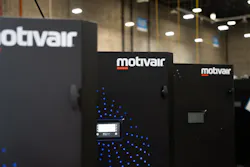
Walking the production floor reveals rows of coolant distribution units at various stages of assembly alongside extensive testing infrastructure.
For Whitmore, quality assurance remains non-negotiable.
Every CDU leaving the factory undergoes full testing prior to shipment.
"There are zero exceptions," he said.
That testing philosophy applies equally to large floor-mounted systems and smaller in-rack CDUs designed for direct deployment inside AI server cabinets.
As cooling systems become increasingly intertwined with mission-critical compute infrastructure, reliability requirements have risen accordingly.
A cooling failure no longer threatens a single rack.
It can potentially impact AI clusters worth hundreds of millions of dollars.
The Buffalo operation has also undergone multiple production redesigns as demand accelerates.
Whitmore noted that manufacturing lines have been reorganized three separate times, with each iteration improving throughput, yield, and product quality.
The approach reflects a broader reality emerging across AI infrastructure supply chains. Competitive advantage increasingly derives not only from product innovation but from the ability to manufacture consistently at scale.
Why Bigger Isn't Always Better
One of the more interesting discussions during the podcast centered on a growing industry debate surrounding so-called "facility-scale CDUs."
As AI campuses expand toward gigawatt-scale power consumption, some vendors advocate for increasingly large centralized cooling systems.
Whitmore argues that the conversation is more nuanced.
The challenge stems from the dynamic behavior of modern AI workloads, particularly large language model training and inference environments.
These systems can generate dramatic fluctuations in thermal load almost instantaneously.
Mechanical cooling infrastructure, however, operates according to the laws of physics rather than the speed of software.
"There is a delay from when computers are putting those heat loads into the water loop and when it actually gets received at the CDU," Whitmore explained.
The issue becomes more pronounced as cooling systems move farther away from the compute equipment they support.
For Whitmore, the distinction highlights Motivair's role as an intermediary between the digital and physical worlds.
"We sit at the crossroads of IT and infrastructure," he said. "We're the bridge between the water flowing through the computers and the facility cooling system."
His most memorable observation captured the challenge succinctly:
"Mechanical equipment doesn't operate at the speed of an electron."
As AI systems continue to increase in scale and complexity, understanding those physical realities may become as important as understanding the compute architectures themselves.
Liquid Cooling Comes to Lake Mariner
The practical application of those principles is visible at one of the industry's most closely watched AI infrastructure projects.
The podcast was recorded during a Schneider Electric global media event highlighting deployment progress at the TeraWulf Lake Mariner campus in western New York.
Located on a repurposed industrial site near Niagara Falls, the project is expected to support up to 750 MW of power demand upon full buildout, positioning it among the largest AI-focused infrastructure campuses in North America.
The site has secured long-term commitments from anchor tenants including Core42 and Fluidstack, the latter backed by Google.
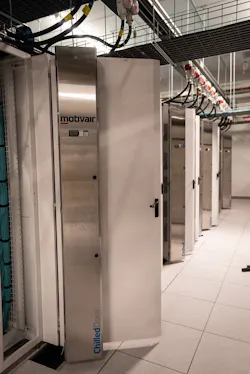
Schneider Electric and Motivair have jointly delivered more than $290 million in infrastructure solutions to support the campus, including Galaxy VX UPS systems, lithium-ion battery infrastructure, Motivair coolant distribution units, in-rack manifolds, ChilledDoor rear-door heat exchangers, racks, enclosures, monitoring software, and engineering services.
The deployment serves as a real-world example of how power infrastructure, liquid cooling, digital monitoring, and engineering services are increasingly converging into a single integrated AI infrastructure stack.
It also reflects the industry's growing focus on what many executives now describe as the defining challenge of the AI era: time-to-power.
The Next Phase of AI Infrastructure
For Whitmore, the future trajectory appears clear.
Every publicly visible silicon roadmap points toward continued adoption of liquid cooling.
Demand remains strong.
And increasingly, success may depend less on having the best individual component than on possessing the manufacturing capacity, supply-chain maturity, and operational scale necessary to support customers deploying infrastructure by the gigawatt.
"I think the industry will really be dominated by just a couple of the biggest players," Whitmore said.
That assessment reflects a broader shift underway throughout the AI infrastructure sector.
The conversation is moving beyond whether liquid cooling will become mainstream.
That question has effectively been answered.
The new challenge is execution.
Can suppliers scale globally? Can manufacturing keep pace with silicon innovation? Can cooling infrastructure be deployed quickly enough to support AI's accelerating demand curve?
Those questions increasingly define the competitive landscape.
And in Buffalo, where Motivair's production lines continue to expand, the answers are currently being assembled.
At Data Center Frontier, we talk the industry talk and walk the industry walk. In that spirit, DCF Staff members may occasionally use AI tools to assist with content. Elements of this article were created with help from OpenAI's GPT5.
Keep pace with the fast-moving world of data centers and cloud computing by connecting with Data Center Frontier on LinkedIn, following us on X/Twitter and Facebook, as well as on BlueSky, and signing up for our weekly newsletters using the form below.
About the Author
 Matt Vincent
Matt Vincent
Matt Vincent is Editor in Chief of Data Center Frontier, where he leads editorial strategy and coverage focused on the infrastructure powering cloud computing, artificial intelligence, and the digital economy. A veteran B2B technology journalist with more than two decades of experience, Vincent specializes in the intersection of data centers, power, cooling, and emerging AI-era infrastructure. Since assuming the EIC role in 2023, he has helped guide Data Center Frontier’s coverage of the industry’s transition into the gigawatt-scale AI era, with a focus on hyperscale development, behind-the-meter power strategies, liquid cooling architectures, and the evolving energy demands of high-density compute, while working closely with the Digital Infrastructure Group at Endeavor Business Media to expand the brand’s analytical and multimedia footprint. Vincent also hosts The Data Center Frontier Show podcast, where he interviews industry leaders across hyperscale, colocation, utilities, and the data center supply chain to examine the technologies and business models reshaping digital infrastructure. Since its inception he serves as Head of Content for the Data Center Frontier Trends Summit. Before becoming Editor in Chief, he served in multiple senior editorial roles across Endeavor Business Media’s digital infrastructure portfolio, with coverage spanning data centers and hyperscale infrastructure, structured cabling and networking, telecom and datacom, IP physical security, and wireless and Pro AV markets. He began his career in 2005 within PennWell’s Advanced Technology Division and later held senior editorial positions supporting brands such as Cabling Installation & Maintenance, Lightwave Online, Broadband Technology Report, and Smart Buildings Technology. Vincent is a frequent moderator, interviewer, and keynote speaker at industry events including the HPC Forum, where he delivers forward-looking analysis on how AI and high-performance computing are reshaping digital infrastructure. He graduated with honors from Indiana University Bloomington with a B.A. in English Literature and Creative Writing and lives in southern New Hampshire with his family, remaining an active musician in his spare time.
Voices of the Industry

 Image courtesy of Midea Building Technologies