Google’s Utah Deal Puts Geothermal Power on the Data Center Map
Key Highlights
-
Fervo expects the first of eight generating units dedicated to Google’s 396 MW contract to deliver power in mid-2028. A separate expansion option could bring geothermal electricity directly to a proposed Utah campus.
-
Indonesia’s Pertamina Geothermal Energy is studying a 5 MW data center pilot at an existing field, where it must account for electricity already committed to the national utility.
-
Google’s first geothermal agreements in Asia target 10 MW for Taiwan’s grid. In Kenya, available power and disagreements over capacity payments have delayed Microsoft and G42’s proposed cloud campus.
-
New Zealand and Iceland offer two operating examples. Microsoft buys renewable attributes from a 51.4 MW plant supplying New Zealand’s grid, while Verne operates an Icelandic campus served by geothermal and hydroelectric power.
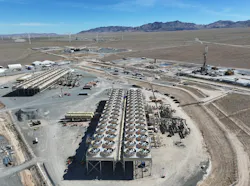
In its November 9 project update, Fervo Energy identified the eight geothermal generating units it is building in southwestern Utah to supply Google with 396 megawatts of grid-connected power. As Fervo explained on its third-quarter earnings call, Google has agreed to pay for the power over 15 years even if it never builds the proposed Beaver County data center. The expansion option ties geography more closely to the deal. If Google elects to buy roughly 600 MW more, the companies are pursuing a direct connection that could carry that power from Cape Station to the proposed campus.
Years before the AI boom, data centers gave other industries a working example of how a large electricity customer could bring renewable generation to market. In October 2014, Rich Miller reported for Data Center Knowledge on a field of more than 57,000 solar panels serving the QTS Princeton campus in New Jersey. The array could produce up to 14.1 MW. That same year, Facebook, Hewlett-Packard, and Intel joined General Motors, Walmart, Mars, and six other companies in asking utilities for competitive renewable power, access to new projects, and contracts long enough to support investment. By January 2017, 65 companies had signed those buyers’ principles.
When Miller revisited the subject in DCF in March 2017, he found that data center providers had contracted for more than 1.2 GW of renewable power in the preceding year. In 2025, Google alone signed agreements for more than 12 GW of new clean energy. Corporate buyers have learned how to help finance power plants at a scale few would have imagined a decade ago. What a data center developer still needs to know is how much electricity will be available on its local grid at two in the morning, through a lull in the wind, and on the day the next hall opens.
That question runs through the new DCF Global franchise, most recently in our examination of Britain’s bargain with the AI data center industry, where access to power comes with obligations to host communities and electricity customers. DCF’s geothermal reporting traces one route toward meeting those obligations. In 2023, Google and Fervo’s Nevada pilot began delivering electricity to the local grid. We subsequently examined the case for locating geothermal generation behind the meter. In Utah, Fervo and Google are now pursuing both approaches at the same field.
Utah’s First 33 MW Is Operating. Google’s Eight Units Come Next.
The clearest measure of progress at Cape Station comes from three generating blocks in different stages of commissioning. The first, rated at 33 MW, entered commercial operation on September 30. By November 9, the second had synchronized with the grid and was delivering test electricity. The third was mechanically complete, with crews checking equipment and systems ahead of live operation. Fervo expects the latter two units to reach commercial operation by January 1, 2027, completing the first phase.
Google’s contracted supply will come from blocks four through 11, a group Fervo calls Cape Google 400. Fervo expects first power from those units in mid-2028 and is targeting full contracted capacity by the end of that year. Under the take-or-pay agreement, Fervo has a committed customer as it drills wells and builds generating equipment. Google can secure a substantial block of new supply before settling the scope and location of its Utah data center.
The additional 600 MW involves a different decision. Under the agreement announced in September, Fervo committed to offering Google an option to increase its purchases to nearly 1 GW by June 2030. The companies are pursuing behind-the-meter delivery for that expansion under Utah’s SB132 framework. If the arrangement proceeds, proximity to the field would become a condition of receiving that power directly. The nearly 1 GW figure describes potential electricity purchases. The campus remains subject to engineering, approvals, and a commercial decision by Google.
In Indonesia, Who Has a Claim on the Next 5 MW?
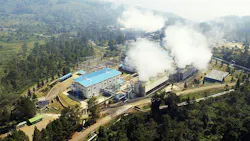
At Kamojang in West Java, Pertamina Geothermal Energy is approaching site selection from the opposite direction. PGE already operates a producing geothermal field and wants to allocate 5 MW to a data center pilot there. Before the company can offer those megawatts to a new customer, it must account for its existing deliveries to Indonesia’s national utility, PLN.
At a November 4 briefing covered by Indonesian news agency ANTARA, PGE executives said they had completed an initial technology study for a pilot designed to run entirely on power from the field. The company was examining commercial terms, prospective data center partners, and revisions to the project’s environmental assessment. According to ThinkGeoEnergy’s account of the proposal, PGE expected the reviews to run through late 2026 or early 2027 and envisaged a pilot lasting one to two years.
The proposed 5 MW is an allocation at the plant. The share available to servers would depend on cooling and other facility loads. A campus operator would also need to know what carries those loads when generating equipment comes out of service. Those are consequential design questions for a pilot intended to demonstrate independence from other energy sources.
Six days after PGE’s briefing, Indonesia’s deputy communications minister set out the government’s expectations at the launch of a separate Equinix expansion in Jakarta. He called for developers to plan new data centers alongside grid reinforcement, renewable supply, cooling efficiency, and water management. Equinix says its JK1 campus achieves renewable energy coverage through certificates and other energy attributes. At Kamojang, PGE wants to take on the physical supply obligation itself.
In Taiwan, the Work Begins With Access to Land
Google’s first geothermal procurement agreements in Asia call for an initial 10 MW of new generation on Taiwan’s grid to support local data centers and offices. When Google and developer Baseload Capital announced the agreements in April 2025, a Google energy executive told Taiwan Public Television Service that the companies expected operations to begin in 2029. The original timetable allowed roughly four years between signing a customer and delivering electricity.
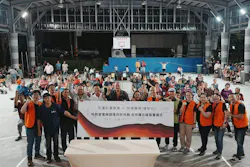
Baseload’s development work in Hualien County illustrates one reason such projects take time. In November 2025, the company reported that members of the Hongye Tribe had voted to approve a public-land lease for geothermal exploration. Baseload opened a local office, reached an agreement with the community, and secured an exploration permit for a two-year program of drilling in stages. The company has described Hongye separately from Google’s contracted supply. What the Hualien project documents is an early milestone rarely visible in a power purchase announcement: the developer secured community consent before drilling could establish what the field might produce.
Kenya Has the Generating Field. The Campus Remains Unresolved.
In Kenya’s Rift Valley, the appeal of Olkaria was evident when Microsoft and G42 announced their digital investment initiative in 2024. Kenya already had a fleet of geothermal generating stations at Olkaria. G42 and local partners proposed building a campus there, powered by geothermal electricity and hosting Microsoft Azure services for a new East Africa cloud region.
Two difficulties emerged. In May 2026, Semafor reported that President William Ruto had cited insufficient available power as an obstacle to the project. Separately, Reuters, citing Bloomberg, reported disagreements over payment guarantees. Microsoft and G42 had sought a commitment from the Kenyan government to buy a certain amount of computing capacity annually. Kenya’s principal secretary for information said discussions remained active at the time. The project was reported delayed, with its scale and terms still under discussion.
Olkaria exposes two decisions that often get folded into the phrase geothermal-powered campus. The electricity supplier needs to establish how much power it can reserve after serving existing customers. The campus developer needs customers prepared to buy enough computing capacity to support the investment. In Beaver County, Google has settled the first question for 396 MW even if its campus plans change. In Kenya, the terms on both sides of the meter became subjects of negotiation.
New Zealand and Iceland Offer a View From Operations
Near Taupō on New Zealand’s North Island, the distinction between what a plant produces and what a technology company purchases is written into the contract. Contact Energy’s 51.4 MW Te Huka Unit 3 began supplying the national grid in December 2024. Under a ten-year agreement with Contact, Microsoft purchases all the renewable energy attributes associated with the plant’s output. Electricity flows into the national system. Microsoft gains the contractual right to claim the renewable generation without having to put its data halls beside the wells.
Iceland offers the view from the customer’s rack. At its campus on a former NATO base near Keflavík, Verne identifies geothermal and hydroelectric generation as its power sources. Its campus specifications also list two 33 kV transmission feeds, diverse power routes, and 2N generator redundancy. For a customer choosing where to install a high-performance computing cluster, those details belong together. The generation mix describes the electricity available to the campus. The feeds and backup generators describe how Verne keeps equipment energized when a supply route or a piece of electrical infrastructure goes out of service.
Even in an established renewable market, operators negotiate additional supply campus by campus. In June, Icelandic generator Landsvirkjun and Borealis Data Center announced a 12 MW power purchase agreement supporting expansion at Blönduós. Landsvirkjun operates hydroelectric, geothermal, and wind facilities. The agreement gives Borealis a specific quantity of additional power on that system, a more useful figure for an expansion schedule than the country’s overall renewable share.
Taking Geothermal to the Load
The larger opportunity for data center developers is to widen the map beyond places with established geothermal fields. Conventional plants depend on finding accessible heat, fluid, and a pathway through the rock. Enhanced geothermal developers use drilling and reservoir engineering to circulate fluid through hot rock. For an operator with land, fiber, and customers already lined up, the attraction is the prospect of developing generation closer to the proposed load. As Sage Geosystems CEO Cindy Taff remarked in a DCF Show conversation about geothermal and time to power, “Now the primary challenge is just enough energy.”
Meta is pursuing two approaches. Its partnership with Sage targets up to 150 MW using a geopressured geothermal system, with an initial phase originally aimed at 2027. Separately, XGS Energy’s planned 150 MW project in New Mexico would use closed-loop technology to supply the Public Service Company of New Mexico grid in support of Meta’s operations. In March, XGS placed an initial order for Baker Hughes engineering services. The milestones to watch are wells completed, net electricity available after the plant powers its own equipment, and the first deliveries accepted by the grid.
A dozen years ago, the solar field serving QTS Princeton gave visitors something they could see and measure: 57,000 panels and 14.1 MW of generating capacity. At Cape Station, the equivalent field report is the status of three adjoining units. One sells electricity. The second is sending test power to the grid. Crews are commissioning the third. Google’s eight units follow those. For a data center operator deciding when to order servers or promise capacity to a customer, that sequence is the part of the gigawatt story that sets the calendar.
Watch: Inside Fervo’s Cape Station
CNBC’s Pippa Stevens visits Cape Station in southwestern Utah to ask Fervo CEO Tim Latimer about Google’s 396 MW power agreement and what it will take to bring down the cost of enhanced geothermal power. The segment aired September 4, 2026, shortly before the first generating unit entered commercial operation.
At Data Center Frontier, we talk the industry talk and walk the industry walk. In that spirit, DCF Staff members may occasionally use AI tools to assist with content.
Keep pace with the fast-moving world of data centers and cloud computing by connecting with Data Center Frontier on LinkedIn, following us on X/Twitter and Facebook, as well as on BlueSky, and signing up for our weekly newsletters using the form below.
About the Author
 Matt Vincent
Matt Vincent is Editor in Chief of Data Center Frontier, where he leads editorial strategy and coverage focused on the infrastructure powering cloud computing, artificial intelligence, and the digital economy. A veteran B2B technology journalist with more than two decades of experience, Vincent specializes in the intersection of data centers, power, cooling, and emerging AI-era infrastructure. Since assuming the EIC role in 2023, he has helped guide Data Center Frontier’s coverage of the industry’s transition into the gigawatt-scale AI era, with a focus on hyperscale development, behind-the-meter power strategies, liquid cooling architectures, and the evolving energy demands of high-density compute, while working closely with the Digital Infrastructure Group at Endeavor Business Media to expand the brand’s analytical and multimedia footprint. Vincent also hosts The Data Center Frontier Show podcast, where he interviews industry leaders across hyperscale, colocation, utilities, and the data center supply chain to examine the technologies and business models reshaping digital infrastructure. Since its inception he serves as Head of Content for the Data Center Frontier Trends Summit. Before becoming Editor in Chief, he served in multiple senior editorial roles across Endeavor Business Media’s digital infrastructure portfolio, with coverage spanning data centers and hyperscale infrastructure, structured cabling and networking, telecom and datacom, IP physical security, and wireless and Pro AV markets. He began his career in 2005 within PennWell’s Advanced Technology Division and later held senior editorial positions supporting brands such as Cabling Installation & Maintenance, Lightwave Online, Broadband Technology Report, and Smart Buildings Technology. Vincent is a frequent moderator, interviewer, and keynote speaker at industry events including the HPC Forum, where he delivers forward-looking analysis on how AI and high-performance computing are reshaping digital infrastructure. He graduated with honors from Indiana University Bloomington with a B.A. in English Literature and Creative Writing and lives in southern New Hampshire with his family, remaining an active musician in his spare time.