Executive Roundtable: Speed Without Compromise
For the third installment of our Executive Roundtable cycle for the third quarter of 2026, Data Center Frontier turns to one of the industry’s defining pressures: speed.
The current data center market is increasingly measured in terms of speed to power, speed to market and, ultimately, speed to token. AI demand is compressing project timelines, accelerating procurement decisions and pushing operators toward repeatable designs, modular construction, factory integration and other strategies intended to bring capacity online faster.
But faster deployment does not reduce the consequences of failure. In many respects, it raises them. Higher-density systems are more tightly coupled, infrastructure margins are narrower, and problems that escape design review, factory testing or commissioning can become considerably harder (and more expensive) to correct once a facility is carrying production AI workloads.
That makes the distinction between compressing a schedule and compressing rigor increasingly important. Standardization, prefabrication and parallel workstreams can eliminate time from a project without necessarily increasing risk. But commissioning, controls validation, integrated systems testing and operational visibility are areas where greater infrastructure complexity may demand more scrutiny, not less.
For this installment, DCF asks where the industry can genuinely move faster without sacrificing resilience — and where the pursuit of time-to-power risks creating technical or operational debt that surfaces only after the facility is live.
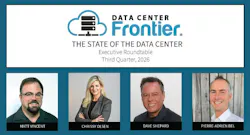
Our distinguished Executive Roundtable panelists for Q3 of 2026 include:
- Chrissy Olsen, Vice President of Critical Power Solutions, MPI Energy
- David Shepard, Global Head of Data Center Business, Chemelex-Raychem
- Pierre-Adrien Bel, Product Manager, EMEA, Rehlko
And now, our third Executive Roundtable question for Q3 of 2026.
Data Center Frontier: With time-to-power compressing development schedules, where can operators safely accelerate deployment — and where do commissioning, testing and operational visibility need to become more rigorous rather than less?

Chrissy Olsen, MPI Energy: There are many ways to build faster, including standardized designs, modular equipment and completing more work before systems arrive at the site.
Those are smart ways to improve time-to-power. What we cannot afford to rush is testing and commissioning.
Turning the power on does not mean a facility is ready. Operators need to know what will happen during a power interruption, a cooling issue or another unexpected event.
They also need clear, useful information about how the facility is performing.
We can, and must, find ways to build faster, but speed should come from better planning and coordination, not from skipping the steps that prove the data center will perform when it matters most.

David Shepard, Chemelex-Raychem: With time-to-power compressing development schedules, where can operators safely accelerate deployment — and where do commissioning, testing and operational visibility need to become more rigorous rather than less? Deployments on a smaller scale, where possible, enable the operators to gain real world operational competence. When done that way, the scale up is more easily managed, though it is always a challenge. And managing it is far more rigorous.
Practically speaking, think of it like this: Operator A is a large colocation provider. The million square feet under management today are handled by expert staff who know the gear and the process.
The operator wants to deploy AI infrastructure in a secure, well-run environment and introduce risk (density/cost, water/plumbing, etc…) into a massively risk-averse environment. Starting up a smaller version of the final deployment, building competency and comfort around the new infrastructure, will pay dividends.

Pierre-Adrien Bel, Rehlko: Operators can safely accelerate deployment by moving more modeling and validation work earlier in the project. Validated generator models, digital twins and hardware-in-the-loop testing can help teams evaluate equipment interactions, control logic and system behavior before physical commissioning begins. At Rehlko, this has driven increased investment in generator characterization and model validation, using measured performance data to develop system-level simulations that more accurately reflect real-world operating conditions.
Where operators should not reduce rigor is commissioning and system-level validation. A conventional resistive load-bank test can confirm that equipment accepts load, but it does not fully represent AI-driven conditions such as rapid load steps, load rejection, reactive power requirements or sustained variability.
For prime-power and islanded applications, testing should progress from individual assets to subsystems and then to fleet-level validation under the power management system. That final stage needs to confirm coordinated response across generators, BESS, inverters and controls while maintaining stable voltage and frequency.
The goal is to shift more validation upstream so commissioning confirms a well-understood system rather than becoming the first time teams see how the full architecture behaves under AI-style load conditions.
NEXT: Roundtable Recap
Related video: SemiAnalysis examines how modular construction is compressing AI data center deployment schedules — and why commissioning and systems integration remain critical constraints even as the industry races toward faster time-to-power.
About the Author
 Matt Vincent
Matt Vincent
Matt Vincent is Editor in Chief of Data Center Frontier, where he leads editorial strategy and coverage focused on the infrastructure powering cloud computing, artificial intelligence, and the digital economy. A veteran B2B technology journalist with more than two decades of experience, Vincent specializes in the intersection of data centers, power, cooling, and emerging AI-era infrastructure. Since assuming the EIC role in 2023, he has helped guide Data Center Frontier’s coverage of the industry’s transition into the gigawatt-scale AI era, with a focus on hyperscale development, behind-the-meter power strategies, liquid cooling architectures, and the evolving energy demands of high-density compute, while working closely with the Digital Infrastructure Group at Endeavor Business Media to expand the brand’s analytical and multimedia footprint. Vincent also hosts The Data Center Frontier Show podcast, where he interviews industry leaders across hyperscale, colocation, utilities, and the data center supply chain to examine the technologies and business models reshaping digital infrastructure. Since its inception he serves as Head of Content for the Data Center Frontier Trends Summit. Before becoming Editor in Chief, he served in multiple senior editorial roles across Endeavor Business Media’s digital infrastructure portfolio, with coverage spanning data centers and hyperscale infrastructure, structured cabling and networking, telecom and datacom, IP physical security, and wireless and Pro AV markets. He began his career in 2005 within PennWell’s Advanced Technology Division and later held senior editorial positions supporting brands such as Cabling Installation & Maintenance, Lightwave Online, Broadband Technology Report, and Smart Buildings Technology. Vincent is a frequent moderator, interviewer, and keynote speaker at industry events including the HPC Forum, where he delivers forward-looking analysis on how AI and high-performance computing are reshaping digital infrastructure. He graduated with honors from Indiana University Bloomington with a B.A. in English Literature and Creative Writing and lives in southern New Hampshire with his family, remaining an active musician in his spare time.
Related
Voices of the Industry
 Source: Adobe Stock, courtesy of ebm-papst
 Source: Champion Fiberglass