Texas Tightens Oversight of Data Center Development
Key Highlights
- Texas is moving from an incentive-led posture toward greater scrutiny of data center grid costs, water use and community impacts.
- ERCOT’s Batch Zero process and new ride-through requirements are adding grid-planning and operational requirements for large data center loads.
- Water-use transparency and efficiency are emerging as major 2027 legislative issues, including possible reporting requirements and water-efficient cooling standards.
- Texas’ qualified data center sales-tax exemption faces growing scrutiny, with lawmakers considering reform or repeal.
- Gov. Greg Abbott’s August 3 audit directive has paused advancement of data center projects through ERCOT’s interconnection process pending verification of project information.
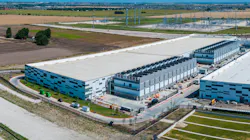
Texas has spent the past decade building one of the most data center-friendly policy environments in the United States. But the state’s political posture is tightening. The emerging message from Austin is that continued data center growth will face greater scrutiny over grid costs, water use, tax incentives and community impacts.
What is interesting about this policy conversation is that the Texas Legislature is not in regular session. The 89th regular session ended June 2, 2025, and the 90th Legislature does not convene until January 12, 2027. What has occurred instead is a concentrated period of interim committee work, gubernatorial recommendations, implementation of Senate Bill 6, calls for a special session, and regulatory action by the Public Utility Commission of Texas and the Electric Reliability Council of Texas. Together, those efforts are creating the framework for a broader legislative debate in 2027 while already affecting projects seeking ERCOT interconnection, infrastructure costs and site-selection decisions.
Abbott Sets Out a New Policy Framework
The policy shift accelerated June 10, when Gov. Greg Abbott directed the PUCT to require data centers to fully fund the electric infrastructure needed to serve their operations and directed PUCT and ERCOT to identify additional actions available under existing authority. Separately, Abbott pledged to work with lawmakers in 2027 on legislation requiring data centers to add electric capacity, use water-efficient cooling systems, report electricity and water use, phase out outdated tax incentives and adopt additional protections for neighboring communities.
The most consequential shift began June 10, when Gov. Greg Abbott sent state electricity regulators a sweeping list of data center policy priorities. Abbott called for future legislation requiring new facilities to add generation to the Texas grid, pay the full cost of their interconnection and related infrastructure, use closed-loop or similarly water-efficient cooling systems, and file annual reports on electricity and water consumption. The proposal also included the development of statewide best-practice standards for noise and other community impacts. The statement also urged lawmakers to repeal the state’s data center sales tax exemptions and other incentives he described as outdated or unnecessary.
That proposal represented a major reversal in tone. Texas has historically treated data centers as major economic-development projects, with qualified facilities eligible for sales-tax exemptions on computers, equipment, cooling systems, power infrastructure, electricity and fuel. Abbott’s new framework instead emphasizes greater cost responsibility and protection of residential and small-business ratepayers from infrastructure costs associated with large-load growth.
The practical impact of Texas adopting these proposals could be enormous for developers. If lawmakers require new data centers to add to Texas’ electric capacity, developers may need to demonstrate incremental supply or other qualifying capacity arrangements. The details of that obligation have not yet been legislated. Meanwhile, SB 6 and its implementation already increase the importance of deposits, security and other financial commitments tied to large-load interconnection and transmission infrastructure.
Even before lawmakers take up those proposals in 2027, the direction of policy can affect project underwriting by adding uncertainty around future power, infrastructure-cost and tax assumptions.
SB 6 Begins Reshaping Grid Access
Senate Bill 6 implementation has supplied the regulatory bridge between the 2025 Legislature and the current policy debate. On June 18, the PUCT approved ERCOT’s “Batch Zero” process for large-load interconnections. The framework groups qualifying projects of 75 megawatts or more into a common study so ERCOT can evaluate aggregate demand, allocate available grid capacity and identify needed transmission upgrades. At the time, ERCOT was tracking more than 438 gigawatts of large-load requests, nearly 89% of them associated with data centers.
Batch Zero was not a new statute but part of the implementation framework built around SB 6. It moves large-load planning toward batch-level transmission analysis. A project’s timeline can therefore depend not only on its own site and utility arrangements but also on aggregate demand, available transmission capacity and ERCOT’s assessment of project readiness.
The PUCT followed with another consequential action on July 9, approving “ride-through” requirements for Large Computational Loads. The rules require data centers and similar facilities to remain stable and connected during specified voltage and frequency disturbances rather than disconnecting large blocks of load simultaneously. If a facility fails to ride through an event, it may be required to investigate, submit a corrective plan and implement remediation. ERCOT can order a load disconnected if continued operation creates an imminent reliability risk.
These operational standards add a new engineering and compliance layer to data center development. Electrical design, uninterruptible power supplies, backup-generation controls and workload-protection schemes will increasingly have to account for grid behavior as well as facility and IT protection. Industry groups have questioned the extent of regulators’ statutory authority over retail loads, an issue that could return to lawmakers in 2027 as PUCT and ERCOT seek clearer authority over large-load operations.
Water Transparency Becomes a Legislative Priority
Water policy emerged as the second major legislative front. At a June 23 House Natural Resources Committee hearing, lawmakers examined the state’s limited information about data center water use. A voluntary PUCT survey developed with the Texas Water Development Board drew responses from 28 of 377 companies notified, representing 92 facilities. A separate mandatory TWDB water-use survey also produced weak compliance: only 17% of surveyed data centers responded in 2025, even though participation is required by law and failure to comply can be punished as a Class C misdemeanor.
The hearing made mandatory disclosure one of the clearest candidates for 2027 legislation. Republican and Democratic lawmakers questioned how the state could plan water infrastructure or evaluate projects in drought-prone regions without reliable facility-level data. Rep. Cody Harris, R-Palestine, said resource-use transparency should not be optional and identified disclosure of water consumption and water sources as a baseline issue for the next session.
Legislation requiring more comprehensive reporting of water consumption and sources is therefore likely to receive serious consideration next session. Lawmakers may also revisit enforcement and confidentiality provisions so agencies can obtain useful planning data while protecting proprietary information.
Cooling requirements may similarly become a development standard rather than a voluntary sustainability commitment. Abbott specifically endorsed closed-loop systems, while committee discussions focused on water-efficient development in water-stressed regions. A statewide standard could favor closed-loop or other water-efficient cooling architectures, including systems that reduce reliance on potable water.
Some water-saving cooling approaches can increase electrical demand or reduce cooling efficiency during hot weather. Future legislation will therefore have to coordinate water and power policy rather than regulate them separately.
The Sales Tax Exemption Comes Under Threat
The sharpest legislative threat to data center project economics surfaced July 27, when the Senate Finance Committee reviewed the state’s sales tax exemptions for qualified data centers. The committee’s interim charge noted that the estimated state cost of the exemptions has grown from $14.6 million in 2014–15 to a projected $3.3 billion in 2028–29.
Comptroller officials testified that 138 data centers had qualified for the program, but only 20 had been audited. Six of those audited facilities were found out of compliance, including projects that failed to meet job, square-footage or power-agreement requirements. The state’s previous estimate that it would forgo $3.2 billion over two years was also described as an underestimate because another 59 certifications had been approved in 2026 and officials expected roughly 10 more certifications each month.
Those numbers gave momentum to proposals to repeal or restructure the incentive. Committee Chair Joan Huffman said no tax exemption should operate on “autopilot” and reiterated that she intends to file legislation in 2027 to reform or eliminate it. Other senators questioned whether an industry already choosing Texas for power availability, land, fiber and market access still needs an exemption covering the state’s 6.25% sales tax on qualifying equipment and electricity.
Lawmakers could preserve the incentive while tightening eligibility and compliance requirements, including verified job creation, investment commitments, resource-efficiency standards and greater responsibility for infrastructure costs. They could also revisit when benefits begin relative to the existing five-year compliance window.
Special-Session Pressure Builds
Pressure for immediate lawmaking grew in late July. Agriculture Commissioner Sid Miller, Democratic Sen. Carol Alvarado, Rep. Richard Peña Raymond, local officials, community groups and other critics urged Abbott to call a special legislative session. Raymond asked for a temporary moratorium on permitting, construction approvals and state-level fast-tracking until lawmakers could establish statewide rules.
The pressure crossed traditional political lines, bringing together rural conservatives concerned about land and water with Democrats and environmental groups focused on consumer costs and resource use. Abbott did not call a special session, leaving interim hearings, agency action and the approaching 2027 regular session as the principal paths for policy change.
Abbott Pauses Data Center Interconnections
On August 3, Abbott directed the PUCT and ERCOT to conduct a comprehensive verification of data center projects advancing through ERCOT’s interconnection process before allowing those projects to move forward. Developers must provide information on tax incentives, ownership, projected peak and annual electricity consumption, on-site generation, water sources, cooling systems, and measures addressing noise, light, traffic, setbacks and emergency response. Projects that fail to satisfy state and regulatory requirements can be denied grid connection.
The directive came as ERCOT was considering approximately 474 gigawatts of connection requests, more than five times the grid’s record peak demand, with data centers representing roughly 90% of the proposed load. ERCOT subsequently withheld the Batch Zero project classifications scheduled for August 7 and said it would seek an exception to the existing timetable while consulting with the PUCT on next steps.
The order created a direct development constraint. Yet it is not a substitute for legislation. It operates through the ERCOT interconnection process, leaving different questions for projects outside the ERCOT region and for fully islanded facilities with no ERCOT grid connection. The directive also does not establish a permanent statutory framework, leaving broader questions of agency authority, reporting and development standards for the Legislature.
Texas Development Pipeline Remains Active
Even as the policy environment tightens, development announcements over the past week underscored the scale of the Texas pipeline. Cipher Digital acquired an option on approximately 288 acres within 25 miles of San Antonio for its proposed Apollo campus, which could support up to 900 MW. The company said it has submitted the site as a studied load through ERCOT’s Batch Zero process. Cipher also began delivering data center capacity at its 300 MW Black Pearl site in Texas two months ahead of schedule; the site is being leased to AWS under a deal with a minimum 15-year term.
Activity also continued across Dallas-Fort Worth. Crow Holdings and CleanArc Data Centers are pursuing a five-story, 245 MW facility on approximately 40 acres at Dallas Market Center, potentially replacing the existing Market Hall, with a first phase targeted for late 2027. PowerHouse Data Centers and AREP, meanwhile, filed plans for the Circle T Data Center in Westlake, north of Fort Worth. Site plans call for as many as four 300,000-square-foot buildings totaling 300 MW. PowerHouse told local officials that its active and planned Texas portfolio now encompasses 11 projects totaling approximately 10 GW. The Westlake proposal has also drawn opposition from nearby residents and a Buddhist monastery over noise, proximity and other community impacts, illustrating the local-development friction increasingly accompanying large projects even where data centers are already permitted as a land use.
The power side of the buildout is moving at similar scale. Houston-based NRG said it is aligned on principal commercial terms with an unnamed global cloud and AI hyperscaler for a new 1.2 GW combined-cycle natural gas plant in Texas. The roughly $3.2 billion first phase is targeted for late 2029 and could eventually expand to 2.4 GW. NRG said the minimum 15-year arrangement would have the hyperscaler support incremental generation through capacity and operating payments rather than relying solely on existing grid supply.
Taken together, the announcements show why the Texas policy debate carries such high stakes. The development pipeline remains measured in hundreds of megawatts and increasingly in gigawatts, while the projects moving forward are bringing questions of generation, grid access and community impact directly into development strategy.
What to Watch in 2027
Based on Abbott’s stated legislative priorities, PUCT and ERCOT actions, and interim committee hearings, the 2027 debate is likely to center on several recurring issues:
- Reform or repeal of the qualified data center sales-tax exemption.
- Mandatory electricity and water-use reporting.
- Water-efficient cooling requirements.
- Greater responsibility for electric infrastructure costs.
- Stronger project-readiness and compliance requirements.
- Clearer PUCT and ERCOT authority over large-load operations.
- Community protections addressing issues such as noise, setbacks and other local impacts.
- Expanded county authority over data center development in unincorporated areas.
The question for Texas is whether it can impose a more demanding framework while preserving its advantages in AI and cloud infrastructure and preventing speculative projects or poorly allocated infrastructure costs from overwhelming the electric grid, water systems and local communities.
The direction of Texas policy is already becoming clearer. Projects with credible schedules, stronger financial commitments, transparent resource requirements, water-efficient cooling, concrete community protections and a willingness to bear the infrastructure costs associated with their development are likely to be better positioned. Projects dependent on uncertain grid capacity, limited disclosure or assumptions that today’s incentive structure will remain unchanged face a more difficult path.
At Data Center Frontier, we talk the industry talk and walk the industry walk. In that spirit, DCF Staff members may occasionally use AI tools to assist with content.
Keep pace with the fast-moving world of data centers and cloud computing by connecting with Data Center Frontier on LinkedIn, following us on X/Twitter and Facebook, as well as on BlueSky, and signing up for our weekly newsletters using the form below.
About the Author
 David Chernicoff
David Chernicoff
 Matt Vincent
Matt Vincent
Matt Vincent is Editor in Chief of Data Center Frontier, where he leads editorial strategy and coverage focused on the infrastructure powering cloud computing, artificial intelligence, and the digital economy. A veteran B2B technology journalist with more than two decades of experience, Vincent specializes in the intersection of data centers, power, cooling, and emerging AI-era infrastructure. Since assuming the EIC role in 2023, he has helped guide Data Center Frontier’s coverage of the industry’s transition into the gigawatt-scale AI era, with a focus on hyperscale development, behind-the-meter power strategies, liquid cooling architectures, and the evolving energy demands of high-density compute, while working closely with the Digital Infrastructure Group at Endeavor Business Media to expand the brand’s analytical and multimedia footprint. Vincent also hosts The Data Center Frontier Show podcast, where he interviews industry leaders across hyperscale, colocation, utilities, and the data center supply chain to examine the technologies and business models reshaping digital infrastructure. Since its inception he serves as Head of Content for the Data Center Frontier Trends Summit. Before becoming Editor in Chief, he served in multiple senior editorial roles across Endeavor Business Media’s digital infrastructure portfolio, with coverage spanning data centers and hyperscale infrastructure, structured cabling and networking, telecom and datacom, IP physical security, and wireless and Pro AV markets. He began his career in 2005 within PennWell’s Advanced Technology Division and later held senior editorial positions supporting brands such as Cabling Installation & Maintenance, Lightwave Online, Broadband Technology Report, and Smart Buildings Technology. Vincent is a frequent moderator, interviewer, and keynote speaker at industry events including the HPC Forum, where he delivers forward-looking analysis on how AI and high-performance computing are reshaping digital infrastructure. He graduated with honors from Indiana University Bloomington with a B.A. in English Literature and Creative Writing and lives in southern New Hampshire with his family, remaining an active musician in his spare time.
Voices of the Industry
 Image courtesy of Bell & Gossett
 Source: Adobe Stock, courtesy of ebm-papst