Land & Expand: Texas’ AI Boom Meets a New Political Reality
Key Highlights
-
Democrat Gina Hinojosa's election as Texas governor, alongside Democratic gains in the state House and statewide offices, raises the prospect of an extended data center permitting pause and new legislation in 2027.
-
Riot Platforms disclosed a 910 MW, approximately $28 billion lease with Anthropic at its Corsicana campus, while Hut 8 advanced its gigawatt-scale Beacon Point project.
-
CenterPoint Energy increased its 10-year capital plan to $70.7 billion as Greater Houston prepares for major industrial and data center electricity demand.
-
Fermi's proposed 222 MW TensorWave lease missed its closing deadline, while Microsoft declined to exercise an expansion option for capacity at Nscale's Texas project.
-
From San Antonio to Hudspeth County, developers increasingly face demands for greater transparency, water and power safeguards, and clearer community benefits.
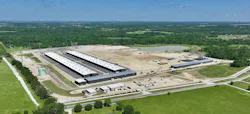
In DCF's Land & Expand series, we track where North American data center development is taking root, where it's accelerating, and the forces shaping which projects actually get built. Today we examine how Texas has become one of the clearest demonstrations of the extraordinary scale of AI infrastructure development — and of the challenges now facing the industry as it attempts to turn that investment into operating capacity.
In the space of several weeks, the state has seen major new data center leases, expanded utility investment plans, new behind-the-meter generation proposals, and continued construction on large AI campuses. At the same time, regulators have tightened oversight, municipalities have adopted additional development controls, and several high-profile transactions have encountered financing or execution challenges.
Then came the November 3 midterm elections.
Democrat Gina Hinojosa defeated three-term Republican Gov. Greg Abbott, becoming the first Democrat elected Texas governor since Ann Richards in 1990. Democrats also won the Texas House and the lieutenant governorship, although Republicans retained their majority in the state Senate.
The results introduce a new political dimension to a data center market already undergoing substantial regulatory change. Hinojosa made the industry's rapid expansion a campaign issue, calling for a moratorium on new approvals until lawmakers establish stronger protections for communities, water supplies, electricity customers, and local decision-making. In a November 5 interview reported by Reuters, the governor-elect reaffirmed her intention to pause further approvals until those protections are in place.
As Data Center Frontier reported in August, Texas was already moving toward a more restrictive regulatory framework under Abbott, who ordered audits of prospective data centers and suspended certain approvals pending the results. Hinojosa's election could extend that process and place new requirements on developers seeking to move projects forward.
Yet the state's AI infrastructure market is hardly standing still. The emerging Texas story is not simply one of growth versus regulation. It is about a new set of conditions under which massive capital commitments, available power, established customers, and community acceptance may determine which developments actually reach operation.
A $28 Billion Agreement Shows That Texas Is Still in Expansion Mode
One of the largest recent transactions illustrates the continuing strength of demand. On November 4, Riot Platforms announced a 15-year, triple-net powered-land lease covering 910 MW of critical IT capacity at its Corsicana campus in Navarro County. Although Riot initially described its customer as a leading frontier AI laboratory, the company's quarterly SEC filing identifies Anthropic as the tenant.
Riot estimates that the agreement represents approximately $28 billion in contractual revenue over its initial term, with an average of about $1.8 billion annually. The contract became effective November 4 after the applicable approvals and technical conditions were satisfied.
The development model is noteworthy. Riot will provide land, powered pads, and high- and medium-voltage electrical infrastructure, while Anthropic will supply and operate its modular computing equipment. The lease covers a contiguous 332-acre site, with deliveries expected in three phases extending through July 2028. The first phase comprises 400 MW, followed by 200 MW and 310 MW. Under the agreement, Anthropic is responsible for electricity costs and other operating expenses, while Riot retains responsibility for the site's power infrastructure. Rent is structured around contracted capacity rather than actual computing utilization.
The result is a substantially more defined commercial arrangement than a speculative gigawatt-scale development announcement. Nevertheless, construction, financing, commissioning, and scheduled delivery remain significant obligations.
It is also an example of the changing role of former cryptocurrency infrastructure operators in the AI market. Sites originally assembled around access to large electrical loads are increasingly being repositioned to serve customers requiring high-density computing capacity. The transaction underscores the continuing appetite for large-scale Texas developments, extending the expansion trend documented in DCF's previous Land & Expand roundup.
Riot's agreement was announced one day after Hinojosa's election victory. The timing is striking, although the transaction was negotiated and signed before the election and should not be interpreted as a response to its outcome. Instead, it demonstrates the simultaneous forces now shaping Texas: substantial demand for power-ready infrastructure and growing uncertainty over the rules governing future development.
The Industry Begins Engaging Texas' Incoming Leadership
The changing political landscape has already prompted outreach from major AI infrastructure operators. On November 7, CoreWeave CEO Michael Intrator publicly sought cooperation with Hinojosa's incoming administration, calling for collaboration on existing permitted projects and clear standards for future development.
As Bloomberg reported, the company expressed support for the principle that data center growth must deliver benefits to Texas and its communities.
The outreach illustrates an important distinction between projects already holding permits and proposals still seeking government authorization. Developers with committed capital and construction schedules need clarity about whether existing approvals remain valid and how additional regulatory conditions might apply, while projects still in the planning or permitting stages face a less certain pathway.
There has been no comprehensive announcement establishing how Hinojosa's proposed moratorium would treat every category of existing or pending development. That uncertainty will be one of the industry's principal concerns as the transition progresses.
The new political situation also should not be mistaken for a unified legislative position. Democrats will control the Texas House, while Republicans retain the Senate. Lt. Gov.-elect Vikki Goodwin, a Democrat, will preside over that Republican-majority chamber. The 2027 legislative session will therefore be critical in determining which proposals can command sufficient support to become law.
Houston's Power Infrastructure Plans Expand by $4 Billion
While political uncertainty grows, Texas utilities continue preparing for substantial increases in electricity consumption. On October 27, CenterPoint Energy announced a $4 billion expansion of its 10-year capital investment program, bringing planned investment through 2035 to $70.7 billion. The Houston-based utility also accelerated approximately $1.5 billion in previously scheduled expenditures into the period ending in 2030.
The company's third-quarter earnings announcement reflects expectations for significant growth across Greater Houston, including data centers and other industrial and commercial customers. CenterPoint continues to anticipate approximately 14 GW of additional electricity demand in its Greater Houston service area by the end of 2030.
Its Batch Zero analysis provides a more detailed view of the development pipeline. The company's October investor presentation identified approximately 10 GW of submissions eligible as base load, another 2 GW as studied load, and approximately 5 GW in an additional demand category. Those figures describe planning and interconnection categories, not operating load or guaranteed future construction.
For data center developers, the distinction between a requested megawatt and an energized one is becoming increasingly consequential. CenterPoint's planned transmission investments are intended to strengthen the regional system, improve import capacity, and provide the infrastructure needed to accommodate demand growth.
The utility argues that additional large customers can help spread electricity system costs over a broader base. Whether those benefits sufficiently offset the new infrastructure required to serve them remains an important subject for regulators and consumer advocates, one that Texas' revised political landscape will place under even greater scrutiny.
ERCOT's Interconnection Review Becomes a Development Gatekeeper
The scale of the issue extends well beyond Houston. As Data Center Frontier previously reported in its detailed examination of ERCOT's Batch Zero process, the grid operator was tracking approximately 474 GW of proposed large-load connections in early August, roughly 90% associated with data centers.
That figure is not a credible forecast of operating data center capacity. It includes requests at widely varying stages of maturity, including projects that may never obtain financing, customers, permits, or transmission service. ERCOT's Batch Zero review was developed to help separate qualified projects from the broader interconnection queue.
Following Abbott's August 3 directive, the grid operator began verifying large-load proposals before allowing them to advance through the revised study process. The review includes project readiness, electrical characteristics, financial commitments, and information about developers' proposed use of electricity and other resources.
In parallel, ERCOT has been developing stricter expectations for large computational loads, including voltage ride-through and dynamic modeling requirements intended to address the potential grid effects of sudden load disconnections.
The regulatory questions are no longer limited to whether enough electricity can be delivered to a data center. They increasingly include how the facility behaves as part of the larger electrical system, which infrastructure investments are necessary to serve it, and who ultimately bears those costs.
ERCOT's state and community impact information-gathering process is expected to produce a report by December 10, creating another important milestone ahead of the 2027 legislative session.
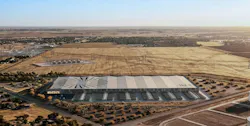
Hut 8 Advances a Gigawatt-Scale Campus Near Corpus Christi
Another significant development came November 4, when Hut 8 reported continued progress on its Beacon Point AI data center campus in the Corpus Christi region.
The company said that its previously announced second 352 MW IT-capacity lease had fully commercialized the campus, bringing the total contracted IT capacity associated with the two phases to 704 MW. The campus is designed around approximately 1 GW of utility capacity, a separate measure from the critical IT load under lease. Hut 8 estimates approximately $19.6 billion in base-term contract value across the two phases.
In its third-quarter results, the company said construction of the campus substation had begun, alongside foundation and underground utility work for the first phase. Initial data hall delivery is targeted for the third quarter of 2027, with the second phase targeted for the second quarter of 2028.
The company also disclosed agreements to acquire two energized sites in West Texas, with up to 230 MW of utility capacity at full energization, subject to outstanding approvals and infrastructure development. Those acquisitions point to another important trend: the increasing value of existing electrical infrastructure and sites that can potentially be adapted to serve advanced computing.
As new greenfield projects face lengthy power studies and regulatory requirements, already energized locations may offer an alternative route to capacity. The distinction is especially important in markets such as Dallas-Fort Worth, where DCF's analysis of CBRE's first-half 2026 data found that approximately 95% of the region's 765 MW under construction had already been preleased.
PowerHouse and Big Watt Win Approval for Taylor Technology Campus
Not every large new project is meeting resistance at the municipal level. On October 8, the City of Taylor approved a development agreement with PowerHouse Data Centers and Big Watt Digital for the proposed Taylor Technology Campus northeast of Austin.
The 664-acre project is designed to support as much as 1 GW of data center capacity, incorporating dedicated behind-the-meter generation, including a planned natural gas power facility. The agreement represents an alternative to development on unincorporated land with comparatively limited local zoning oversight.
According to the City of Taylor's project documentation, the agreement establishes a path for annexation and binding requirements addressing environmental and quality-of-life concerns.
That distinction is significant. The Taylor project illustrates how local government oversight and continued development can coexist, provided developers and municipalities reach agreement on applicable standards. It does not remove the need for other permits, financing, generation infrastructure, or construction milestones.
For PowerHouse, a division of American Real Estate Partners, the development also extends a large national pipeline of potential AI infrastructure sites.
As DCF recently examined in its coverage of Brookfield's investment in AREP, the transaction reflects the growing strategic value of land development combined with access to electricity and the ability to navigate increasingly complex approvals.
Soluna and Applied Digital Pursue Wind-Connected AI Infrastructure
Another approach to securing electricity is emerging in the Texas Panhandle. On October 21, Soluna Holdings and Applied Digital announced an agreement to form a joint venture for a proposed 50 MW critical IT facility at Soluna's Project Dorothy 3 site near Silverton in Briscoe County.
The development would be co-located with the 150 MW Briscoe Wind Farm, with its initial phase drawing electricity from both wind generation and the grid. Under the proposed ownership structure, Applied Digital would hold 51% of the venture and Soluna 49%, following closing. ChronoScale, a publicly traded accelerated-computing company majority-owned by Applied Digital, has signed a nonbinding letter of intent to lease the planned facility.
Importantly, the transaction is not yet fully closed. The companies' October 21 announcement identifies several remaining conditions, including Briscoe County approval of a project tax abatement, definitive lease agreements, power arrangements, and corporate approvals.
That tax-abatement condition takes on added significance as state leaders debate the future of incentives for data center development.
The project illustrates the attraction of pairing AI infrastructure with existing energy assets, while its outstanding conditions also demonstrate how even promising developments depend on a sequence of commercial and regulatory approvals. It is part of the broader shift toward hybrid power strategies that DCF examined in its recent Power First report from the 2026 Data Center Frontier Trends Summit.
Fermi's Proposed 222 MW Lease Misses Its Closing Deadline
The challenge of converting development plans into binding commercial commitments is especially visible in West Texas.
On November 3, Fermi America disclosed that its proposed lease agreement with TensorWave had not become effective after the October 31 closing deadline passed without extension. The transaction covers a planned 222 MW data center facility at Fermi's Project Matador development near Amarillo.
The proposed agreement was expected to generate approximately $6.5 billion over an initial 15-year term, assuming the transaction closed and the contractual conditions were fulfilled.
According to Fermi's November 3 statement, remaining conditions include final documentation, operational agreements, board approvals, and project-level construction financing. Neither party has exercised its contractual termination rights, and Fermi says discussions are continuing. The company indicated that it expects to provide additional information during its November 12 earnings call, or sooner if appropriate.
Project Matador is one of the industry's most ambitious proposed developments, built around a plan for extensive private power infrastructure to support AI computing capacity.
The TensorWave situation illustrates an increasingly important financing distinction. A proposed long-term lease can provide the foundation for a major infrastructure project, but the agreement must become effective and its associated construction financing must be secured before it can be treated as firm contracted capacity.
That distinction has become more consequential as AI computing itself emerges as a financeable infrastructure asset, a transition examined in DCF's coverage of NVIDIA's AI factory financing strategy.
Microsoft's Nscale Decision Adds Another Qualification
Another development surfaced November 5, when Reuters reported that Microsoft had decided not to exercise an option to expand its existing computing agreement with Nscale at a Texas data center.
The proposed expansion would have substantially increased the contracted capacity at the company's Ward County development. Importantly, the decision had reportedly been made months before the election, and the existing Microsoft-Nscale agreement remains in place. It therefore should not be characterized as a consequence of Texas' political shift.
Nevertheless, the decision adds another example of the difference between an announced development pipeline, a customer option, and a firm contractual commitment. In a market measured in hundreds of megawatts and multibillion-dollar agreements, those distinctions are becoming essential to evaluating project readiness.
Dallas Inference Agreement Highlights the Value of Existing Capacity
Not every AI infrastructure deployment requires a new hyperscale campus.
On October 26, Forum Markets announced that its Forum Edge AI joint venture with Edge Node had entered into a $94.4 million, 36-month agreement with Fireworks, an AI inference platform. The agreement covers reservations of NVIDIA B300 GPU computing capacity at an existing Dallas data center, with deployment expected in late December 2026 or early January 2027.
The company's SEC filing identifies a deployment involving 96 enterprise AI servers.
Unlike a greenfield gigawatt-scale campus, this arrangement relies on an existing powered facility. The distinction matters as the industry moves from an almost exclusive focus on the enormous infrastructure requirements of model training toward a broader mix of AI workloads, including inference services.
Existing facilities with available electrical and thermal capacity may provide a faster route to deployment, particularly while new projects undergo extended regulatory and interconnection reviews.
The opportunity to extract more usable compute capacity from infrastructure already in place is also drawing renewed attention. In a recent DCF Show interview with Hammerhead AI CEO Rahul Kar, the discussion centered on using AI workload orchestration to turn otherwise unused electrical capacity into productive inference infrastructure without compromising existing customer commitments.
ServerDomes Brings an Unconventional Model to Hudspeth County
The proposed ServerDomes Global project near Desert Haven in Hudspeth County illustrates a different response to the industry's infrastructure challenges.
The company is pursuing a campus at Hueco Ranch, west of the state's larger AI development concentrations. Plans reported for the site contemplate approximately 350 MW of data center capacity, potentially distributed across as many as ten geodesic dome structures. The proposed first phase would occupy roughly 700 acres within a larger property.
Rather than relying primarily on conventional utility service, ServerDomes proposes dedicated behind-the-meter natural gas generation and closed-loop cooling infrastructure. The company's design is intended to accommodate high-density computing, including both air- and liquid-cooled configurations.
However, local residents have raised questions about the development's effects on roads, water resources, wildlife, and the surrounding environment. According to local reporting by KVIA, representatives met with residents on October 26 after concerns that information about the project had not been communicated adequately. County officials have sought further information supporting the developer's claims about water consumption and electrical generation.
Those claims require careful distinction from independently verified operating performance. A proposed closed-loop system, for example, does not by itself establish that a facility will have no continuing water requirements. The project's development status and ultimate environmental footprint remain contingent on further documentation and implementation.
Hueco Ranch is representative of a larger challenge for AI infrastructure developers: private generation and unconventional building designs do not eliminate the need to establish credibility with local governments and communities. As DCF has previously examined in its reporting on community opposition, local acceptance is increasingly becoming a material consideration in determining which projects can advance.
San Antonio and Other Cities Tighten Local Controls
Regulatory pressure is also increasing within Texas' established metropolitan markets.
On October 29, the San Antonio City Council voted 9-2 to adopt new data center development regulations. The rules establish additional land-use review and specific-use authorization requirements for affected zoning districts, along with standards addressing setbacks, landscaping, noise barriers, parking, and site access. The ordinance also prohibits new data center development in the Edwards Aquifer Recharge Zone District.
San Antonio's action reflects a broader reassessment of the industry's physical presence in urban and suburban communities. On October 27, League City approved a zoning amendment requiring special-use permits for data centers, giving local officials additional authority to evaluate proposed developments. Coppell has also advanced changes requiring specific review of data centers and cryptocurrency mining facilities in light-industrial districts.
Although the requirements vary, the underlying direction is similar. Communities that previously handled data centers through broad industrial-use classifications are creating more explicit standards for evaluating facilities with substantial electricity, water, generation, and land-use implications.
The result is an increasingly complicated local approval landscape, even before developers encounter the state's evolving grid and environmental regulations.
A Statewide Permitting Pause Raises the Stakes
The municipal activity is occurring against the backdrop of Abbott's statewide regulatory actions.
On September 21, the outgoing governor directed the Texas Commission on Environmental Quality to halt permits sought by data center projects until regulators completed audits examining electricity and water requirements. The directive followed earlier instructions to ERCOT, the Public Utility Commission of Texas, and the Texas Water Development Board to gather and verify information about proposed facilities.
Implementation became controversial in October after environmental advocates identified data center-related applications that appeared to have continued advancing. TCEQ subsequently acknowledged problems with its electronic filing process and temporarily shut down automated submissions while making changes intended to ensure applications received appropriate review.
The distinction between the state's current pause and Hinojosa's proposed future moratorium is important.
Abbott's directives were tied to specified audits and regulatory review. Hinojosa has proposed maintaining a broader suspension of new approvals until lawmakers establish additional protections. Whether those measures can be implemented in the form proposed, and how they would apply to projects already permitted or under construction, will require further decisions by state officials.
The situation reflects a larger national shift toward more proof-driven data center development. As DCF explored in How States Are Rewriting the Rules for Data Center Growth, states are increasingly requiring developers to substantiate power availability, infrastructure plans, environmental performance, and community commitments before projects can advance.
The Coming Fight Over Tax Incentives
Among the most consequential policy questions is the future of Texas' tax treatment of data centers.
The industry's qualified data center sales-tax exemption has grown dramatically alongside AI infrastructure investment. According to state comptroller estimates reported by The Texas Tribune, the exemption is projected to reduce state revenue by approximately $3.2 billion over a two-year period.
Abbott called for eliminating the exemption and other data center incentives during the next legislative session. Hinojosa has also supported ending subsidies, while advocating additional community protections and greater transparency around proposed developments.
This is a significant area of policy overlap between the outgoing and incoming governors, even though their broader approaches differ.
The issue is particularly relevant for developers whose financial models or pending transactions depend on receiving public incentives. Repeal or modification of existing programs would require legislative action, with important questions about effective dates, existing beneficiaries, and possible transition provisions.
Industry advocates argue that data centers provide construction employment, property-tax revenue, and other economic benefits that should be considered when evaluating incentives. Critics question whether those benefits justify the scale of the exemptions and the public infrastructure required to support rapidly expanding AI loads.
The 2027 debate will help determine how Texas balances continued investment with the costs and obligations associated with data center development.
Cooling and Backup Power Remain Part of the Equation
Even as the focus shifts toward regulation and project finance, operators continue seeking improvements in the technologies used to support data center operations.
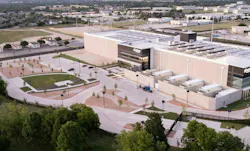
On October 29, Sabey Data Centers disclosed a pilot program testing hydrotreated vegetable oil, or HVO, in backup generators at its Austin campus. The company is evaluating whether renewable diesel can replace conventional diesel while maintaining the performance and reliability expected of mission-critical backup power systems.
The environmental benefits of HVO depend on feedstock sourcing, production methods, and the emissions being measured. Although smaller in scale than the state's largest power and development announcements, such efforts may become more relevant as operators face increasing expectations to document the environmental performance of their facilities.
Texas' Next Test: Which Projects Can Actually Deliver?
The recent announcements reveal a market moving in several directions at once.
Riot's Corsicana agreement and Hut 8's Beacon Point campus demonstrate that major customers and investors continue committing capital to Texas AI infrastructure. CenterPoint's expanded capital plan shows the scale of utility investment expected to support a growing electricity load.
The Soluna-Applied Digital venture and PowerHouse's Taylor project illustrate different approaches to combining data center development with power generation and local approvals. Meanwhile, Fermi's delayed lease closing and Microsoft's decision not to expand its Nscale agreement show that customer commitments, financing, and project schedules remain subject to change.
And from San Antonio to Hudspeth County, communities are demanding a more substantial role in deciding how new data centers are developed.
What has changed most clearly since November 3 is the political setting in which these questions will be decided. Texas' incoming governor has made data center regulation a priority. Its Legislature will enter 2027 with divided partisan control between the two chambers, and regulators are already engaged in an extensive review of the industry's grid and resource requirements.
The state's established advantages — energy resources, land availability, industrial infrastructure, and proximity to growing AI markets — remain substantial. But those advantages do not guarantee that every proposed campus will advance.
The next phase of Texas data center development will increasingly depend on whether developers can demonstrate deliverable power, credible financing, binding customer commitments, responsible resource use, and a workable relationship with the communities hosting their facilities.
It is another expression of the industry's broader transition from projection to execution, with Texas emerging as one of the most consequential places where that transition is playing out.
Texas is still attracting the land and the capital. The harder question now is what it will take to expand.
At Data Center Frontier, we talk the industry talk and walk the industry walk. In that spirit, DCF Staff members may occasionally use AI tools to assist with content.
Keep pace with the fast-moving world of data centers and cloud computing by connecting with Data Center Frontier on LinkedIn, following us on X/Twitter and Facebook, as well as on BlueSky, and signing up for our weekly newsletters using the form below.
About the Author
 David Chernicoff
 Matt Vincent
Matt Vincent is Editor in Chief of Data Center Frontier, where he leads editorial strategy and coverage focused on the infrastructure powering cloud computing, artificial intelligence, and the digital economy. A veteran B2B technology journalist with more than two decades of experience, Vincent specializes in the intersection of data centers, power, cooling, and emerging AI-era infrastructure. Since assuming the EIC role in 2023, he has helped guide Data Center Frontier’s coverage of the industry’s transition into the gigawatt-scale AI era, with a focus on hyperscale development, behind-the-meter power strategies, liquid cooling architectures, and the evolving energy demands of high-density compute, while working closely with the Digital Infrastructure Group at Endeavor Business Media to expand the brand’s analytical and multimedia footprint. Vincent also hosts The Data Center Frontier Show podcast, where he interviews industry leaders across hyperscale, colocation, utilities, and the data center supply chain to examine the technologies and business models reshaping digital infrastructure. Since its inception he serves as Head of Content for the Data Center Frontier Trends Summit. Before becoming Editor in Chief, he served in multiple senior editorial roles across Endeavor Business Media’s digital infrastructure portfolio, with coverage spanning data centers and hyperscale infrastructure, structured cabling and networking, telecom and datacom, IP physical security, and wireless and Pro AV markets. He began his career in 2005 within PennWell’s Advanced Technology Division and later held senior editorial positions supporting brands such as Cabling Installation & Maintenance, Lightwave Online, Broadband Technology Report, and Smart Buildings Technology. Vincent is a frequent moderator, interviewer, and keynote speaker at industry events including the HPC Forum, where he delivers forward-looking analysis on how AI and high-performance computing are reshaping digital infrastructure. He graduated with honors from Indiana University Bloomington with a B.A. in English Literature and Creative Writing and lives in southern New Hampshire with his family, remaining an active musician in his spare time.
Related



Voices of the Industry
 Source: TomUK/Shutterstock.com
 Source: 3DAnimals/Shutterstock.com