AI Infrastructure Is Redrawing the Data Center Services Landscape
Key Highlights
- Major companies are restructuring and acquiring firms to create integrated platforms that cover the entire data center lifecycle, from planning to operations.
- The surge in AI infrastructure projects is driving demand for specialized workforce, logistics, and lifecycle management services, highlighting the importance of operational expertise.
- Consolidation among equipment manufacturers and service providers is expanding their roles into power, cooling, and energy infrastructure, blurring traditional industry boundaries.
- Developers now have the option to assemble traditional project teams or rely on integrated service providers, with strategic choices impacting project coordination and responsibility.
- The concept of capacity is evolving beyond megawatts to include the ability to effectively execute and operate complex, high-density data center facilities at scale.
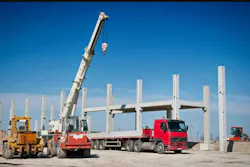
The rapid expansion of AI infrastructure is creating a parallel market for specialized companies capable of helping developers and operators plan facilities, manage construction programs, install increasingly heavy equipment, commission complex cooling and electrical systems, staff facilities and ultimately keep them operating. Several announcements during the past month illustrate just how broad that market has become.
T5 Services is separating its construction and operations businesses, launching its construction organization as the independent EverOn Data Center Services while T5 Operations moves toward acquisition by Salute. JK Technology Services has acquired 360 Rigging to strengthen the heavy-lift and logistics capabilities it offers technology and data center customers. Meanwhile, Limbach Holdings has acquired CYMCOR, giving the mechanical, electrical, plumbing and controls specialist a much larger role in data center program management and commissioning.
A fourth transaction announced September 2 extends the same trend into perhaps the industry’s dominant development constraint: power. Solaris Energy Infrastructure acquired Omega Foundation Services, adding specialized engineering, procurement and construction capabilities to a platform that already provides generation, distribution, installation, commissioning, aftermarket support and operations and maintenance.
The same pattern is also appearing at much larger scale among global infrastructure suppliers. Vertiv’s agreement to acquire UtilityInnovation Group for approximately $1.45 billion extends its reach beyond power and cooling equipment inside the data center into microgrids, onsite generation and grid interconnection, while Flex’s $4.4 billion agreement to acquire EPC Power adds advanced power-conversion technology for AI data centers and emerging 800-volt architectures. Both deals point toward a broader shift in which suppliers are increasingly moving beyond a single layer of the infrastructure stack, but are assembling more integrated platforms spanning power delivery, facility systems and increasingly the path from grid to chip.
Taken together, the announcements point toward an evolution in the data center supply chain. Developers historically assembled large teams of architects, engineering firms, contractors, commissioning agents, logistics providers and facilities operators. Those specialties aren't disappearing. But increasingly, service companies are attempting to combine multiple pieces of the project lifecycle under larger platforms capable of following a data center from initial planning through construction, turnover and Day 2 operations.
AI Is Creating a Services Boom Alongside the Construction Boom
The opportunity is being driven by extraordinary infrastructure growth.
JLL reported in August that North American data center absorption reached a record 25 GW during the first half of 2026—twice the level recorded a year earlier and five times the figure from two years earlier. Vacancy remained around 1%, and JLL said 77% of capacity currently under construction is now located outside the industry's traditional primary markets.
Building in established markets such as Northern Virginia, Dallas and Phoenix gives developers access to experienced data center contractors, electricians, mechanical specialists, commissioning engineers and operations personnel. Moving gigawatts of construction into newer markets means much of that expertise must either be developed locally or brought into the market where labor is already constrained.
Uptime Institute's 2026 Global Data Center Survey found that more than half of respondents were having difficulty finding qualified candidates for open positions, with staffing and skills shortages showing signs of intensifying. The problem becomes more complicated as rack densities increase and operators introduce technologies such as direct liquid cooling that require skills beyond those associated with traditional air-cooled enterprise facilities.
The result is growing value for service providers that can bring their own trained workforce, operating procedures and specialized expertise to a new project.
T5's Restructuring Shows How Large the Services Business Has Become
The September 1 restructuring of T5 Services may be one of the clearest examples. T5 Construction has become EverOn Data Center Services, an independent construction company dedicated exclusively to digital infrastructure. At the same time, Salute has agreed to acquire T5 Operations, subject to closing conditions and regulatory approvals. EverOn and Salute are expected to remain strategic partners even as they operate independently.
The scale of the construction business helps explain the change. Tom Mertz, formerly chief operating officer and president of T5 Services and now president and CEO of EverOn Data Center Services, said:
Our growth to $1.7 billion in revenue, with 83% generated from third-party customers, reflects the strength of our team and the confidence leading developers and hyperscalers place in us. While our name is changing, what customers rely on is not. EverOn gives us the opportunity to focus entirely on helping customers build increasingly complex digital infrastructure while creating the flexibility to grow alongside the industry we serve.
According to T5, what is now EverOn grew from $87 million in revenue in 2021 to $1.7 billion in 2025. Third-party projects accounted for 83% of the 2025 total. Its teams have completed more than 260 construction projects encompassing more than 12 million square feet of data center space.
Its menu of services also illustrates how far today's specialized data center contractors have moved beyond conventional general contracting.
EverOn lists ground-up campuses, data hall fit-outs, retrofits and upgrades, design-build delivery, long-lead equipment procurement, commissioning oversight, quality assurance and quality control, owner advisory work and preconstruction services. The company also specifically highlights direct liquid cooling, high-density AI infrastructure and construction inside live mission-critical facilities.
A developer building an entirely new AI campus has one set of challenges. An operator trying to install liquid cooling, replace electrical infrastructure or increase rack density inside an energized facility has another. Work has to be sequenced around operating equipment, maintenance windows and redundancy requirements. The cost of an error can include an outage rather than simply a construction delay.
The T5 restructuring effectively creates two specialized service platforms addressing opposite sides of that divide. EverOn concentrates on construction and infrastructure delivery, while Salute is becoming an even larger operations, facilities management and commissioning organization.
Upon closing of the T5 Operations acquisition, Salute says it will have more than 15 GW of data center capacity under management across more than 150 markets, supported by over 3,800 employees. The combination also adds T5's operational experience to Salute's direct-to-chip liquid cooling operations capabilities.
Limbach Moves Upstream With CYMCOR
Limbach Holdings' August 4 acquisition of CYMCOR represents a somewhat different approach to building an integrated data center services platform. Limbach is traditionally associated with the infrastructure inside the facility: mechanical, electrical, plumbing and controls systems. Its existing data center services include modular and offsite fabrication, mechanical construction, equipment rigging and setting, retrofit work and ongoing maintenance. It has more than 525,000 square feet of fabrication capacity across its network. The acquisition of CYMCOR puts Limbach much earlier in the decision-making process.
Limbach paid approximately $30 million for CYMCOR, which specializes in program management, commissioning oversight and strategic consulting for hyperscale, colocation, enterprise and other mission-critical customers. CYMCOR currently oversees customer project budgets with a cumulative value exceeding $8 billion.
That makes the acquisition strategically more significant than its purchase price might initially suggest. Marc Robertson, president of CYMCOR, said:
Over the past two decades, CYMCOR has built a reputation as a trusted advisor to owners managing some of the most complex capital programs in the industry. Limbach’s growing national presence, engineering expertise and operational resources will strengthen our capabilities, broaden our customer reach, and support long-term growth. We're excited to build on CYMCOR's strong reputation while becoming part of an organization that shares our values, customer focus, and long-term vision.
Rather than waiting until an owner needs a mechanical installation, retrofit or maintenance project, Limbach can potentially engage while the owner is planning the program itself.
Limbach explicitly described this as an opportunity to create "pull-through" work. It expects CYMCOR's owner relationships to create opportunities for engineering, construction, commissioning, maintenance and other lifecycle services downstream.
Owners will still need appropriate governance and clearly defined scopes when an organization providing advisory or program-management services can also compete for downstream construction work. But the attraction of the integrated model is straightforward: fewer interfaces and potentially greater accountability.
JK Technology Services Tackles the Physical Logistics Problem
Not every critical service sits at the engineering or operations level. Some of the most difficult work on an AI construction site comes down to getting a very large, very expensive piece of equipment from a truck to precisely where it belongs.
JK Technology Services' August 18 acquisition of Manassas, Virginia-based 360 Rigging strengthens that layer of the data center services stack by combining essential components of the logistics chain.
360 Rigging specializes in crane and rigging work, and its trained and certified riggers are joining JKTS' crane and rigging operation. JKTS is combining that capability with warehousing, transportation, staging and heavy-equipment handling.
The services can cover equipment ranging from generators and switchgear to chillers and sensitive electronics. JKTS also provides secure warehousing, asset tracking, equipment staging and controlled releases aligned with a project's construction sequence.
That may sound like a relatively narrow part of data center development, but AI infrastructure is making logistics more consequential. Large electrical equipment, cooling skids, generators, transformers and prefabricated systems have to arrive in the correct sequence. Sites often have limited laydown space, while multiple contractors may be working simultaneously against aggressive schedules.
Equipment delivered too early occupies scarce space. Equipment delivered late can stop other trades. Poorly coordinated heavy lifting can create both safety and schedule risks. David Cox, president of JK Moving Services, JKTS’ parent company, said:
The addition of 360 Rigging allows JKTS to capitalize on the high-growth opportunities of the booming technology sector. We are thrilled to welcome the 360 team and its leader Jeremy Hawkins to the JKTS team as we expand our presence in the crane and rigging industry. These segments require specialized services, and our continued investments in top talent and expertise position us to deliver the best end-to-end service in the marketplace.
The growing use of prefabricated and modular systems magnifies the requirement for that kind of logistics expertise. Moving labor out of the field and into fabrication plants can shorten schedules, but it also means larger assemblies must eventually be transported, staged, lifted and connected at the site. In that environment, rigging and logistics become part of the construction schedule rather than an ancillary moving service.
JKTS is consequently positioning itself as a single source across warehousing, transport, heavy lifts, equipment placement and technology deployment—a model that parallels the broader consolidation taking place elsewhere in the services sector.
Power Services Are Becoming Part of the Same Equation
The Solaris Energy Infrastructure acquisition of Omega Foundation Services extends the services discussion outside the data center building itself. Solaris said the transaction adds specialized EPC and heavy civil capabilities while broadening its full-cycle power offering to include early-stage site services, plant installation and commissioning, and electrical substation development. The company said bringing those capabilities in-house should improve its control over cost and construction schedules.
This is important because the dividing line between "data center construction" and "energy infrastructure construction" is becoming increasingly difficult to identify. Bill Zartler, chairman and co-chief executive officer, and Amanda Brock, co-chief executive officer, were quoted as saying:
Omega adds another key piece of the power value chain, expanding our execution capabilities and opening new revenue opportunities across a range of third-party projects. We've worked alongside the Omega team for two years in multiple locations and have great confidence in their ability to execute. We're thrilled to welcome the Omega team to Solaris and see substantial room for growth in the combined company. In addition to the Omega transaction, we have significant near-term opportunities for long-term contracted power growth with new and existing customers as their power needs intensify. We're working closely with these customers to meet their demand and look forward to announcing several further business expansions in the coming months.
For gigawatt-scale AI developments, the developer may be involved with substations, transmission interconnections, generation plants, batteries or other behind-the-meter infrastructure long before servers arrive.
Solaris now describes its overall portfolio as including generation, distribution, installation and commissioning, aftermarket support, and operations and maintenance.
The arrival of companies with roots in energy and heavy industrial services suggests that the data center supplier base itself is changing as projects begin to resemble large industrial infrastructure developments.
The Pattern Extends Across the Services Stack
The transactions involving T5, Limbach, JK Technology Services and Solaris are hardly isolated. A wider wave of acquisitions and partnerships is pushing equipment manufacturers, contractors, engineering firms and specialist service providers toward broader roles across the data center lifecycle.
Vertiv provided perhaps the clearest parallel in September, announcing an agreement to acquire UtilityInnovation Group for approximately $1.45 billion in cash, with additional consideration tied to performance. UIG brings microgrid controls, onsite-generation orchestration, specialized switchgear and behind-the-meter power architecture. The deal also extends a broader 2026 acquisition push by Vertiv that has added liquid-cooling specialist Strategic Thermal Labs, chiller manufacturer ThermoKey and prefabricated infrastructure provider Bmarko as the company builds out more of the AI data center infrastructure stack. Vertiv described the move as extending its portfolio upstream from the critical power and cooling systems inside the facility toward the grid interconnection and onsite generation itself — effectively creating a path from power source to chip.
Days later, Flex announced a $4.4 billion agreement to acquire EPC Power, adding grid-forming and power-conversion technology designed for data centers, utility-scale energy storage and microgrids. EPC Power’s platform includes rectifiers and DC-DC conversion for emerging 800-volt data center architectures, with solid-state transformer development also planned. The company says it has more than 15 GW deployed across 62 countries and expects its annual U.S. manufacturing capacity to exceed 30 GW in 2027. For Flex, the acquisition extends a portfolio that already encompasses power, cooling and compute infrastructure and pushes the company further toward treating the data center electrical system as an integrated whole. As AI racks drive higher power densities and new approaches to power distribution, Flex is positioning EPC Power’s technology between the grid and the GPUs themselves — another example of suppliers expanding beyond individual products toward broader infrastructure platforms capable of solving multiple pieces of the deployment problem.
The same consolidation is occurring among the companies supplying the skilled labor and execution capacity required to build that infrastructure. MasTec completed its acquisition of The Superior Group in July after valuing the electrical contractor at approximately $1.65 billion, adding one of the country’s larger self-performing electrical workforces to an infrastructure business already spanning power, communications and civil construction. In September, multi-craft contractor Loenbro acquired Prism Electric, its largest acquisition to date, expanding its electrical construction capabilities and presence in Texas and Oklahoma for data center, industrial and other mission-critical projects. Both transactions reflect the value being placed not simply on construction backlog, but on established teams capable of actually delivering increasingly complex electrical infrastructure at scale.
Professional and operational services are consolidating as well. Cumming Group added TLM Group, an owner’s-representation and project-management firm specializing in data center programs for financial institutions, hyperscalers and colocation operators across North America. Promera, meanwhile, acquired Formula Facilities Services and Critical Area Cleaning in September to establish a UK and Ireland platform whose services extend from construction and commissioning into maintenance of operating critical environments. The latter is an unusually specific example of the lifecycle model: two businesses positioned on opposite sides of facility turnover are being combined so the same services platform can follow a customer from construction into operations.
Mission Critical Group illustrates how quickly these platforms can be assembled. During the past several months, MCG has moved to add transformer capacity through CORE Transformers, while acquiring Anchor Automation to bring controls integration, remote monitoring and connected services into its electrical infrastructure platform; and in September formed a strategic partnership with Hitachi aimed at combining modular power equipment with monitoring, AI analytics, predictive maintenance and broader high-, medium- and low-voltage energy systems. The individual moves differ, but the direction is consistent: suppliers that once occupied a defined point in the data center value chain are increasingly trying to own more of the path from power availability and design through construction, commissioning and ongoing operations.
The Emerging Data Center Services Stack
Taken together, these moves reveal a services stack becoming both broader and more interconnected. An owner can now procure outside expertise for early program and portfolio planning; site and power infrastructure; owner representation and program management; design-assist and constructability; general construction; prefabrication and modularization; equipment procurement; warehousing and staging; crane and rigging work; installation; QA/QC; commissioning; facilities management; operations; maintenance; retrofits; and specialized AI infrastructure services such as direct-to-chip liquid cooling operations.
What is changing is not simply the number of services available, but how companies are organizing around them. Vertiv, Flex and Mission Critical Group illustrate one direction: expanding across adjacent layers of the infrastructure stack to create more integrated platforms. Limbach’s acquisition of CYMCOR moves in a similar direction from another starting point, extending a construction and building-systems business upstream into owner advisory and program management.
That does not mean one company will, or should, provide every service. The T5 restructuring illustrates the opposite approach. Rather than keeping construction and operations inside one organization, EverOn and Salute are becoming independent specialist platforms while maintaining a strategic relationship intended to preserve coordination between construction and Day 2 operations.
For developers and operators, the larger change is therefore one of choice. They can assemble traditional best-of-breed project teams, rely more heavily on integrated providers, or combine the two. But as projects become larger, faster and more technically complex, the ability to coordinate those interfaces — and decide where responsibility should sit — is becoming a strategic question of its own.
Services Become Another Form of Capacity
For the data center industry, "capacity" normally means megawatts. The current AI construction cycle suggests developers may need to think about another form of capacity as well: the ability to actually execute those megawatts.
Securing land, power and financing does not by itself create a functioning data center. Projects still require engineers, electricians, pipefitters, controls specialists, riggers, commissioning professionals and trained facility operators. They also require organizations capable of coordinating those disciplines across increasingly compressed construction schedules and increasingly complex electrical, mechanical and cooling systems.
That helps explain why skilled workforces, specialized operating expertise and the ability to integrate multiple pieces of the development lifecycle are becoming assets in their own right. The acquisitions described here are not simply attempts to capture more revenue from a booming market. In many cases, they are attempts to secure scarce execution capability and bring more of it under coordinated control.
The AI infrastructure boom needs more than chips, buildings and megawatts. It needs organizations capable of turning those ingredients into functioning facilities — and keeping them functioning after the construction crews leave.
For developers and operators, that means the services ecosystem is becoming part of the capacity equation itself: broader, more specialized, increasingly integrated and capable of operating at national and global scale.
Vertiv and Compass Datacenters discuss how AI infrastructure is driving closer integration across data center design, power, cooling, deployment and ongoing operations.
At Data Center Frontier, we talk the industry talk and walk the industry walk. In that spirit, DCF Staff members may occasionally use AI tools to assist with content.
Keep pace with the fast-moving world of data centers and cloud computing by connecting with Data Center Frontier on LinkedIn, following us on X/Twitter and Facebook, as well as on BlueSky, and signing up for our weekly newsletters using the form below.
About the Author
 David Chernicoff
David Chernicoff
 Matt Vincent
Matt Vincent
Matt Vincent is Editor in Chief of Data Center Frontier, where he leads editorial strategy and coverage focused on the infrastructure powering cloud computing, artificial intelligence, and the digital economy. A veteran B2B technology journalist with more than two decades of experience, Vincent specializes in the intersection of data centers, power, cooling, and emerging AI-era infrastructure. Since assuming the EIC role in 2023, he has helped guide Data Center Frontier’s coverage of the industry’s transition into the gigawatt-scale AI era, with a focus on hyperscale development, behind-the-meter power strategies, liquid cooling architectures, and the evolving energy demands of high-density compute, while working closely with the Digital Infrastructure Group at Endeavor Business Media to expand the brand’s analytical and multimedia footprint. Vincent also hosts The Data Center Frontier Show podcast, where he interviews industry leaders across hyperscale, colocation, utilities, and the data center supply chain to examine the technologies and business models reshaping digital infrastructure. Since its inception he serves as Head of Content for the Data Center Frontier Trends Summit. Before becoming Editor in Chief, he served in multiple senior editorial roles across Endeavor Business Media’s digital infrastructure portfolio, with coverage spanning data centers and hyperscale infrastructure, structured cabling and networking, telecom and datacom, IP physical security, and wireless and Pro AV markets. He began his career in 2005 within PennWell’s Advanced Technology Division and later held senior editorial positions supporting brands such as Cabling Installation & Maintenance, Lightwave Online, Broadband Technology Report, and Smart Buildings Technology. Vincent is a frequent moderator, interviewer, and keynote speaker at industry events including the HPC Forum, where he delivers forward-looking analysis on how AI and high-performance computing are reshaping digital infrastructure. He graduated with honors from Indiana University Bloomington with a B.A. in English Literature and Creative Writing and lives in southern New Hampshire with his family, remaining an active musician in his spare time.